
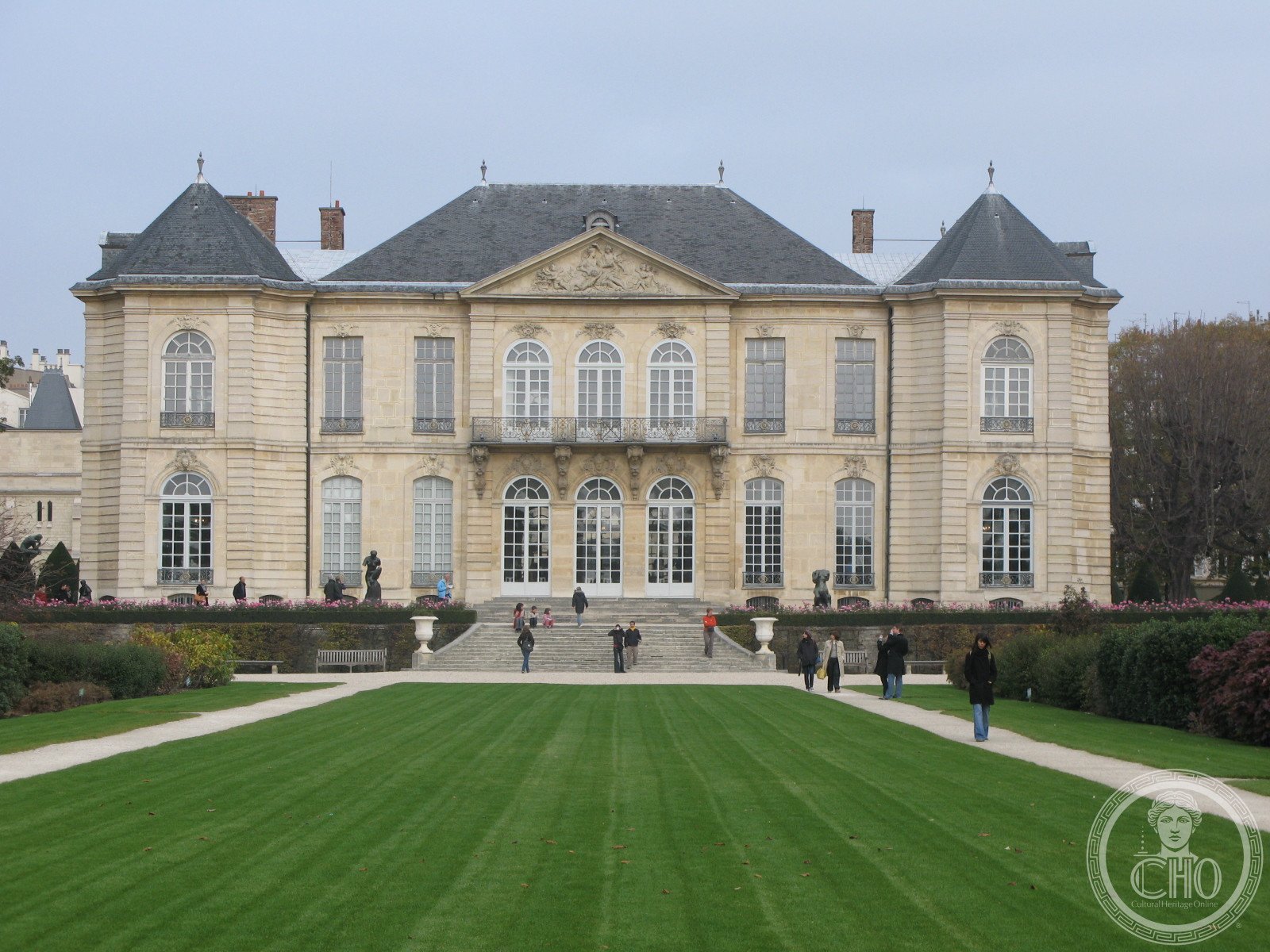
Musée Rodin
The Musée Rodin is a dedicated museum in Paris presenting the work of Auguste Rodin (1840–1917), the sculptor widely regarded as the founder of modern sculpture. Established in 1919 at the Hôtel Biron, an 18th-century rococo mansion in the 7th arrondissement, the museum holds the largest public collection of Rodin’s works, including original plasters, marbles, bronzes, drawings, and photographs. Its sculpture garden — one of the finest in Paris — displays The Thinker, The Gates of Hell, and The Burghers of Calais in an open-air setting against the backdrop of the restored Hôtel Biron.
At a glance
- Type
- Monographic sculpture and fine arts museum
- Period
- Hôtel Biron built c. 1730; museum established 1919; major renovation completed 2015
- Style
- Hôtel Biron: French Rococo (18th century); gardens: formal French landscape
- Location
- 79 rue de Varenne, 75007 Paris, France
- Coordinates
- 48.8553° N, 2.3136° E
Overview
The museum occupies the Hôtel Biron and its surrounding three-hectare garden, adjacent to Les Invalides in the 7th arrondissement of Paris. The permanent collection comprises around 6,600 sculptures, 8,000 drawings, and 8,000 photographs, as well as Rodin’s personal collection of antiquities, which includes works by Van Gogh, Renoir, and Monet. In exchange for state ownership of the Hôtel Biron and its gardens, Rodin bequeathed his entire estate — works, archives, and collection — to the French state, an arrangement formalised by the law of 1916 that created the museum. After a €12 million renovation completed in 2015, both the mansion and its gardens have been returned to their 18th-century appearance.
History
The Hôtel Biron was built around 1730 for the wigmaker Abraham Peyrenc de Moras and later passed to the Maréchal de Biron, giving it its current name. Sequestered during the Revolution, it became in the early 20th century a rooming house for artists: Isadora Duncan, Henri Matisse, Jean Cocteau, and Rodin himself all rented studios there between 1908 and 1917. Rodin took up residence in 1908, eventually occupying the ground floor and the garden; he lived and worked at the Biron until his death in November 1917, just weeks after the French government formalised the museum’s creation. The museum opened to the public in 1919, two years after Rodin’s death, and immediately became one of Paris’s most visited cultural sites.
What you see
In the garden, three of Rodin’s most celebrated works are displayed at monumental scale: The Thinker (1880–1882) on a stone plinth near the entrance, The Burghers of Calais (1889) on a low platform in the north garden, and The Gates of Hell (1880–1917) — the vast bronze portal that occupied Rodin for nearly four decades and served as source material for dozens of his best-known figures. Inside the mansion, ground-floor rooms decorated with 18th-century boiseries display original marbles including The Kiss (1882) and The Hand of God (1898), alongside plaster models showing Rodin’s working process. Upper floors are dedicated to drawings, photographs, and Rodin’s personal art collection, including five paintings by Van Gogh.
Cultural significance
Auguste Rodin is credited with liberating Western sculpture from the academic tradition of his time, and the Musée Rodin preserves the full arc of his development — from early Salon pieces to the unresolved, fragmented forms that anticipate 20th-century modernism. The museum’s combination of historic mansion, formal garden, and outdoor sculpture makes it one of the most visited museums in France, typically attracting over 700,000 visitors annually. Its collection continues to influence contemporary artists and sculptors, and the museum actively lends works to exhibitions worldwide.
Practical information
- Address
- 79 rue de Varenne, 75007 Paris
- Opening hours
- Tuesday–Sunday 10:00–18:30; closed Monday. Check official website for current hours and seasonal variations.
- Admission
- Paid entry; garden-only ticket available at reduced rate. Free for visitors under 26 from EU countries. Check official website for current rates.
- Website
- musee-rodin.fr
Getting there
The museum is a short walk from Varenne metro station (line 13), directly in front of which stands Rodin’s statue of Balzac at the Esplanade des Invalides. Alternatively, Saint-François-Xavier (line 13) is an eight-minute walk. Bus lines 69, 82, 87, and 92 stop on rue de Varenne or boulevard des Invalides. The museum entrance is on rue de Varenne; a secondary garden entrance exists on boulevard des Invalides. Bicycle parking is available at Vélib’ stations on nearby streets.
Sources & resources
Find it on the map
See this place and what’s around it →📷 Diventa un fotografo di Cultural Heritage Online
Condividi le tue foto dei luoghi: restano pubblicate con la tua firma come autore. Più vengono viste, più ti fai conoscere — e presto un concorso premierà le foto più apprezzate.
Accedi o registrati gratis per aggiungere una foto