
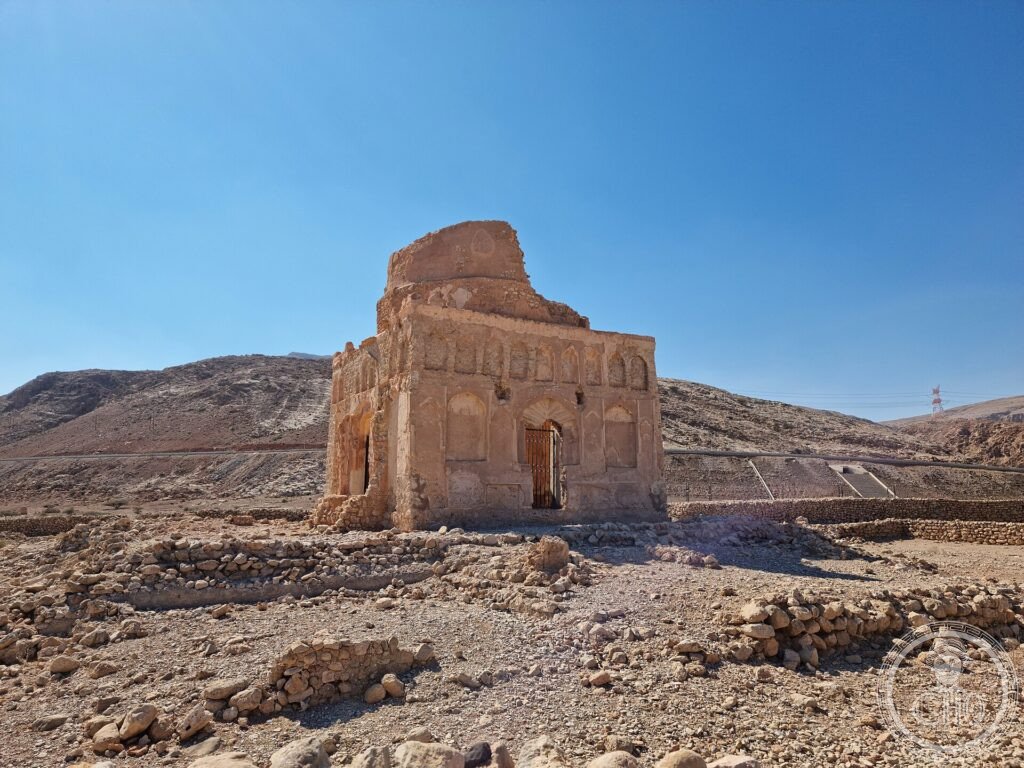
Sulla costa orientale dell’Oman, fra il mare e le montagne, sorgono le rovine di Qalhat, un tempo fiorentissimo porto del regno di Hormuz. Per secoli mercanti e navi vi commerciarono fra l’Arabia, l’India e l’Africa orientale; Marco Polo e Ibn Battuta la descrissero. Oggi resta soprattutto il bel mausoleo di Bibi Maryam a vegliare sul sito.
At a glance
The Ancient City of Qalhat, on the eastern coast of Oman, was from the 11th to the 15th century a flourishing port and a leading city of the kingdom of Hormuz, which controlled the trade of the Gulf and the Indian Ocean. Merchants here traded across Arabia, Persia, India, China and East Africa, and travellers such as Marco Polo and Ibn Battuta described its wealth. Largely ruined after earthquake and conquest, the site preserves the remains of the walled city and, above all, the elegant mausoleum of Bibi Maryam. It was inscribed by UNESCO in 2018.
Key facts
- UNESCO: World Heritage since 2018 (Ancient City of Qalhat)
- Port of Hormuz: a major city of the medieval Hormuz kingdom
- 11th–15th centuries: a great Indian Ocean trading centre
- Described by travellers: by Marco Polo and Ibn Battuta
- Bibi Maryam: the fine mausoleum that dominates the site
- Walled city: the remains of houses, mosques and a necropolis
History
Qalhat rose as a port on the Gulf of Oman, well placed for the monsoon trade across the Indian Ocean, and became one of the principal cities of the kingdom of Hormuz, the great commercial power of the region. Through its harbour passed horses, spices, textiles, dates and pearls, and its prosperity drew merchants of many nations; the famous travellers Marco Polo and Ibn Battuta both wrote of it.
In the 15th and 16th centuries earthquake damage and the rise of new powers, including the arrival of the Portuguese, brought Qalhat’s decline, and it was abandoned. Its ruins — walls, houses, mosques, water systems and the standing mausoleum of Bibi Maryam, named after a noblewoman who is said to have built it — were inscribed by UNESCO in 2018 as a rare record of this trading world.
What you see
The most striking survival is the mausoleum of Bibi Maryam, a square stone tomb (now without its dome) standing amid the bare coastal hills, its walls once finely decorated. Around it spread the excavated remains of the walled city — foundations of houses and mosques, cisterns and a necropolis — between the sea and the mountains.
The lone mausoleum above the ruined port, looking out to the Indian Ocean, is the image of Qalhat.
Practical information
- Site: an archaeological site on the coast; viewing points and paths
- Best time: the cooler months (October–March)
- Time needed: 1–2 hours
- Setting: near Sur on the east coast of Oman
Getting there
Qalhat is on the eastern coast of Oman, about 20 km north of the town of Sur and some 180 km south-east of Muscat, reached by road. GPS: 22.70° N, 59.37° E.
Nearby
- Sur — the historic dhow-building port nearby
- Wadi Shab — a beautiful coastal wadi to the north
- Ras al-Jinz — a turtle-nesting beach to the south-east
Sources
- UNESCO World Heritage Centre — “Ancient City of Qalhat” (ref. 1537)
- Oman Ministry of Heritage and Tourism — official body
- Encyclopaedia Britannica — Oman; Hormuz
Find it on the map
See this place and what’s around it →📷 Become a Cultural Heritage Online photographer
Share your photos of places: they stay published under your name as the author. The more they're seen, the more you get noticed — and soon a contest will reward the most appreciated photos.
Log in or sign up free to add a photo