
Prehistoric Museum of Balzi Rossi
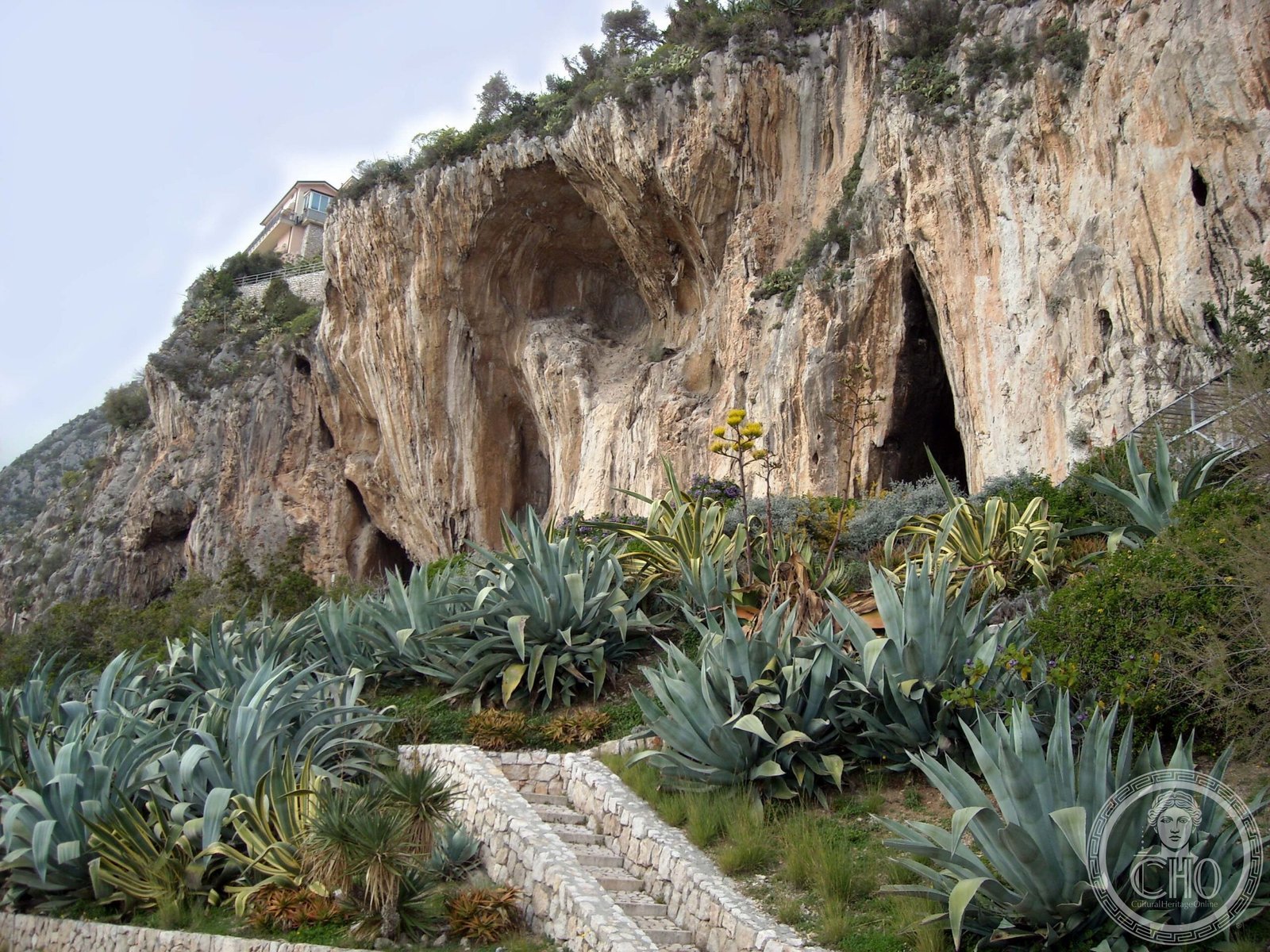
The Prehistoric Museum of Balzi Rossi stands at one of western Europe’s most significant Upper Palaeolithic archaeological complexes, a group of red-limestone caves (balzi rossi means “red rocks” in Ligurian) on the coast of Ventimiglia in Liguria, just metres from the French border. The museum documents more than 150 years of continuous excavation at the Balzi Rossi cave system, presenting finds that range from approximately 35,000 to 10,000 years ago and include skeletal remains of early modern humans, tools of the Aurignacian and Gravettian cultures, and the celebrated Grimaldi Venus figurines.
At a glance
- Type
- State prehistoric museum (Museo Nazionale)
- Period
- Upper Palaeolithic, approximately 35,000–10,000 BP
- Style
- Prehistoric cave site with associated museum building
- Location
- Balzi Rossi, Ventimiglia, Province of Imperia, Liguria, Italy
- Coordinates
- 43.7839° N, 7.5341° E
Overview
Balzi Rossi is ranked among the most important archaeological sites of the early Upper Palaeolithic in Western Europe. The site’s cluster of caves in the red cliffs overlooking the Mediterranean provided shelter for successive prehistoric human communities over tens of thousands of years, preserving an exceptional stratigraphic record. The name “Grimaldi Man” — a term once applied to skeletal remains from the Cavillon cave — placed Balzi Rossi at the centre of early 20th-century debates about human prehistory and migration into Europe.
History
Systematic excavations at Balzi Rossi began in the 1870s under the direction of Thomas Hanbury and subsequently continued by French, Italian, and international teams throughout the 20th century. Riparo Mochi, one of the rock shelters within the complex, yielded Aurignacian material now considered among the earliest evidence of anatomically modern humans in Europe, dated to approximately 35,000 years before present. Gravettian layers produced the famous group of Venus figurines — small female statuettes carved from steatite and bone — alongside ochre-dusted burials of the Grimaldi type.
What you see
The museum displays the most significant portable finds from the caves, including Gravettian stone tools, bone points, and personal ornaments; the celebrated Venus figurines of Balzi Rossi (steatite female statuettes in multiple stylistic variants); and casts of the famous Grimaldi skeletal remains. Illustrated panels explain stratigraphy, excavation history, and the palaeoclimatic context of the Last Glacial Maximum. Guided paths lead from the museum building to the cliff-face cave openings themselves, where visitors can see the original excavation contexts.
Cultural significance
The Balzi Rossi complex has shaped fundamental interpretations of the Palaeolithic peopling of Europe and the cognitive evolution of early modern humans. The Venus figurines from this site are part of a pan-European phenomenon of Gravettian symbolic art that extends from the Pyrenees to Siberia, and the Balzi Rossi examples remain key comparative objects for this debate. The site is protected as a national monument and managed by the Italian Ministry of Culture.
Practical information
- Address
- Via Balzi Rossi 9, 18039 Ventimiglia IM, Italy
- Hours
- Check official MiC website; closed Mondays (typical for Italian state museums)
- Admission
- Standard MiC tariff; free first Sunday of each month
Getting there
The museum is located at Balzi Rossi on the coast, approximately 3 km west of Ventimiglia town centre, very close to the French border at Menton. From Ventimiglia railway station (on the Genoa–Nice line), take a local bus or taxi westward toward Ponte San Luigi. By car, follow the Via Aurelia (SS1) westward from Ventimiglia toward the French border; parking is available at the site.
Sources & resources
Find it on the map
See this place and what’s around it →📷 Diventa un fotografo di Cultural Heritage Online
Condividi le tue foto dei luoghi: restano pubblicate con la tua firma come autore. Più vengono viste, più ti fai conoscere — e presto un concorso premierà le foto più apprezzate.
Accedi o registrati gratis per aggiungere una foto