
Pompei, Ercolano e Oplontis — Città Sepolte dal Vesuvio
Three Roman cities buried under 4–6 metres of volcanic ash and pumice by the eruption of Vesuvius on 24 August 79 CE: the largest single archaeological site in Europe and the most complete surviving record of Roman urban life at its height.
At a glance
The eruption of Vesuvius that buried Pompeii, Herculaneum, and Oplontis (Villa di Poppea) happened over approximately 19 hours on 24–25 August 79 CE. Pompeii, a prosperous commercial city of 11,000–20,000 inhabitants, was buried under 4–6 metres of tephra (volcanic debris) in several distinct phases: a first shower of pumice lapilli (first 12 hours), then a sequence of pyroclastic surges that killed those who had not escaped. The dead were preserved as cavities in the hardened ash; Giuseppe Fiorelli's technique of injecting plaster into these cavities (developed 1863) produced the haunting casts of victims, animals, and wooden objects that are among archaeology's most powerful images. UNESCO inscribed the site in 1997 under criteria iii, iv, and v.
Key facts
- Pompeii: founded 6th century BCE (Oscan); refounded as Roman colony 80 BCE; 66 hectares; 11,000–20,000 inhabitants; buried 79 CE
- Ercolano / Herculaneum: smaller elite town, 4,500 inhabitants; buried under 23 m of volcanic material; organic materials (papyrus, wood, fabric) preserved in carbonized form
- Oplontis / Villa di Poppea: luxury suburban villa at Torre Annunziata, attributed to Nero's wife Poppaea Sabina; 97 rooms; outstanding fresco cycle (Second Style)
- Discovered: Pompeii 1748, Herculaneum 1709; Oplontis 1964 excavations
- Eruption: 24–25 August 79 CE (some scholars argue 24 October); pyroclastic surges reached 500–700°C at Herculaneum
- UNESCO inscription: 1997, criteria iii, iv, v
- Coordinates: 40.7490° N, 14.4850° E — Google Maps
History
Pompeii was founded by the Oscan people in the 6th century BCE at the mouth of the Sarno River, a natural harbour. It came under Samnite control in the 4th century BCE and was absorbed into the Roman sphere after the Social War; Roman general Lucius Cornelius Sulla captured the city in 89 BCE and refounded it as Colonia Cornelia Veneria Pompeianorum. The city's prosperity in the 1st century CE rested on the fertile volcanic soil of the Campanian Plain (garum fish sauce production, wine, grain), on maritime trade through the port of Puteoli, and on the luxury villas of Rome's elite on the surrounding hillsides. An earthquake in 62 CE severely damaged the city; reconstruction was still underway when the eruption struck in 79 CE.
The rediscovery began accidentally in 1709 when a well was sunk at Herculaneum and struck the theatre. Systematic excavation at Pompeii began under Charles III of Bourbon in 1748; the finds — fresco-covered walls, bronze statues, household objects preserved intact — transformed European art history and gave rise to the Neoclassical movement. Josiah Wedgwood modelled his pottery on Pompeian designs; Robert Adam copied its wall decoration schemes for British interiors; Goethe, Shelley, and later Freud visited and described transformative experiences. The site remains partially excavated: approximately one third of the city (the “unexcavated area”) has never been opened, preserved for future generations with better technology.
What you see
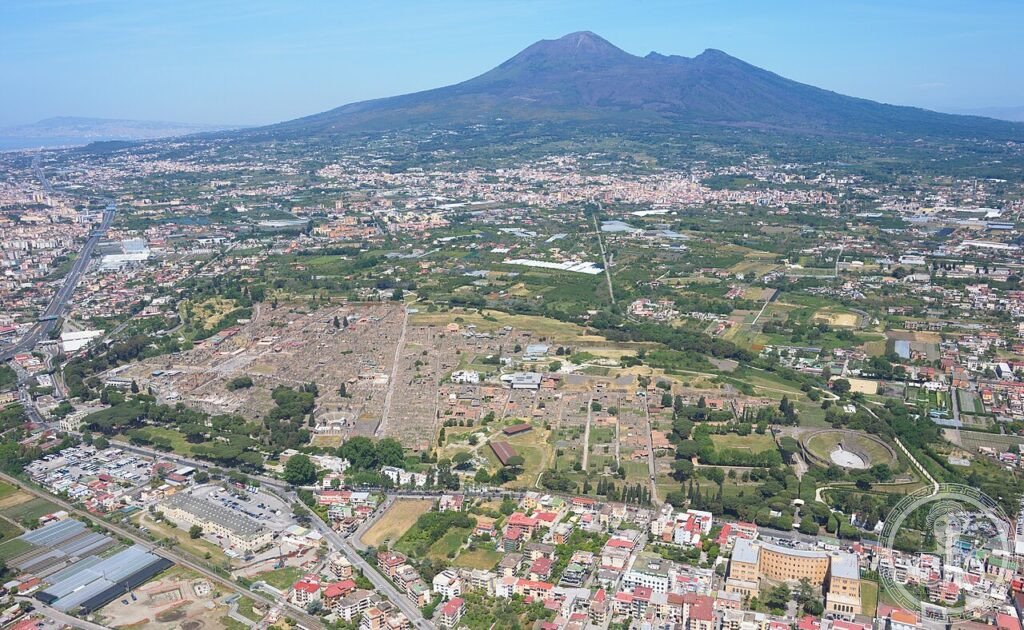
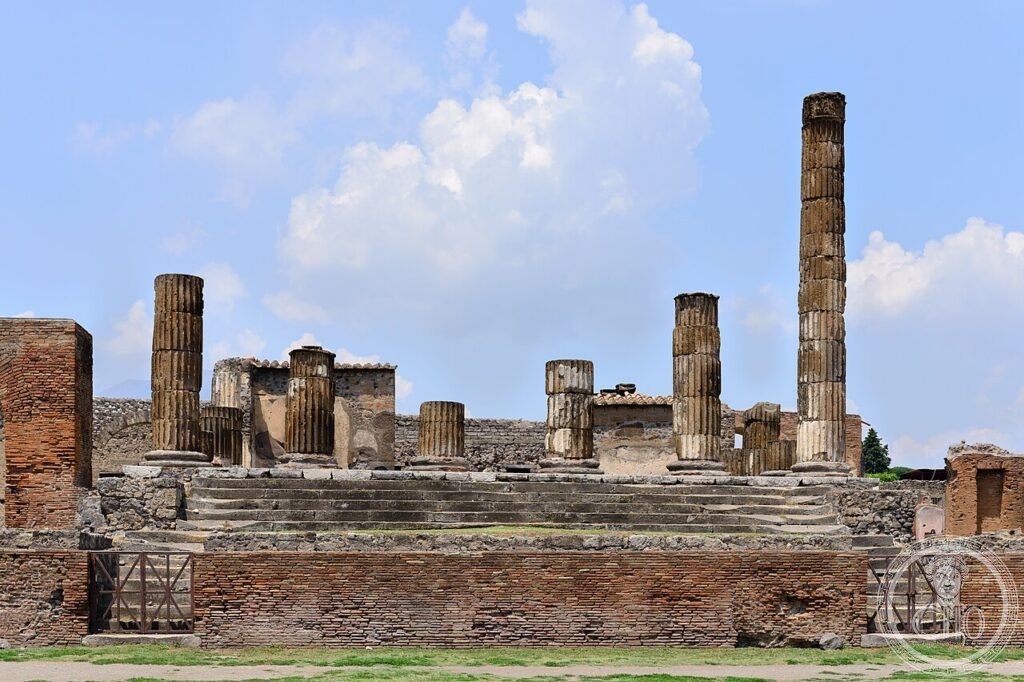
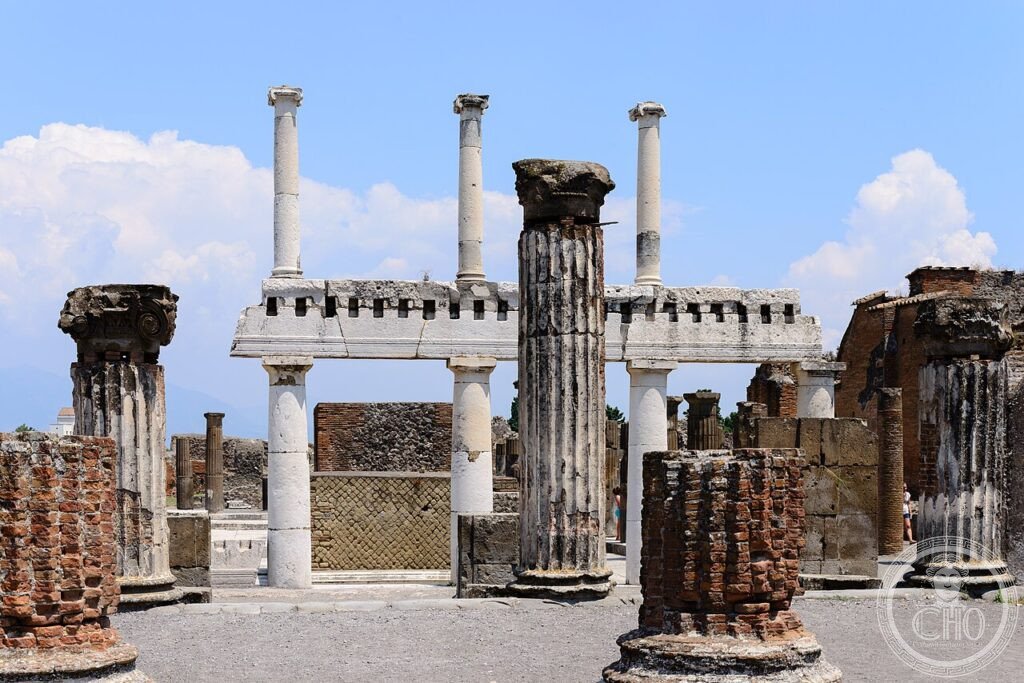
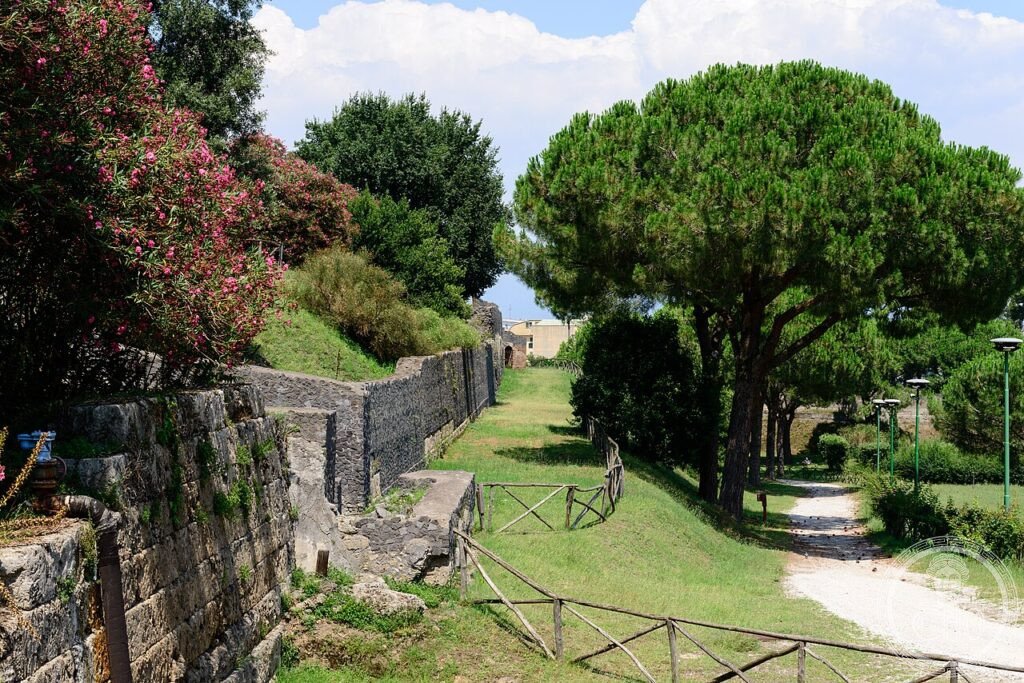
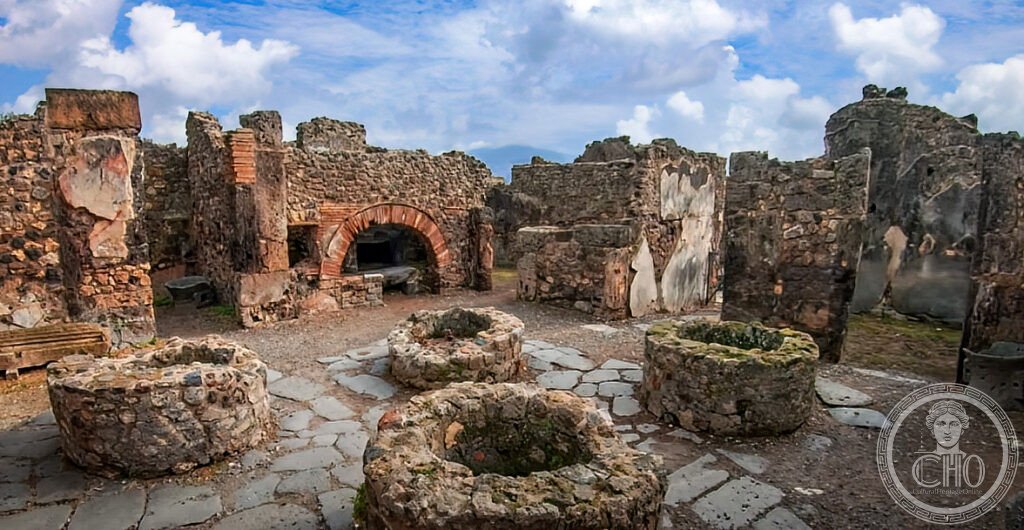
Walking Via dell'Abbondanza, Pompeii's main commercial street (ruts from cart wheels still worn into the basalt paving), visitors pass bakeries (with grain still in the millstones), thermopolia (fast-food counters with terracotta pots set into stone counters), fulleries (laundries), and bar fronts with electoral inscriptions painted directly onto the masonry. The Forum, at the northwest end of the town, opens onto the Temple of Jupiter (c. 150 BCE), the Basilica (law court, c. 120 BCE), the Temple of Apollo, and the covered market (macellum); the Vesuvius is directly framed at the end of the Forum axis. The Villa dei Misteri, 500 metres outside the Herculaneum Gate, preserves the most complete fresco cycle to survive from antiquity: a Second-Style frieze (c. 60 BCE) depicting 29 life-size figures in an initiation ritual, across three walls of a single dining room.
Herculaneum is smaller (4.5 hectares excavated) but better preserved: because the pyroclastic flows buried it more rapidly and deeply than Pompeii, organic materials including wooden furniture, doors, shutters, fabric, and the Herculaneum Papyri (c. 1,800 charred carbonised scrolls from the Villa dei Papiri, still being read with X-ray tomography) survived. The Villa dei Papiri, the most luxurious Roman suburban villa known, was the model for the Getty Villa in Malibu.
Practical information
- Pompeii: Open daily 09:00–19:00 (summer), 09:00–17:00 (winter); book at pompeiisites.org; 3–5 hours minimum
- Ercolano: Separate ticket (smaller site, less crowded); connected to Pompei by 20 min Circumvesuviana train
- Oplontis: Torre Annunziata on Circumvesuviana; often uncrowded; included in combined site ticket
- Combined ticket: Covers Pompei + Ercolano + Oplontis + Stabia; valid 3 consecutive days
- Sun and shoes: Open site with no shade; closed-toe walking shoes required; water essential in summer
Getting there
Circumvesuviana railway (Naples–Sorrento line): Pompeii Scavi station (stop “Villa dei Misteri”) is 35 minutes from Naples Piazza Garibaldi; frequent service. Herculaneum: Ercolano Scavi station, 20 minutes from Naples. Oplontis: Torre Annunziata station. By car: A3 motorway, exit Pompei Est; paid parking available. Naples Airport (NAP) is 25 km northwest.
Nearby
- Vesuvio: 8 km north — active volcano; Gran Cono crater hiking trail (1,281 m); views over Naples Bay
- Museo Archeologico Nazionale di Napoli: Finest collection of Pompeian artefacts including the Alexander Mosaic and the Secret Cabinet
- Costiera Amalfitana: 30 km south — UNESCO 1997; Amalfi, Positano, Ravello
Gallery
Sources
- UNESCO World Heritage List — Archaeological Areas of Pompeii, Herculaneum and Torre Annunziata, rif. 829, 1997
- Parco Archeologico di Pompei — pompeiisites.org
- Mary Beard, The Fires of Vesuvius: Pompeii Lost and Found, Harvard University Press, 2008
- Wikimedia Commons — CC BY-SA images of Pompeii archaeological site
Find it on the map
See this place and what’s around it →📷 Diventa un fotografo di Cultural Heritage Online
Condividi le tue foto dei luoghi: restano pubblicate con la tua firma come autore. Più vengono viste, più ti fai conoscere — e presto un concorso premierà le foto più apprezzate.
Accedi o registrati gratis per aggiungere una foto