
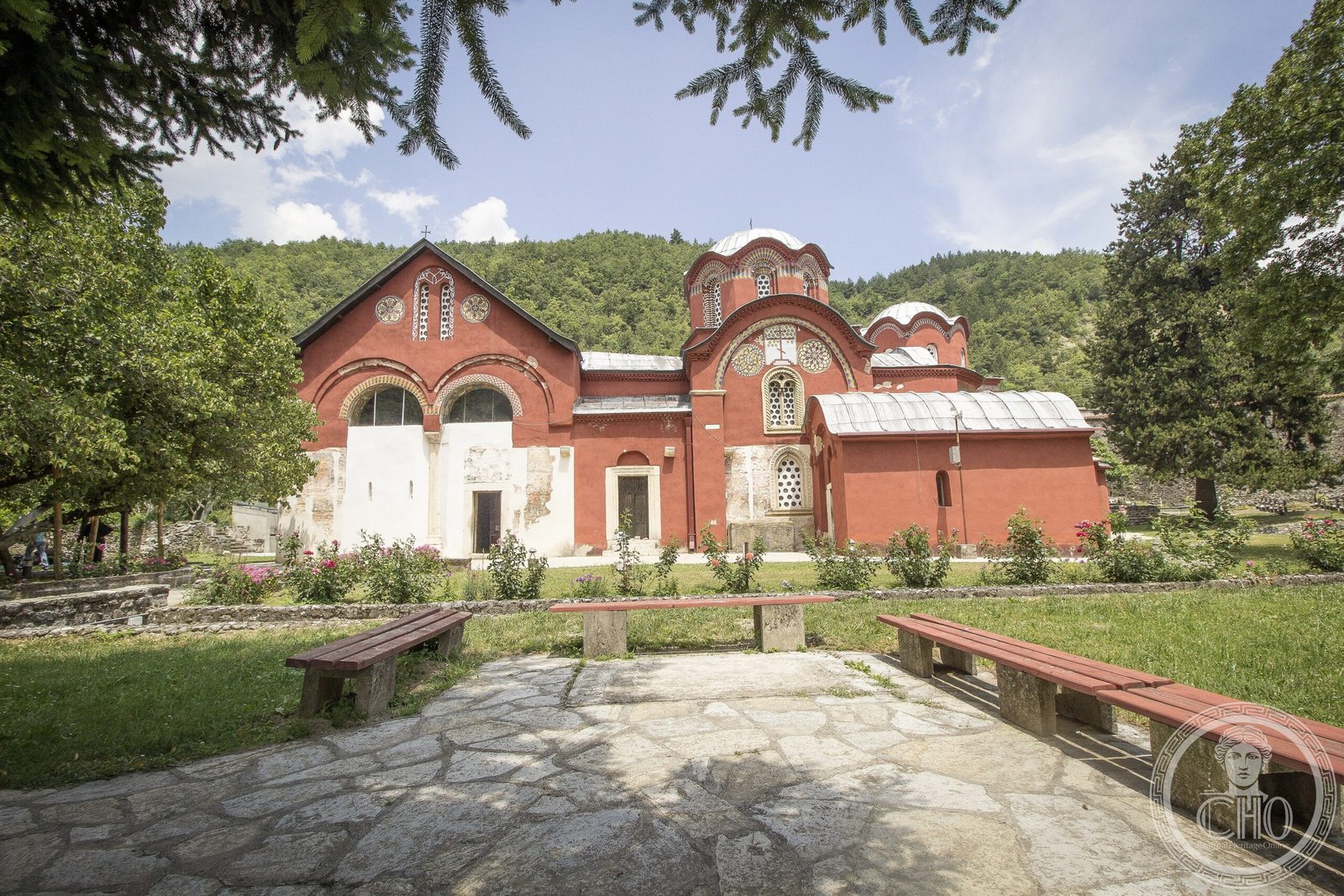
A medieval Serbian Orthodox monastery that became the spiritual and administrative seat of the Serbian Patriarchate, housing four interconnected churches in a unique architectural configuration.
At a glance
The Patriarchate of Peć Monastery stands as one of the most important ecclesiastical complexes in Serbian medieval architecture. Founded in the 13th century near Peja in Kosovo, it evolved into the principal residence and ceremonial center of the Serbian Orthodox Church—a role it continues to hold under direct jurisdiction of the Serbian Patriarch.
History
Construction began in the 13th century as a monastic community. The complex underwent significant expansion during the 14th century, establishing its architectural prominence. In 1346, when the Serbian Patriarchate of Peć was formally created, the monastery was designated as the seat of Serbian Patriarchs, elevating its canonical and political importance within the Orthodox world.
Throughout medieval and early modern times, the monastery served a dual function: as an active religious center and as a mausoleum for Serbian archbishops and patriarchs, underscoring its dynastic significance.
What you see
The monastery complex comprises four churches arranged in an innovative configuration unique to Serbian medieval design. Three churches connect as a unified spatial whole, while a fourth stands as part of the larger ensemble. This architectural arrangement reflects both liturgical needs and the monastery’s evolving ceremonial functions.
The design demonstrates sophisticated medieval building practices adapted to the specific religious and administrative requirements of the Patriarchate.
Cultural significance
The monastery embodies the continuity and authority of the Serbian Orthodox Church. Its special stavropegial status places it under direct Patriarchal jurisdiction, a privilege reflecting centuries of ecclesiastical preeminence. The traditional enthronement ceremony of newly elected Patriarchs occurs here, symbolizing an unbroken lineage extending to Saint Sava, the founder of the autocephalous Serbian Church.
As part of the “Medieval Monuments in Kosovo” UNESCO World Heritage Site, it stands alongside three other Serbian Orthodox monuments, collectively preserving a critical chapter of medieval Balkan cultural heritage.
Key facts
- Location: Peja, Serbia
- Coordinates: 42.661°N, 20.266°E
- Founded: 13th century
- Patriarchate established: 1346
- UNESCO World Heritage Site: Medieval Monuments in Kosovo (combined inscription)
- Architectural feature: Four interconnected churches
Practical information & getting there
The monastery is accessible near the city of Peja in Kosovo. As an active religious site under Patriarchal authority, visitors should observe appropriate protocols respecting its ongoing ecclesiastical function and the traditions of the Serbian Orthodox Church. For current visiting conditions and hours, consult local tourism resources or the Serbian Orthodox Church directly.
Sources & resources
Find it on the map
See this place and what’s around it →📷 Become a Cultural Heritage Online photographer
Share your photos of places: they stay published under your name as the author. The more they're seen, the more you get noticed — and soon a contest will reward the most appreciated photos.
Log in or sign up free to add a photoIs this page about you?
This page is read by travellers and heritage enthusiasts who find it on Google. Tell us how you are connected to this place and we will take it from there.