
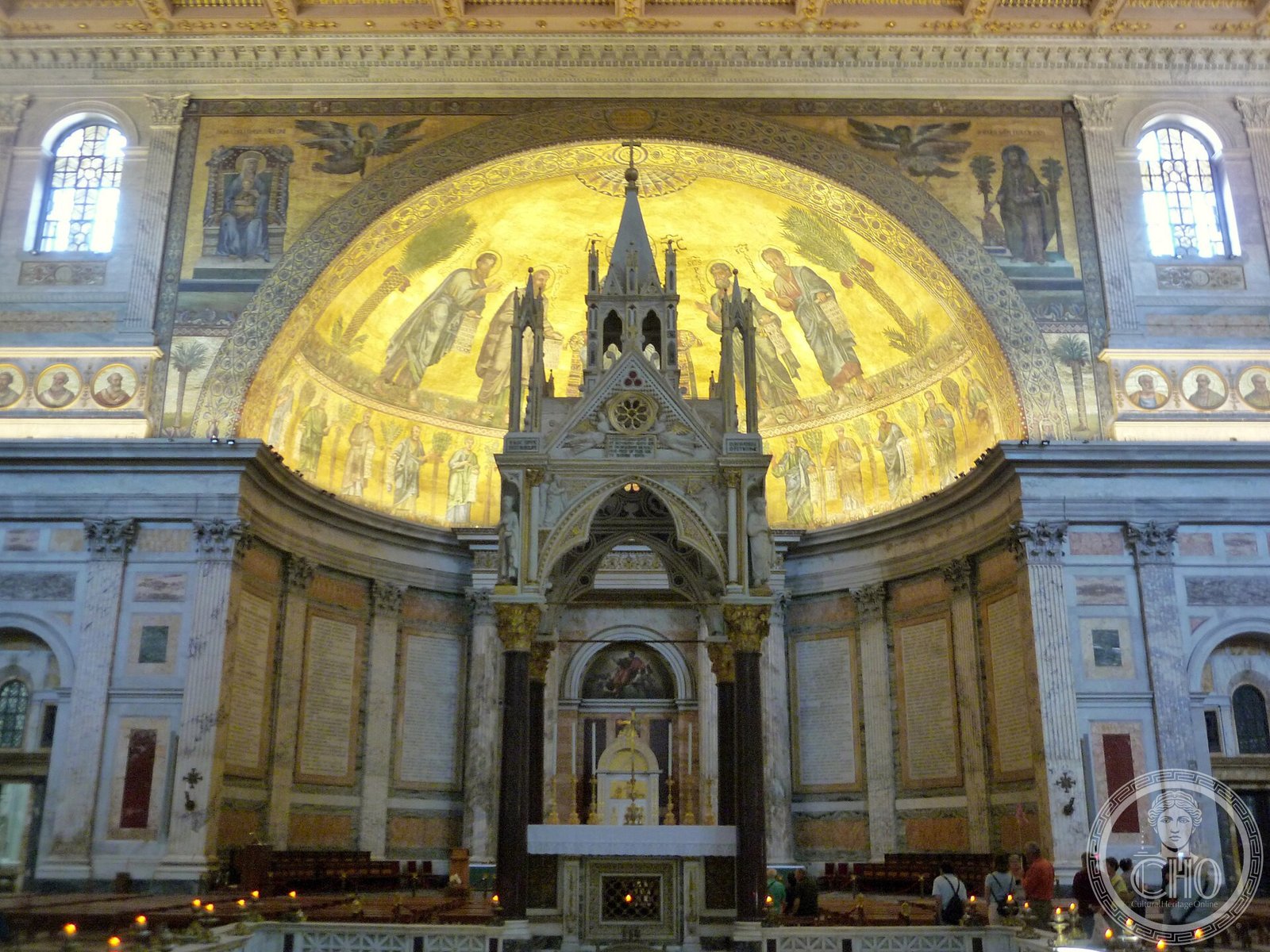
Papal Basilica of St. Paul Outside the Walls
The Papal Basilica of Saint Paul Outside the Walls is one of Rome’s four major papal basilicas, alongside Saint John in the Lateran, Saint Peter’s and Saint Mary Major, and one of the city’s Seven Pilgrim Churches. Built over the burial place of the Apostle Paul, it is the conventual church of an adjacent Benedictine abbey and stands on Italian soil under the extraterritorial ownership of the Holy See.
At a glance
- Type
- Major papal basilica and Benedictine abbey church
- Period
- Early Christian foundation; rebuilt in the 19th century
- Style
- Basilica plan, restored after fire
- Location
- Rome, Italy (Holy See extraterritorial property)
Overview
Saint Paul Outside the Walls stands on the Via Ostiense, south of the historic Aurelian Walls from which it takes its name. It is one of the four major papal basilicas of Rome and a principal goal of Christian pilgrimage. The basilica serves the Benedictine community of the abbey attached to it.
History
The basilica marks the traditional site of the Apostle Paul’s tomb and has been a centre of veneration since the earliest centuries of Christianity. It grew into one of the great churches of Rome and a fixture on the pilgrimage circuit of the Seven Churches. Today it is administered as part of the Holy See’s extraterritorial holdings within Italian territory.
What you see
The basilica is organised on a vast columned plan leading to the high altar above the apostle’s tomb. As the conventual church of the neighbouring Benedictine abbey, it combines a major place of worship with a working monastic community. Its scale places it among the largest churches in Rome.
Cultural significance
As one of the four major papal basilicas and a Seven Churches pilgrimage site, Saint Paul Outside the Walls is among the most important sacred monuments of Christendom. Its status as Holy See extraterritorial property underlines its singular place in the relationship between the Vatican and Italy.
Practical information
Via Ostiense, Rome, Italy. The basilica is open to visitors and pilgrims; for current opening hours, liturgical schedules and access to the cloister, check the official website.
Getting there
The basilica is served directly by the Rome Metro Line B station Basilica San Paolo, a short walk from the entrance. Several city bus lines along the Via Ostiense also stop nearby.
Sources & resources
Find it on the map
See this place and what’s around it →Historical events at this place (2)
📷 Diventa un fotografo di Cultural Heritage Online
Condividi le tue foto dei luoghi: restano pubblicate con la tua firma come autore. Più vengono viste, più ti fai conoscere — e presto un concorso premierà le foto più apprezzate.
Accedi o registrati gratis per aggiungere una foto