

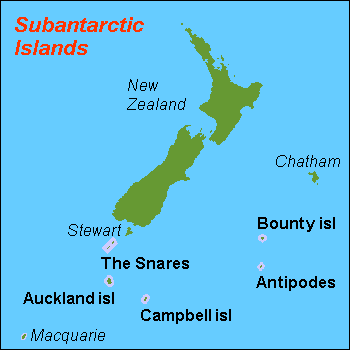
Five remote island groups at the southern edge of Zealandia preserve a distinctive subantarctic ecosystem and geological record spanning millions of years.
At a glance
The New Zealand Subantarctic Islands represent the five southernmost groups of New Zealand’s outlying islands, collectively protected as a UNESCO World Heritage Site. Located near the southeast edge of Zealandia, these islands occupy some of Earth’s most isolated waters south of the subtropical convergence.
History
The islands emerge from a geological foundation of immense age and drama. Zealandia, the largely submerged continent that anchors these islands, rifted from Australia between 60 and 85 million years ago, then separated from Antarctica 85 to 130 million years ago. This prolonged isolation has shaped the islands’ unique natural heritage over tens of millions of years.
What you see
These are natural sites, not built structures. The islands display the geological and biological character of the subantarctic zone, sharing certain features with Australia’s Macquarie Island to the west.
Cultural significance
The islands’ World Heritage designation reflects their exceptional value as a record of geological and evolutionary processes. Their remoteness and pristine condition make them laboratories for understanding subantarctic ecosystems and the deep-time geology of the southwestern Pacific.
Key facts
- Five island groups comprising the site
- UNESCO World Heritage Site
- Located at approximately 50.75°S, 166.104°E
- Part of Zealandia, rifted from Australia 60–85 million years ago
- Separated from Antarctica 85–130 million years ago
Practical information & getting there
These islands are among the most remote on Earth and are not accessible to casual visitors. Access is strictly controlled to protect the fragile ecosystem. Inquire with New Zealand Department of Conservation for information on research or authorized expeditions.
Sources & resources
Find it on the map
See this place and what’s around it →📷 Become a Cultural Heritage Online photographer
Share your photos of places: they stay published under your name as the author. The more they're seen, the more you get noticed — and soon a contest will reward the most appreciated photos.
Log in or sign up free to add a photo