
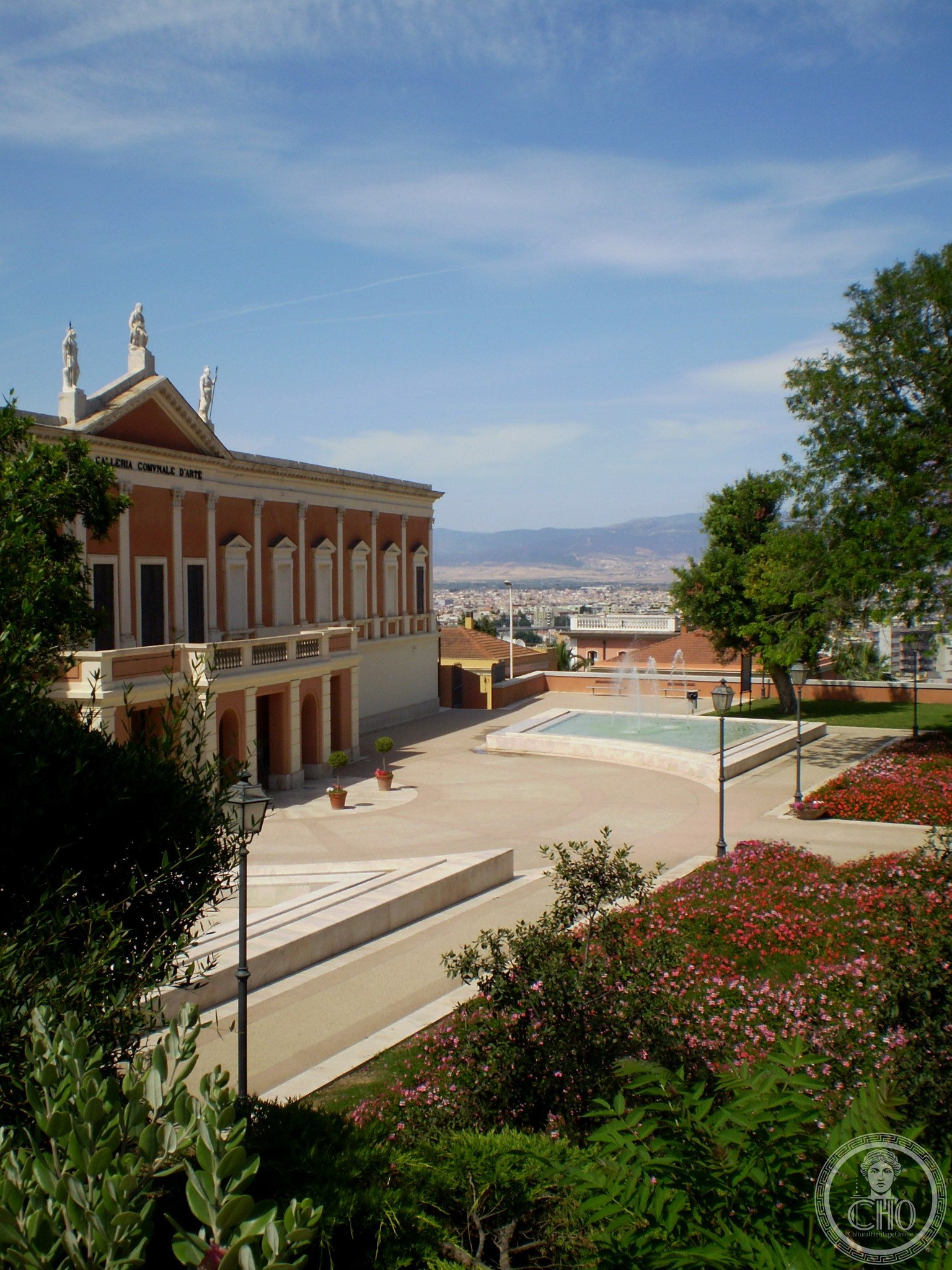
Municipal Art Gallery Museum of Cagliari
The Municipal Art Gallery Museum of Cagliari (Galleria Comunale d’Arte) is the main civic art collection of the Sardinian capital, housed in the neoclassical Padiglione delle Mostre within the Villa Comunale public gardens. Founded in 1933 and substantially expanded through gifts and purchases, the gallery specialises in Sardinian art from the late nineteenth and twentieth centuries, with a core nucleus dedicated to the work of painter Giuseppe Biasi and sculptor Francesco Ciusa, two of the most important figures in modern Sardinian culture. The museum also holds an international collection of prints donated by the Collezione Ingrao.
- Type
- Municipal art gallery (Galleria comunale)
- Period
- Founded 1933; collection covers late 19th–20th century
- Style
- Modern Sardinian painting and sculpture; international graphic arts
- Location
- Viale Regina Elena, Villa Comunale, 09124 Cagliari CA
- Coordinates
- 39.2259° N, 9.1159° E
- Current use
- Permanent civic art collection; temporary exhibitions; managed by the Municipality of Cagliari
Overview
Set within the shaded grounds of the Villa Comunale, Cagliari’s historic public garden overlooking the Tyrrhenian coast, the Galleria Comunale d’Arte presents five decades of Sardinian artistic identity through painting, sculpture, and printmaking. The museum’s twin strengths — Sardinian modernism and the Ingrao international print collection — make it the most versatile civic collection on the island. Rotating temporary exhibitions complement the permanent galleries, placing Sardinian production in dialogue with broader European currents.
History
The gallery was established in 1933 when the Municipality of Cagliari committed to building a permanent showcase for Sardinian art at a time when the island’s painters were gaining recognition on the mainland. Early acquisitions centred on works exhibited at national shows, including pieces by Giuseppe Biasi, whose sensuous depictions of Sardinian peasant life in vibrant colour had attracted attention at the Venice Biennale. The Ingrao collection of graphic arts, donated in the later twentieth century, added an international dimension that extended the gallery’s scope beyond regional boundaries.
What you see
The permanent collection is anchored by the works of Giuseppe Biasi (1885–1945), whose paintings of Sardinian festivals, costumes, and landscapes are displayed alongside the monumental sculptures of Francesco Ciusa (1883–1949), best known for his prize-winning bronze La Madre dell’Ucciso (Mother of the Slain). The international print collection in the Ingrao section surveys early twentieth-century graphic art across Europe and the Americas, offering an unexpected cosmopolitan counterpoint to the Sardinian nucleus.
Cultural significance
The gallery is the primary institutional guardian of modern Sardinian visual art, preserving a body of work that articulates the island’s cultural distinctiveness during the decades of its integration into unified Italy. Biasi’s images of traditional Sardinian dress and ritual have become iconic representations of island identity, while Ciusa’s bronze sculptures gave Sardinian artists their first major presence at the Venice Biennale in 1907.
Practical information
The gallery is located in the Padiglione delle Mostre inside the Villa Comunale gardens, near the waterfront promenade. Check the official website of the Municipality of Cagliari for current opening hours and admission prices. The surrounding park is free to enter and offers pleasant walking before or after your visit.
Getting there
The Villa Comunale is a short walk from Piazza Yenne along Viale Regina Elena, at the edge of the Stampace district. CTM buses serving the city centre stop nearby. The seafront area has public parking along the Poetto road. The museum is accessible by foot or bicycle from the central train station in approximately fifteen minutes.
Sources & resources
Find it on the map
See this place and what’s around it →📷 Diventa un fotografo di Cultural Heritage Online
Condividi le tue foto dei luoghi: restano pubblicate con la tua firma come autore. Più vengono viste, più ti fai conoscere — e presto un concorso premierà le foto più apprezzate.
Accedi o registrati gratis per aggiungere una foto