
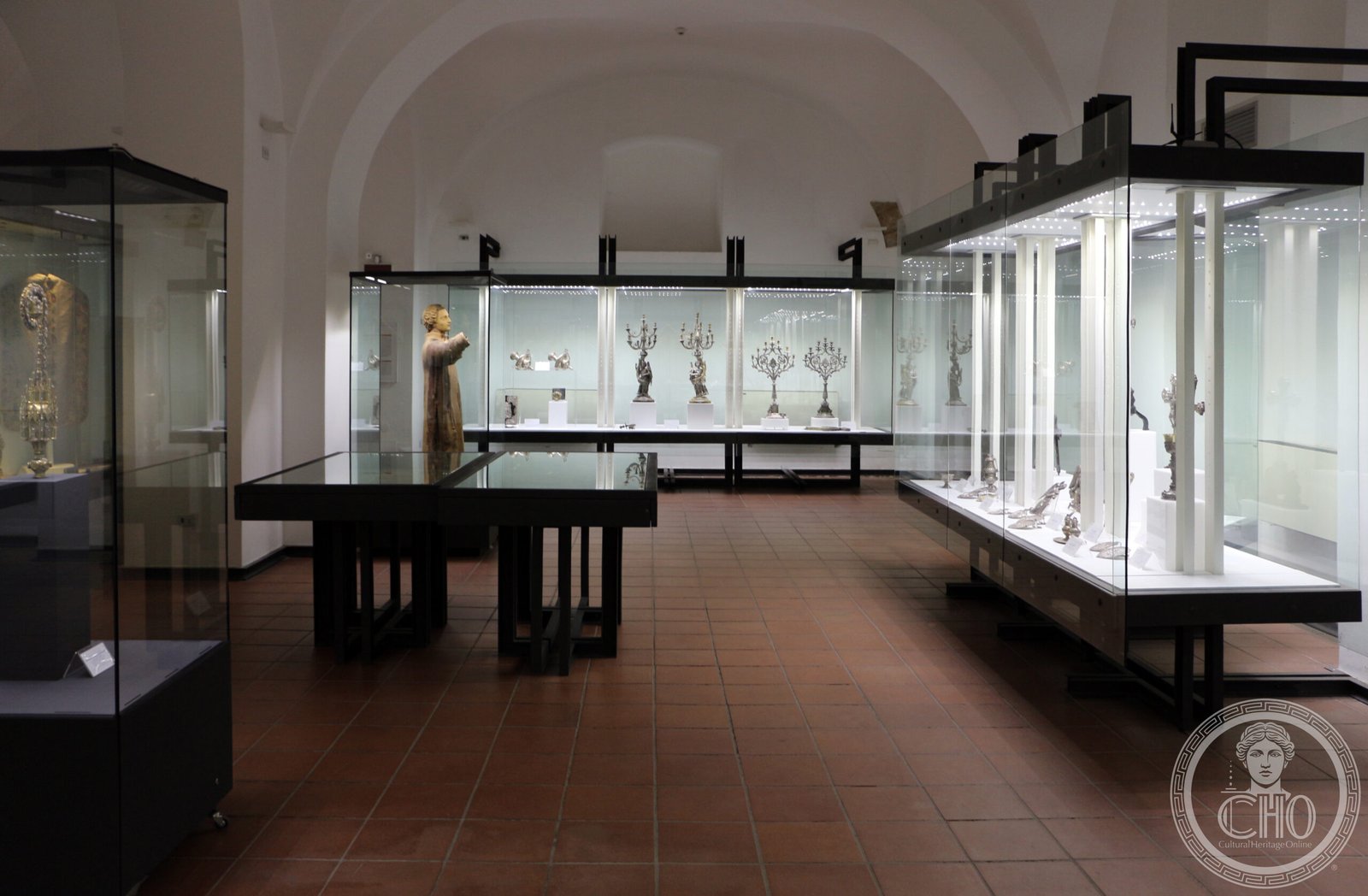
Diocesan Museum of Reggio Calabria
The Diocesan Museum of Reggio Calabria preserves the artistic and liturgical heritage of one of Italy’s oldest archdioceses, gathering sacred objects, paintings, goldsmithing, vestments, and documents that document two millennia of Christian presence in the Strait of Messina region. Housed in the historic centre of Reggio Calabria, the museum complements the city’s renowned National Archaeological Museum by extending the record of human culture from antiquity into the medieval and modern religious tradition.
At a glance
- Type
- Diocesan museum of religious art and heritage
- Period
- Collections spanning early Christian period to 20th century
- Style
- Religious art: Byzantine, Norman, Baroque, Neoclassical
- Location
- Reggio Calabria, Calabria (38.1057° N, 15.6427° E)
Overview
Reggio Calabria stands at one of the Mediterranean’s most strategic crossings, facing Sicily across the Strait of Messina, and its archdiocese has been among the most historically active in southern Italy. The city suffered catastrophic earthquakes in 1783 and 1908 that destroyed most of its older fabric, making the survival of any pre-modern religious objects particularly precious. The Diocesan Museum was established to gather and protect the artistic patrimony that survived these disasters, along with objects recovered from churches across the wider metropolitan territory.
History
Christianity reached the area of Reggio Calabria during the 1st century AD, and the local church traces its origins to apostolic times. The medieval period saw the archdiocese accumulate significant artistic wealth through donations from Norman, Aragonese, and Spanish patrons. The 1783 and 1908 earthquakes caused enormous losses, but the Diocesan Museum has since assembled a collection that documents the long arc of sacred art production in the region from early medieval icons and Byzantine silverwork to Baroque altarpieces and 18th-century goldsmithing.
What you see
The collection includes illuminated manuscripts, liturgical vestments embroidered in silk and gold thread, processional crosses and reliquaries in silver and gilded copper, and panel paintings ranging from Byzantine-influenced icons to Counter-Reformation altarpieces. Particular highlights are the pieces that survived the 1908 earthquake — among the most destructive seismic events in European history — and objects recovered from rural chapels and churches throughout the province. Architectural fragments and inscriptions round out the display.
Cultural significance
As a repository of objects that would otherwise be lost to the earthquakes of 1783 and 1908, the Diocesan Museum plays an irreplaceable role in preserving the collective memory of Calabrian Christian communities. Its collections also shed light on the multicultural religious history of a region that saw Byzantine Greek, Latin, and later Norman and Spanish Catholic traditions in close proximity for centuries.
Practical information
- Address
- Reggio Calabria, Italy
- Opening hours
- Check official website or contact the Archdiocese of Reggio Calabria-Bova
- Admission
- Check official website for current prices
- Coordinates
- 38.1057° N, 15.6427° E
Getting there
Reggio Calabria is the southernmost city on the Italian mainland, served by Reggio Calabria Airport (REG) and by mainline and high-speed rail from Naples, Rome, and Milan via the Trenitalia network. The city centre is compact and walkable; the museum is in the historic district reachable on foot from the central Piazza Italia. Ferry and hydrofoil services connect to Messina in Sicily.
Sources & resources
Find it on the map
See this place and what’s around it →📷 Diventa un fotografo di Cultural Heritage Online
Condividi le tue foto dei luoghi: restano pubblicate con la tua firma come autore. Più vengono viste, più ti fai conoscere — e presto un concorso premierà le foto più apprezzate.
Accedi o registrati gratis per aggiungere una foto