
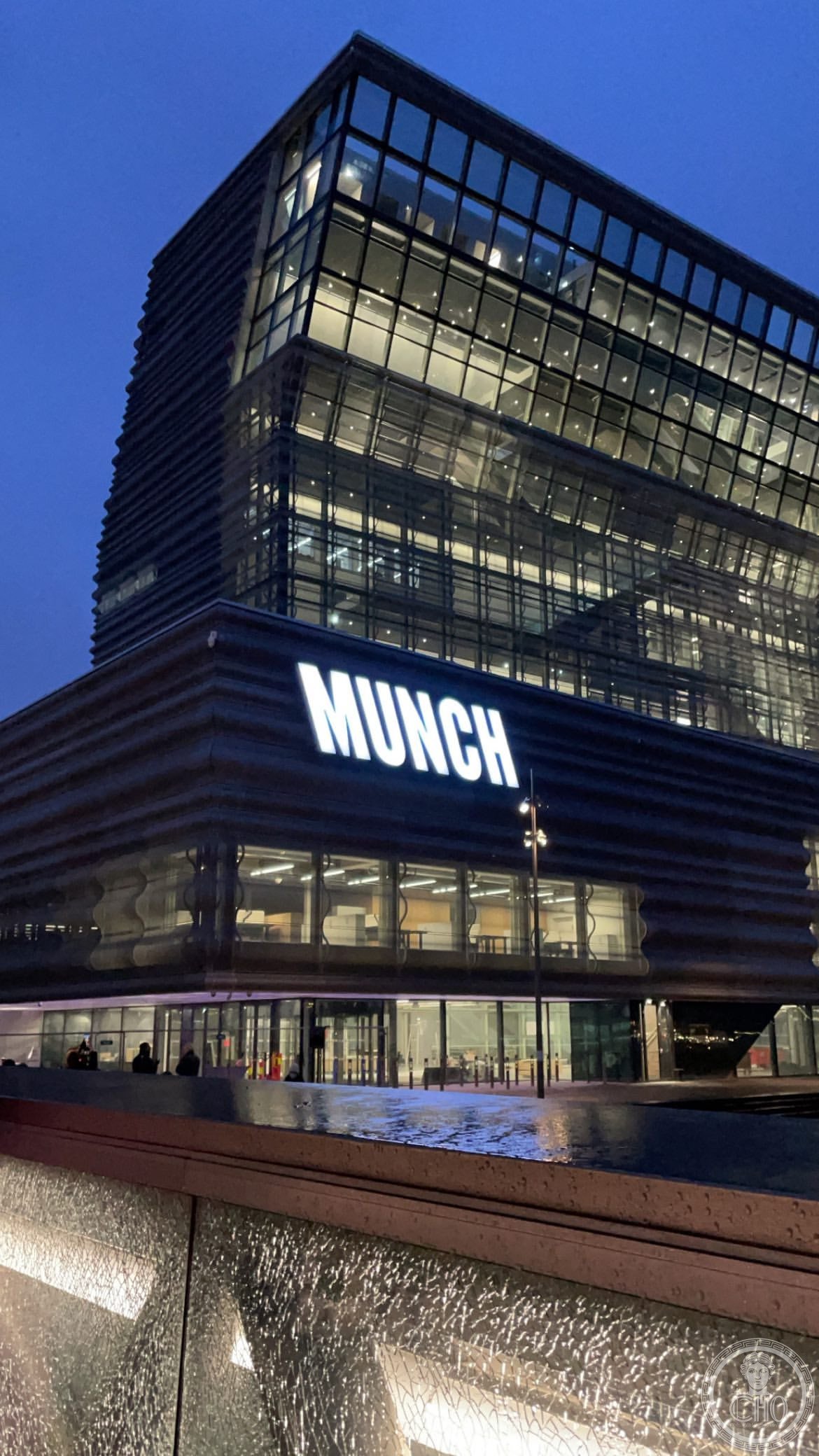
Munch Museum
The Munch Museum (Munchmuseet) in Oslo is the world’s largest repository of works by Edvard Munch (1863–1944), housing more than 26,000 artworks bequeathed by the artist to the City of Oslo at his death. Reopened in 2021 in a striking 13-storey tower on the Bjørvika waterfront, the new museum presents rotating selections from its encyclopaedic collection alongside temporary exhibitions, and offers unobstructed views of the Oslo Fjord from its upper levels.
At a glance
- Type
- Monographic art museum
- Period
- Collection spans 1880–1944; new building opened 2021
- Style
- Contemporary architecture (Estudio Herreros, Madrid); 13-storey cantilevered tower
- Location
- Edvard Munchs plass 1, 0194 Oslo, Norway
- Coordinates
- 59.9056° N, 10.7552° E
Overview
The Munch Museum holds by far the largest collection of works by Edvard Munch, including two versions of his iconic painting The Scream (1893 and 1910), as well as thousands of drawings, prints, watercolours, letters, and diaries. The collection was bequeathed by Munch to the City of Oslo in his will; the original Munch Museum in Tøyen served from 1963 until the move to Bjørvika. The new 26,000-square-metre building by Spanish firm Estudio Herreros is clad in perforated aluminium panels and leans dramatically over the waterfront, making it one of Norway’s most architecturally bold cultural institutions.
History
Edvard Munch bequeathed his entire studio — paintings, drawings, prints, and personal archive — to the City of Oslo when he died in January 1944. The original Munch Museum opened in Tøyen in 1963 and housed the collection for nearly sixty years. In 2004 two thieves stole the 1893 version of The Scream and a Madonna from the museum at gunpoint; both works were recovered undamaged in 2006. The decision to build a larger, more secure museum in the new Bjørvika cultural district was taken in the 2010s; construction by Estudio Herreros began in 2016 and the museum opened to the public in October 2021.
What you see
Thirteen levels of exhibition space present thematic and chronological selections from the collection, focusing on major series such as the Frieze of Life (which includes The Scream, Madonna, and The Kiss), Munch’s expressionist landscapes, and his late self-portraits. A dedicated room houses the two Scream versions under carefully controlled light conditions. The building’s cantilevered upper floors contain a restaurant with panoramic fjord views, while the ground floor is publicly accessible without a ticket, offering views into the atrium and access to a museum shop. Temporary exhibitions occupy dedicated floors and rotate regularly.
Cultural significance
Edvard Munch is Norway’s most celebrated visual artist and one of the founding figures of Expressionism; The Scream is among the most recognised images in the history of Western art. The Munch Museum is therefore both a pillar of Norwegian national identity and a globally significant institution for the study of modern art. Its new building at Bjørvika anchors Oslo’s transformation of its post-industrial waterfront into a cultural destination of international standing.
Practical information
- Address
- Edvard Munchs plass 1, 0194 Oslo, Norway
- Hours
- Check official website for current opening hours; open most days of the year
- Admission
- Check official website for current ticket prices; ground floor free
Getting there
The museum is a ten-minute walk from Oslo Central Station along the Bjørvika waterfront, or reachable via tram line 13 (Bjørvika stop). From Aker Brygge, the waterfront promenade links directly to Bjørvika in approximately 25 minutes on foot. The Oslo Opera House is immediately adjacent.
Sources & resources
Find it on the map
See this place and what’s around it →📷 Diventa un fotografo di Cultural Heritage Online
Condividi le tue foto dei luoghi: restano pubblicate con la tua firma come autore. Più vengono viste, più ti fai conoscere — e presto un concorso premierà le foto più apprezzate.
Accedi o registrati gratis per aggiungere una foto