
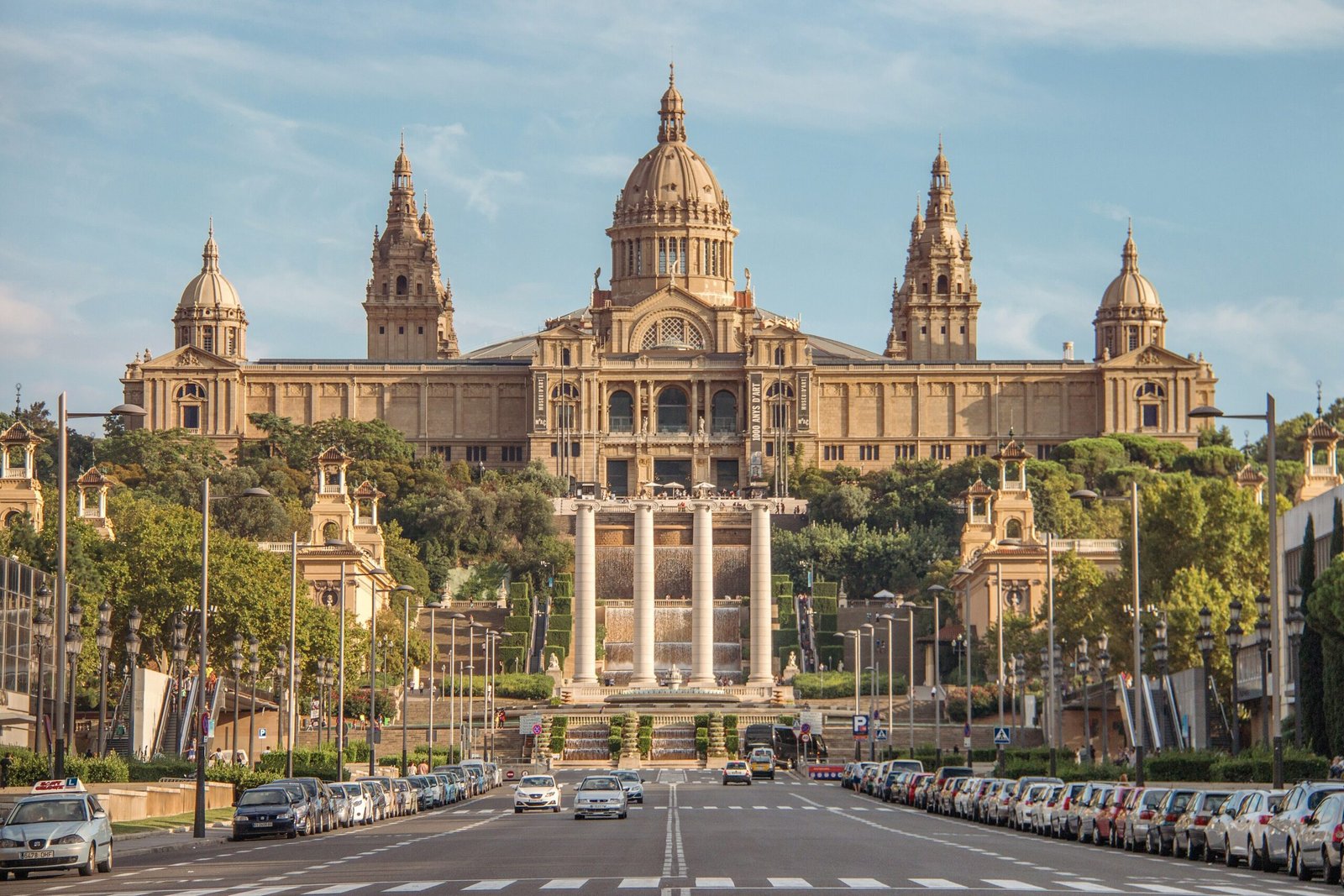
Palau Nacional — MNAC
A monumental palace above the city, holding the world’s finest collection of Romanesque murals.
At a glance
Crowning Montjuïc above Plaça d’Espanya, the Palau Nacional was built for the 1929 International Exhibition and now houses the Museu Nacional d’Art de Catalunya (MNAC). Behind its domed, classical front lies a thousand years of Catalan art — and, above all, an unmatched gallery of Romanesque frescoes rescued from Pyrenean churches. The approach, up the monumental steps past the Magic Fountain, is half the experience.
Key facts
- Built: 1929, for the International Exhibition
- Houses: the Museu Nacional d’Art de Catalunya (MNAC)
- Star collection: Romanesque murals from Catalan churches
- Setting: above the Magic Fountain and Plaça d’Espanya
History
The palace was the centrepiece of the 1929 Expo that reshaped Montjuïc. Rather than demolish it afterward, the city turned it into a museum, eventually consolidating Catalonia’s national art collection here. The Romanesque frescoes — detached from remote mountain churches in the early twentieth century to save them — are its treasure.
What you see
The vast central hall sits under the dome; galleries run through Romanesque, Gothic, Renaissance and Baroque to a strong Modern collection. The reconstructed church apses, lit to show the frescoes in their curved settings, are unforgettable. Outside, the terrace gives one of the great panoramas of Barcelona.
Practical information
- Access: ticketed museum; closed Mondays; rooftop terrace accessible.
- Arrive: via Plaça d’Espanya and the escalators up the hill.
- Evening: pair with the Magic Fountain show (seasonal).
- Time needed: 2 hours.
Nearby
Sources
- Wikipedia (English): Palau Nacional; Museu Nacional d’Art de Catalunya.
- Coordinates: 41.3683, 2.1533.
Find it on the map
See this place and what’s around it →📷 Diventa un fotografo di Cultural Heritage Online
Condividi le tue foto dei luoghi: restano pubblicate con la tua firma come autore. Più vengono viste, più ti fai conoscere — e presto un concorso premierà le foto più apprezzate.
Accedi o registrati gratis per aggiungere una foto