
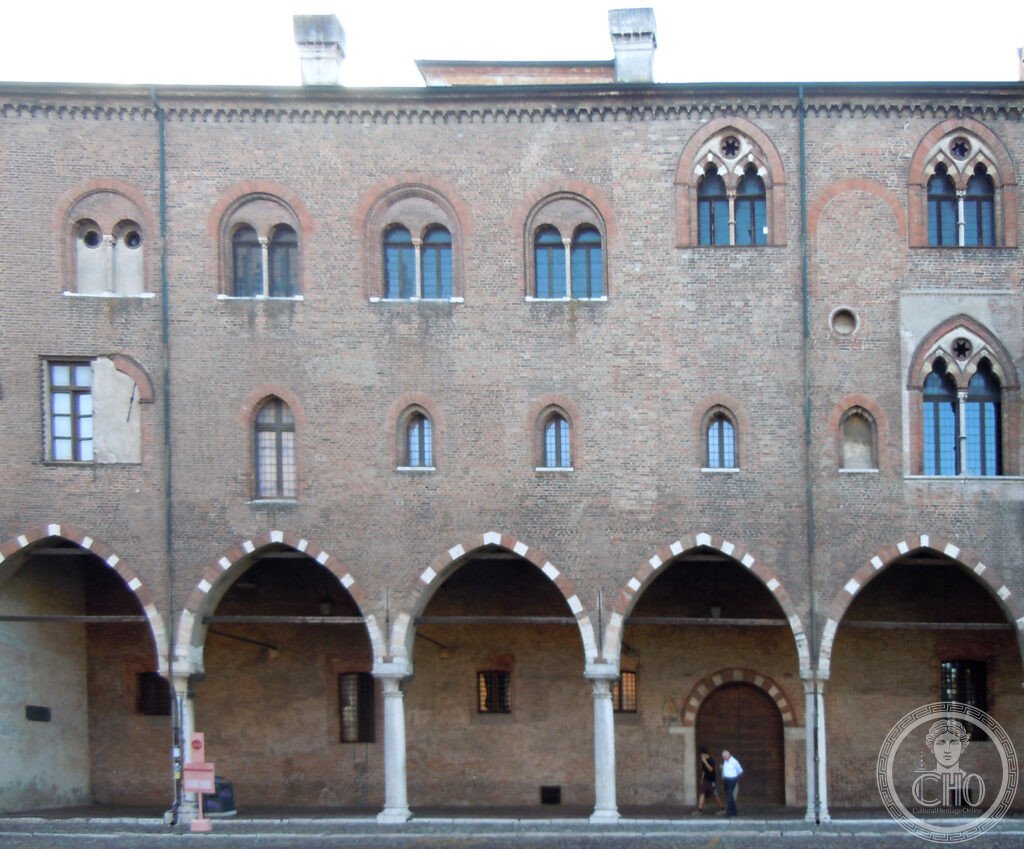
Mantova e Sabbioneta
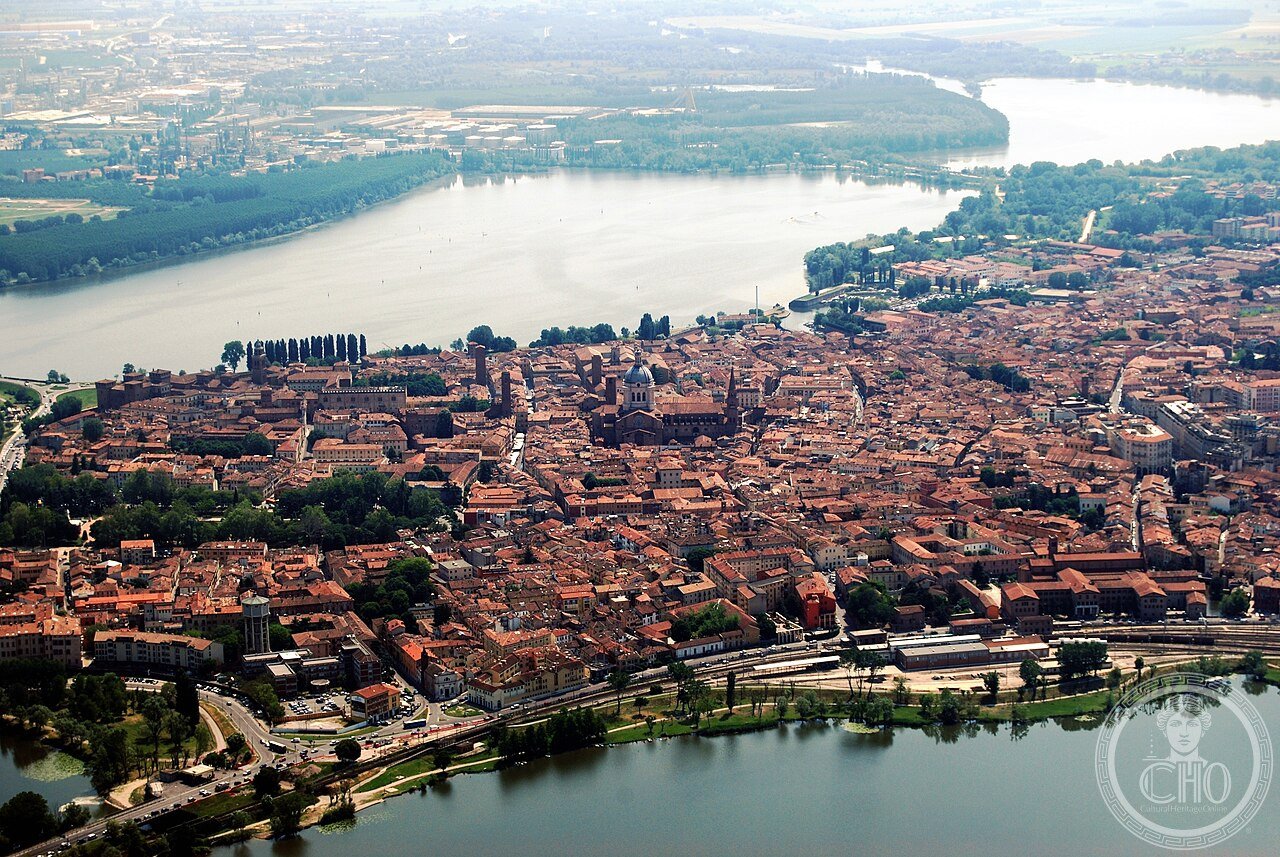
Mantova e Sabbioneta (UNESCO 2008, rif. 1287) incarnano due visioni diverse della “città ideale” rinascimentale: Mantova è la città organica cresciuta attorno alla corte dei Gonzaga per 400 anni (1328–1707 CE), con il Palazzo Te di Giulio Romano (1525 CE) e la Camera degli Sposi di Mantegna (1474 CE); Sabbioneta è la città costruita dal nulla in 37 anni (1554–1591 CE) da Vespasiano Gonzaga come città pianificata ex-novo — la più completa città ideale del Rinascimento italiano.
At a glance
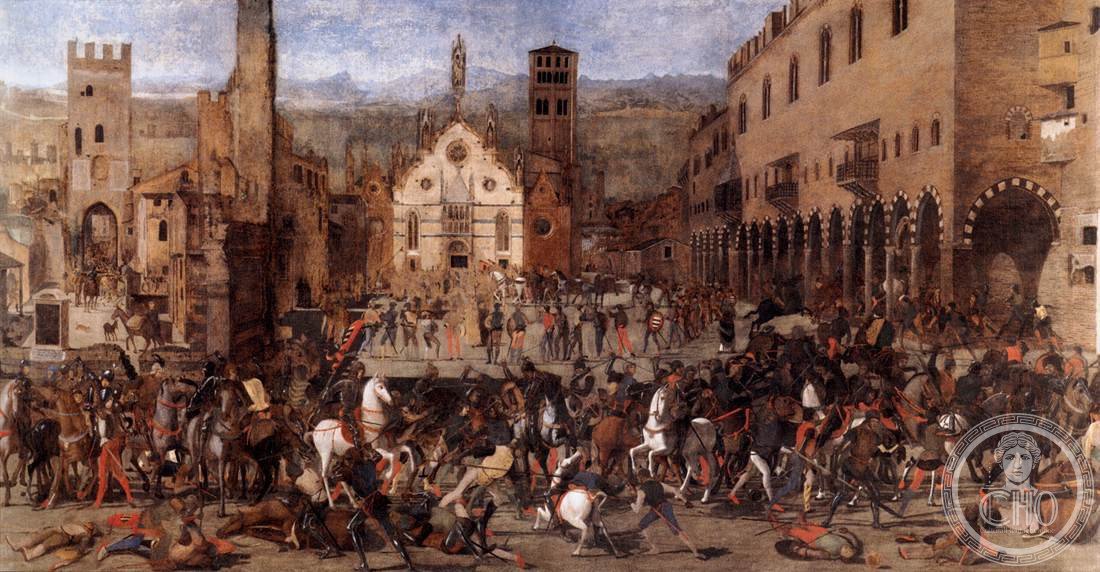
Mantova Sabbioneta Lombardia (the most precisely Mantova zone Mantova Lombardia Italy 45.1562 N 10.7834 E UNESCO WHS 2008 reference 1287 Mantua and Sabbioneta: the site (2 components: (1) Mantova (the city of Mantua: population 47,000; the perimeter of the UNESCO historic centre: 3.5 km around the peninsula; the key monuments: the Palazzo Ducale (500 rooms; 34,000 m²; the largest palace in Italy by room count); Palazzo Te (Giulio Romano, 1525–1535 CE); the Basilica di Sant’Andrea (Leon Battista Alberti, 1472 CE; the nave: 27 m high × 19 m wide; the largest barrel-vaulted nave in Italy); the Rotonda di San Lorenzo (1082 CE; the oldest circular church in Lombardy; the Byzantine-style interior with 2 tiers of columns)); (2) Sabbioneta (the “ideal city” built by Vespasiano Gonzaga (1531–1591 CE): a hexagonal walled city 40 km from Mantova; population today: 4,200; the monuments (the 5 UNESCO monuments of Sabbioneta): the Palazzo Ducale (1565 CE; the “Sala d’Oro” with the gold-leaf ceiling), the Galleria degli Antichi (1584 CE; the museum for Vespasiano’s sculpture collection), the Teatro Olimpico (1588 CE; Vincenzo Scamozzi (the student of Andrea Palladio); the second Renaissance theatre after the Teatro Olimpico of Vicenza (1585 CE; Palladio’s last work); 800 seats; the fixed stage set: a single-point perspective cityscape of Sabbioneta itself; still in use for theatrical performances), the Church of the Incoronata (1588 CE; the personal chapel of Vespasiano), the Palazzo del Giardino (1573 CE))); the Gonzaga family (the ruling family of Mantova 1328–1707 CE: 379 years of uninterrupted government; the dynasty began with Luigi I Gonzaga (the murder of Passarino Bonacolsi on 16 August 1328 CE in the Piazza Sordello (the piazza in front of the Palazzo Ducale): the Gonzaga takeover of power; the eyewitness account: the chronicles of Giovanni Villani (1280–1348 CE) describe the palace coup); the dynasty ended with Ferdinando Carlo Gonzaga (expelled by the Emperor in 1707 CE after supporting the French against the Habsburgs in the War of Spanish Succession)).
Key facts
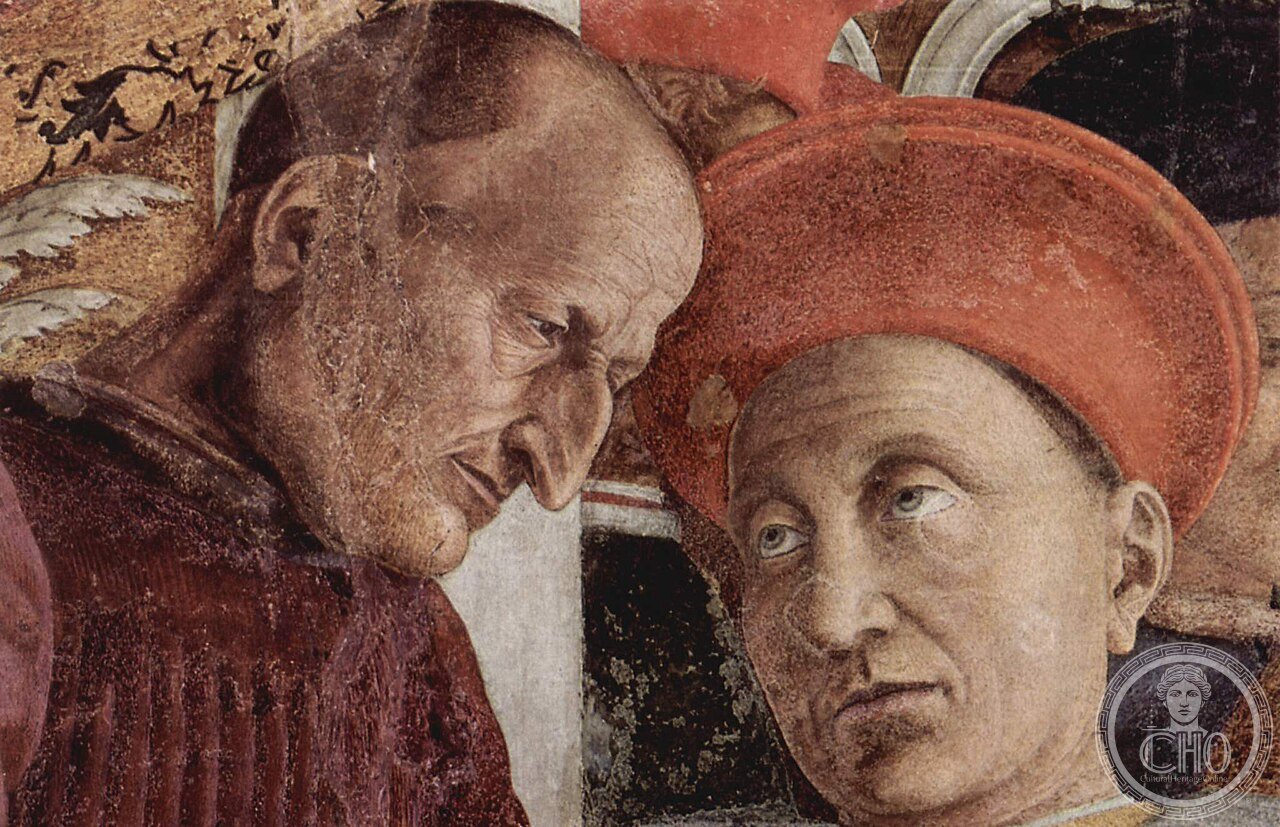
- La Camera degli Sposi di Mantegna (1474 CE) e il primo trompe-l’oeil del Rinascimento: come il foro illusionistico sul soffitto cambiò la storia della pittura europea: the Camera degli Sposi (the “Camera Picta” in Mantegna’s original name: the painted room in the Palazzo Ducale; the Castle of San Giorgio tower, second floor; dimensions: 8 m × 8 m; height 7 m; painted 1465–1474 CE (9 years: Mantegna worked on the Camera degli Sposi for 9 years intermittently while completing other commissions for Ludovico II Gonzaga); the patrons: Ludovico II Gonzaga (1412–1478 CE) and his wife Barbara of Brandenburg; the content: the 2 main painted walls show scenes of the Gonzaga court: (1) the “Camera di Corte” (the throne room scene: Ludovico II receiving a letter while his family and court watch; 18 identifiable portraits including the young Francesco Gonzaga (future cardinal); the dogs (the hound in the foreground = Rubino, Ludovico II’s personal hunting dog: Mantegna painted him from life; the dog is in profile, an unusual pose); (2) the “Scena dell’Incontro” (the meeting between Ludovico II and his son Francesco (recently made Cardinal) outside Mantua); the ceiling (the “oculus illusionistico”: the most innovative element: a painted circular opening (3 m diameter) in the center of the vault ceiling showing a sky with clouds, a balcony railing, and women and cherubs looking down at the viewer from above; the innovation: the first painted ceiling in European art where the viewer’s eye is deceived into seeing real space above them (the “sotto in su” (below looking up) technique: only 2 earlier examples: (1) the oculus of the Pantheon (27 BCE: a real opening, not painted); (2) a fresco by Guariento (c.1354 CE) in Padua: unpersuasive); Mantegna’s oculus directly inspired Correggio (the dome of the Duomo di Parma: 1526 CE; the first fully illusionistic painted dome: the “Assumption of the Virgin” from below))
- GPS (Piazza Sordello, Mantova — accesso Palazzo Ducale): 45.1562° N, 10.7834° E
History
Da Virgilio 70 BCE al UNESCO 2008 (the most precisely Mantova zone history: the ancient history (Mantova: the Latin name from the Etruscan “Manthva”; the city was founded by the Etruscans (7th century BCE); the Roman Mantua: the birthplace of Virgil (Publius Vergilius Maro: born October 15, 70 BCE, at Andes (modern Pietole), 3 km from Mantua; died September 21, 19 BCE, at Brindisi, on his return from Greece; buried on the Via Puteolana near Naples (the “Tomba di Virgilio”: the tomb later became a pilgrimage site; the Dantean reference (Purgatorio Canto VI, ll.71–78: “O Mantovano, io son Virgilio”)))); the Gonzaga period (1328–1707 CE: the Gonzaga as patrons: (1) Andrea Mantegna (1431–1506 CE): court painter 1460–1506 CE (46 years): the longest tenure of any Renaissance court painter; (2) Giulio Romano (1499–1546 CE): the student of Raphael; Gonzaga court architect and designer 1524–1546 CE; the Palazzo Te (1525–1535 CE): the “pleasure palace” of Federico II Gonzaga; the Sala dei Giganti (the “Room of the Giants”: 12 m × 12 m; Giulio Romano 1530–1532 CE: the room is a single continuous fresco covering all 4 walls + the ceiling + the floor (the floor fresco was destroyed in the 17th century CE): the depicted myth (the Gigantomachy: Zeus’s defeat of the giants who tried to storm Olympus): the composition shows the giants crushed under falling columns and thunder; the trompe-l’oeil effect: the columns painted as if they are falling into the room toward the viewer)); (3) Leon Battista Alberti (1404–1472 CE): Gonzaga architect for the Basilica di Sant’Andrea (designed 1470 CE; built 1472–1788 CE)); the UNESCO inscription (2008 CE: reference 1287).
What you see
Il Palazzo Ducale, la Camera degli Sposi, il Palazzo Te, la Basilica di Sant’Andrea, poi Sabbioneta (the most precisely Mantova zone visit (1.5 days): Day 1 — Mantova: the Palazzo Ducale (ticket €15; open 8:15–19:15 Tue–Sun; the Camera degli Sposi: pre-booking MANDATORY (coopculture.it; limited to 30 visitors/15 minutes; book 2–3 weeks ahead in summer); the Appartamento Ducale: 20 rooms open to the public; the Isabella d’Este Studiolo: the intimate suite of Isabella d’Este (1474–1539 CE): the 2 intarsia-paneled rooms (inlaid wood from 1497 CE) with the Triumphs of Caesar (Mantegna; the 9 canvases of the Caesar triumphal procession: now at Hampton Court, London; the rooms have replica images)); the Palazzo Te (Viale Te 13; €12; open Mon 13:00–18:00, Tue–Sun 9:00–18:00; the Sala dei Giganti: the single fresco room (see Key Facts); the Sala di Psiche: the erotic frescoes celebrating Federico II’s relationship with his mistress Isabella Boschetti (1529 CE)); Day 2 — Sabbioneta (40 km; APAM bus from Mantova Piazzale Porta Pradella (40 min; €4.00; Mon–Sat; Sun: no direct bus; car/taxi only); the UNESCO Sabbioneta: €10 (the ticket includes all 5 UNESCO monuments + guide in Italian and English; book at Ufficio Turistico di Sabbioneta, Piazza Ducale)).
Practical information
- Come prenotare la Camera degli Sposi e come raggiungere Sabbioneta da Mantova senza auto: il trasporto (Verona → Mantova: Trenitalia (25 min; €3.90; 2 treni/ora); Milano → Mantova: Trenitalia (2h; €9; con cambio a Verona); la Camera degli Sposi (prenotazione obbligatoria su coopculture.it o +39 0376 323 860; ingresso ogni 15 minuti (30 visitatori per slot); la finestra di prenotazione: 90 giorni in anticipo; i slot migliori: 9:00, 9:15, 9:30 (prima dell’afflusso); mai prenotare oltre le 13:00 (la luce del pomeriggio entra dalla finestra ovest e abbaglia le pareti nord); Sabbioneta (bus APAM da Mantova: il bus 3 (la linea Mantova-Sabbioneta) parte da Piazzale Porta Pradella alle 6:30/7:30/12:30/14:30 da lun-sab; il ritorno: 7:45/13:45/17:15/19:15; domenica = no bus (taxi da Mantova: €35 A/R via Uber/taxi)); il consiglio notte (Mantova: hotel a partire da €60/notte; il B&B nel centro storico: Ca’ delle Erbe (Via Corridoni 49))
Getting there
Trenitalia da Verona (25 min, €3.90) o Milano (2h, €9). GPS: 45.1562/10.7834. Palazzo Ducale €15 (Camera degli Sposi: prenotazione obbligatoria). Sabbioneta: bus APAM 40 min.
Nearby
- Verona (UNESCO 2000 rif. 797) — 45 km (Trenitalia 25 min; €3.90; l’Arena 30 CE (opera festival luglio-agosto); Piazza delle Erbe; Castel San Pietro)
- Cremona (liutai dal XVII sec. CE — Stradivari, Guarneri, Amati) — 50 km (Trenitalia via Milano 1h20; il Museo del Violino (Piazza Marconi 5; €10; 150 strumenti antichi (1566–1762 CE)); il Duomo di Cremona (1107 CE: il Torrazzo, 111 m, il campanile medievale più alto d’Europa))
Gallery
Sources
- Wikipedia, Mantua; Palazzo Ducale di Mantova; Camera degli Sposi; Palazzo Te; Sabbioneta, accessed June 2026
- UNESCO, Mantua and Sabbioneta, WHS reference 1287, inscribed 2008
- Lightbown, Ronald. Mantegna: with a Complete Catalogue of the Paintings, Drawings and Prints. Phaidon, 1986 (the definitive study of the Camera degli Sposi)
Find it on the map
See this place and what’s around it →📷 Diventa un fotografo di Cultural Heritage Online
Condividi le tue foto dei luoghi: restano pubblicate con la tua firma come autore. Più vengono viste, più ti fai conoscere — e presto un concorso premierà le foto più apprezzate.
Accedi o registrati gratis per aggiungere una foto