
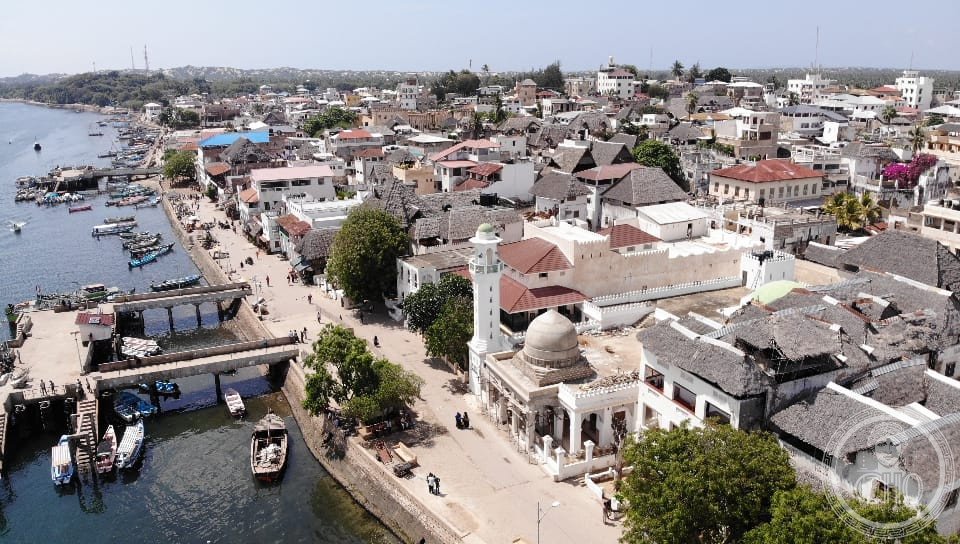
Lamu Old Town
The most intact and authentic Swahili settlement in the world and the oldest continuously inhabited city in Kenya — Lamu Old Town (Lamu Island, Lamu County, Kenya; the Swahili coast of the Indian Ocean; inhabited continuously since at least the 14th century CE; population approximately 23,000; no motor vehicles — all transport by foot or donkey) preserves the urban fabric of a medieval Swahili mercantile city as if five centuries have barely passed.
At a glance
Lamu (the most precisely Lamu single Swahili settlement 14th CE coral stone narrow alleys carved wooden doors donkeys no motor vehicles Islam UNESCO heritage: Lamu is the best-preserved example of the Swahili urban tradition (the civilization that developed along the East African coast through the interaction of Bantu African, Arab, Persian, Indian, and later Portuguese and Omani cultures; held together by trade in ivory, gold, and enslaved people across the Indian Ocean): the city plan (the narrow alleys — the widest street in Lamu is approximately 3m; the alleys 1-2m wide — designed for the Indian Ocean monsoon winds to funnel through and provide natural ventilation); the coral-stone construction (the walls built from coral blocks cut from the reef; lighter and more insulating than stone or brick); the carved wooden doors (the most elaborate door-carving tradition in East Africa; the chain-and-fish-scale motifs; the large central brass boss; the inscription panels above the door (Quranic verses)); the 23 mosques; the waterfront (no dock or pier — dhows beach on the shore) — the most precisely Lamu single Swahili settlement 14th CE coral stone narrow alleys carved wooden doors donkeys no motor vehicles Islam UNESCO heritage in any UNESCO world heritage site; the Indian Ocean trade (the most precisely Lamu single monsoon trade gold ivory enslaved Indian Persian Arab Omani dhows Swahili coast Indian Ocean heritage: Lamu’s wealth (11th-19th century CE) derived from its position as a waystation on the Indian Ocean dhow trade: Lamu exported ivory (from the East African interior), mangrove poles (used as building timber throughout the Persian Gulf), and enslaved people; it imported cotton cloth from India, porcelain from China (the Lamu Museum holds the largest collection of Chinese celadon and porcelain in East Africa), and rice from the Persian Gulf) — the most precisely Lamu single monsoon trade gold ivory enslaved Indian Persian Arab Omani dhows Swahili coast Indian Ocean heritage in any UNESCO world heritage site)).
Key facts
- The Carved Wooden Door — Lamu’s Signature Art: the most precisely Lamu single carved wooden door largest collection Swahili East Africa chain fish scale brass boss Quranic inscription heritage — the carved wooden doors of Lamu (the most precisely Lamu carved wooden door collection: the largest surviving collection of traditional Swahili carved wooden doors in the world; over 500 significant examples in the Old Town; the designs (chain-link borders; fish-scale fillings; the central brass boss; the projecting wooden spikes on older doors (a defensive tradition from the Mombasa coast)); the inscriptions (Quranic verses or the owner’s name and build date in Arabic script) above the door frame; the doors were traditionally the most expensive part of a Lamu house — a man built the door before the house around it as a statement of wealth)
- The Donkeys: the most precisely Lamu single 3000 donkeys no motor vehicles transport goods only donkeys East Africa heritage — Lamu has approximately 3,000 donkeys and no private motor vehicles (the only island in East Africa with no car traffic, except for one ambulance and a few government vehicles); the donkeys carry everything in the Old Town (construction materials, food, furniture); the Lamu Donkey Sanctuary (run by the International Donkey Protection Trust; veterinary care for working donkeys; the only donkey hospital in East Africa)
- GPS: 2.2697° S, 40.9025° E
History
The Omani period (the most precisely Lamu single 1812 CE Battle Shela Lamu Pate Mazrui Omani alliance defeat Pate coast control heritage: in 1812 CE, the most important military event in Lamu’s history occurred: the Battle of Shela (on Shela beach, 2 km south of Lamu town) in which the Lamu-Omani alliance defeated the forces of the rival town of Pate; the Mazrui clan (who held Fort Jesus in Mombasa and were rivals of the Omani Bu Said); the victory secured Lamu’s commercial dominance of the northern Kenya coast for the following century; the Fort of Lamu (built by the Omanis after 1821 CE; now the Lamu Museum) is the physical legacy of this period; the Omani Arab aristocracy of Lamu built many of the great townhouses — the most precisely Lamu single 1812 CE Battle Shela Lamu Pate Mazrui Omani alliance defeat Pate coast control heritage in any UNESCO world heritage site)).
What you see
Exploration (the most precisely Lamu single waterfront promenade fort Lamu Museum carved door wandering alleys Matondoni village dhow building heritage: Lamu rewards wandering (the most practical approach: arrive at Lamu waterfront from the passenger ferry from Mokowe (15 min; KES 100; the journey across the channel to the island); the waterfront promenade (the social heart of Lamu; the dhows; the evening gathering of fishermen and residents); the Lamu Museum (in the Fort; open 08:00-18:00; KES 1,200; the Chinese porcelain collection; the siwa horn (a 400-year-old ceremonial horn; blown only at official occasions); the architecture exhibition); the Old Town alleys (no map needed — the town is too small to get seriously lost; the Riyadha Mosque; the door-hunting circuit); the half-day trip to Matondoni village on the opposite coast of the island (the traditional dhow-building village; craftsmen using only hand tools; the beach; hire a donkey or take a boat) — the most precisely Lamu single waterfront promenade fort Lamu Museum carved door wandering alleys Matondoni village dhow building heritage in any UNESCO world heritage site)).
Practical information
- Getting there: Lamu is accessible by air (Lamu Airport (LAU) or Manda Airport (LAU); 5-7 daily flights from Nairobi Wilson Airport; 1h 15min; KES 7,000-15,000 return (Fly540, Airkenya); or from Mombasa 30 min); or by ferry from Mokowe (the mainland jetty; reached by road from Malindi (4h) or Mombasa (7h)); there are no roads to the island itself; the best season is June-September (the dry season; KES rates are lower; the monsoon winds fill the dhow sails) and December-March; security advisory: check current Kenya government and FCO/US State Department advisories for the Lamu-Somalia border region before visiting; the Lamu Coast has had security incidents related to Al-Shabaab; the town of Lamu itself has been generally safe but the situation evolves; most visitors travel without incident
Getting there
Lamu Airport (LAU) from Nairobi 1h15 (KES 7,000-15,000). No cars on island. Ferry from Mokowe. Check security advisory. GPS: -2.2697, 40.9025.
Nearby
- Shela Village — 2 km south; the upmarket residential village south of Lamu town (the Peponi Hotel — the most famous hotel on the Kenyan coast; a Lamu institution since 1967; the beachside veranda restaurant; the Shela beach (3 km of white sand backed by sanddunes); quieter and more upscale than Lamu town)
- Manda Toto and Ras Kitau — Marine Reserve — the islands and reefs around Lamu (the Lamu Marine Park; snorkelling and diving on the fringing reef; dugong sightings; green sea turtles nesting on Manda Toto beach; hire a local dhow for the day trip from the Lamu waterfront))
Sources
- Wikipedia, Lamu Old Town; Swahili culture; Battle of Shela, accessed June 2026
- UNESCO, Lamu Old Town, WHS reference 1055, inscribed 2001
Find it on the map
See this place and what’s around it →📷 Diventa un fotografo di Cultural Heritage Online
Condividi le tue foto dei luoghi: restano pubblicate con la tua firma come autore. Più vengono viste, più ti fai conoscere — e presto un concorso premierà le foto più apprezzate.
Accedi o registrati gratis per aggiungere una foto