
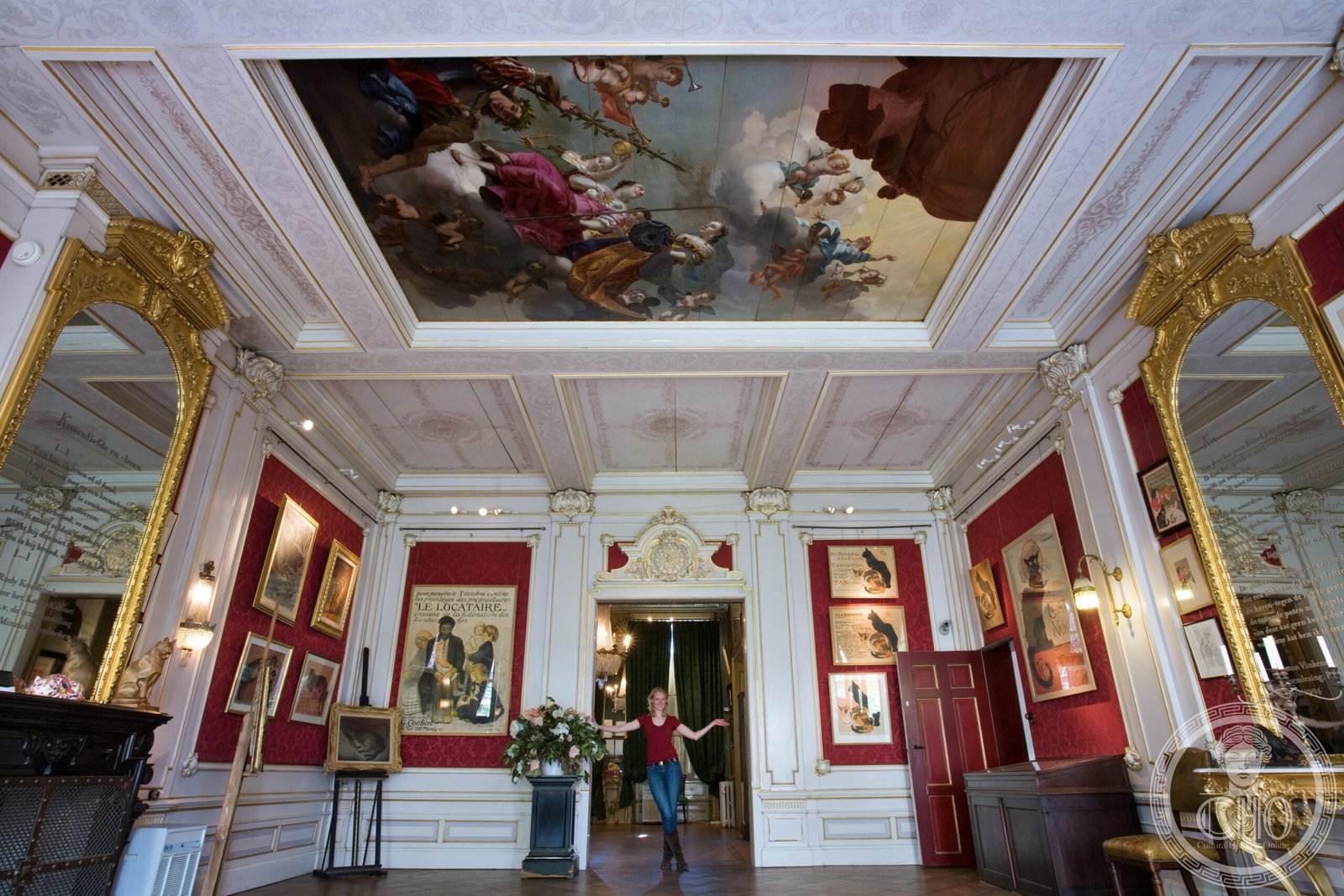
KattenKabinet (Cat Cabinet)
The KattenKabinet (Cat Cabinet) is a small private museum in Amsterdam dedicated entirely to fine art and decorative objects depicting cats, housed in a magnificent seventeenth-century canal house on the Herengracht. Founded in 1990 by financier Bob Meijer in memory of his beloved red tom cat John Pierpont Morgan, it holds an internationally significant collection of paintings, prints, posters, and sculptures featuring cats, including works by Rembrandt, Picasso, and Toulouse-Lautrec.
At a glance
- Type
- Private specialist art museum
- Period
- Canal house built c. 1667; museum founded 1990
- Style
- Dutch Golden Age canal house (exterior and historic interiors)
- Location
- Herengracht 497, Amsterdam-Centrum, North Holland, Netherlands
- Coordinates
- 52.3656° N, 4.8894° E
Overview
The KattenKabinet occupies a double-fronted canal house at Herengracht 497, one of the finest addresses on Amsterdam’s Golden Bend, built in the Dutch Golden Age around 1667. The museum’s collection spans six centuries of European art in which cats play a central or prominent role, from seventeenth-century Dutch genre scenes to Belle Époque lithographs and twentieth-century graphic art. Several live cats roam the museum’s rooms, reinforcing the institution’s warm and eccentric character.
History
The canal house at Herengracht 497 was constructed around 1667 and has served various residential and commercial purposes across its history. Bob Meijer, a Dutch financier and art collector, purchased the property and opened it as a public museum in 1990, driven by his grief at the death of his red cat John Pierpont Morgan (named after the American banker) and his determination to commemorate the animal through a collection of art. The museum has since grown into a respected specialist institution with a programme of changing exhibitions alongside its permanent collection. The historic interiors of the canal house — including painted ceilings and original woodwork — remain a significant draw in their own right.
What you see
Visitors move through the period rooms of a seventeenth-century patrician house hung with paintings, lithographs, and drawings in which cats appear as subjects, companions, or symbols — from Dutch Golden Age domestic interiors to Belle Époque advertising posters and modernist graphic works. The collection includes a print attributed to Rembrandt and works by Pablo Picasso and Henri de Toulouse-Lautrec. Original stucco ceilings, marble fireplaces, and canal views from the tall sash windows frame the art in an atmosphere of quiet domestic grandeur. Living cats wander the rooms, and the garden at the rear offers a tranquil break mid-visit.
Cultural significance
The KattenKabinet is one of the very few museums in the world dedicated to a single animal as a subject of fine art, and its collection — spanning old masters to twentieth-century graphic design — reveals how consistently the cat has functioned as a symbol of independence, mystery, and domestic comfort in Western visual culture. The setting, in one of Amsterdam’s grandest surviving canal houses, adds an architectural layer of heritage value that makes the visit rewarding quite apart from the feline theme.
Practical information
- Address
- Herengracht 497, 1017 BT Amsterdam
- Admission
- Paid; check kattenkabinet.nl for current prices
- Hours
- Check official website for current opening hours
- Website
- kattenkabinet.nl
Getting there
The museum is located on the Herengracht in central Amsterdam, a 15-minute walk from Amsterdam Centraal station or a short tram ride (lines 1, 2, 5 to Keizersgracht or Vijzelstraat). The Golden Bend stretch of the Herengracht is also within comfortable walking distance of the Rijksmuseum and Van Gogh Museum, making it easy to combine visits. Bicycle parking is available along the canal.
Sources & resources
Find it on the map
See this place and what’s around it →📷 Diventa un fotografo di Cultural Heritage Online
Condividi le tue foto dei luoghi: restano pubblicate con la tua firma come autore. Più vengono viste, più ti fai conoscere — e presto un concorso premierà le foto più apprezzate.
Accedi o registrati gratis per aggiungere una foto