
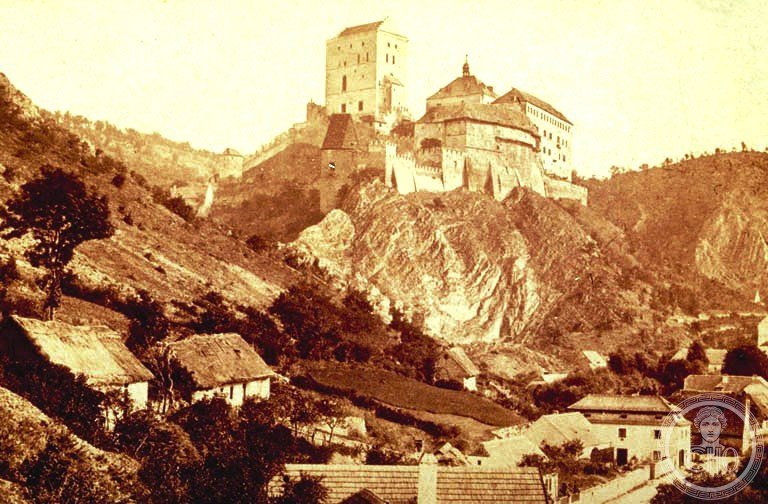
Karlštejn Castle
Karlštejn Castle is a large Gothic fortress founded in 1348 by Holy Roman Emperor and Bohemian King Charles IV, built to safeguard the Imperial Regalia, the Bohemian crown jewels, and sacred relics. Perched on a limestone ridge above the Berounka River valley in Central Bohemia, it is among the most famous and most visited castles in the Czech Republic.
At a glance
- Type
- Royal Gothic castle
- Period
- Founded 1348 by Charles IV; major 19th-century neo-Gothic restoration
- Style
- Gothic; 19th-century neo-Gothic restoration by Josef Mocker
- Location
- Karlštejn village, Central Bohemian Region, Czech Republic · 49.9398° N, 14.1458° E
Overview
Karlštejn Castle is one of the most iconic landmarks in the Czech Republic and a flagship destination for visitors to Bohemia. Founded in 1348 by Charles IV as a secure treasury for the most precious objects of the Bohemian and Imperial crowns, its three-tiered layout on a steep wooded hill makes it visually dramatic from every approach. It ranks among the country’s most frequently visited cultural heritage sites, welcoming hundreds of thousands of tourists each year.
History
Charles IV laid the foundation stone of Karlštejn in 1348, commissioning a castle specifically designed to protect holy relics and the regalia of the Holy Roman Empire rather than to serve as a conventional residence. Construction was substantially complete by 1365, when the Chapel of the Holy Cross in the Great Tower was consecrated. The castle was besieged but never captured during the Hussite Wars of the early fifteenth century. It fell into disuse after the crown jewels were moved to Prague in 1619 and gradually deteriorated. Between 1887 and 1899, architect Josef Mocker undertook a sweeping neo-Gothic restoration that gave the castle much of the appearance visitors see today.
What you see
The castle is arranged on three ascending levels: the lower Imperial Palace containing the residential halls; the middle Church of Our Lady with its remarkable Apocalypse cycle frescoes; and at the summit the Great Tower housing the Chapel of the Holy Cross. The chapel’s interior is covered floor to ceiling with over 2,000 semi-precious stones and 129 painted panels by Master Theodoric, considered among the finest examples of Bohemian Gothic panel painting. Access to the Chapel of the Holy Cross is by advance reservation only, with limited daily visitor numbers to protect the fragile medieval interior.
Cultural significance
Karlštejn is among the most important Gothic monuments in Central Europe and one of the defining images of Bohemian cultural identity. Its founding purpose — the protection of sacred and imperial treasures — reflects the unique role of Bohemia within the medieval Holy Roman Empire under Charles IV, who also founded Prague’s Charles University and commissioned the St. Vitus Cathedral. The 129 panel paintings by Master Theodoric in the Chapel of the Holy Cross are listed as National Cultural Monuments and represent a pinnacle of fourteenth-century European painting.
Practical information
- Address
- Karlštejn 172, 267 18 Karlštejn, Czech Republic
- Hours
- Seasonal; check official website for current opening times (generally closed on Mondays)
- Tickets
- Multiple tour routes with separate tickets; Chapel of the Holy Cross requires advance booking. Check official website for current prices
Getting there
Karlštejn is located approximately 28 kilometres southwest of Prague. Regular train services run from Praha Hlavní nádraží (Prague Main Station) to Karlštejn station on the Praha–Beroun line, with a journey time of approximately 40–45 minutes. From the station, a signposted path leads uphill through the village to the castle in about 20–25 minutes on foot. Buses also serve the route from Prague; driving takes approximately 35–45 minutes via the D5 motorway and local roads.
Sources & resources
Find it on the map
See this place and what’s around it →📷 Diventa un fotografo di Cultural Heritage Online
Condividi le tue foto dei luoghi: restano pubblicate con la tua firma come autore. Più vengono viste, più ti fai conoscere — e presto un concorso premierà le foto più apprezzate.
Accedi o registrati gratis per aggiungere una foto