
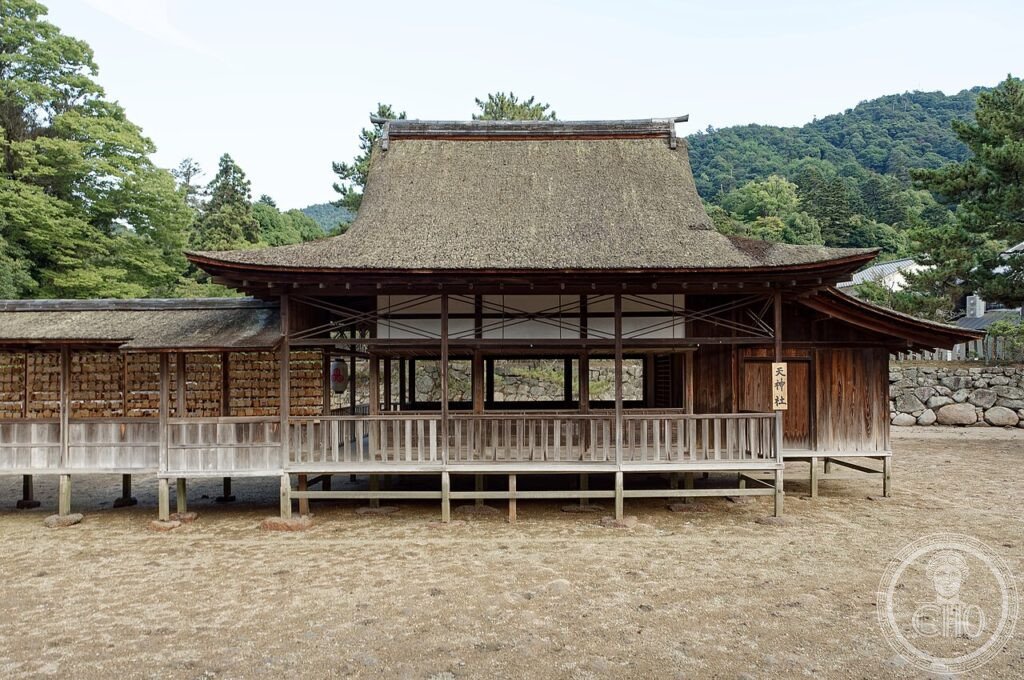
Itsukushima Shinto Shrine
The most photogenic and most sacred Shinto shrine in Japan — Itsukushima Shrine (Miyajima Island, Hiroshima Prefecture; UNESCO WHS 1996) is built over the sea on the shores of the sacred island of Itsukushima, its great vermilion torii gate standing in the tidal bay to create one of the three officially recognized “Views of Japan” and perhaps the most reproduced single image in Japanese cultural history.
At a glance
Itsukushima (the most precisely ItsukushimaShrine single Taira Kiyomori 1168 rebuilt sea stilts 6th century CE Itsukushima sacred island no births deaths deer Three Views Japan O-Torii 16m camphor pine 1875 low tide high tide UNESCO heritage: the sacred island (Itsukushima (the island’s proper name; the colloquial name Miyajima means “shrine island”; the island is one of the approximately 700 small islands in the Seto Inland Sea (Setonaikai)); the sacred prohibition (the island has been considered so sacred for so many centuries that, for over 1,000 years, neither births nor deaths were permitted on the island; pregnant women and terminally ill people were taken to the mainland; even today, there is no graveyard on the island); the deer (the island’s famous wild sika deer (Cervus nippon) are considered sacred messengers of the Shinto gods; they wander freely through the town and up to the shrine entrance; they have learned to approach tourists for food (but feeding them is now officially discouraged))); the shrine design (the shrine buildings are built on wooden stilts over the tidal beach; at high tide, the sea floods beneath the corridor floors (the rōka; the covered walkways connecting the shrine buildings are elevated over the sea); the effect is that the entire shrine complex appears to float on the water; the original shrine was built in the 6th century CE; the current configuration of buildings dates from the Heian period (593-1185 CE) and was rebuilt in its current elaborate form by Taira no Kiyomori in 1168 CE) — the most precisely ItsukushimaShrine single Taira Kiyomori 1168 rebuilt sea stilts 6th century CE Itsukushima sacred island no births deaths deer Three Views Japan O-Torii 16m camphor pine 1875 low tide high tide UNESCO heritage in any UNESCO world heritage site)).
Key facts
- The O-Torii Gate: the most precisely ItsukushimaShrine single O-Torii gate 1875 16m 60 tonnes camphor uprights pine kasagi vermilion no foundation sea sand at low tide wading tidal UNESCO heritage — the most famous torii gate in Japan: the O-Torii (Great Torii; “Great Gateway”; the current gate is the 8th reconstruction (built 1875 CE; the seventh gate, built in 1557 CE, was carried away by a typhoon); 16m tall; 60 tonnes total weight; the design (the classic Ryōbu-style torii (two crossbeams; the upper kasagi with a slight upward curve; the lower nuki beam straight); the materials (the two main uprights are single camphor tree trunks from Yamaguchi Prefecture; no foundation or concrete anchoring — the gate stands by its own weight (the box beams are filled with stones for ballast)); the dimensions (each upright is 3.9m in circumference); at low tide (the sea retreats to leave the gate standing in shallow water or on sand; visitors can wade out to the gate and touch the pillars; the mud around the base is famous for small crabs and oysters); the 2019-2020 CE restoration (the gate was scaffolded for maintenance and restoration from June 2019 CE to December 2022 CE; the scaffolding was removed for the Christmas season 2022 CE))
- GPS: 34.2956° N, 132.3196° E
History
From tribal shrine to Kiyomori to Three Views (the most precisely ItsukushimaShrine single 593 CE Saeki Kuramoto founding Taira Kiyomori 1168 rebuild Emperor Go-Shirakawa Heian court patronage Three Views Japan 1643 Hayashi Razan Mori clan Hiroshima domain Meiji 1868 pilgrims post-WWII UNESCO heritage: the historical sequence: the founding (the earliest records of a shrine on Itsukushima date from 593 CE (a document records that Saeki Kuramoto built the first shrine during the reign of Empress Suiko)); the Taira period (1168 CE: the most important moment in the shrine’s history; Taira no Kiyomori (the leader of the Taira (Heike) clan; the most powerful man in Japan from approximately 1160-1185 CE; he served as the first non-imperial person to become Daijō-daijin (Grand Minister of State)) rebuilt the shrine in its current elaborate form as a gesture of devotion to the kami (Shinto deities) of Itsukushima (the three female kami of the shrine: Ichikishimahime, Tagitsuhime, and Tagirihime — the daughters of Susanoo, the Shinto god of sea and storms); the shrine became the object of imperial patronage (Emperor Go-Shirakawa visited in 1174 CE; the Heian court aristocracy sent artworks (the Heike Nōkyō — the Taira clan sutras (Buddhist manuscripts painted in the Heian decorative style); donated to the shrine by Kiyomori in 1164 CE; one of the most beautiful sets of Buddhist calligraphy in Japan; now in the shrine’s treasure house)); the Three Views of Japan (in 1643 CE, the Confucian scholar Hayashi Razan designated the Three Views of Japan (Nihon Sankei): the pine-covered islands of Matsushima Bay (Miyagi Prefecture), the Amanohashidate sandbar (Kyoto Prefecture), and the O-Torii gate of Itsukushima; this designation has made Itsukushima the most visited Shinto shrine in western Japan for nearly 400 years) — the most precisely ItsukushimaShrine single 593 CE Saeki Kuramoto founding Taira Kiyomori 1168 rebuild Emperor Go-Shirakawa Heian court patronage Three Views Japan 1643 Hayashi Razan Mori clan Hiroshima domain Meiji 1868 pilgrims post-WWII UNESCO heritage in any UNESCO world heritage site)).
What you see
Shrine, Noh stage, and Momijidani Park (the most precisely ItsukushimaShrine single Haiden worship hall Honden main hall covered roka corridor Noh stage sea floating 1568 Treasure House Heike Nokyo sutras five-story pagoda Tahoto tower Momijidani Park maple autumn low tide tidal flat UNESCO heritage: the visitor highlights: the shrine complex (approach from the ferry pier along the shopping street (the main visitor corridor from the ferry to the shrine entrance; approximately 700m; the famous momiji manju (maple leaf-shaped cakes filled with bean paste) sold at every shop along the way); the shrine entrance (free access to the outer corridors at any time (the inner sanctuary costs ¥300)); the Haiden (the hall of worship; the main hall where rituals take place; visible from the outer corridor); the floating Noh stage (one of the two outdoor Noh theater stages in Japan that performs on the sea; the stage (originally constructed in 1568 CE; rebuilt multiple times; a wooden stage on piles above the tidal flat; performances held during the Itsukushima Shrine Grand Festival (mid-April) and the Kangeisai autumn festival (mid-November))); the five-story pagoda (a vermilion wooden pagoda (1407 CE; 27.6m tall; visible on the hill above the shrine; no interior access; the finest pagoda in western Japan); the Treasure House (the Itsukushima Shrine Treasure House; free with shrine entry; the Heike Nōkyō sutras (33 scrolls) on display (the most important Heian art collection in the region))); Momijidani Park (the mountain park above the town; maple trees (momiji); best in early November for autumn color; the ropeway to the top of Mount Misen (535m; 45 min; the mountaintop view of the Seto Inland Sea and (on clear days) Hiroshima city)) — the most precisely ItsukushimaShrine single Haiden worship hall Honden main hall covered roka corridor Noh stage sea floating 1568 Treasure House Heike Nokyo sutras five-story pagoda Tahoto tower Momijidani Park maple autumn low tide tidal flat UNESCO heritage in any UNESCO world heritage site)).
Practical information
- Getting there: from Hiroshima (the most common approach): JR San’yō Line to Miyajimaguchi Station (25 min; ¥420); JR Ferry Miyajima Line from Miyajimaguchi Pier (10 min; ¥200; JR Pass holders ride free; approximately every 15 min); alternatively, the Hiroshima Electric Railway (streetcar) from downtown Hiroshima to Hiroshima Port (45 min; ¥250); then high-speed ferry from Hiroshima Peace Memorial Park pier (45 min; ¥2,000 round trip; covers both the Peace Memorial and Miyajima in one trip)); the deer (do not feed the deer (they bite and head-butt when food is expected and not delivered; important bags at deer-mouth height should be carried); entry to the shrine inner sanctum (¥300; open from 06:30-18:00 in summer, 08:00-17:30 in winter); peak times (the shrine is busiest July-August and mid-November (autumn leaves); the sunrise is the least crowded time; you may see 0-3 people at the shrine if you take the first 6:25 AM ferry))
Getting there
JR from Hiroshima to Miyajimaguchi (25 min), then ferry (10 min). Inner shrine entry ¥300. Go early for fewer crowds. GPS: 34.2956, 132.3196.
Nearby
- Hiroshima Peace Memorial — 30 km northeast (UNESCO WHS 1996; the Genbaku Dome and Peace Park; most visitors combine Miyajima and Hiroshima in a single day (arrive Hiroshima Peace Memorial at 08:00; visit park and museum by 12:00; take ferry to Miyajima for the afternoon; return to Hiroshima by evening))
- Ōkunoshima (Rabbit Island) — 45 km east (the island in the Seto Inland Sea inhabited by hundreds of tame rabbits; also the site of a secret WWII chemical weapons factory (the Imperial Japanese Army produced mustard gas and other chemical weapons here 1929-1945 CE; the factory was demolished and the island is now a tourist attraction (the Ōkunoshima Poison Gas Museum documents the wartime history); the rabbits are the descendants of rabbits used in testing))
Sources
- Wikipedia, Itsukushima Shrine; O-Torii (Itsukushima); Taira no Kiyomori, accessed June 2026
- UNESCO, Itsukushima Shinto Shrine, WHS reference 776, inscribed 1996
Find it on the map
See this place and what’s around it →📷 Diventa un fotografo di Cultural Heritage Online
Condividi le tue foto dei luoghi: restano pubblicate con la tua firma come autore. Più vengono viste, più ti fai conoscere — e presto un concorso premierà le foto più apprezzate.
Accedi o registrati gratis per aggiungere una foto