
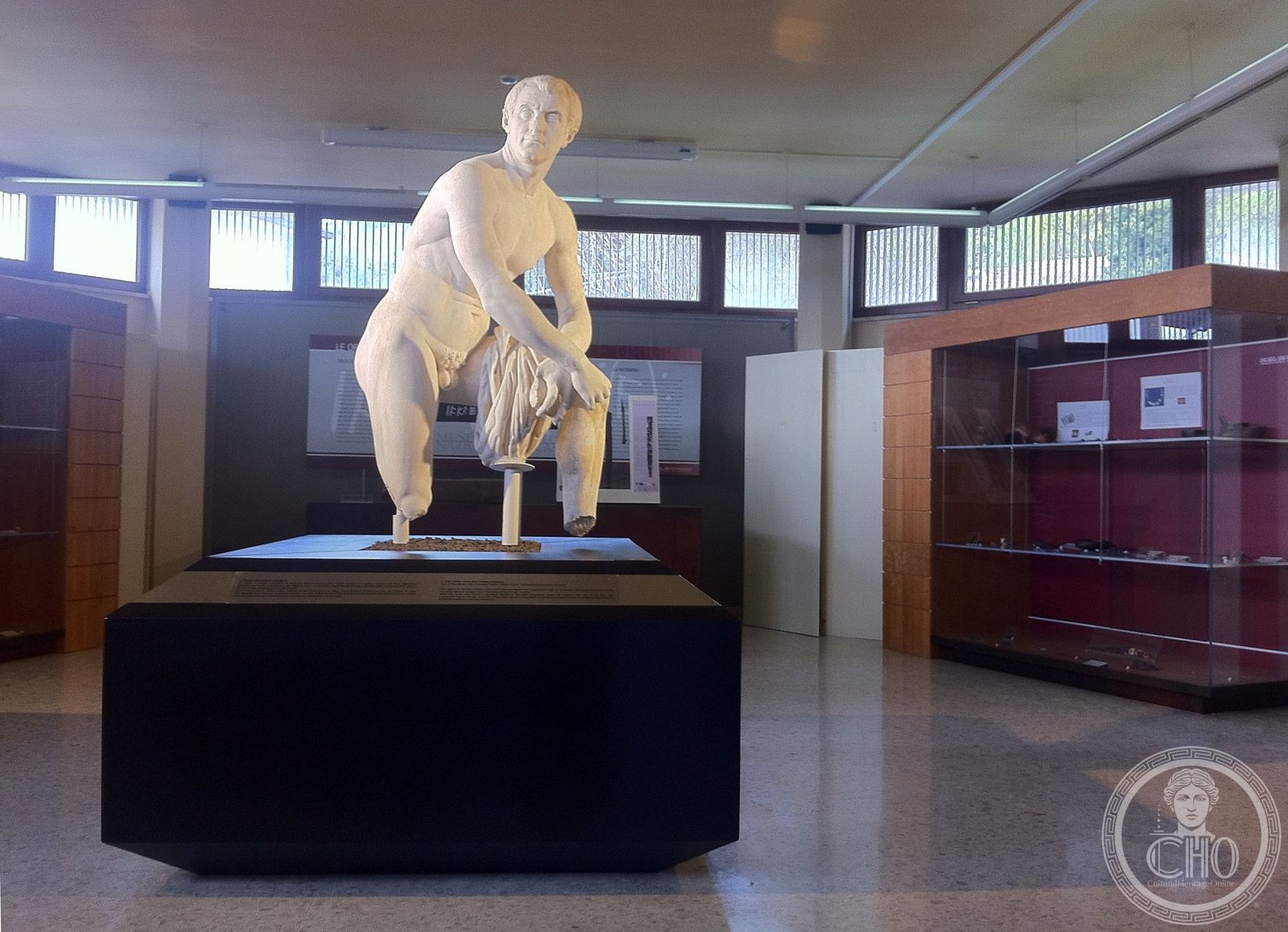
Gianfilippo Carettoni National Archaeological Museum of Cassino
The National Archaeological Museum of Cassino is a state museum in the town of Cassino, in the Liri valley of southern Lazio, dedicated to the archaeology of the ancient Roman city of Casinum and the surrounding territory of the Volscians and Samnites. Named after the archaeologist Gianfilippo Carettoni, who conducted important excavations in the area, the museum documents the human settlement of the valley from prehistory through the late Roman period, with particular emphasis on the prosperous Roman municipium that developed here from the 2nd century BC.
At a glance
- Type
- State archaeological museum
- Period
- Collections span prehistoric to late Roman period; the ancient city of Casinum flourished 2nd century BC–4th century AD
- Style
- Roman and Samnite material culture
- Location
- Cassino, Frosinone FR, Lazio, Italy · 41.4834° N, 13.8209° E
Overview
Cassino sits at the foot of Monte Cassino, the hill crowned by the famous Benedictine abbey, in a strategically important river valley that has been continuously inhabited since prehistoric times. The museum collects and displays the material evidence of this long history, with a focus on the Roman period when Casinum was a notable town on the Via Latina, the ancient road linking Rome with southern Italy. The collections include funerary goods, sculpture, mosaics, and everyday objects recovered from excavations across the territory.
History
The ancient city of Casinum was originally a Samnite settlement that passed into Roman control following the Samnite Wars of the 4th–3rd centuries BC. Under Rome it became a prosperous municipium, and the Roman orator and statesman Marcus Terentius Varro is associated with the territory. The area later gave rise to one of the most significant events in Western monasticism: in 529 AD, St Benedict of Norcia founded his abbey on Monte Cassino, establishing the Benedictine Rule that would shape European religious life for centuries. The museum was established to consolidate and display finds from excavations conducted throughout the 20th century, including Carettoni’s campaigns on the Roman city.
What you see
The permanent collection is organised chronologically, opening with prehistoric and Samnite material before moving through the Republican and Imperial Roman periods. Highlights include funerary monuments and inscriptions, votive offerings from local sanctuaries, domestic pottery and glass, and architectural fragments from public buildings. Mosaics recovered from Roman villas in the territory are displayed in dedicated rooms. The museum also documents the geological and environmental history of the Liri valley, contextualising human settlement within the natural landscape.
Cultural significance
The museum preserves the archaeological heritage of one of Italy’s most historically layered territories — a valley that witnessed the spread of Roman civilisation, the birth of Benedictine monasticism, and some of the most intense fighting of World War II (the Battles of Monte Cassino, 1944). As a national museum, it forms part of the Italian Ministry of Culture’s network of state archaeological institutions in Lazio. Its collections are the principal repository for finds from the ancient Casinum territory, which is under ongoing archaeological study.
Practical information
- Address
- Cassino, Frosinone, Lazio, Italy
- Managed by
- Italian Ministry of Culture — Musei Nazionali
- Hours
- Check official website or contact the museum for current opening times and admission fees
Getting there
Cassino railway station is on the Rome–Naples line (Via Cassino), with direct trains from Roma Termini (approximately 1h 20min) and from Naples (approximately 1h 10min). From the station, the town centre — where the museum is located — is reachable on foot or by local bus. By road, take the A1 motorway (Autostrada del Sole) to the Cassino exit, then follow signs for the town centre. The Abbazia di Montecassino is a further 9 km uphill by road or local bus.
Sources & resources
Find it on the map
See this place and what’s around it →📷 Diventa un fotografo di Cultural Heritage Online
Condividi le tue foto dei luoghi: restano pubblicate con la tua firma come autore. Più vengono viste, più ti fai conoscere — e presto un concorso premierà le foto più apprezzate.
Accedi o registrati gratis per aggiungere una foto