
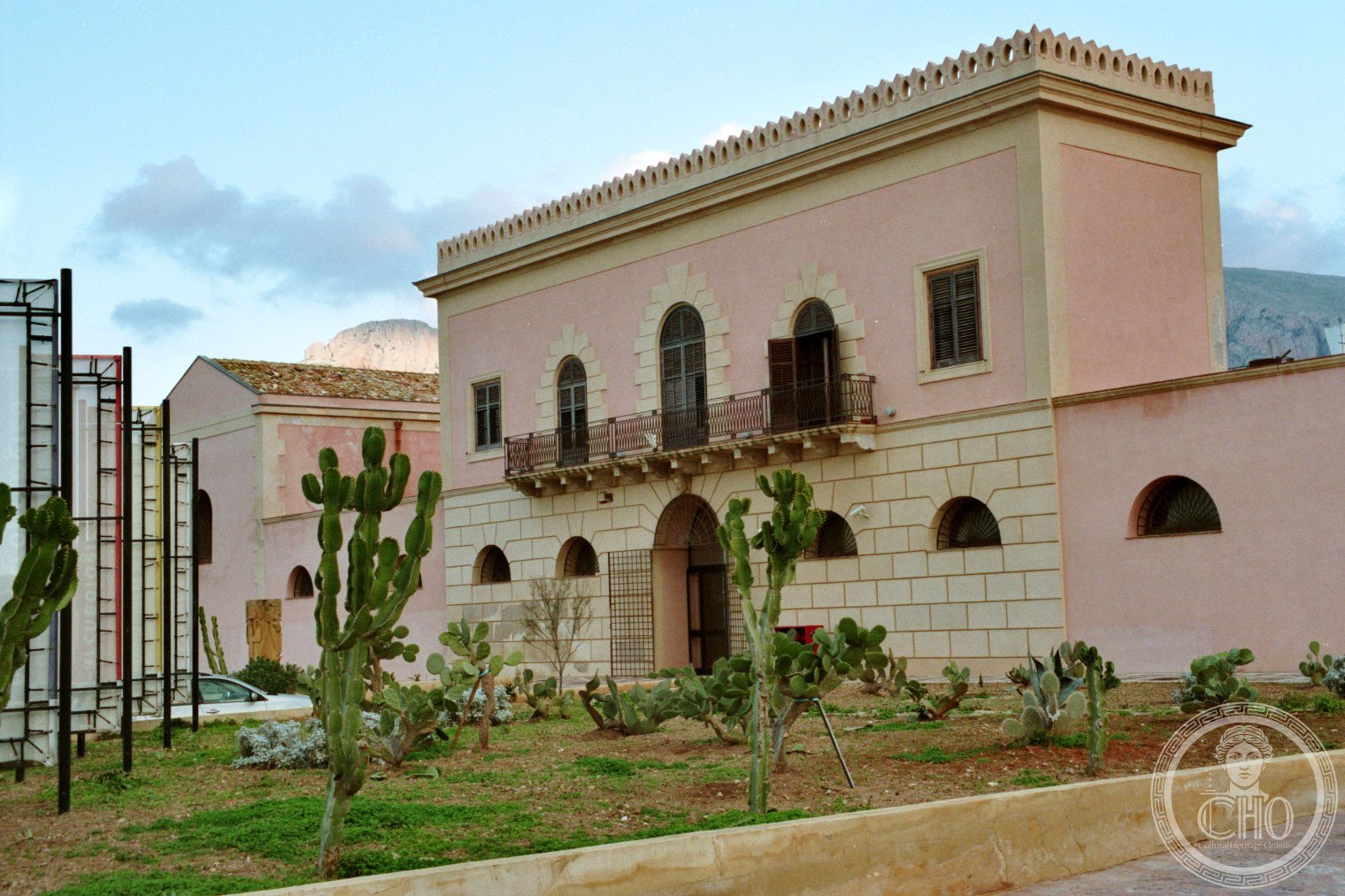
Regional Museum of Natural History in Terrasini
The Regional Museum of Natural History in Terrasini, housed in the Palazzo d’Aumale on the western coast of Sicily, is one of the island’s principal natural history institutions, preserving geological, palaeontological, and biological collections that document Sicily’s extraordinary environmental diversity. The museum is especially renowned for its collection of Quaternary vertebrate fossils and its documentation of the endemic fauna of the Sicilian Channel.
At a glance
- Type
- Regional museum of natural history
- Period
- Palazzo d’Aumale: 19th century; museum collections established mid-20th century
- Style
- Neoclassical palace; scientific museum layout
- Location
- Via Conte Federico 1, 90049 Terrasini PA, Sicily
- Coordinates
- 38.1538° N, 13.0795° E
Overview
Situated in the Palazzo d’Aumale, a 19th-century aristocratic residence overlooking Terrasini’s scenic bay, the Regional Museum of Natural History is managed by the Sicilian Regional Authority for Cultural Heritage. Its holdings span geology, mineralogy, palaeontology, zoology, and botany, with particular strength in the fossil record of prehistoric Sicily. The building also contains a section dedicated to the Carriage Museum, making the complex an unusually broad cultural site on the Palermo coastline.
History
Palazzo d’Aumale was built for the Duke of Aumale, son of King Louis-Philippe of France, who had acquired land in Sicily during the 19th century. The building passed to the Italian state after Unification and was subsequently used for various public purposes. The Regional Government of Sicily established the natural history collection here in the second half of the 20th century, drawing on existing geological and faunal survey materials accumulated during decades of scientific fieldwork across the island. The museum was formally recognised as a regional institution and progressively expanded its collections and public programming.
What you see
Visitors encounter a broad range of natural history exhibits spread across the palazzo’s ground and upper floors. Palaeontological galleries display fossils of Quaternary mammals — including dwarf elephant and hippo specimens unique to the Sicilian island fauna — alongside marine invertebrates and fish. Mineralogical and geological cases present Sicily’s volcanic and sedimentary rock formations, while zoological displays cover birds, reptiles, and the rich marine life of the Sicilian Channel. A carriage collection preserved in separate ground-floor rooms showcases 19th-century aristocratic transport, adding a social-history dimension to the visit.
Cultural significance
Sicily’s position as a Mediterranean island has produced distinctive evolutionary trajectories — including the island dwarfism visible in prehistoric elephant and hippo species — making the museum’s palaeontological collections scientifically important at European level. For visitors, the setting in Palazzo d’Aumale, with its sea views and period architecture, adds cultural and aesthetic value to what is also a serious research institution.
Practical information
- Address
- Via Conte Federico 1, 90049 Terrasini PA
- Hours
- Check official website for current opening hours
- Admission
- Check official website for current ticket prices
Getting there
Terrasini is located approximately 25 km west of Palermo on the coastal road toward Trapani. By car, take the A29 motorway (Palermo–Mazara del Vallo) and exit at Terrasini. Regular bus services connect Terrasini with Palermo’s main bus terminal; journey time approximately 40–50 minutes. The museum overlooks the bay and is a short walk from the town centre and seafront.
Sources & resources
Find it on the map
See this place and what’s around it →📷 Diventa un fotografo di Cultural Heritage Online
Condividi le tue foto dei luoghi: restano pubblicate con la tua firma come autore. Più vengono viste, più ti fai conoscere — e presto un concorso premierà le foto più apprezzate.
Accedi o registrati gratis per aggiungere una foto