
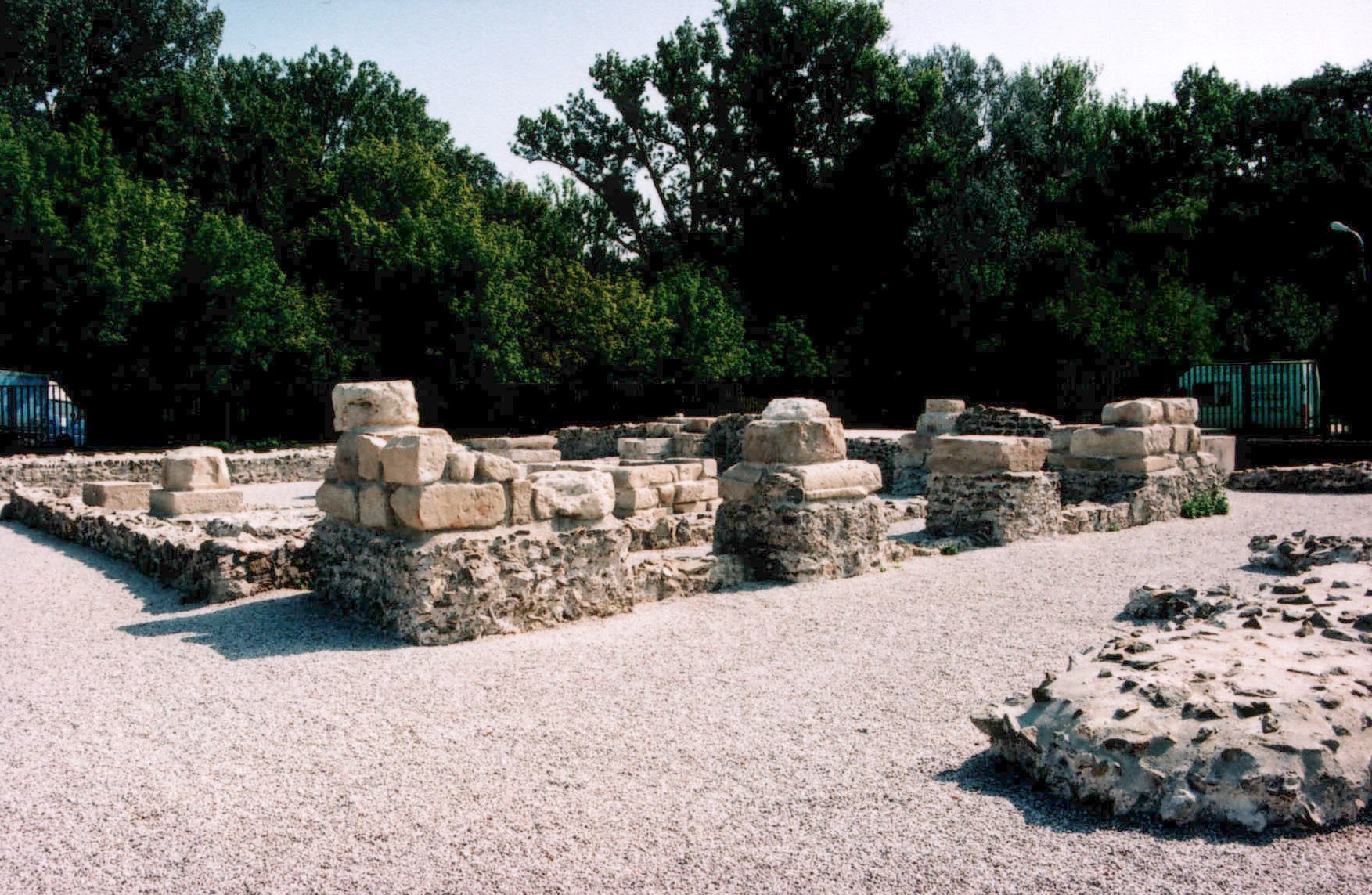
A Roman military camp on the Danube frontier, Gerulata guarded the empire’s northern border in Pannonia until legions withdrew in the 4th century. Its excavated remains now tell the story of frontier life.
At a glance
Gerulata was a fortified Roman military installation built in the 2nd century near present-day Rusovce, now a borough of Bratislava. Strategically positioned along the Danube, it served as part of the empire’s defensive network across Pannonia until abandonment in the 4th century.
History
Established during the 2nd century, Gerulata functioned as a frontier garrison protecting Roman territory against threats from beyond the Danube. The camp remained operational for approximately two centuries before Roman forces withdrew from Pannonia in the 4th century, bringing an end to the site’s military use.
What you see
The most impressive surviving structure is a quadrilateral building measuring 30 metres long and 30 metres wide, distinguished by walls 2.4 metres thick. Excavations have revealed fragments of the Roman forum, structural remains, gravestones, and everyday objects—bronze, iron, ceramic and stone pieces—that illuminate the material culture of the garrison.
Cultural significance
Gerulata exemplifies the Danubian Limes, the Roman empire’s most extensive frontier system. In July 2021, the site was inscribed on UNESCO’s World Heritage List as part of the Western segment of this monumental defensive line, recognizing its historical importance to understanding Roman frontier strategy and provincial life.
Key facts
- Location: Rusovce, Bratislava, Slovakia (48.0561° N, 17.1497° E)
- Founded: 2nd century
- Abandoned: 4th century
- Roman province: Pannonia
- UNESCO World Heritage Site: 2021 (Danubian Limes)
Practical information & getting there
A museum dedicated to Gerulata operates during summer months and is housed within the Bratislava City Museum. The exhibition is located behind the Catholic Church of St Mary Magdalene in Rusovce. The museum displays excavated objects and contextual information about daily life at the Roman camp.
Sources & resources
Find it on the map
See this place and what’s around it →📷 Become a Cultural Heritage Online photographer
Share your photos of places: they stay published under your name as the author. The more they're seen, the more you get noticed — and soon a contest will reward the most appreciated photos.
Log in or sign up free to add a photo