
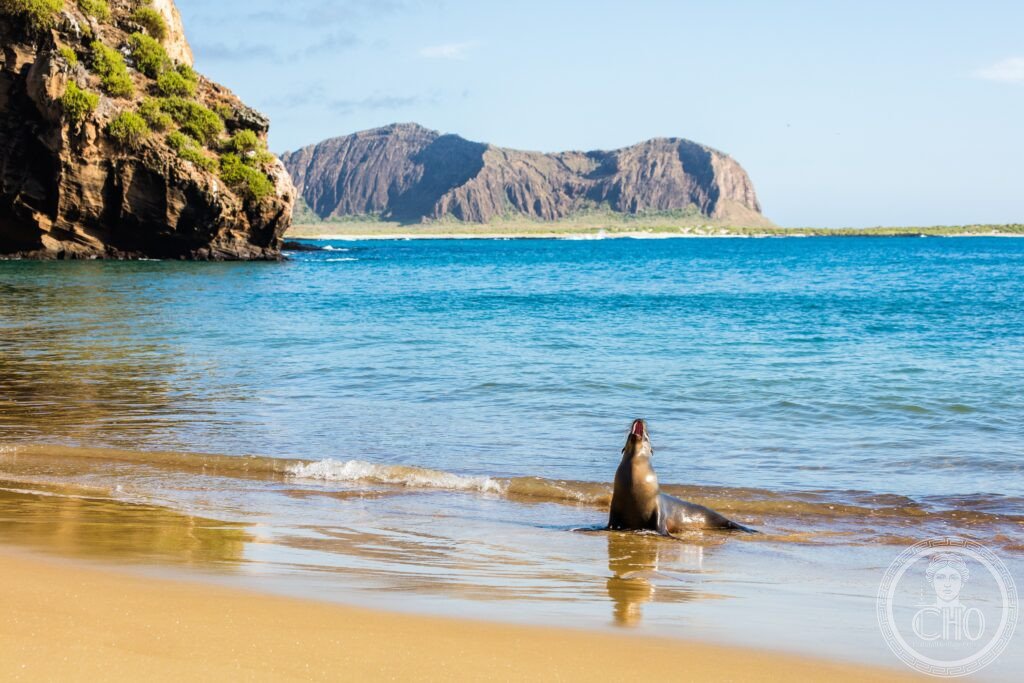
Galápagos Islands
The laboratory of evolution and one of the most remarkable wildlife experiences on Earth — the Galápagos Islands, a volcanic archipelago 1,000 km west of Ecuador in the Pacific Ocean, are where Charles Darwin developed the theory of natural selection in 1835; the extraordinary tameness of the wildlife (animals that evolved without human predators and have never learned fear), the diversity of endemic species, and the pristine marine environment create one of the most extraordinary wildlife encounters accessible to tourists.
At a glance
The Galápagos Islands (Archipiélago de Colón; UNESCO WHS 1978; one of the inaugural 12 UNESCO World Heritage Sites; Galápagos National Park: 697,000 hectares of land; Galápagos Marine Reserve: 133,000 km² of ocean; 97% of the land area is protected as national park — the inhabited areas comprise the other 3%, on the four inhabited islands: Santa Cruz, San Cristóbal, Isabela, and Floreana) are distributed across an area of approximately 45,000 km² in the eastern Pacific Ocean; the archipelago sits on the Galápagos hotspot, a plume of hot mantle material that has been continuously producing volcanic activity for approximately 4 million years; the islands are progressively older from west to east (the western islands Fernandina and Isabela are the most recently formed and are still volcanically active; the eastern islands San Cristóbal and Española are the oldest and have gentler topography); the human settlement of approximately 33,000 people (2026 estimate) is concentrated on the four inhabited islands; all visitor access to the national park requires a licensed naturalist guide (one guide per 16 tourists maximum); independent hiking in the national park is not permitted; the visit model is either a live-aboard cruise (4–15 day itineraries; the most comprehensive way to see multiple islands) or island-hopping from the inhabited islands (visiting different sites by day-boat).
Key facts
- The wildlife and the theory of natural selection: the tameness of Galápagos wildlife is as important as its diversity — the animals of the Galápagos evolved in the absence of mammalian predators; land iguanas, marine iguanas, tortoises, sea lions, and most bird species show no fear of humans — a masked booby will sit on its nest while you photograph it from 50 cm; a sea lion will swim with you in the shallows; a marine iguana will stare at you while you lie on the rocks beside it; Charles Darwin arrived on HMS Beagle on 15 September 1835 and spent 5 weeks collecting specimens; his observations of the Galápagos finches (13 species on different islands, each with a beak shape uniquely adapted to the food sources available on that island; the finches all share a common ancestor that arrived from South America; their diversification into different food niches across the islands is one of the clearest demonstrations of adaptive radiation) were central to his formulation of the theory of natural selection in On the Origin of Species (1859); the Galápagos mockingbirds (4 species, each endemic to a different set of islands) were actually more significant for Darwin’s thinking than the finches, though the finches became the iconic symbol of evolution
- The marine iguana (Amblyrhynchus cristatus): the only seagoing lizard on Earth and the most bizarre reptile in the Galápagos — the marine iguana (endemic to the Galápagos; largest males up to 1.4 kg; the only lizard that feeds in the sea; they dive to 10 metres and graze on marine algae on underwater rocks; they can remain submerged for up to 30 minutes; they lose heat rapidly while diving in the cold Humboldt Current water and need to bask in the sun for several hours after feeding to restore body temperature; while basking, they expel excess salt from glands in their nostrils — a visible stream of white crystalline salt secreted from the nostril is the characteristic behaviour of a basking marine iguana; the iguanas are colonial — beaches and rocky areas may host hundreds of individuals stacked on top of each other in basking piles; they run no faster than walking pace and will not move away from you unless you step over them)
- The Galápagos giant tortoise: the largest living tortoise and the iconic symbol of the islands — the Galápagos giant tortoise (Chelonoidis niger; different species or subspecies exist on different islands; the total population was reduced to approximately 3,000 individuals by the early 20th century due to hunting by whalers and pirates who used them as a live food source — giant tortoises can survive without food or water for months and were stored upside-down in ships’ holds; the total population has recovered to approximately 10,000–15,000 individuals; the most famous individual was Lonesome George, the last Pinta Island tortoise, who died on 24 June 2012 at approximately 100 years of age; a captive breeding programme at the Charles Darwin Research Station on Santa Cruz has been breeding tortoise species from various islands and releasing the hatchlings into the wild since the 1970s; the saddle-back shell shape (found on islands where vegetation is sparse and ground-level; the long neck and raised shell front allow the tortoise to reach overhead cactus pads) vs. the domed shell shape (found on islands with abundant low vegetation; the dome shell and shorter neck are adapted to grazing low) are a famous example of adaptation within a single genus)
- Heritage: UNESCO World Heritage Site (Galápagos Islands), inscribed 1978 (inaugural list)
- GPS: -0.6667° S, -90.5500° W
History
The Galápagos were discovered by accident by the Bishop of Panama, Tomás de Berlanga, in 1535 when his ship was blown off course; the islands served as a base for pirates, buccaneers, and whalers from the 17th to the 19th centuries (the giant tortoises were taken alive as food); Ecuador annexed the islands in 1832; Charles Darwin arrived on HMS Beagle in September 1835; his observations contributed to On the Origin of Species (1859); Galápagos National Park established 1959; UNESCO WHS 1978 (inaugural list); listed as World Heritage in Danger 1996 due to tourism growth, invasive species, and illegal fishing; removed from the Danger list in 2010 after significant improvements to species management and fishing controls.
What you see
The visitor experience divides by island and site: Santa Cruz (the main hub; Puerto Ayora; the Charles Darwin Research Station — the captive tortoise breeding centre, walkable from town; the Tortoise Reserve in the highlands — wild giant tortoises at close range; snorkelling with sea lions at Playa Alemana); Española (the southernmost island; the waved albatross colony, May–December, 12,000+ pairs; the Española mockingbird; marine iguanas; Punta Suárez is considered one of the best wildlife sites in the Galápagos); Fernandina (the most pristine island; no invasive species; the largest marine iguana colony in the Galápagos; Galápagos hawks and penguins; snorkelling with flightless cormorants and sea turtles); Isabella (the largest island; the Tagus Cove, with Darwin’s name carved in rock by whalers; Volcán Wolf, active volcano; seahorse populations in the mangroves); the diving (Wolf and Darwin seamounts, at the northern end of the archipelago, are considered among the top 5 dive sites in the world — hammerhead shark schools, whale sharks, and Mola Mola sunfish).
Practical information
- Getting there and fees: the entry point is either Baltra Island Airport (GPS; north of Santa Cruz; more convenient for most cruises) or San Cristóbal Airport (SCY); both airports have daily flights from Quito (2h) and Guayaquil (1h 45 min); the national park entrance fee is USD $200 per person (from 2024; increased from USD $100 to USD $200 for all nationalities; collected at the airport upon arrival; payable by card); a transit card (INGALA; USD $10) is also required; most live-aboard cruises include the park fee in their package; day-boat operations from Santa Cruz do not
- Cruise vs island-hopping: live-aboard cruise (4 to 15 days; ranges from USD $1,500 to USD $10,000+ per person; the most comprehensive option — a good 8-day cruise visits 10–15 different sites on 6+ islands; the yachts anchor in different locations each night; the boats range from small yachts of 8–16 passengers to first-class vessels of 20–100 passengers) vs. island-hopping (stay in a hotel on Santa Cruz, San Cristóbal, or Isabela and take day trips by fast boat to nearby sites; significantly cheaper — USD $100–300/day; misses the more remote islands which are only accessible by overnight cruise); most visitors who have the budget choose the cruise; most sites near the inhabited islands can be seen adequately on day trips
- Best season: the Galápagos can be visited year-round; the garúa season (June–November; cold and misty; the Humboldt Current is strongest; the ocean is most productive — whale sharks common; hammerhead sharks common; best for diving) vs. the warm season (December–May; warmer and calmer seas; baby sea lions and sea turtles; the waved albatross colony is absent June–November on Española); January–March is the most biodiverse period with the most animal activity; the sea temperature ranges from 15°C (July–September, garúa season) to 27°C (February–April, warm season)
Getting there
Fly to Baltra (GPS) or San Cristóbal (SCY). Daily flights from Quito (2h) and Guayaquil (1h 45 min). National park fee: USD $200 per person. GPS: -0.6667, -90.5500.
Nearby
- Quito Historic Centre (Ecuador) — Quito is the gateway airport for the Galápagos; the historic centre of Quito (UNESCO WHS 1978; one of the inaugural 12 WHS; the best-preserved colonial city centre in Latin America — the churches of San Francisco, La Compañía de Jesús, and the Plaza Mayor are among the finest colonial architecture in the Americas) is an essential companion to any Galápagos trip; the Mitad del Mundo monument (the equatorial monument; though the actual equatorial line, determined by GPS, runs through a different spot 240 m away — the original monument is off by the margin of 18th-century instrument accuracy) is 14 km north of the city
- Amazon rainforest (Ecuador) — accessible from Quito by road or flight to Tena, Puyo, or Coca; the Ecuadorian Amazon (the western Amazon basin; lower Amazon elevation — accessible from Quito in 5–6h by road, descending from 2,800 m in Quito to 300 m in the Amazon basin; the Napo River is the main access corridor; the Yasuní National Park is the most biodiverse park in the world per unit area — approximately 160 amphibian species, 150 mammal species, 596 bird species, and 100,000 insect species per hectare; a UNESCO Biosphere Reserve; threatened by oil development) is one of the most biodiverse regions in the world and is commonly combined with a Galápagos trip
- Machu Picchu (Peru) — accessible from Quito by flight to Lima, then Cusco (approximately 4–5h total); the most famous archaeological site in the Americas; see separate CHO place card
Sources
- Wikipedia, Galápagos Islands; Galápagos giant tortoise; Marine iguana; Darwin’s finches, accessed June 2026
- UNESCO, Galápagos Islands, WHS reference 1, inscribed 1978
- Darwin, Charles, On the Origin of Species, John Murray, 1859 (public domain)
Find it on the map
See this place and what’s around it →📷 Diventa un fotografo di Cultural Heritage Online
Condividi le tue foto dei luoghi: restano pubblicate con la tua firma come autore. Più vengono viste, più ti fai conoscere — e presto un concorso premierà le foto più apprezzate.
Accedi o registrati gratis per aggiungere una foto