
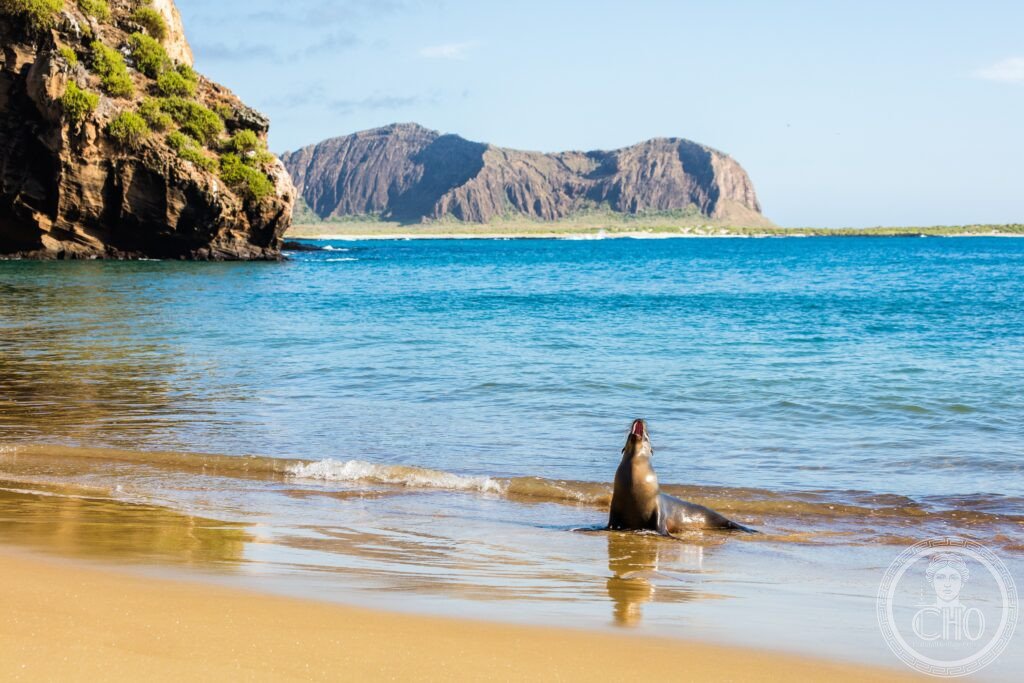
The living laboratory of evolution and the most biologically significant archipelago on Earth — the Galápagos Islands, 1,000 km west of Ecuador in the Pacific Ocean, are where Charles Darwin developed the observations that led to On the Origin of Species (1859), and where today the wildlife (marine iguanas, giant tortoises, blue-footed boobies, flightless cormorants, and Galápagos penguins) has no evolved fear of humans and allows visitors to approach within metres.
At a glance
The Galápagos Islands (UNESCO WHS 1978; the first natural World Heritage Site in South America and the second ever inscribed (after Yellowstone in the United States (1978)); area of the Galápagos National Park: approximately 7,882 km² of land (97% of the archipelago is protected National Park); the marine reserve (the Galápagos Marine Reserve: 133,000 km² of ocean; the second largest marine reserve in the world at the time of its creation in 1998; the most biologically productive marine environment in the eastern Pacific Ocean); the geology (the islands are all volcanic in origin; the current volcanic activity (Fernandina (La Cumbre; active regularly; the most active volcano in the Galápagos; the most pristine large island in the archipelago (uninhabited; visited only by guided tours)); the position of the islands over the Galápagos hotspot (the geological hot spot that has been feeding the island-building volcanism for approximately 3–5 million years; the islands are moving eastward on the Nazca Plate at approximately 5 cm per year; the westernmost islands (Fernandina and Isabela) are the youngest and most geologically active; the easternmost islands are the oldest and most eroded)); the endemism (the percentage of species found nowhere else on Earth (the Galápagos endemic species: 97% of reptiles; 80% of land birds; 30% of plants; 20% of marine species; the highest island endemism rates in the world; the reason for the high endemism: the extreme isolation of the islands (1,000 km from the nearest landmass) means that each colonising species evolves in isolation from the parent population, producing new species over hundreds of thousands of years — the process Darwin observed and described as natural selection)).
Key facts
- Darwin’s visit and the theory of evolution: the most consequential 5-week visit in the history of science — Darwin and the Galápagos (Charles Darwin (1809–1882) visited the Galápagos aboard HMS Beagle (Captain Robert FitzRoy) in September–October 1835 (a 5-week visit — a very short visit that produced the most important scientific insight of the 19th century)); the mockingbirds (the key observation: Darwin collected mockingbirds on four different islands and noticed that the birds from each island were slightly different — a different species on each island; the vice-governor of the islands told Darwin that he could identify which island a tortoise came from by the shape of its shell; Darwin had not thought to note which island his tortoise specimens came from; the regret (Darwin’s realisation, back in London, that the different mockingbirds from different islands were the key to understanding the geographical isolation-and-speciation process — the most important retrospective insight in the history of biology); the finches (the famous “Darwin’s finches” (the 15 species of finches in the Galápagos; all descended from a single ancestral finch species that reached the islands from South America approximately 2–3 million years ago; each species has evolved a different beak shape adapted to a different food source (the most elegant demonstration of adaptive radiation in the world); the most visited finch: the woodpecker finch (Camarhynchus pallidus; one of the only tool-using birds in the world; uses a cactus spine to extract insects from tree bark — the finest example of tool use in a non-primate animal)); the delay (Darwin did not publish the theory of natural selection until 1858 — 23 years after the Galápagos visit (the most important delay in the history of science; the motivations for the delay are complex: fear of the religious reaction; the need to build an unanswerable case; the encouragement of friends like Lyell and Hooker; and the letter from Alfred Russell Wallace in 1858 describing independently the same theory of natural selection — the most coincidental double-discovery in science))
- The iconic species: animals that changed how humans think about nature — the Galápagos tortoise (Chelonoidis niger; the largest living tortoise (the largest individuals can exceed 400 kg and 1.5 m in length); the longest-lived land animal (individuals routinely exceed 150 years; the most famous individual: Lonesome George (the last surviving Pinta Island tortoise; the rarest animal in the world for several decades; lived at the Charles Darwin Research Station in Puerto Ayora; died June 24, 2012, aged approximately 100 years; his death ended the Pinta Island subspecies (the most documented extinction event in the Galápagos conservation history))); the Galápagos penguin (Spheniscus mendiculus; the only penguin species that lives at the equator; found only in the Galápagos; nests on Isabela and Fernandina islands; the most northern wild penguin colony in the world; the most endangered penguin in the world (approximately 1,200 individuals; Endangered); blue-footed booby (Sula nebouxii; the most photographed bird in the Galápagos (the blue feet are the result of carotenoid pigments derived from their fish diet; the brighter the blue, the healthier the bird; the courtship dance (the male lifts each blue foot in turn in a slow-motion march display — the most elaborate foot display in bird courtship; the most photographed single bird behaviour in the Galápagos)); the flightless cormorant (Nannopterum harrisi; the only flightless cormorant species in the world; found only on Isabela and Fernandina; the wings have reduced to useless stubs over approximately 2 million years of island isolation (no land predators = no need to fly); the most striking example of evolutionary loss in a bird)
- The visitor experience: the only place in the world where wild animals have no evolved fear of humans — the wildlife interactions (the key characteristic of the Galápagos visitor experience: the wildlife does not flee; the sea lions (the Galápagos sea lion (Zalophus wollebaeki) rests on the benches along the waterfront of Puerto Ayora, sleeps on the boats, and will approach snorkellers underwater; the most frequently mentioned “pinch yourself” moment for Galápagos visitors: a sea lion puppy investigating your fins while snorkelling on the reef)); the regulations (the Galápagos National Park requires all visitor sites to be accessed via guided tours with certified guides; individual independent access to visitor sites is not permitted (the most important conservation measure in the islands); the maximum group size is 16 people per guide per site; the 2m rule (visitors must stay 2 m away from all wildlife at all times — the most consistently violated rule in the park; the animals do not observe the rule from their side); the Galápagos conservation model (the most successful wildlife tourism conservation model in the world; 97% of the total land area is National Park; the remaining 3% is inhabited human settlements (Puerto Ayora on Santa Cruz; Puerto Baquerizo Moreno on San Cristóbal; Puerto Villamil on Isabela; Puerto Velasco Ibarra on Floreana — the only community accessible solely by boat) with a total population of approximately 32,000)
- Heritage: UNESCO World Heritage Site, Galápagos Islands, inscribed 1978
- GPS: -0.7393° N, -90.3370° E (Santa Cruz Island)
History
The discovery (the islands were accidentally discovered by the Spanish Bishop Tomás de Berlanga in 1535 when his ship was blown off course while sailing from Panama to Peru; Berlanga named them “Las Encantadas” (the Enchanted Isles) — for the mist and the confusing currents that made the islands appear and disappear; the name “Galápagos” (from the Spanish word for the saddle-shaped tortoise shells; the name first used in Spanish maps of 1570)); the pirate and whaling era (the 17th–19th centuries; the islands were used as a base by English and Dutch pirates, then by American and British whalers; the whalers took approximately 200,000 Galápagos tortoises as live food (the tortoises could survive without food or water for up to a year in the hold of a ship); the most destructive period in the islands’ conservation history; the populations of several tortoise subspecies were driven to extinction during this period); Ecuador (the islands were claimed by Ecuador in 1832; Darwin’s visit (1835); On the Origin of Species (1859); the Charles Darwin Research Station (1964); UNESCO WHS 1978; the marine reserve (1998); the most comprehensive heritage protection framework of any island group in the world).
What you see
The essential Galápagos itinerary: the cruise vs. island-hopping (the live-aboard cruise (8–16 days; the most comprehensive experience; visits the outer islands (Fernandina, Genovesa, Española) that are not accessible on day trips from the inhabited islands; the most expensive option (USD 150–500+ per person per day); the most rewarding for wildlife encounters); the island-hopping (3–7 days; stay on Santa Cruz (Puerto Ayora), San Cristóbal, or Isabela; day trips to visitor sites; the most economical approach; misses the outer islands but covers the most important sites)); the essential visitor sites: Charles Darwin Research Station (Puerto Ayora, Santa Cruz; the tortoise breeding centre; Lonesome George’s former enclosure; the most important conservation education site in the archipelago); the Galápagos Giant Tortoises in the wild (the highlands of Santa Cruz; the free-ranging tortoises in the El Chato Reserve; the most accessible wild tortoise experience; the tortoises (up to 400 kg) move through the farmland); Fernandina Island (La Cumbre volcano; the most pristine island; the largest colony of marine iguanas; flightless cormorants; Galápagos penguins; only accessible via cruise; the finest wildlife encounter in the archipelago).
Practical information
- Getting there: flights from Quito (UIO) or Guayaquil (GYE) to the Galápagos (two airports: Seymour Airport on Baltra island (near Santa Cruz; the main gateway for liveaboard cruises) and San Cristóbal Airport (for island-hopping based on San Cristóbal)); the transit control card (the Tarjeta de Control de Tránsito Turístico; USD 20; required for all visitors; purchased in the Ecuadorian mainland airport before boarding); the Galápagos National Park entrance fee (USD 200 per person as of 2024 (the fee was raised from USD 100 in August 2024 — the largest single increase in the history of the fee; the revenue funds conservation and inspection programmes); payable in cash or card at the airport on arrival); Ecuador (the mainland transit: Quito (the Old Town of Quito is a UNESCO WHS (1978; the first city on the UNESCO list); the highest capital city in the world after La Paz; the historic centre (the best-preserved Spanish colonial urban centre in Latin America; the most important colonial Baroque church interior in South America: the Compañía de Jesús (the “Golden Church”; 1765; the most ornate Baroque interior in Ecuador; estimated 7 tonnes of gold leaf on the interior surfaces))
- The conservation model: how the Galápagos became the most successfully protected archipelago in the world — the management framework (the Galápagos Special Law (1998; the most comprehensive island conservation legislation in Latin America; the law: established the Galápagos Marine Reserve; imposed strict limits on immigration to the inhabited islands (only Ecuadorian citizens with established residency may live in the islands; the most effective population control mechanism of any UNESCO WHS); created the inter-institutional management authority; required that 90% of all tourism revenue stays in the islands); the inspection and quarantine system (the most rigorous biosecurity system in the Americas; all visitors and all goods entering the islands are inspected for invasive species; the inspection protocol (all luggage is X-rayed; fruit, vegetables, and soil are confiscated; even wooden walking sticks are inspected for soil in the grain); the most important threat to the islands: invasive species (the plants and animals brought accidentally or deliberately by humans that outcompete the native species; the most damaging: the black rat (attacks tortoise eggs and bird nests); the goat (the most destructive large mammal; 100,000 goats on Isabela Island were completely eradicated between 1997 and 2006 in the most successful island predator eradication programme in history))
- The underwater Galápagos: world-class diving and snorkelling — the Galápagos Marine Reserve (the most productive marine environment in the eastern Pacific Ocean; the reason (the confluence of three ocean currents (the cold Humboldt Current from the south; the warm Panama Current from the north; the cold Cromwell (Equatorial Undercurrent) from the west); the nutrient upwelling (the cold currents bring deep, nutrient-rich water to the surface, supporting an extraordinary density of plankton, fish, and marine mammals); the marine megafauna (whale sharks (the largest fish in the world; Galápagos is one of the most reliable sites in the world for whale shark encounters; most commonly seen August–November at Darwin and Wolf islands (the northernmost islands; the most remote and most spectacular dive sites in the archipelago); Galápagos sharks; hammerhead sharks (scalloped hammerhead; schools of up to 100 individuals at Wolf and Darwin; the most impressive shark encounter in the Pacific); sea turtles (the Pacific green sea turtle; the most commonly seen marine turtle in the Galápagos; the manta rays; the Galápagos (the only place in the world where you can snorkel with penguins, sea lions, marine iguanas, and sharks in the same morning))
Getting there
Flights from Quito (UIO) or Guayaquil (GYE) to Baltra (for Santa Cruz) or San Cristóbal. Transit control card USD 20 + National Park fee USD 200 payable on arrival. GPS: -0.7393, -90.3370 (Santa Cruz).
Nearby
- Quito Old Town (UNESCO WHS 1978) — the nearest major city and a UNESCO WHS in its own right; the first city on the UNESCO World Heritage List — described in the Practical section; the most important colonial Baroque city in South America; the obligatory stopover on the journey to and from the Galápagos
- Machu Picchu (UNESCO WHS 1983) — 2,000 km south-east of the Galápagos (3h flight from Quito to Cusco); the most important Inca archaeological site and the most visited heritage site in South America; described in the CHO place card for the Historic Sanctuary of Machu Picchu; the most logical combination for a two-week South American heritage itinerary: Quito + Galápagos (one week) + Cusco + Machu Picchu (one week)
- Amazon rainforest (Ecuadorian Amazon) — accessible from Quito (1h flight to Coca or Puerto Misahuallí in the Ecuadorian Amazon); the most accessible gateway to the Amazon basin in South America — the Ecuadorian Amazon (the Oriente; the most biodiverse region in the world (the Yasuni National Park (UNESCO Man and Biosphere Reserve; the most biodiverse single point on Earth — more species of trees per hectare than in the entire continental United States); the Waorani people (the most isolated indigenous group in Ecuador until the 1950s; now partly accessible via ethical community tourism programmes); the Napo River (the most important river in the Ecuadorian Amazon; the Napo Wildlife Center (the finest wildlife lodge in the Ecuadorian Amazon; 4-day minimum stay recommended; the best wildlife: giant otters, tapirs, black caiman, hundreds of bird species))
Sources
- Wikipedia, Galápagos Islands; Marine iguana; Galápagos tortoise; Darwin in the Galápagos, accessed June 2026
- UNESCO, Galápagos Islands, WHS reference 1, inscribed 1978
- Jonathan Weiner, The Beak of the Finch, Knopf, 1994
Find it on the map
See this place and what’s around it →📷 Become a Cultural Heritage Online photographer
Share your photos of places: they stay published under your name as the author. The more they're seen, the more you get noticed — and soon a contest will reward the most appreciated photos.
Log in or sign up free to add a photo