
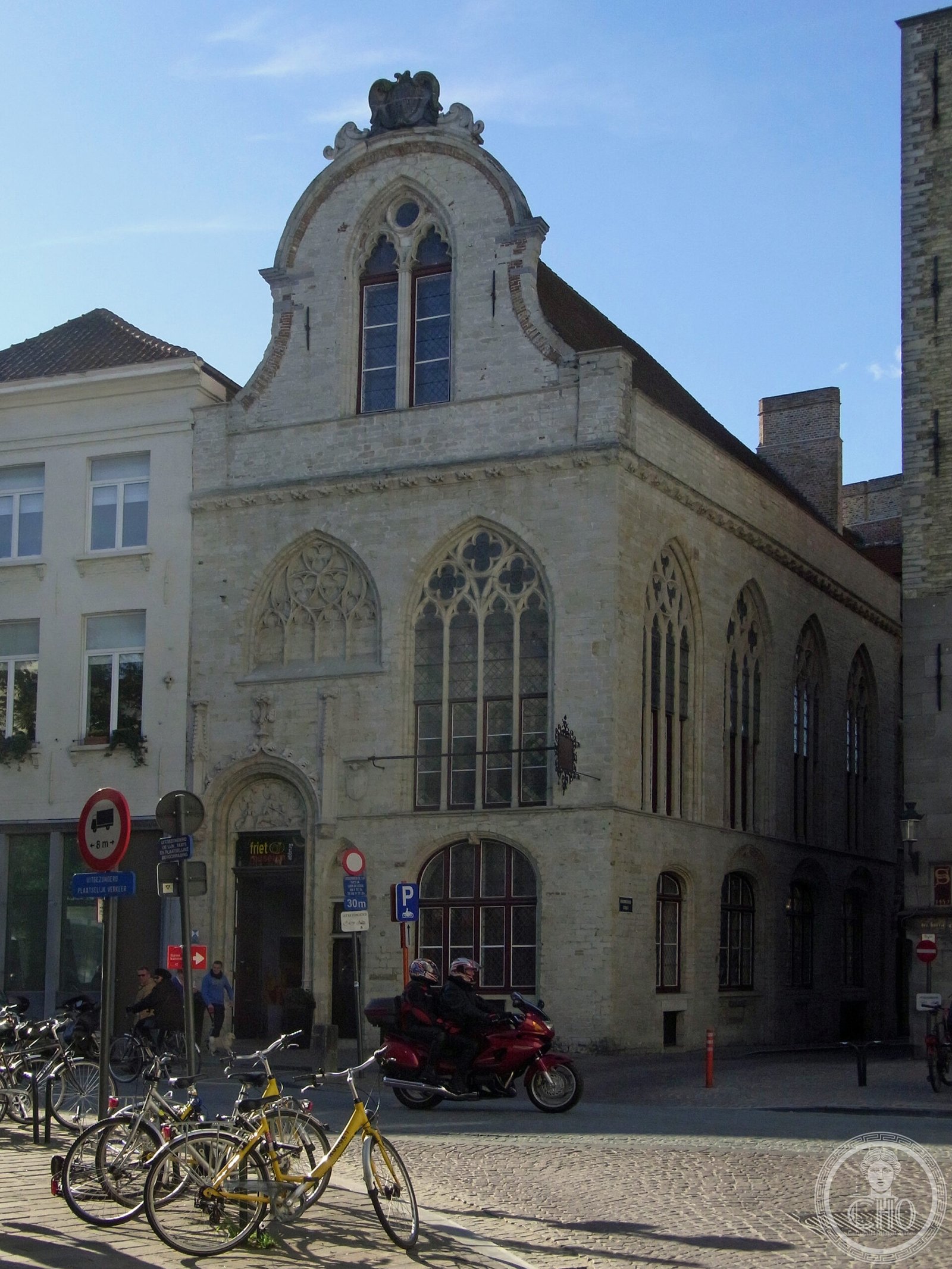
French Fries Museum (Frietmuseum)
The Frietmuseum in Bruges, Belgium, is the world’s first and only museum dedicated to the history of potatoes and the art of making Belgian fries. Opened in 2008 in the medieval Saaihalle building on Vlamingstraat, it traces the journey of the potato from its origins in the Andes of South America, through its introduction to Europe in the sixteenth century, to its transformation into the thin-fried potato strip now beloved across the globe. The museum is an unconventional but beloved Bruges attraction, combining food history, cultural heritage and interactive displays in one of the city’s finest surviving Gothic civic buildings.
At a glance
- Type
- Specialised food history museum
- Period
- Museum opened 2008; building (Saaihalle) dates to the 14th century
- Style
- Gothic civic architecture; contemporary interpretive interior
- Location
- Vlamingstraat 33, 8000 Bruges, Belgium
- Coordinates
- 51.2111° N, 3.2239° E
Overview
The Frietmuseum is a museum in Bruges, Belgium, which is devoted to the history of potatoes and the production of Belgian fries, and describes itself as “the first and only museum dedicated to potato fries.” The museum occupies the Saaihalle, a fourteenth-century Gothic building that once served as a cloth merchants’ exchange, lending its exhibits a strikingly atmospheric medieval backdrop. Belgium’s claim to be the true birthplace of the deep-fried potato strip is central to the museum’s narrative, challenging the popular anglophone assumption that fries are a French invention.
History
The potato arrived in Europe from South America in the second half of the sixteenth century, initially regarded as a botanical curiosity before spreading as a staple crop. Belgian historians argue that potato frying originated in the Meuse valley of present-day Belgium in the late seventeenth century, where poor villagers fried thin potato strips as a winter substitute for small fish when the river froze. The term “French fries” is thought to derive from Allied soldiers in World War I encountering Belgian fried potatoes and labelling them “French” because French was the dominant language of the Belgian army at the time. The Frietmuseum was founded in 2008 to document and celebrate this contested history with scholarly rigour and accessible storytelling.
What you see
The museum’s three floors guide visitors through the full story of the potato and the Belgian fry. The ground floor covers the potato’s origins in the Andean highlands of Peru and Bolivia, its cultivation by pre-Columbian civilisations and its export to Europe by Spanish conquistadors. The upper floors trace the potato’s role in European agriculture, the invention of deep frying techniques and the specific Belgian frite culture — including the legendary frituur (fry stall) tradition. Exhibits include historical implements, archival photographs, vintage friture equipment and interactive elements. The visit ends in a working frituur on the ground floor where visitors can buy freshly made Belgian fries.
Cultural significance
The Frietmuseum occupies the intersection between intangible food heritage and the concrete history of agriculture, trade and popular culture. Belgium’s frituur tradition — the neighbourhood fry stall serving paper cones of fries with mayonnaise — is recognised as a genuine cultural institution, and the museum gives it the same documentary seriousness afforded to fine art and monuments. The Saaihalle building itself is a protected medieval monument, making the museum an unexpected guardian of Bruges’s architectural heritage as well as its culinary identity.
Practical information
- Address
- Vlamingstraat 33, 8000 Brugge, Belgium
- Hours
- Check the official Frietmuseum website (frietmuseum.be) for current opening times and admission fees; generally open daily
Getting there
The museum is located in central Bruges, approximately ten minutes on foot from the Markt (Market Square) and fifteen minutes from Bruges railway station. Walk north from the Markt along Sint-Jakobsstraat and then Vlamingstraat. Bruges station is served by frequent intercity trains from Brussels (about one hour), Ghent (30 minutes) and Antwerp (about 70 minutes). Within the city, buses and horse-drawn carriages can bring visitors close to the historic centre; the old town is compact and best explored on foot.
Sources & resources
Find it on the map
See this place and what’s around it →📷 Diventa un fotografo di Cultural Heritage Online
Condividi le tue foto dei luoghi: restano pubblicate con la tua firma come autore. Più vengono viste, più ti fai conoscere — e presto un concorso premierà le foto più apprezzate.
Accedi o registrati gratis per aggiungere una foto