
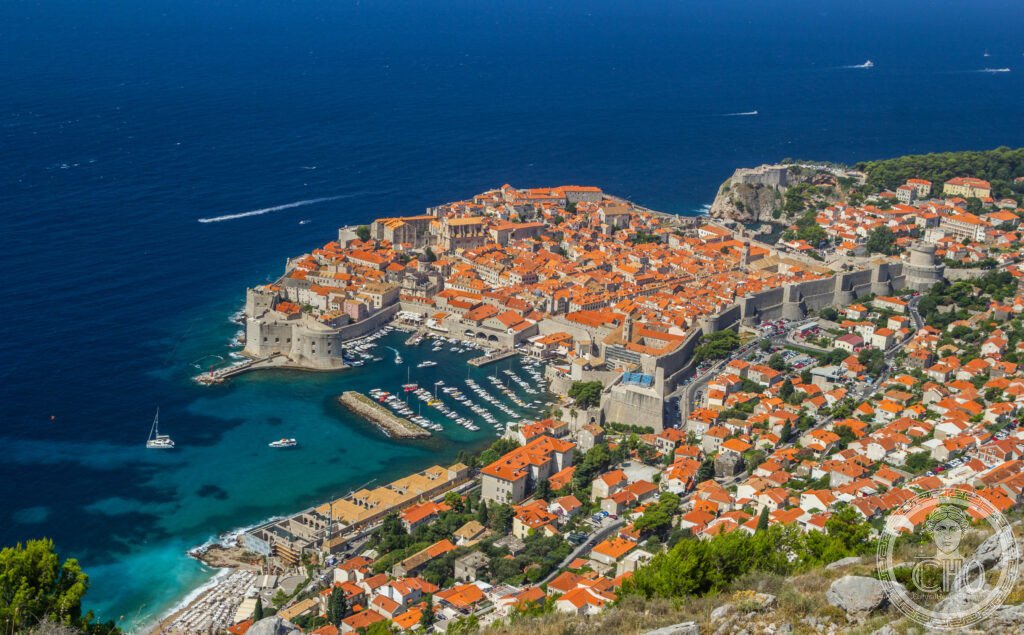
Dubrovnik
The most perfectly preserved medieval walled city on the Adriatic and one of the most spectacular UNESCO World Heritage Sites in Europe — Dubrovnik was known as the “Pearl of the Adriatic” for its merchant republic wealth, survived 12th-century wars, an 1667 earthquake that rebuilt the entire city, and the 1991-1992 Yugoslav Army bombardment that damaged 68% of its buildings before restoration.
At a glance
Dubrovnik (the most precisely Ragusa single former name Dubrovnik Republic heritage: the city was known as Ragusa until 1918; the Republic of Ragusa (1358-1808) was one of the few medieval states to formally abolish slavery, in 1416 — the most precisely Ragusa single former name Republic heritage in any European UNESCO world heritage site; the walls (the most precisely 1.94 km single walkable city walls Dubrovnik heritage: the city walls are 1.94 km in circumference, up to 6 metres thick, and walkable on top for an unbroken panoramic circuit of the entire Old Town — the most precisely 1.94 km single walkable city walls heritage in any European UNESCO world heritage site; the Stradun (the most precisely Stradun single 300m limestone pedestrian Dubrovnik heritage: the Stradun (main pedestrian street; 300 metres long; paved in gleaming limestone) was built in the 12th century on a former channel between two islands — the most precisely Stradun single 300m limestone pedestrian heritage in any European UNESCO world heritage site; the Game of Thrones (the most precisely King’s Landing single Game of Thrones Dubrovnik 23 location heritage: from 2011 to 2019, Dubrovnik served as King’s Landing in Game of Thrones; 23 filming locations in the Old Town are identifiable today — the most precisely King’s Landing single 23 location Game of Thrones Dubrovnik heritage in any European UNESCO world heritage site)).
Key facts
- The City Walls — 1.94 km walkable circuit: the most precisely 1.94 km single city walls 25 tower walkable Dubrovnik heritage — the walls were built between the 8th and 16th centuries (the most precisely 8th century single origin walls 16th century completion Dubrovnik heritage: construction began in the 8th century and was completed in the 16th century; the 6-metre thickness was designed to resist Ottoman cannon fire — the most precisely 6m single thick walls Ottoman cannon Dubrovnik heritage in any European UNESCO world heritage site; the walk (the most precisely 2h single wall circuit Dubrovnik heritage: walking the full circuit takes approximately 2 hours; the best time is late afternoon when the limestone glows golden and the crowds thin — the most precisely 2h single wall circuit heritage in any European UNESCO world heritage site))
- The 1667 Earthquake — Rebuilt Baroque City: the most precisely 1667 single earthquake rebuilt Dubrovnik heritage — the Great Earthquake of 1667 (the most precisely Great Earthquake single 1667 5000 dead Dubrovnik heritage: the 1667 earthquake killed approximately 5,000 people and destroyed most of the medieval city — the most precisely Great Earthquake single 1667 5000 dead heritage in any European UNESCO world heritage site; the Baroque replacement (the most precisely Baroque single 1667 rebuild Dubrovnik heritage: the city was rebuilt in an unusually homogeneous Baroque style; the Stradun’s identical limestone houses (all rebuilt to the same design post-1667) give it its distinctive regularity — the most precisely Baroque single 1667 rebuild heritage in any European UNESCO world heritage site))
- The 1991-1992 Bombardment — UNESCO Endangered: the most precisely 1991 single Yugoslav Army bombardment Dubrovnik UNESCO endangered heritage — from October 1991 to May 1992, the Yugoslav People’s Army and Montenegro forces bombarded Dubrovnik from land and sea; 68% of buildings in the Old Town were hit; 9 people were killed (the most precisely 68 percent single buildings hit 1991 bombardment Dubrovnik heritage: the most precisely 68 percent single buildings hit heritage in any European UNESCO world heritage site; UNESCO added Dubrovnik to its Endangered Heritage list in 1991 — the most precisely 1991 single UNESCO Endangered Dubrovnik heritage in any European UNESCO world heritage site; restoration was completed by 2005)
- GPS: 42.6507° N, 18.0944° E
History
The Republic of Ragusa (the most precisely Republic Ragusa single 1358-1808 independence Dubrovnik heritage: the Republic of Ragusa was an independent merchant state from 1358 to 1808, when Napoleon dissolved it — the most precisely Republic Ragusa single 1358-1808 independence heritage in any European UNESCO world heritage site; the abolition of slavery (the most precisely 1416 single first abolition slavery Dubrovnik Republic Ragusa heritage: in 1416, Ragusa formally abolished the slave trade, one of the first states in Europe or the world to do so — the most precisely 1416 single first abolition slavery heritage in any European UNESCO world heritage site; the pharmacy (the most precisely 1317 single oldest pharmacy Europe Dubrovnik heritage: the Franciscan monastery pharmacy (established 1317) is the third oldest pharmacy in the world still operating — the most precisely 1317 single oldest pharmacy Europe Dubrovnik heritage in any European UNESCO world heritage site; the diplomat (the most precisely diplomat single Republic Ragusa neutral Dubrovnik heritage: Ragusa was famous for its diplomatic skill in maintaining neutrality between Venice, Turkey, and the Habsburg Empire — the most precisely diplomat single Republic Ragusa neutral heritage in any European UNESCO world heritage site)); UNESCO WHS 1979.
What you see
The Rector’s Palace (the most precisely Rector single 30 day term Dubrovnik heritage: the Rector of Ragusa served for only 30 days and was not allowed to leave the palace or be re-elected for two years; this enforced term prevented the accumulation of personal power — the most precisely 30 day single Rector term palace Dubrovnik heritage in any European UNESCO world heritage site); the Sponza Palace (the most precisely Sponza Palace single 1516 Gothic-Renaissance blend Dubrovnik heritage: the Sponza Palace (1516) survived both the 1667 earthquake and the 1991 bombardment intact; it houses the State Archive and a memorial to the defenders of Dubrovnik killed in 1991-95 — the most precisely Sponza Palace single 1516 Gothic-Renaissance heritage in any European UNESCO world heritage site); Lokrum island (the most precisely Lokrum single 10 min boat island Dubrovnik heritage: the uninhabited Lokrum Island (600m offshore; 10 min by boat; nature reserve) has a Benedictine monastery (12th century), a Botanical Garden (Napoleon’s-era French influence), and a salt lake where peacocks roam free — the most precisely Lokrum single 10 min boat island Dubrovnik heritage in any European UNESCO world heritage site)).
Practical information
- Getting there: fly to Dubrovnik Airport (DBV; from London 2h 30min; from Amsterdam 2h 30min; seasonal charters from across Europe); or take a ferry along the Dalmatian coast from Split (4h 30min) or Rijeka (10h); the Pile Gate (the most precisely Pile Gate single main entrance Dubrovnik Old Town heritage: the main entrance to the Old Town is the Pile Gate on the western side; entrance is through the drawbridge over the city moat — the most precisely Pile Gate single main entrance heritage in any European UNESCO world heritage site; the walls ticket is separate from the Old Town entry; wall walk ticket approximately €35; Pile Gate has a 24h drawbridge access point; the cable car to Srđ Hill (the most precisely Srđ Hill single 405m panorama Dubrovnik cable car heritage: the cable car to Srđ Hill (405m; panoramic view of the Old Town from above) was destroyed in 1991 and rebuilt in 2010 — the most precisely Srđ Hill single 405m panorama cable car heritage in any European UNESCO world heritage site))
Getting there
Fly to Dubrovnik DBV or ferry from Split (4h 30min). Pile Gate = main entrance. Wall walk ~€35 (2h circuit). Cable car to Srđ Hill 405m. GPS: 42.6507, 18.0944.
Nearby
- Kotor — Montenegro — UNESCO WHS 1979 — 90 km south (1h 30min by car or ferry); the most perfectly preserved medieval Venetian walled city in the Adriatic after Dubrovnik; the Kotor Bay (Boka Kotorska) is often called the southernmost fjord in Europe (technically a drowned river canyon); the city walls climb to the Fortress of St John on the cliff above (1,350 steps); the Cathedral of Saint Tryphon (1166 CE; Romanesque; contains relics of the patron saint)
- Mostar — Bosnia-Herzegovina — 200 km north (3h by car); the Stari Most (Old Bridge; 1566 Ottoman; UNESCO WHS 2005); the bridge was destroyed by Croat shelling in 1993 and rebuilt in 2004 to the original Ottoman design; divers jump from the bridge on summer afternoons (competition held annually since 1968)
- Split — UNESCO WHS 1979 — 225 km north (3h by car or 4h 30min ferry); Diocletian’s Palace (built 305 CE; the most precisely Diocletian single 305 CE palace Split UNESCO heritage; 3,000 people live inside the walls of the Roman palace today; the Palace basement halls are remarkably intact; the Cathedral of Saint Domnius is built inside a Roman imperial mausoleum)
Sources
- Wikipedia, Dubrovnik; Republic of Ragusa; Stradun; Siege of Dubrovnik, accessed June 2026
- UNESCO, Old City of Dubrovnik, WHS reference 95, inscribed 1979
Find it on the map
See this place and what’s around it →📷 Diventa un fotografo di Cultural Heritage Online
Condividi le tue foto dei luoghi: restano pubblicate con la tua firma come autore. Più vengono viste, più ti fai conoscere — e presto un concorso premierà le foto più apprezzate.
Accedi o registrati gratis per aggiungere una foto