
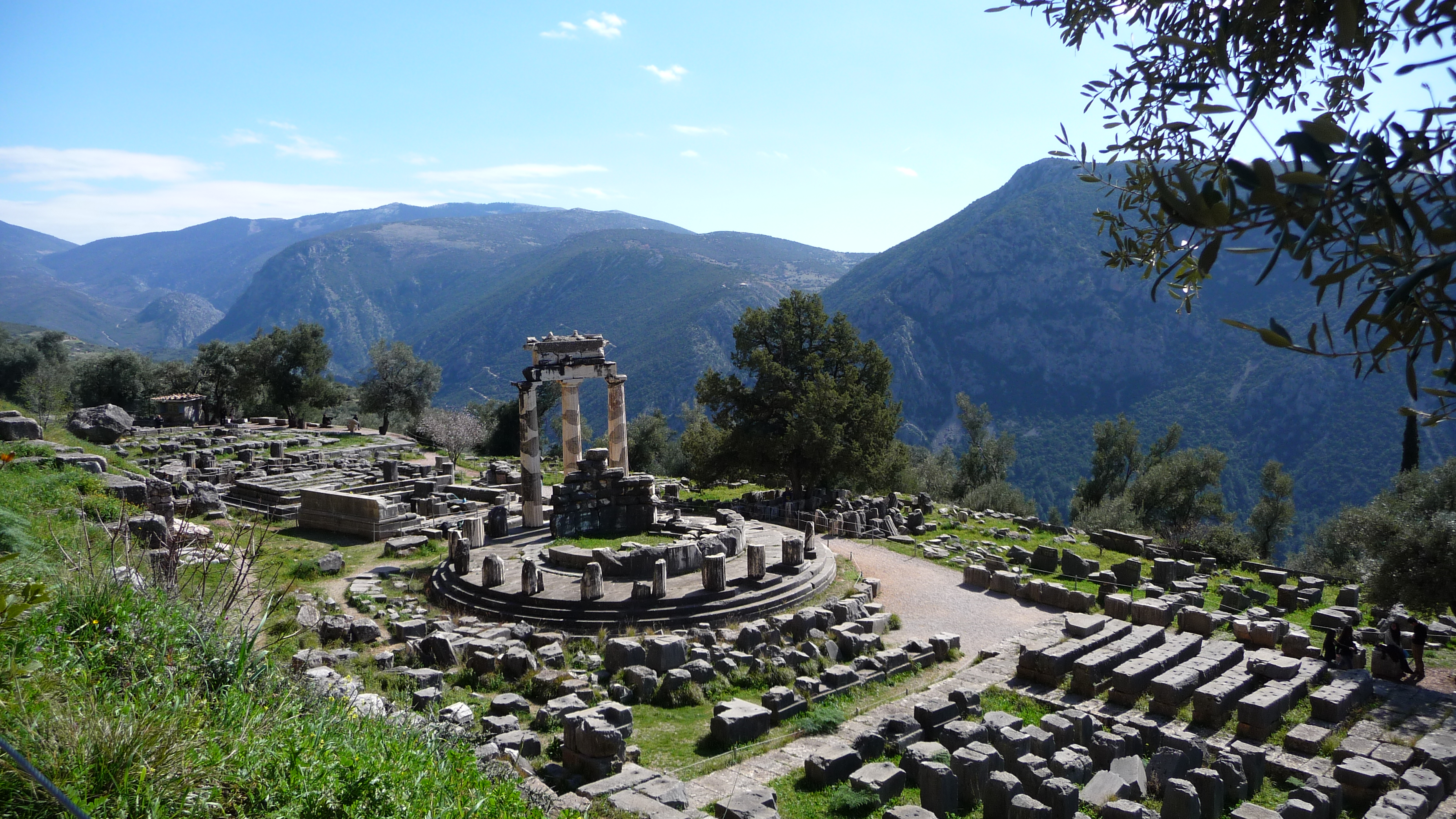
Delphi
The ancient Greeks believed the centre of the world lay at Delphi, home to the Pythia—the most influential oracle of the classical age. This sacred precinct on Mount Parnassus shaped decisions across the Mediterranean for centuries.
At a glance
Delphi was an ancient sacred precinct in central Greece, marked by the Omphalos—a stone monument signifying the world’s navel. The site served as the seat of the Pythia oracle, whose pronouncements guided rulers and citizens throughout antiquity. Today it stands as an extensive archaeological site and UNESCO World Heritage designation, reflecting its profound influence on Hellenic civilization.
History
In legend, Delphi was previously called Pytho. According to the Suda, the site took its name from the Delphyne, a she-serpent who lived there and was killed by the god Apollo—though other accounts identify the serpent as the male Python. The oracle of Delphi became the most-consulted sanctuary in the ancient world, attracting pilgrims seeking divine guidance on matters of state, war, and personal fortune. The sacred precinct occupied a delineated region on the south-western slope of Mount Parnassus, where most major Greek city-states built monuments, affirming their shared Hellenic identity.
What you see
The Omphalos—literally “navel” in Greek—remains the central symbolic monument, representing Delphi’s cosmological significance. The archaeological site comprises temples, treasuries, and votive offerings built by ancient Greek city-states, each testifying to the sanctuary’s universal importance and the builders’ devotion to the oracle’s authority.
Cultural significance
Delphi exemplified the religious and political unity of the ancient Greek world. The oracle’s pronouncements influenced military campaigns, colonization efforts, and constitutional reforms across the Mediterranean. The sanctuary demonstrated how a shared religious centre bound geographically distant city-states into a common cultural identity, making Delphi one of antiquity’s most powerful religious institutions.
Key facts
- Location: Delphi, Greece (38.4823°N, 22.5013°E)
- Significance: Seat of the Pythia oracle and spiritual centre of the ancient Greek world
- UNESCO World Heritage Site: Recognized for its profound influence on classical civilization
- Protected status: Part of Parnassos National Park since 1938
Practical information & getting there
The archaeological site adjoins a small modern town of the same name. You can reach Delphi from Athens by car or bus; the journey takes roughly two hours. The site is open year-round; check locally for current hours and admission details.
Sources & resources
Find it on the map
See this place and what’s around it →📷 Diventa un fotografo di Cultural Heritage Online
Condividi le tue foto dei luoghi: restano pubblicate con la tua firma come autore. Più vengono viste, più ti fai conoscere — e presto un concorso premierà le foto più apprezzate.
Accedi o registrati gratis per aggiungere una foto