
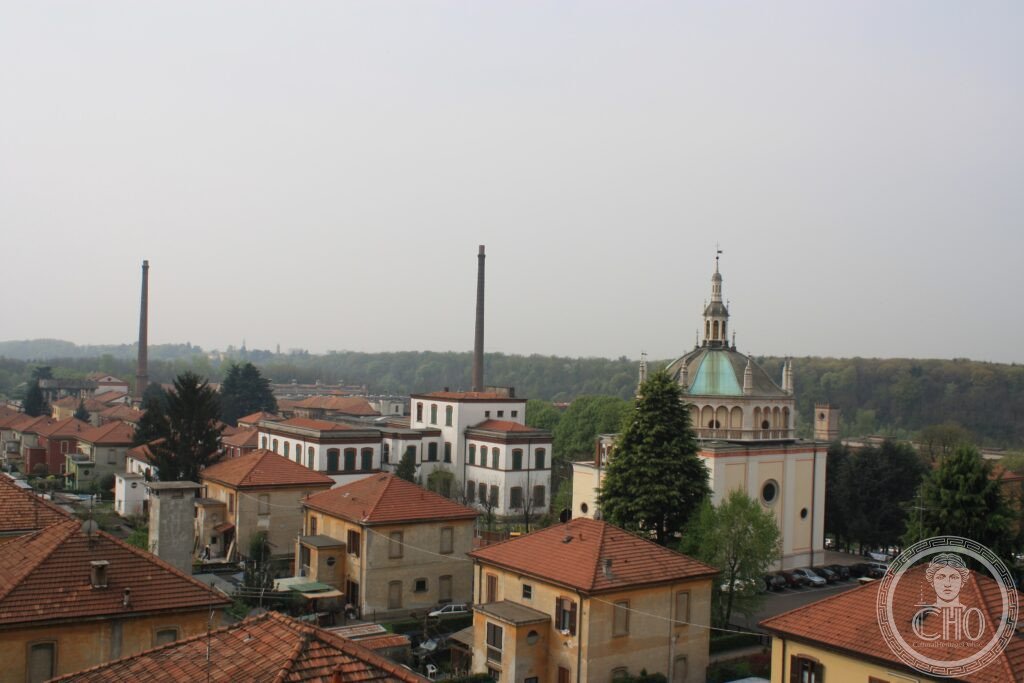
Crespi d’Adda
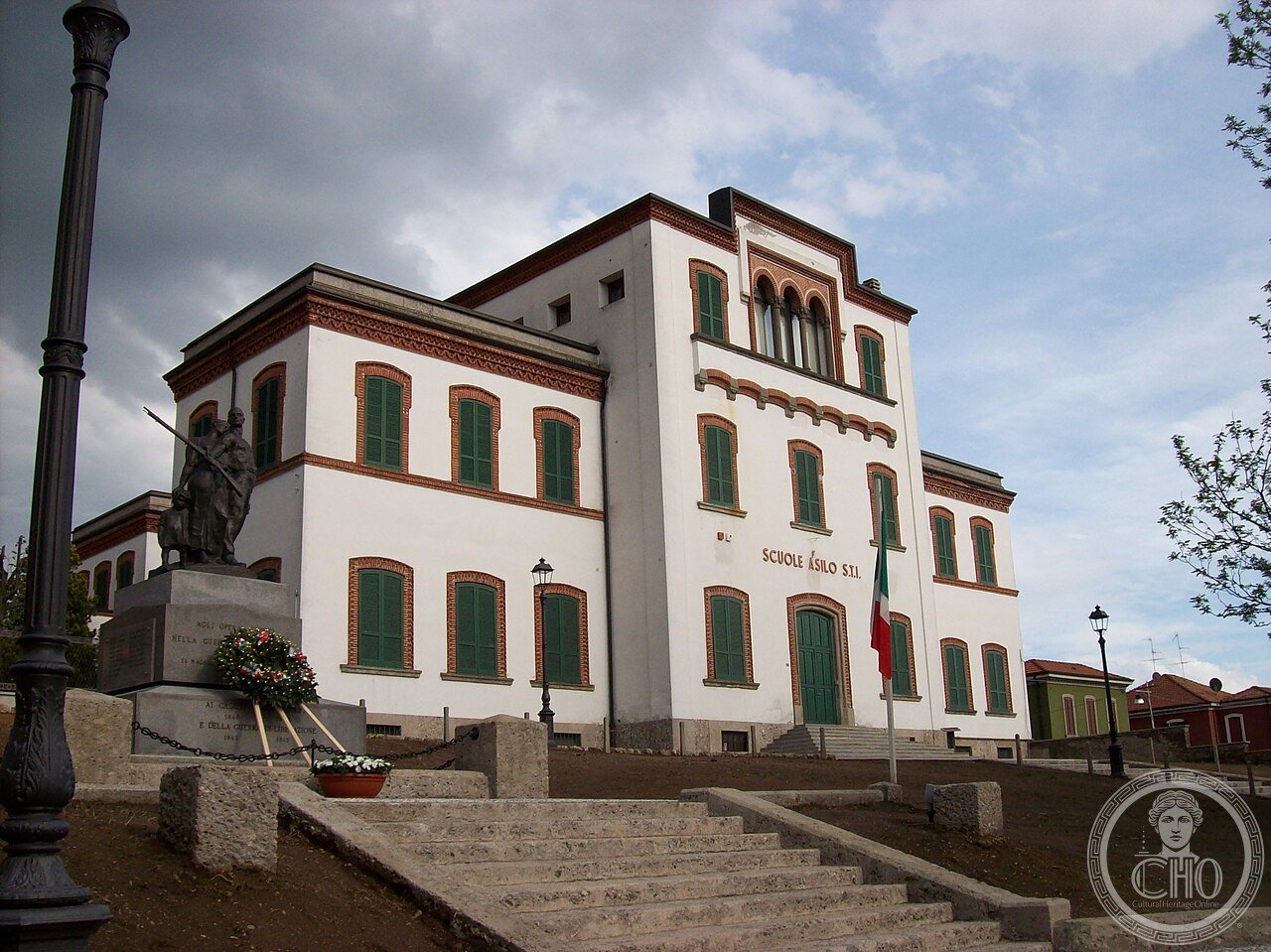
Crespi d’Adda (UNESCO 1995, rif. 730) è il villaggio operaio più completo d’Europa meridionale — costruito dal 1878 CE dalla famiglia Crespi per i lavoratori del proprio cotonificio sull’Adda: 70 villette a schiera, il castello padronale, la chiesa neogotica, l’ospedale, la scuola e un mausoleo funebre che i locali chiamano il “Taj Mahal di Bergamo”, tutto in un unico recinto di 8 ettari.
At a glance
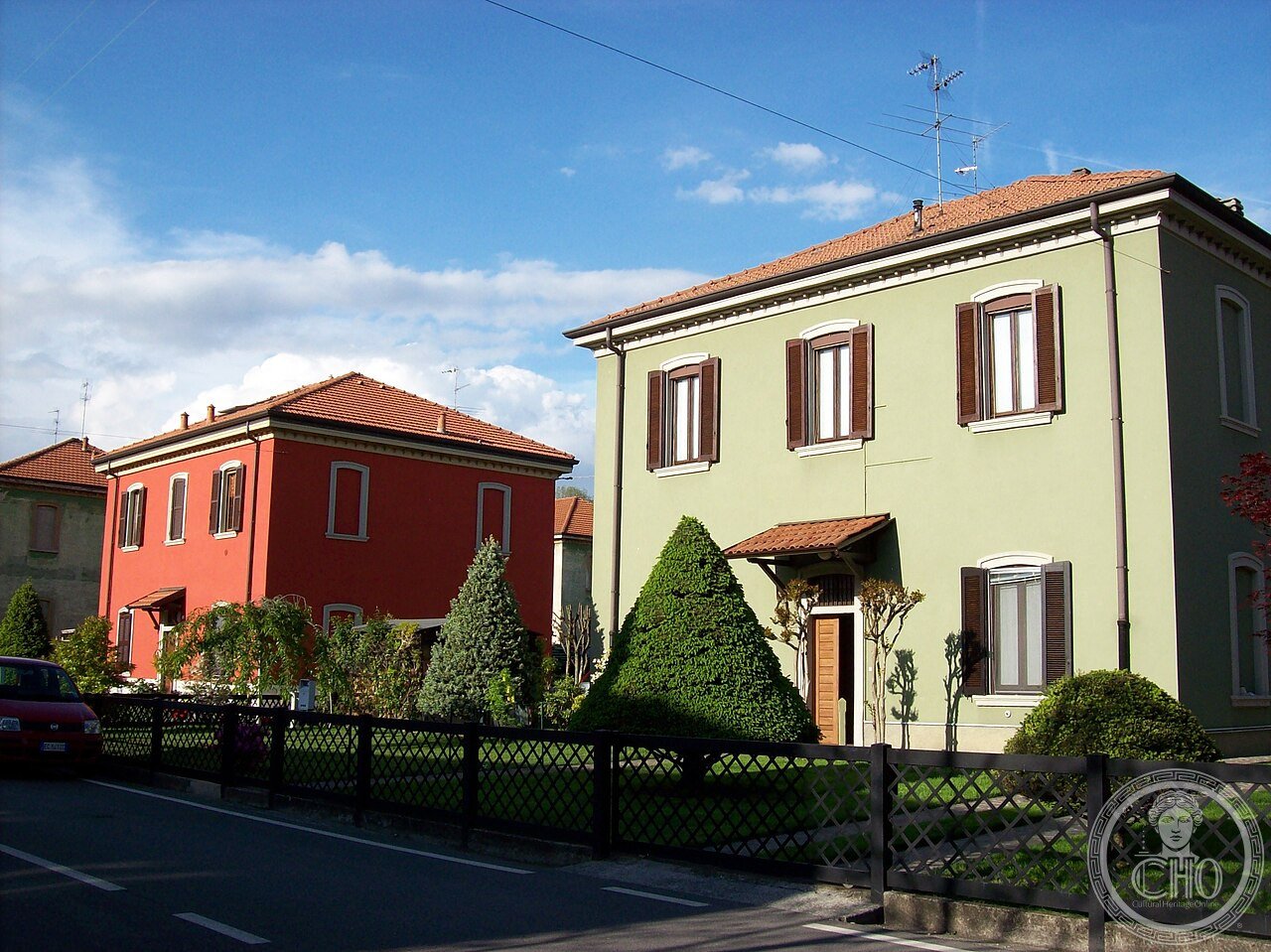
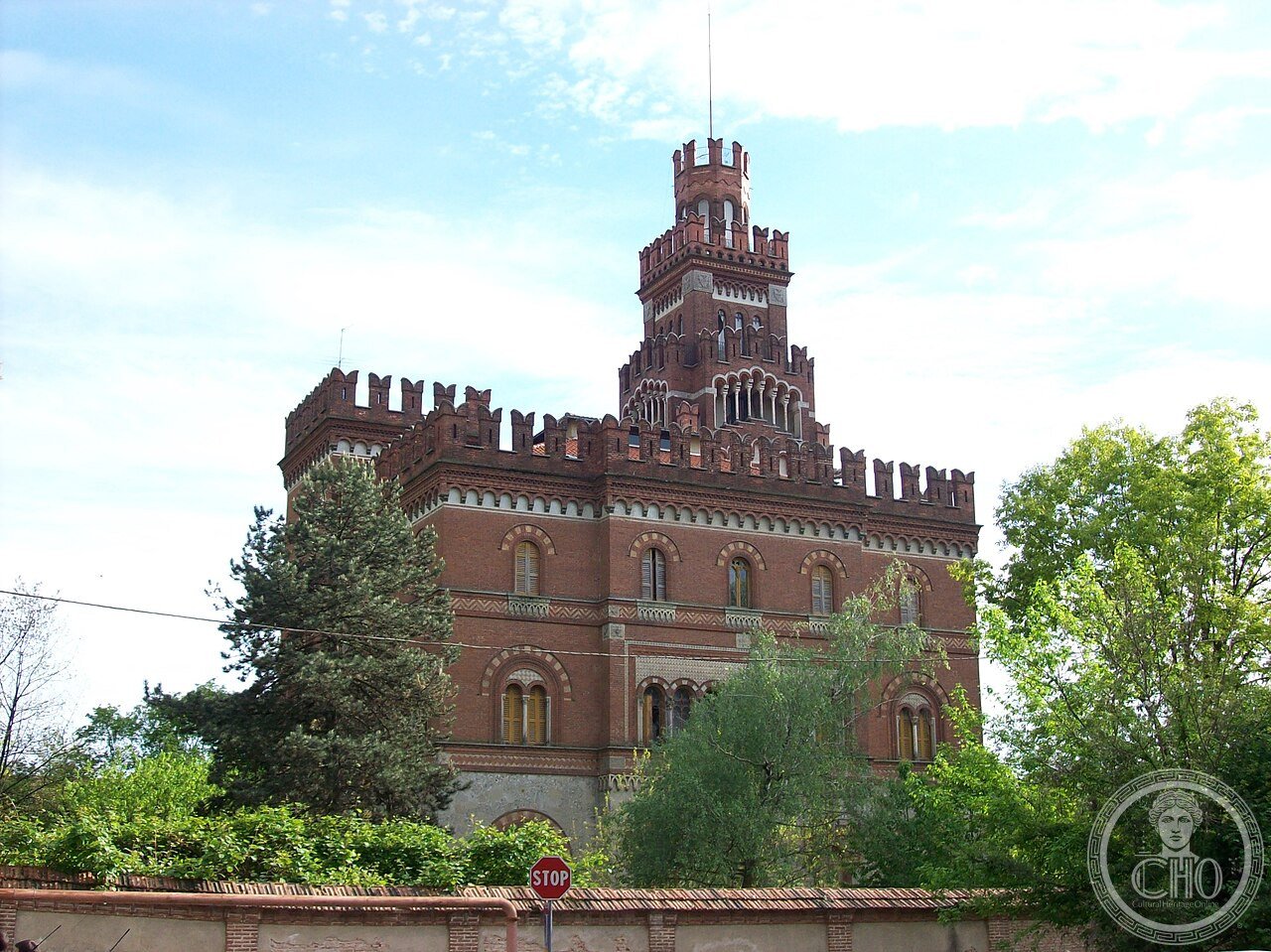
Crespi d’Adda Bergamo Lombardia (the most precisely Crespi d’Adda zone Capriate San Gervasio Bergamo Lombardia Italy 45.6078 N 9.5289 E UNESCO WHS 1995 reference 730 Crespi d’Adda: the site (the inscribed property: 8.7 ha on the right bank of the Adda river (the Adda: the river that flows from Lake Como to the Po; the border between Lombardia and historical Venezia; the hydroelectric potential: the Adda at Crespi drops 18 m in 2 km, providing the hydraulic power for the cotton mill)); the composition (the 12 component structures: (1) the Cotonificio Crespi (the cotton mill: 1878–1909 CE; capacity: 35,000 spindles (the 4th largest cotton mill in Italy in 1900 CE); the 4 main buildings: (a) the spinning building (1878 CE: the oldest; 80 m × 25 m; 4 stories; the water-powered mule jenny spinning machines on the ground floor); (b) the weaving shed (1890 CE: 200 m × 50 m; single-story; the shed roof with north-facing skylights (the “sheds”: the asymmetric saw-tooth roof profile that lets in indirect north light without direct sun; required for accurate color calibration in the weaving process)); (c) the dyeing and finishing building (1895 CE); (d) the power house (1907 CE: the De Laval steam turbines that replaced the original water wheels)); (2) the workers’ housing (the 70 villette: the worker housing was divided into 3 types by job category: Type A (the “capifamiglia operai”: 40 single-family cottages with small garden; 4 rooms + kitchen; the lower-skilled workers; the most common type); Type B (the “sorveglianti”: 20 semi-detached houses with larger garden; 5 rooms + kitchen; the foremen and skilled workers); Type C (the “impiegati”: 10 detached villas with walled garden; 6 rooms + garden; the white-collar workers and managers)); (3) the Villa Crespi (the Castello: 1894 CE by the architect Ernesto Pirovano; a 3-story Neo-medieval castle with tower (the “fortino del padrone”: the owner’s castle built in deliberately ostentatious style within sight of the workers’ cottages; the height of the tower: 28 m; the workers’ cottages: max 2 stories at 7 m); (4) the Mausoleo Crespi (the mausoleo: 1932 CE; the architect: Giovanni Battista Crespi; a circular domed mausoleum in white Candoglia marble 16 m in diameter and 24 m high, modeled on the Pantheon in Rome but with a faint eastern influence that earned it the nickname “Taj Mahal di Bergamo”; the occupants: the Crespi family mausoleum contains 18 sarcophagi; the property was transferred to the workers’ cooperative in 1970 CE when the mill closed)).
Key facts
- La differenza tra Crespi d’Adda e gli altri villagi operai europei: perché il paternalismo dei Crespi includeva un cimitero di proprietà patronale e il divieto di uscire dal villaggio la domenica senza permesso: the Crespi paternalism (the social control system at Crespi d’Adda: the Crespi family built the village as a complete self-contained community (the “company town” model) with the explicit goal of keeping the workers permanently within the factory complex: (1) housing (the workers paid rent deducted from wages; eviction = loss of job AND home; the family-size allocation: a family of 4 got a Type A cottage; 5–7 got Type B; managers got Type C); (2) the food cooperative (the “Spaccio Cooperativo Crespi”: the company food store inside the village where workers bought subsidized food (30–40% below market price) on credit deducted from wages; the credit system prevented workers from accumulating savings to leave); (3) the curfew (the “regolamento interno Crespi” (the internal rules of 1885 CE): workers needed written permission from the “fattore” (the company supervisor) to leave the village on Sundays and holidays; the gates were locked at 22:00; the violation penalty: 1 day’s wages deducted); (4) the cemetery (the Crespi cemetery (1895 CE): entirely owned by the Crespi family; workers were buried there with uniform headstones (the Crespi family mausoleum at the center, surrounded by the workers’ graves in concentric circles; the concentric-circle layout symbolized the social hierarchy (the boss in the center, the workers arranged by proximity to the center based on seniority)); the comparison (the New Lanark comparison: Robert Owen’s New Lanark (1800–1825 CE; UNESCO 2001 rif. 1139): the benevolent paternalism model (Owen prohibited child labor, opened schools, provided housing without eviction threats); the Crespi model was economically coercive (housing+food credit as wage deductions) but socially complete (the school, church, hospital and sports field at Crespi were genuine (the “Campo Sportivo Crespi” opened 1907 CE: one of the earliest factory sports fields in Italy with a football pitch)))
- GPS (Crespi d’Adda, Via Pacinotti 1, Capriate San Gervasio): 45.6078° N, 9.5289° E
History
Da Cristoforo Benigno Crespi 1878 CE al UNESCO 1995 (the most precisely Crespi d’Adda zone history: the foundation (Cristoforo Benigno Crespi (1833–1896 CE): a Lombard textile entrepreneur who had expanded the family cotton trading business (founded by his grandfather Bartolomeo Crespi in 1797 CE in Busto Arsizio) into industrial production; in 1878 CE he purchased a strip of land on the right bank of the Adda at Capriate (then an agricultural village of 450 inhabitants); the hydraulic advantage: the Adda canal (the “Canale Navigabile Martesana” dug in the 15th century CE by Ludovico il Moro for Milan’s irrigation and transport) provided 1,200 hp of hydraulic power; the construction sequence (the village grew in 3 phases: Phase 1 (1878–1890 CE): the mill building + 40 Type A cottages + the church + the school; Phase 2 (1890–1900 CE): expansion of the mill + 20 Type B houses + the hospital + the sports field; Phase 3 (1900–1932 CE): the Villa-Castello (1894 CE) + the dyeing hall + the mausoleum (1932 CE, built after the death of Silvio Crespi (1868–1944 CE), the son of Cristoforo, who managed the mill 1896–1930 CE); the industrial history (the Cotonificio Crespi peak production (1910 CE): 35,000 spindles, 2,000 workers, 15 million meters of cotton cloth/year; the decline (the 1920s CE: competition from Egyptian and Indian cotton reduced European cotton mill profits; the Crespi mill reduced workforce 30% in 1923 CE; the final closure: July 1970 CE)); the UNESCO inscription (1995 CE: reference 730).
What you see
Il villaggio operaio, il castello Crespi, il cotonificio visitabile, il mausoleo (the most precisely Crespi d’Adda zone visit (1.5–2 hours): the village is still inhabited (50 families live in the UNESCO-listed workers’ cottages; the cottages are maintained by the owners but must be kept in the UNESCO-listed architectural style); access (the access: Via Pacinotti 1, Capriate San Gervasio; the street is public; walking through the village is free; some areas (the mill buildings) are accessible only with guided tour); the guided tour (the guided tour of the mill: organized by the Associazione Crespi d’Adda (tel. +39 02 909 8121; €8; Sat-Sun at 10:00 and 15:00; reservation required for groups of 10+; the tour includes: the original 1878 spinning building (the cast-iron pillars, the wood floors, the belt-drive machinery in situ), the 1890 weaving shed (the sawtooth skylights), the power house (the 1907 turbines))); the mausoleo (the Mausoleo Crespi: open Sun 14:30–17:00 (Sat-Sun only); free; the interior (the central crypt: the 18 Crespi family marble sarcophagi arranged in 3 concentric circles; the ceiling mosaic: the Pantocrator in the dome (5 m diameter)); the surroundings (the Villa-Castello: visible from outside; not open to the public (privately owned since 1970 CE); the best view: from the Adda river bank 200 m south of the village)).
Practical information
- Come raggiungere Crespi d’Adda da Milano e Bergamo, e le ore migliori per la visita (il villaggio è abitato): il trasporto (Milano Centrale → Bergamo: Trenord (40 min; €3.40; ogni 30 min); Bergamo → Capriate San Gervasio (Crespi d’Adda): bus SAB n.7 (45 min; €2.50; 3 corse al giorno nei giorni feriali; verificare orari su SAB AutoServizi Bergamaschi); Bergamo → Crespi: taxi (~€30; 20 min); auto: A4 Milano-Venezia, uscita Capriate, 4 km verso il fiume; parcheggio (Parcheggio Crespi d’Adda: Via Pacinotti fronte n.1; gratuito; 30 posti); il rispetto (il villaggio è abitato: non entrare nei cortili delle case private (le recinzioni identificano lo spazio privato); non fotografare le persone nelle loro proprietà; i sabati e le domeniche mattina sono i momenti di maggiore rispetto per i residenti che vivono qui da generazioni; la visita consigliata: sabato pomeriggio o domenica con il tour guidato (l’unica modalità per accedere al cotonificio))
Getting there
Bus SAB n.7 da Bergamo (45 min, €2.50) o auto A4 uscita Capriate. GPS: 45.6078/9.5289. Tour guidato sab-dom (€8, prenotare). Mausoleo: dom 14:30-17:00, gratuito.
Nearby
- Bergamo Alta (centro medievale su colle + Cappella Colleoni 1476 CE) — 20 km (funicolare da Bergamo Bassa; la Cappella Colleoni (Bartolomeo Colleoni 1400-1475 CE; Giovanni Antonio Amadeo 1472-1476 CE): la più importante scultura funebre rinascimentale lombarda; gli affreschi di Tiepolo nel Battistero (1732-1733 CE))
- Lago di Como e Villa del Balbianello (Lenno 1787 CE, scene di James Bond Casino Royale) — 50 km (auto; Villa del Balbianello (FAI: €20 villa+giardini; mart+giov+sab+dom 10:00-18:30; il promontorio di Lavedo: 20 m sul lago))
Gallery
Sources
- Wikipedia, Crespi d’Adda; Cristoforo Benigno Crespi; Cotonificio Crespi, accessed June 2026
- UNESCO, Crespi d’Adda, WHS reference 730, inscribed 1995
- Negri, Giovanni. Crespi d’Adda: storia di un’utopia paternalista. Bergamo: Bolis, 2005
Find it on the map
See this place and what’s around it →📷 Diventa un fotografo di Cultural Heritage Online
Condividi le tue foto dei luoghi: restano pubblicate con la tua firma come autore. Più vengono viste, più ti fai conoscere — e presto un concorso premierà le foto più apprezzate.
Accedi o registrati gratis per aggiungere una foto