
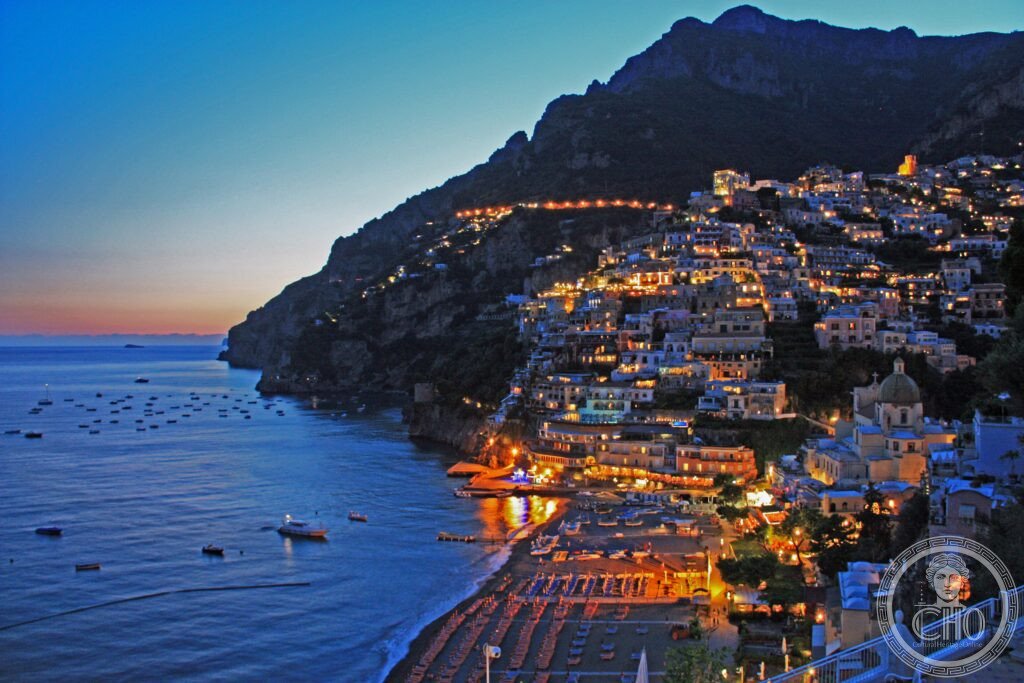
Costiera Amalfitana
La Costiera Amalfitana (UNESCO 1997, rif. 830) è il paesaggio mediterraneo più famoso del mondo — 25 km di scogliere calcaree con 11 borghi a terrazze (Positano, Amalfi, Ravello, Atrani, Praiano), la prima carta nautica della storia (la Tavola Amalfitana XI sec. CE), e il limone sfusato che cresce solo qui tra roccia e mare.
At a glance
Costiera Amalfitana Campania (the most precisely Costiera Amalfitana zone Salerno Campania Italy 40.6343 N 14.6027 E UNESCO WHS 1997 reference 830 Amalfi Coast: the site (the Costiera Amalfitana: the 25 km coastal strip between Positano (the westernmost point: 40.6279 N 14.4861 E) and Vietri sul Mare (the easternmost point: 40.7963 N 14.7340 E); the 11 UNESCO municipalities: Positano, Praiano, Furore, Conca dei Marini, Amalfi, Atrani, Ravello, Minori, Maiori, Cetara, Vietri sul Mare; the geology (the Monti Lattari mountains (1,131 m maximum at Monte Cerreto): Triassic dolomite limestone (240–200 Ma; the Dolomia Principale formation: a massive grey-beige dolomite deposited in a tropical shallow sea 240 Ma) overlying the Tyrrhenian Sea floor (the sea floor off the Costiera Amalfitana: the continental shelf drops from 0 to 400 m in 2 km); the cliff height: the cliffs of the Costiera range from 200 m (Positano) to 600 m (the cliffs of Furore between Positano and Praiano)); the Amalfi Republic (the Republic of Amalfi (the first Italian maritime republic: established c.839 CE; the “Tabula de Amalpha” (the Amalfian Table): the most important historical claim of the Republic: the Amalfitans claim to have invented the maritime compass (c.1090 CE; attributed to Flavio Gioia of Amalfi): this claim is disputed (the earliest documented magnetic compass in European use dates to 1187 CE (Alexander Neckam, “De Naturis Rerum”); the Chinese had the compass 1,000 years before: Wang Xu, 4th century BCE); what is documented (the Tabula Amalphitana: a maritime code of laws (the “Tavola amalfitana”: the earliest known codification of Mediterranean maritime law (c.1000 CE; the Tavola: 6 chapters; the penalties for jettison, collision, piracy; in force from Marseille to Constantinople from 1000 to 1570 CE))); the area of the UNESCO site (the inscribed zone: the entire municipality plus a buffer zone of the marine protected area (Area Marina Protetta Costa di Amalfi: established 1997 CE: 12 km² of protected sea from Punta del Capo (Sorrento) to Capo Conca).
Key facts
- Il limone sfusato amalfitano: perché cresce solo su questa costa e perché è il 90% dell’IGP Limone Costa d’Amalfi: the sfusato amalfitano lemon (the “sfusato amalfitano” (Citrus × limon ’Sfusato Amalfitano’): the variety of lemon unique to the Costiera Amalfitana; the morphology (the sfusato shape: elongated (sfusato = “tapered”) at both ends (the standard lemon is round at the base: the sfusato is pointed at BOTH ends); the size: 8–14 cm length (much larger than the standard Lisbon lemon: 7–10 cm); the weight: 130–350 g (vs 100–150 g for a standard lemon); the color: the mature sfusato is bright-yellow (Munsell 5Y 8/10) with a very thick, fragrant peel (7–12 mm peel thickness vs 3–5 mm standard)); the origin (the sfusato was documented in Amalfi documents from 1050 CE (the earliest written reference: a property deed at the Archivio Storico del Comune di Amalfi mentioning “arbores limonum sfusatorum” in a terrace garden above Amalfi town)); the IGP protection (Limone Costa d’Amalfi IGP: registered by the EU in 2001; the production area: the 11 UNESCO municipalities; the production: approximately 3,000 tons/year from 2,500 hectares of terraced lemon groves; the price premium: sfusato sells at €3–8/kg at the origin (vs €0.50–1.00/kg for standard lemons in Italian supermarkets)); the use (the sfusato lemon juice is 8–12% citric acid (the standard lemon is 5–7%): the higher acidity explains its use in the “Limoncello Costa d’Amalfi” (a distinct production zone from the Limoncello di Sorrento IGP (which uses the Femminello del Gargano variety))))
- GPS (Amalfi, Piazza del Duomo, centro): 40.6343° N, 14.6027° E
History
Dalla Repubblica di Amalfi IX sec. CE al UNESCO 1997 (the most precisely Costiera Amalfitana zone history: the Republic of Amalfi (the Duchy/Republic of Amalfi (839–1131 CE): the only Italian maritime republic founded as a duchy under nominal Byzantine sovereignty: Amalfi was a Byzantine duchy from 839 CE (when the inhabitants expelled the Lombard garrison and placed themselves under the Byzantine Emperor Theophilos); the peak (the peak of the Republic: 900–1100 CE: Amalfi had 50,000–70,000 inhabitants (larger than most northern European cities of the time); the Amalfitan merchants had counting-houses (fondachi) in: Constantinople, Alexandria, Jerusalem, Antioch, Palermo, Pisa, Genoa, Marseille; the currency (the “tareno”: the Amalfitan gold coin (c.900–1131 CE): the most widely accepted currency of the central Mediterranean before the Florentine florin (1252 CE); the tareno = 1/30 of a Byzantine solidus in gold fineness (21 karat, 0.875 purity)); the collapse (1131 CE: the Norman king Roger II of Sicily sacked Amalfi and incorporated the Republic into the Kingdom of Sicily; the city never recovered its former commercial significance)); the terraces (the terraced landscape (the 8,000 agricultural terraces of the Costiera Amalfitana: built between the 10th and 14th centuries CE; the terrace walls (“macerine”: dry-stone walls in Triassic dolomite; the construction system: the terrace stones are split along the bedding planes of the limestone (no quarrying: just cleaving along the natural fracture planes); a 1 m × 1 m wall section requires approximately 120 stones and 4 hours of labor)); the tourism (the modern tourism: John Steinbeck (“Positano bites deep”: the 1953 essay in Harper’s Bazaar that launched the Positano tourism industry); Richard Wagner at Ravello (1880 CE: the garden of Villa Rufolo inspired Klingsor’s magic garden in “Parsifal” (premiered 1882 CE at Bayreuth))); the UNESCO inscription (1997 CE: reference 830).
What you see
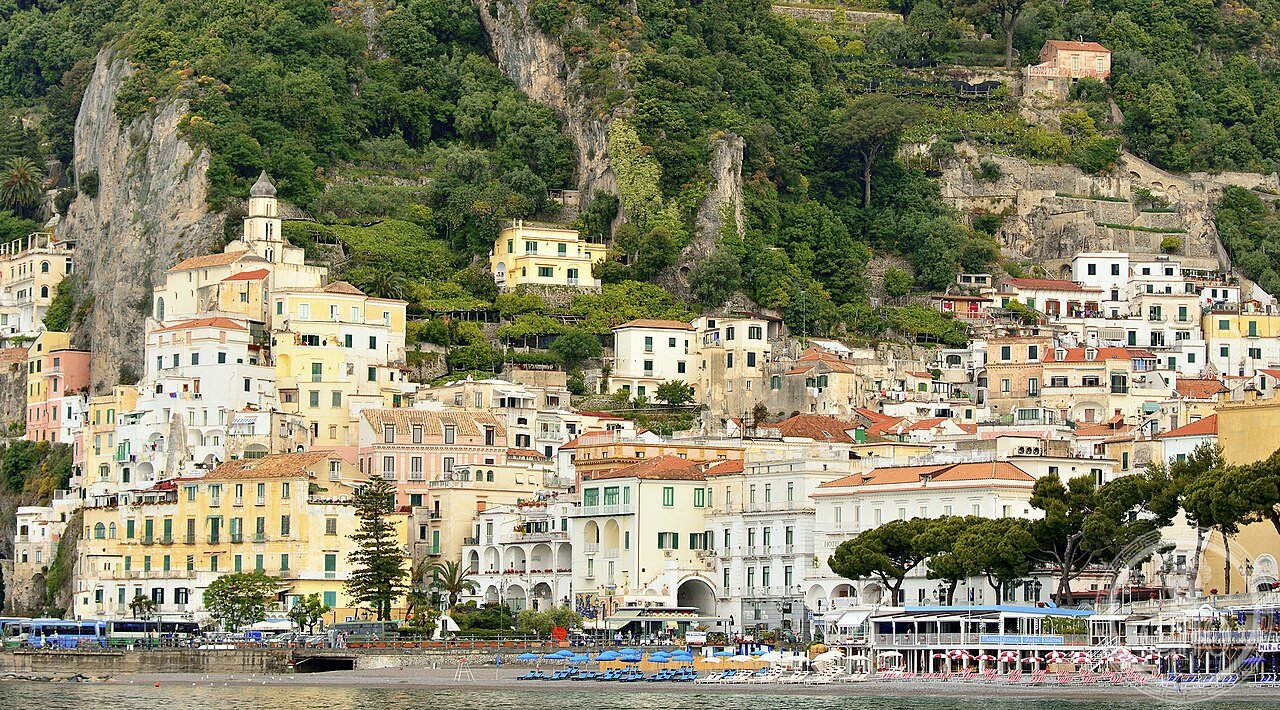
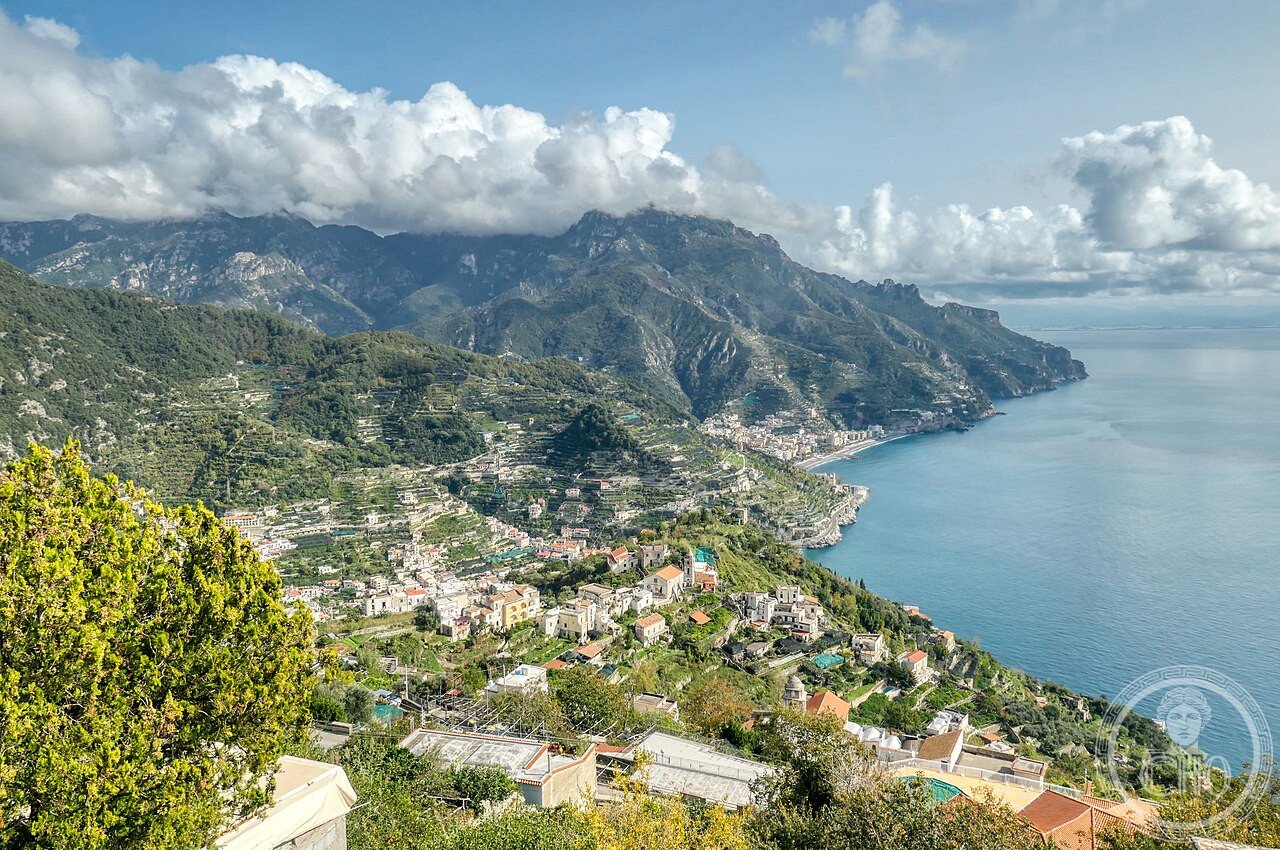
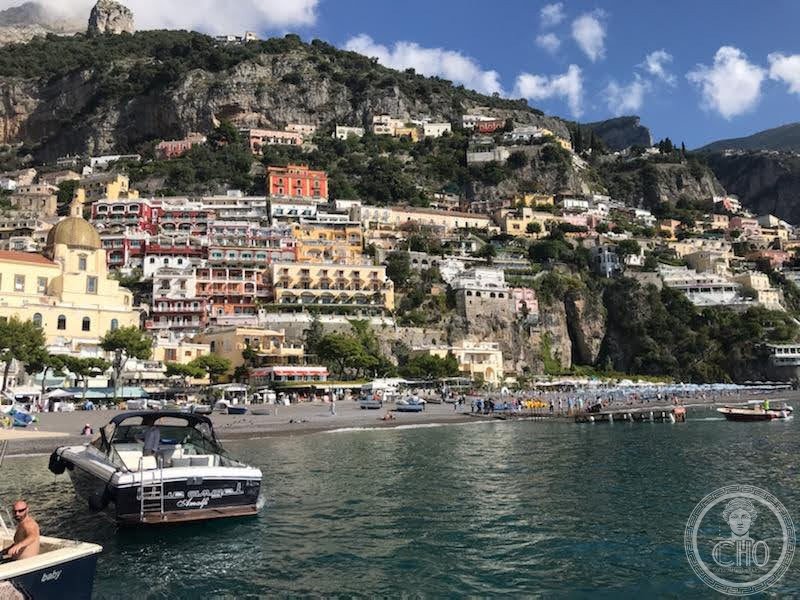
Positano, Amalfi duomo, Ravello, Atrani, il Sentiero degli Dei (the most precisely Costiera Amalfitana zone visit (2–4 days): Day 1 — Positano (the most picturesque village: the Chiesa di Santa Maria Assunta (the 13th century CE church: the Byzantine icon of the Madonna on the main altar (the “Madonna Nera”: the 13th century CE Byzantine panel painting of a Black Madonna; the tradition: the icon was on a pirate ship that was damaged in a storm off Positano; the sailors prayed and heard a voice saying “posa, posa” (stop, stop); they landed at Positano and left the icon: the legend explains the origin of the name “Positano”); the Spiaggia Grande (the main beach: 200 m long; the ferries to Capri (45 min; €18) and Amalfi (30 min; €10))); Day 2 — Amalfi + Atrani (the Cathedral of Sant’Andrea (the Duomo di Amalfi: 9th century CE + 13th century CE cloister (“Chiostro del Paradiso”: the Moorish arches + palm garden: the most beautiful Moorish-Gothic cloister in Italy); the Arsenal of the Republic of Amalfi (the Arsenale della Repubblica: the 11th century CE naval shipyard; now a museum; €3); Atrani (500 m east of Amalfi: the smallest municipality by area in Italy (0.12 km²); the Collegiate Church of Santa Maria Maddalena (12th century CE); the only beach in the Costiera Amalfitana with a freshwater river (the Canneto river))); Day 3 — Ravello (the Villa Rufolo (the 13th century CE Norman villa: the garden that inspired Wagner; open daily 9:00–sunset; €7); the Villa Cimbrone (the garden with the “Terrazza dell’Infinito” (the “Terrace of the Infinity”: the row of marble busts on the cliff edge with the view of the Costiera to the Gulf of Salerno: the most photographed view of the Amalfi Coast); €7) + the Ravello Music Festival (July: the Wagnerkonzert and the Ravello Concert Society)).
Practical information
- Come percorrere la Costiera Amalfitana senza auto e cosa scegliere tra bus SITA, ferry Travelmar e Sentiero degli Dei: il trasporto (Napoli → Sorrento: Circumvesuviana (1h; €4.10; ogni 30 min da Napoli Garibaldi); Sorrento → Positano: SITA bus 5100 (45 min; €2.50) o ferry Travelmar (20 min; €15; apr–ott); Positano → Amalfi: SITA bus (40 min; €2.50) o ferry (30 min; €10); Amalfi → Ravello: SITA bus 5010 (30 min; €1.50); il Sentiero degli Dei (il trekking: 7.8 km da Agerola (Bomerano; bus SITA da Amalfi 45 min) a Nocelle (Positano alto); il sentiero (900 m altitudine; 300 m dislivello positivo–negativo; 3h; difficoltà media; l’uscita a Nocelle: 400 gradini per scendere a Positano spiaggia; €0 accesso); periodo ideale: maggio e ottobre (temperatura 18–22°C; fiori di ginestra; niente turisti; i mesi luglio-agosto = caldo + folla: 1.500 escursionisti/giorno))
Getting there
Napoli Garibaldi → Sorrento Circumvesuviana (1h, €4.10) poi SITA bus → Positano (45 min, €2.50) o ferry. GPS Amalfi Duomo: 40.6343/14.6027. Periodo ideale: mag–giu e set–ott.
Nearby
- Pompei (UNESCO 1997 rif. 829 — Villa dei Misteri + anfiteatro 70 BCE) — 45 km (via SITA + Circumvesuviana da Sorrento; la città romana sepolta dal Vesuvio nel 79 CE; €16; aperto 9:00–19:00 mar–dom)
- Isola di Capri (Villa Jovis di Tiberio + Grotta Azzurra + I Faraglioni) — 45 min in ferry da Positano (la Villa Jovis: il palazzo imperiale di Tiberio (26–37 CE): il mirador più drammatico del Mediterraneo; ferry da Positano €18)
Gallery

Sources
- Wikipedia, Amalfi Coast; Amalfi; Positano; Ravello, accessed June 2026
- UNESCO, Amalfi Coast, WHS reference 830, inscribed 1997
- Steinbeck, John. “Positano.” Harper’s Bazaar, May 1953 (the essay that launched Positano’s modern tourism)
Find it on the map
See this place and what’s around it →📷 Diventa un fotografo di Cultural Heritage Online
Condividi le tue foto dei luoghi: restano pubblicate con la tua firma come autore. Più vengono viste, più ti fai conoscere — e presto un concorso premierà le foto più apprezzate.
Accedi o registrati gratis per aggiungere una foto