
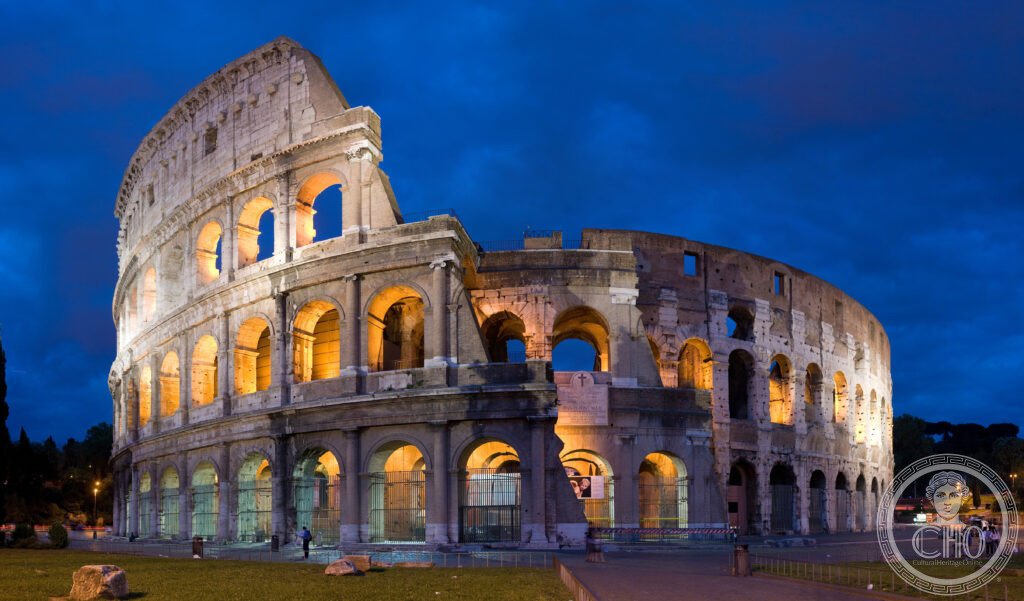
Colosseo — Anfiteatro Flavio, Roma
The largest amphitheatre ever built — 80,000 spectators, 160 CE — still the most visited building in the world after twenty centuries, whose elliptical form, four-storey arcade, and hypogeum (underground network) define what a Roman building looks like in the imagination of every culture that has inherited Rome.
At a glance
The Colosseum (officially Anfiteatro Flavio — Flavian Amphitheatre) stands in the valley between the Palatine, Caelian, and Esquiline hills at the centre of ancient Rome, 500 metres east of the Roman Forum. The largest building of the Roman Empire, it measures 188 by 156 metres externally, rises to a height of 48 metres in four storeys, and in its full configuration could seat approximately 50,000 to 80,000 spectators. Construction began under the Emperor Vespasian in 70 CE on the site of the artificial lake of Nero’s Domus Aurea; it was completed and inaugurated under his son Titus in 80 CE, with 100 days of games.
The Colosseum is part of the UNESCO “Rome” inscription (1980, ref. 91 rev.), which also covers the historic centre, the Vatican, and the San Paolo Fuori le Mura basilica. It has been the most visited tourist site in Italy for the past decade, receiving between five and seven million visitors per year.
Key facts
- Construction: 70–80 CE, under Vespasian (begun) and Titus (completed)
- Dimensions: 188 × 156 m external; arena floor 83 × 48 m; height 48 m
- Capacity: c. 50,000–80,000 spectators
- Inauguration: 80 CE; 100 days of games under Titus
- Later additions: Third tier completed under Domitian (81–96 CE); hypogeum added II century CE
- UNESCO inscription: 1980, ref. 91 rev. — “Historic Centre of Rome, the Holy See and San Paolo fuori le Mura”
- GPS: 41.8902, 12.4922 — Google Maps
History
The decision to build the Colosseum on the site of Nero’s private lake was a deliberate political statement by Vespasian: the hated emperor’s pleasure grounds would become a public space for the entertainment of the Roman people. The building was financed, according to the inscription preserved on the arch of Titus, from the spoils of the sack of Jerusalem (70 CE) — an association that made the Colosseum the most politically loaded building of its age.
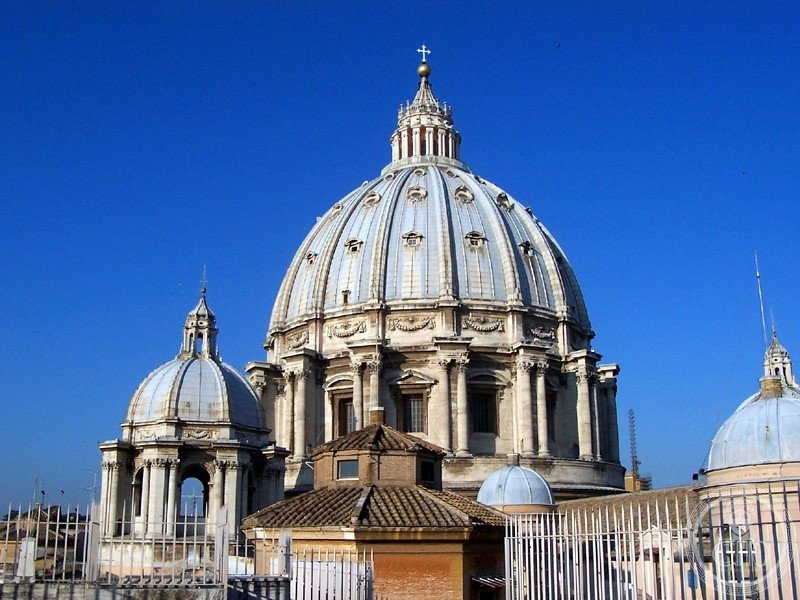
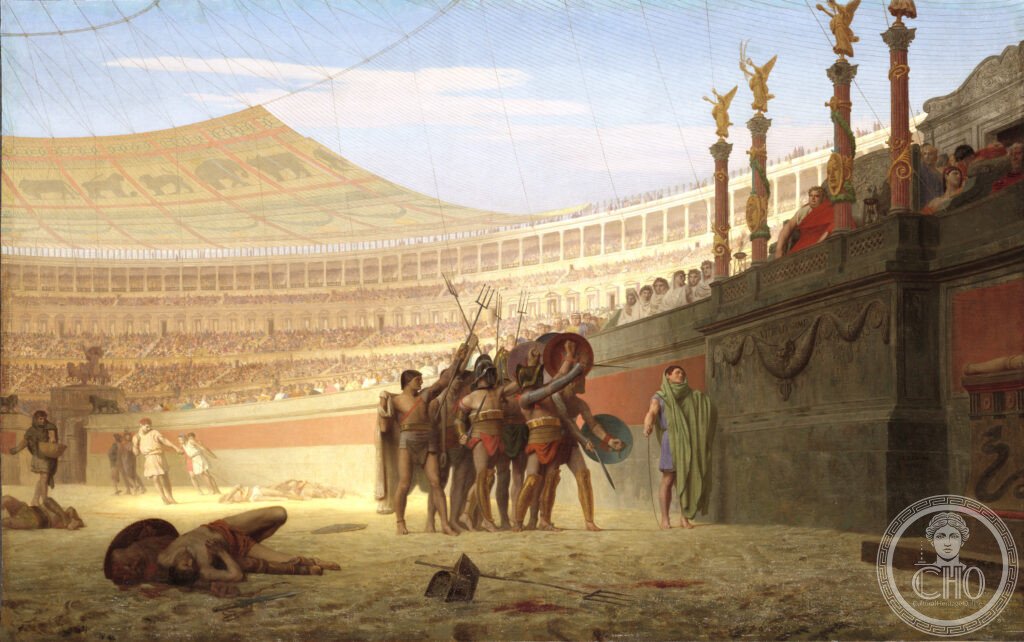
The programme of events — munera (gladiatorial combat), venationes (wild animal hunts), naumachiae (mock naval battles, though these may have been held elsewhere), and public executions — continued until gladiatorial combat was abolished by Honorius in 404 CE and animal hunts by Theodoric in 519 CE. In the early medieval period, the building was used as a fortress, a Christian church site (with shrines for martyred Christians, though the early Christian martyrdom tradition at the Colosseum is disputed by modern historians), and a stone quarry. Enormous quantities of marble and travertine were stripped from the building for use in new construction, including St Peter’s Basilica; the holes left by the removal of metal clamps are still visible in the travertine blocks of the south side.
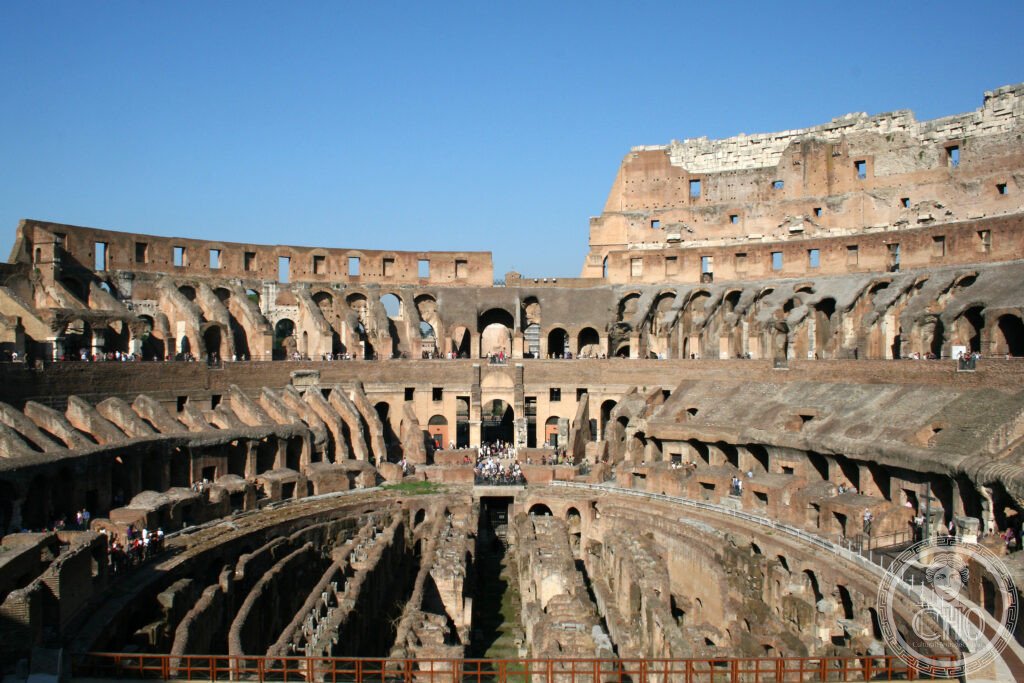
Systematic archaeological excavation of the hypogeum — the underground service level where animals, gladiators, and stage machinery were held before performances — began in the 1990s and continues. The current visitor circuit includes sections of the hypogeum, which gives the most concrete sense of the building’s operational logic.
What you see
The exterior of the Colosseum presents three storeys of engaged columns in ascending orders — Doric at ground level, Ionic on the second, Corinthian on the third — surmounted by a fourth storey of flat pilasters and windows, the whole in travertine limestone quarried from Tivoli. Eighty arched openings on each storey (minus the solid sections at the cardinal points) gave access and light; the arches of the second and third storeys once held marble sculptures. The building is now approximately one-third of its original volume — the stripped south side shows the structural tiers in section, giving an instant understanding of how the cavea was built.
Inside, the visitor circuit covers the three main tiers of the cavea (the stone seating has not survived; the terraced brick vaults are what remain), the access corridors, and sections of the hypogeum. The arena floor is partially reconstructed in wood; the original sand-covered earth floor is indicated below. Standing at the centre of the arena floor, looking up at the elliptical walls of the cavea, gives an immediate and overwhelming sense of what the building was designed to produce: the concentration of human attention on a single performance space, amplified by the architectural mass of 50,000 spectators on all sides.
Gallery
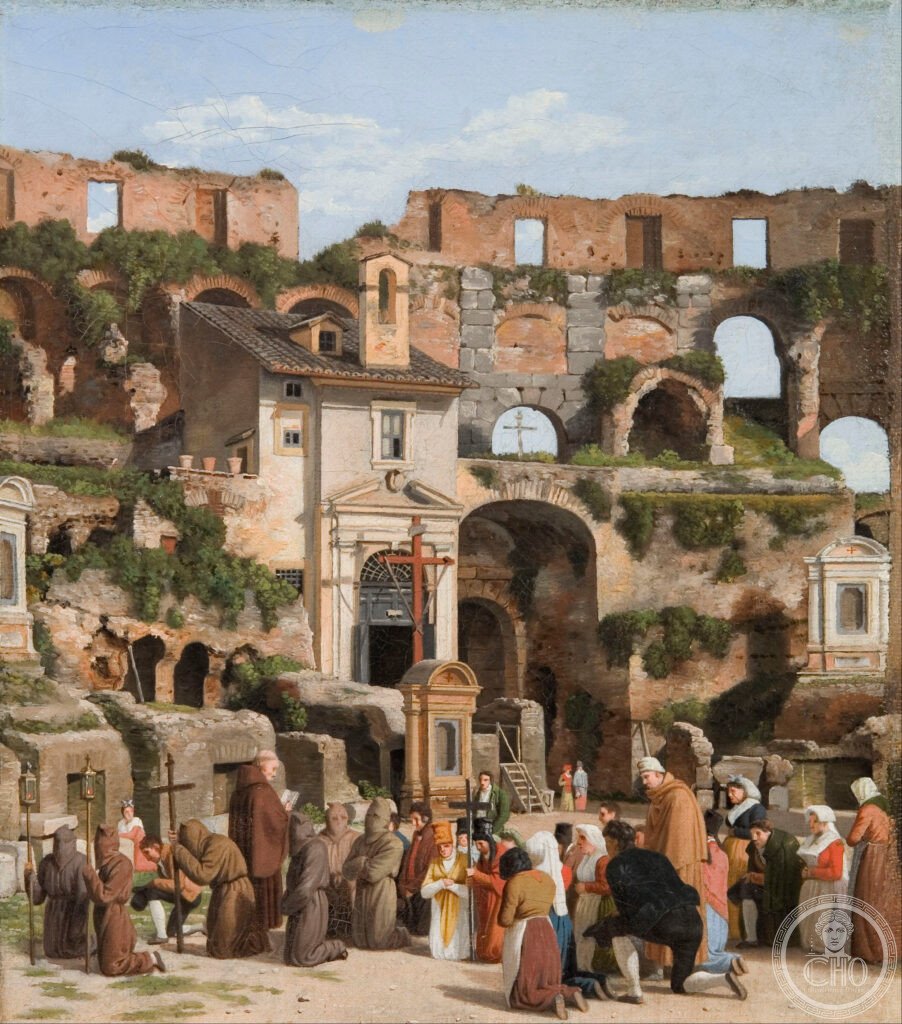
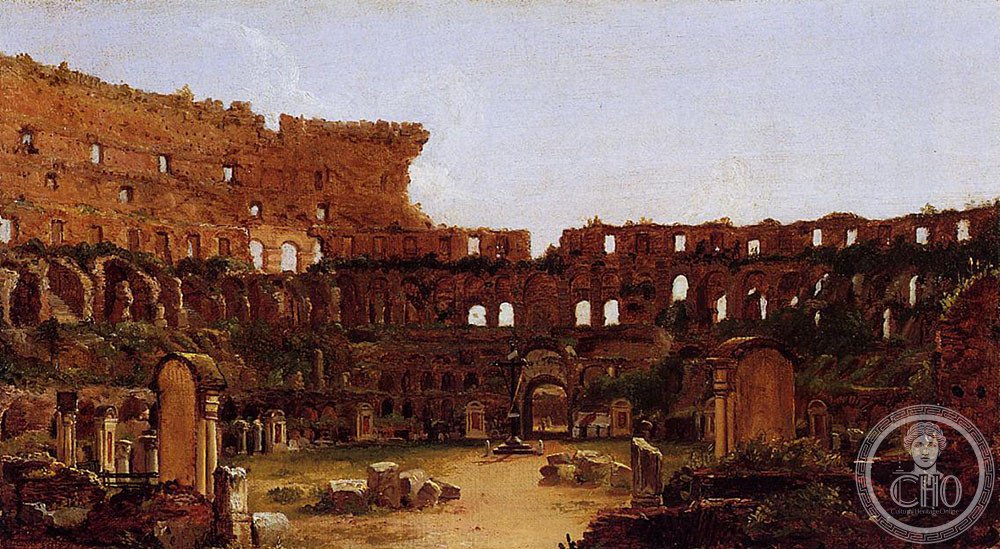
Practical information
- Opening: Daily 9:00 to one hour before sunset. Hours vary seasonally; check coopculture.it.
- Admission: ~€16 (full); combined ticket with Palatine Hill and Roman Forum valid 24h. Campania Artecard not valid.
- Booking essential: Book online at coopculture.it — walk-up queue is 2–3 hours in peak season. Skip-the-line tours also available but expensive.
- Special tours: Hypogeum visit (underground level), Arena floor, and “Colosseum at Night” require separate booking and premium pricing.
- Duration: 1.5–2 hours for a thorough self-guided visit; 1 hour minimum.
Getting there
Piazza del Colosseo, Roma. Metro Line B: Colosseo (1 minute’s walk). Bus 51, 75, 85, 87, 118 to Colosseo. Tram 3 from Trastevere and Testaccio. On foot from the Roman Forum entrance: 5 minutes through the Arch of Constantine. On foot from Piazza Venezia: 20 minutes along Via Sacra. Taxis available at the rank on Via Sacra. Roma Termini is 20 minutes on foot or 5 minutes by Metro B.
Nearby
- Arco di Costantino — 50 m; the largest surviving triumphal arch of the Roman Empire (315 CE), the model for all subsequent European triumphal arches from the Arc de Triomphe to the Washington Square Arch
- Foro Romano and Palatino — 500 m west; the archaeological heart of the Republic and Empire, with the temples, the Via Sacra, the Arch of Titus, the House of the Vestal Virgins, and the Palatine hill palaces
- Domus Aurea — 500 m north-east; Nero’s “Golden House,” whose underground vaults and painted corridors (open by reservation) were the direct precedent for the grotesque decoration of Renaissance artists who entered them
Sources
- UNESCO: whc.unesco.org/en/list/91
- Wikipedia EN: Colosseum
- Connolly, Peter: The Roman Amphitheatre, Oxford UP, 1998
- Rea, Rossella (ed.): Rota Colisei, Milano, Electa, 2002
Find it on the map
See this place and what’s around it →📷 Diventa un fotografo di Cultural Heritage Online
Condividi le tue foto dei luoghi: restano pubblicate con la tua firma come autore. Più vengono viste, più ti fai conoscere — e presto un concorso premierà le foto più apprezzate.
Accedi o registrati gratis per aggiungere una foto