
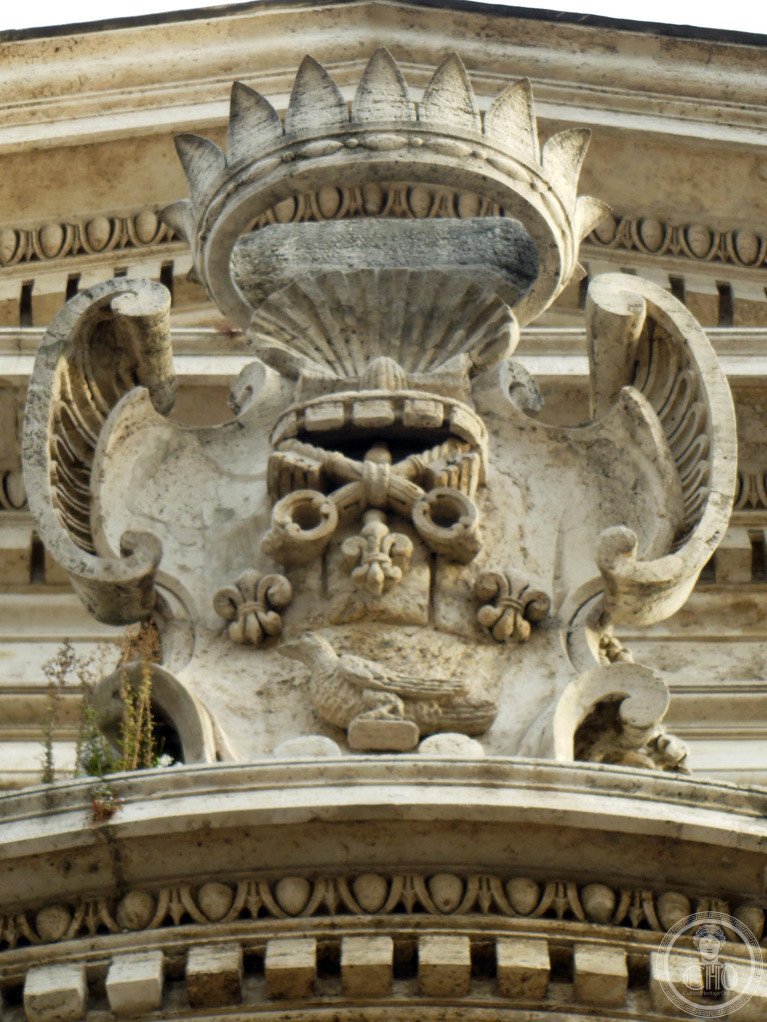
Church of Sant’Andrea al Quirinale
Sant’Andrea al Quirinale is a Roman Catholic titular church on the Quirinal Hill in Rome, designed by Gian Lorenzo Bernini with Giovanni de’ Rossi between 1658 and 1678 for the Jesuit novitiate. Regarded as one of the supreme achievements of Roman Baroque architecture, its distinctive oval plan, rich polychrome marble interior, and theatrical lantern dome made it a benchmark for sacred space design across Europe. Bernini himself considered it among his finest works and returned there frequently in old age to contemplate it in silence.
At a glance
- Type
- Roman Catholic titular church (Jesuit)
- Period
- 1658–1678
- Style
- Roman Baroque
- Location
- Via del Quirinale 29, 00187 Roma, Italy
- Coordinates
- 41.9007° N, 12.4893° E
- Architect
- Gian Lorenzo Bernini (with Giovanni de’ Rossi)
- Patron
- Cardinal Camillo Pamphilj; later Camillo Francesco Maria Pamphilj
- Current use
- Active church; novitiate rooms of St. Stanislaus Kostka open to visitors
Overview
Built for the Jesuit seminary on the Quirinal Hill, Sant’Andrea al Quirinale is universally cited as one of the masterpieces of Roman Baroque religious architecture. Bernini deployed an unusual transverse oval plan to maximise the sense of space within a relatively small footprint, drawing the eye from the entrance toward the high altar and the burst of sculpted light above it. The church’s interior sequence — from the dark vestibule to the brilliantly lit dome — enacts a deliberate spiritual journey from shadow to divine illumination.
History
The Jesuits had maintained a novitiate on the Quirinal Hill since the mid-16th century. In 1658 Cardinal Camillo Pamphilj, nephew of Pope Innocent X, commissioned Bernini to replace the earlier chapel with a new church worthy of the order’s prestige. Construction proceeded from 1658 to 1670, with the interior decoration continuing until 1678. The church was dedicated to Saint Andrew the Apostle, whose martyrdom on a diagonal cross is the narrative thread woven through every element of the décor.
What you see
The facade is convex and porticoed, projecting outward to engage the street in a characteristic Baroque embrace. Inside, the oval nave is lined with eight chapels alternating with pilasters clad in deep-red and grey marble, while gilded stucco figures animate every cornice. Above the high altar, the figure of Saint Andrew appears to ascend in painted and sculpted relief through the broken pediment toward the oval lantern above, where natural light floods in through hidden windows — a theatrical device Bernini perfected here. The sacristy and novitiate rooms, including the preserved chamber of the Jesuit saint Stanislaus Kostka, are also accessible.
Cultural significance
Sant’Andrea al Quirinale is a landmark in the history of Western architecture: Bernini’s solution to the oval nave influenced Baroque church design from Vienna to Lima. For art historians it offers a complete manifesto of Baroque spatial rhetoric — the manipulation of light, the fusion of painting, sculpture and architecture, and the orchestration of an emotional journey for the visitor. It remains an active church and a pilgrimage site for devotees of St Stanislaus Kostka.
Practical information
- Address
- Via del Quirinale 29, 00187 Roma, Italy
- Hours
- Check the official Jesuit website for current opening times; the novitiate rooms have restricted hours
- Admission
- Church free; small fee may apply for novitiate rooms
- Contact
- Check official website for details
Getting there
The church stands on Via del Quirinale, a short walk from the Palazzo del Quirinale. The nearest bus stops are served by lines 40, 64, 70 and 116; the closest metro station is Repubblica (Line A), approximately 10 minutes on foot. Taxis and ride-sharing services stop directly on Via del Quirinale.
Sources & resources
- Sant’Andrea al Quirinale — Wikipedia
- Cultural Heritage Online — Italy travel guides and heritage places
Find it on the map
See this place and what’s around it →📷 Diventa un fotografo di Cultural Heritage Online
Condividi le tue foto dei luoghi: restano pubblicate con la tua firma come autore. Più vengono viste, più ti fai conoscere — e presto un concorso premierà le foto più apprezzate.
Accedi o registrati gratis per aggiungere una foto