
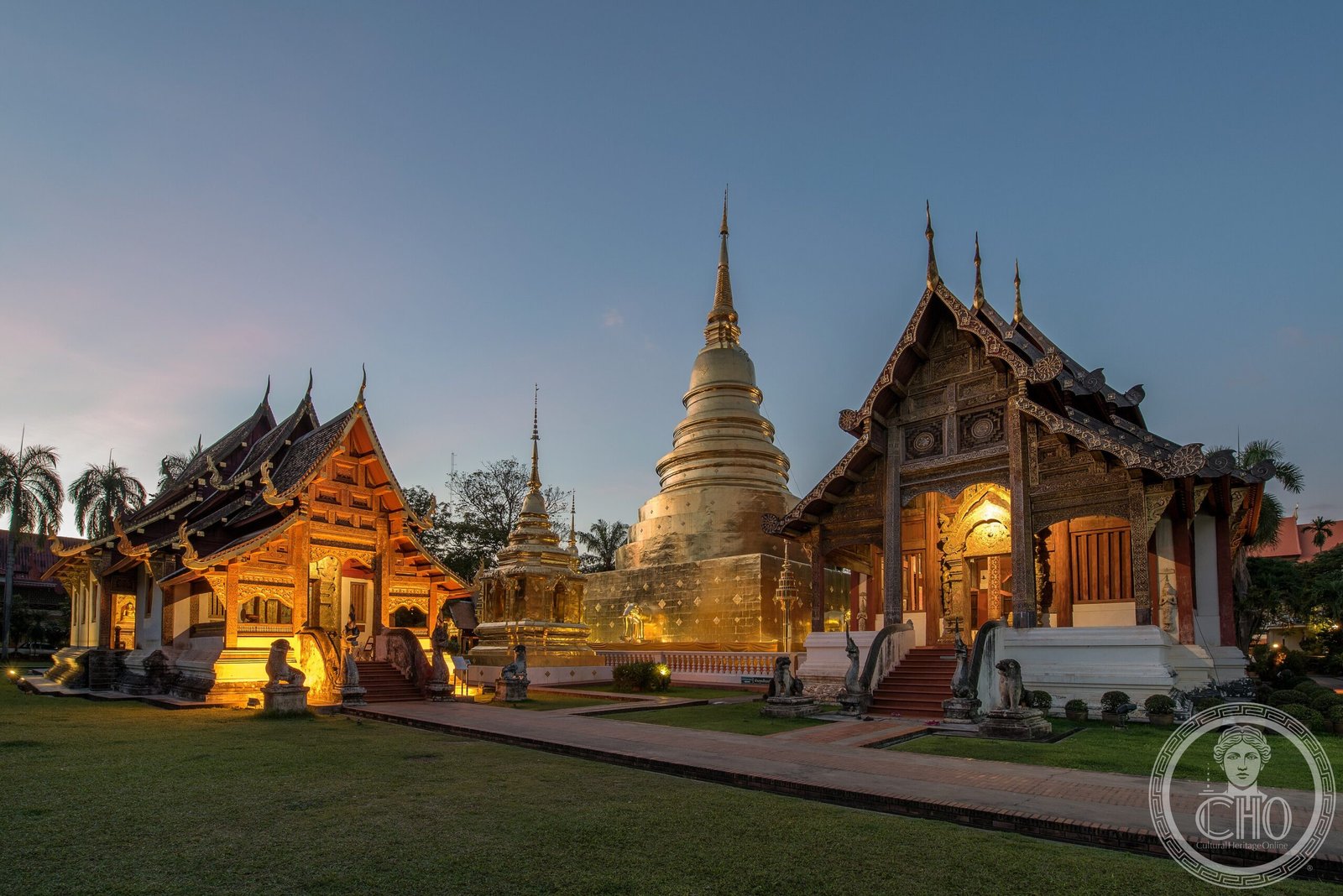
Thailand’s second-largest city and the cultural heart of the north, Chiang Mai rose as a new capital in 1296 and remains a thriving hub of trade, crafts, and heritage along the Ping River.
At a glance
Chiang Mai anchors the Thai highlands 700 km north of Bangkok, with a metropolitan population exceeding 1.2 million. The historic core—a roughly 1.6 km square bounded by ancient red brick walls and a moat—forms the ceremonial and spiritual center of this thriving northern metropolis.
History
Founded in 1296, Chiang Mai (meaning “new city” in Thai) became the capital of the Lan Na kingdom, succeeding Chiang Rai. Its strategic position on the Ping River, a major tributary of the Chao Phraya, and proximity to principal trading routes secured its importance as a commercial and administrative center. The city received official status as Thailand’s first City Municipality in 1935 and remains a vital regional power.
What you see
The old city preserves its medieval layout within remnants of red brick fortifications and a surrounding moat. Four electoral wards—Nakhon Ping, Sriwichai, Mengrai, and Kawila—organize the municipality, with the first three on the west bank of the Ping River and Kawila on the east. The city center, largely contained within the historic walls, occupies the Sriwichai ward.
Cultural significance
UNESCO designated Chiang Mai a Creative City for Crafts and Folk Arts in 2017, recognizing its enduring role as a center of traditional Thai artisanship. The city’s cultural legacy spans centuries of royal patronage, religious practice, and skilled production that continue to define northern Thai identity.
Key facts
- Country: Thailand
- Founded: 1296
- Municipal population: 127,000
- Urban population: ~1.2 million (2023)
- Coordinates: 18.7953°N, 98.9986°E
- UNESCO Creative Cities Network: Crafts and Folk Arts (2017)
Practical information & getting there
Chiang Mai lies 700 km north of Bangkok in the mountainous Thai highlands. The city sprawls across multiple districts—Hang Dong, San Sai, Saraphi, Mae Rim, Suthep, and San Kamphaeng—forming a cohesive urban region. For current visitor information, accommodation, and transportation details, consult official tourism resources before planning your visit.
Sources & resources
Find it on the map
See this place and what’s around it →📷 Become a Cultural Heritage Online photographer
Share your photos of places: they stay published under your name as the author. The more they're seen, the more you get noticed — and soon a contest will reward the most appreciated photos.
Log in or sign up free to add a photo