
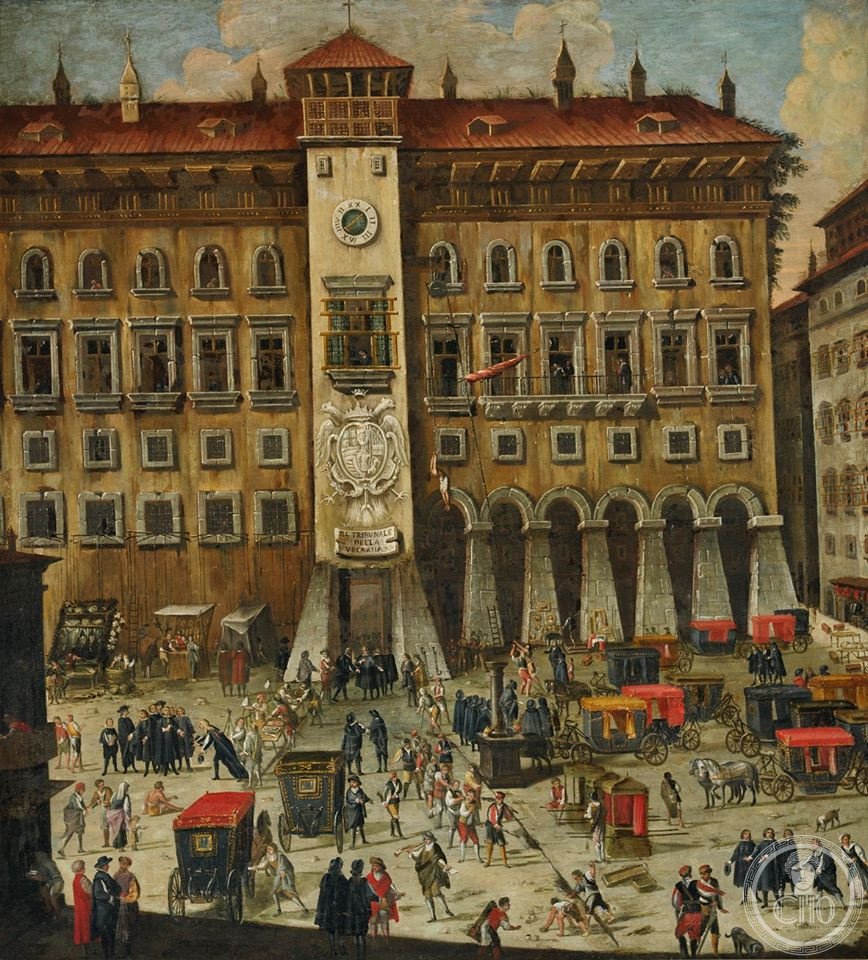
Castel Capuano
Castel Capuano is a Norman castle in the historic centre of Naples, named for its position at the point in the old city walls where the road led out toward Capua. Founded in the twelfth century and later enlarged by Frederick II and the Angevin kings, it served as the primary royal residence of Naples before being converted in 1540 into the Hall of Justice — a role it held for nearly five centuries. Situated at the southwestern end of Via dei Tribunali, it remains one of the oldest surviving fortified structures in the city.
At a glance
- Type
- Medieval castle, later civil courthouse
- Period
- Founded 12th century (Norman); enlarged 13th century; converted to courthouse 1540
- Style
- Norman origin; successive Angevin and Renaissance modifications
- Location
- Piazza Enrico De Nicola, 80139 Naples, Campania, Italy
- Coordinates
- 40.8531° N, 14.2635° E
Overview
Castel Capuano stands at the northeastern edge of Naples’s ancient street grid, at the end of the long axis of Via dei Tribunali. Its name derives from the Porta Capuana, the city gate nearby that opened onto the road leading north to Capua. The castle was until recently home to the Naples Hall of Justice, which has since relocated to the modern Centro Direzionale.
History
The castle was founded in the twelfth century by the Norman king William I of Sicily as a fortified royal residence controlling the eastern approach to the city. Frederick II of Hohenstaufen later strengthened it, and it served as one of the key seats of royal power during the Angevin rule of the Kingdom of Naples in the thirteenth and fourteenth centuries. In 1540, under Spanish viceroy Pedro de Toledo, the structure was repurposed as the Palazzo della Vicaria, Naples’s central courthouse and seat of judicial administration. That judicial function continued, with modifications, until the courts moved to the new Centro Direzionale in the late twentieth century.
What you see
The exterior of Castel Capuano presents a compact fortress mass with thick masonry walls that retain traces of their medieval character despite centuries of alteration. The main façade, facing Piazza Enrico De Nicola, was modified during the Renaissance period with a ceremonial entrance portal added during the Spanish viceroyalty. Interior spaces were reorganized extensively for courtroom use, with halls and corridors bearing decorative cycles commissioned by the Spanish administration in the sixteenth century, including notable frescoed rooms. The tower elements visible today have been substantially integrated into the later building fabric.
Cultural significance
As one of the oldest Norman castles in southern Italy still standing in an urban context, Castel Capuano is a key document of Neapolitan political and architectural history spanning nearly a millennium. Its transformation from royal palace to courthouse illustrates the continuity of civic authority in the same physical spaces across radically different regimes — Norman, Hohenstaufen, Angevin, Aragonese, and Spanish.
Practical information
Castel Capuano is located at Piazza Enrico De Nicola, 80139 Naples. The building is a public institution and its exterior can be viewed freely. Interior access depends on the ongoing repurposing of the spaces; check with the Comune di Napoli or local cultural heritage offices for current visiting arrangements.
Getting there
The castle is walkable from the Naples historic centre. The nearest metro station is Duomo (Line 1, under construction) or Garibaldi (Line 1 and Line 2), approximately 10 minutes on foot along Via dei Tribunali. Buses on the R2 and other city lines stop near Piazza Enrico De Nicola. From Naples Centrale railway station the castle is roughly a 12-minute walk heading west along Corso Umberto I.
Sources & resources
Find it on the map
See this place and what’s around it →📷 Diventa un fotografo di Cultural Heritage Online
Condividi le tue foto dei luoghi: restano pubblicate con la tua firma come autore. Più vengono viste, più ti fai conoscere — e presto un concorso premierà le foto più apprezzate.
Accedi o registrati gratis per aggiungere una foto