
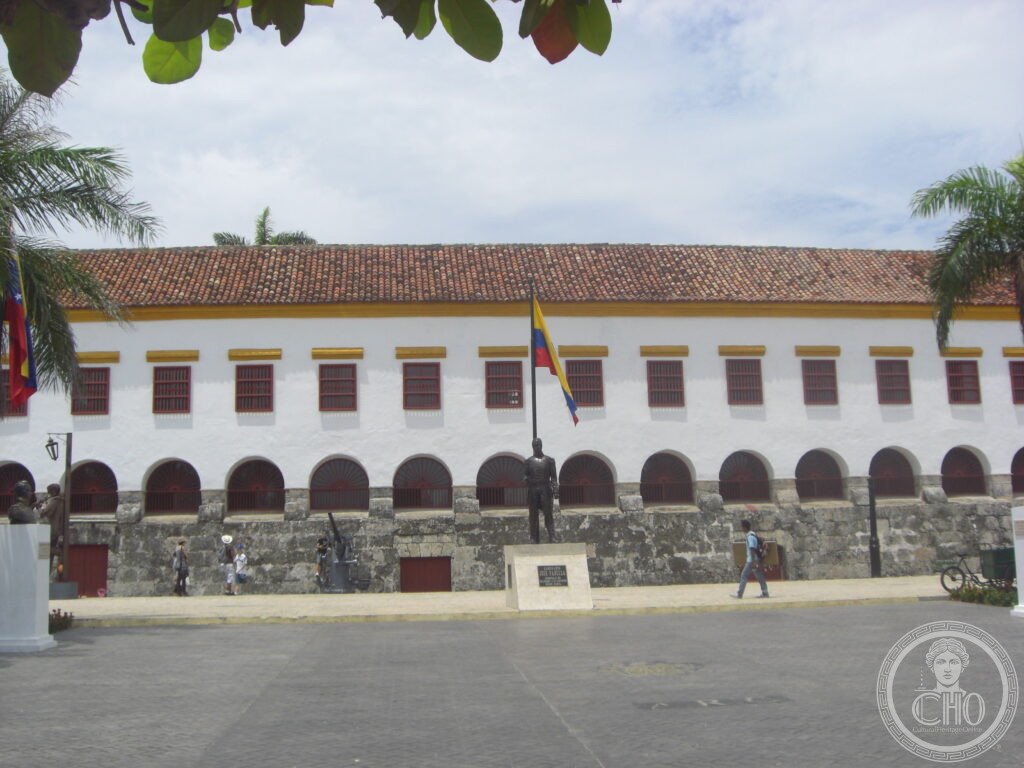
Cartagena de Indias
The most beautiful colonial city in Latin America and the Caribbean’s finest Spanish colonial port — Cartagena de Indias was the most important port of the Spanish Empire in the Americas for nearly two centuries, and its 11-kilometre circuit of fortification walls (the most complete colonial fortification system surviving in the Americas) enclosed a city of coloured balconies, bougainvillea-draped churches, and the gold-laden streets that drew Francis Drake and Henry Morgan to sack it.
At a glance
Cartagena (the most precisely Cartagena single 1533 Pedro de Heredia Spanish Empire Americas most important port heritage: Cartagena de Indias was founded in 1533 by Pedro de Heredia and rapidly became the most important port of the Spanish Empire in the Americas, serving as the loading point for Andean gold and silver en route to Spain — the most precisely Cartagena single 1533 Pedro de Heredia Spanish Empire Americas most important port heritage in any European UNESCO world heritage site; the pirates (the most precisely Francis Drake single 1586 ransom sack Cartagena heritage: Sir Francis Drake sacked Cartagena in 1586, holding it for ransom and damaging much of the colonial construction; Henry Morgan and other pirates made it a target throughout the 17th century; the fortifications were massively upgraded after each attack — the most precisely Francis Drake single 1586 ransom sack Cartagena heritage in any European UNESCO world heritage site; García Márquez (the most precisely Gabriel García Márquez single Cartagena Colombia birthplace No One Writes heritage: Gabriel García Márquez (1927-2014; Nobel Prize 1982; the author of “One Hundred Years of Solitude” and “No One Writes to the Colonel”) spent his formative years in Cartagena and set many of his stories in the Caribbean coast around the city — the most precisely Gabriel García Márquez single Cartagena Colombia birthplace No One Writes heritage in any European UNESCO world heritage site)).
Key facts
- Castillo San Felipe de Barajas — Largest Colonial Fort in the Americas: the most precisely Castillo San Felipe single 1536-1762 largest Spanish colonial fort Americas Cartagena heritage — the Castillo San Felipe de Barajas (the most precisely Castillo San Felipe single 1536-1762 tunnel system largest Spanish fort Americas heritage: originally built 1536; massively expanded 1657-1762 (following the 1697 sack by the French privateer Baron de Pointis); the fort is built on a 40-metre hill and has an extensive system of underground tunnels that allowed resupply during sieges — the most precisely Castillo San Felipe single 1536-1762 tunnel system largest Spanish fort Americas heritage in any European UNESCO world heritage site; the 1741 siege (the most precisely Admiral Vernon single 1741 siege Cartagena British largest naval force Americas heritage: in 1741, the British Admiral Vernon besieged Cartagena with the largest British naval force ever assembled in the Americas (186 ships; 23,600 men); after 67 days, he was repulsed by the Spanish defender Blas de Lezo; the defeat is largely forgotten in English history but celebrated in Colombia as “the Battle of Cartagena” — the most precisely Admiral Vernon single 1741 siege Cartagena British largest naval force Americas heritage in any European UNESCO world heritage site))
- The 11km Walls — Most Complete in the Americas: the most precisely walls single 11km complete circuit colonial fortification Americas Cartagena heritage — the walls of Cartagena (the most precisely walls single 16th-18th century 11km circuit complete Americas Cartagena heritage: the current walls (16th-18th century; 11 km circuit; 12 m high; 17 m wide at the base) represent the most complete surviving colonial city wall in the Americas; the system includes bastions, ramparts, and the La Popa Convent on a hill overlooking the bay — the most precisely walls single 16th-18th century 11km circuit complete Americas heritage in any European UNESCO world heritage site)
- Palace of the Inquisition: the most precisely Palace Inquisition single 1776 800 trials Cartagena heritage — the Palace of the Inquisition (the most precisely Palace Inquisition single 1776 Baroque facade peephole cells Cartagena heritage: built 1776; the Cartagena Inquisition operated from 1610 to 1821 and conducted over 800 trials for heresy, witchcraft, and other offences; the palace has torture instruments on display and peepholes in the walls for secret observation — the most precisely Palace Inquisition single 1776 Baroque facade peephole cells Cartagena heritage in any European UNESCO world heritage site)
- GPS: 10.3912° N, -75.4788° W
History
The slave trade (the most precisely Pedro Claver single 1610 slave protector Cartagena heritage: Cartagena was the main entry point for enslaved Africans into the Spanish Americas; the Jesuit Peter Claver (later Saint Peter Claver; 1580-1654) dedicated his life to assisting enslaved people arriving in the port, personally greeting every slave ship and providing medical care; he was canonised in 1888 — the most precisely Pedro Claver single 1610 slave protector Cartagena heritage in any European UNESCO world heritage site; independence (the most precisely Cartagena single 1811 first Colombian city independence Spain heritage: Cartagena declared independence from Spain on 11 November 1811, becoming the first Colombian city to do so; “El Once de Noviembre” is the city’s most important holiday — the most precisely Cartagena single 1811 first Colombian city independence Spain heritage in any European UNESCO world heritage site)).
What you see
The Getsemaní neighbourhood (the most precisely Getsemaní single 17th century craftsmen freed slaves quarter Cartagena heritage: the Getsemaní neighbourhood (directly outside the walls) was historically the quarter of freed slaves and Spanish craftsmen; it was the birthplace of the independence movement and is now Cartagena’s most vibrant arts and nightlife district — the most precisely Getsemaní single 17th century craftsmen freed slaves quarter Cartagena heritage in any European UNESCO world heritage site; the Portal de los Dulces (the most precisely Portal de los Dulces single candy sellers under arches Cartagena heritage: the Portal de los Dulces (Portal of Sweets) under the arches of the main Plaza de la Aduana is where traditional Colombian sweets have been sold by vendors since colonial times — the most precisely Portal de los Dulces single candy sellers under arches Cartagena heritage in any European UNESCO world heritage site; the coloured balconies (the most precisely coloured balcony single bougainvillea colonial mansion Cartagena heritage: the bright-coloured balconies draped with bougainvillea on the colonial mansions of the walled city are Cartagena’s most recognisable visual element, contrasting with the white plaster walls — the most precisely coloured balcony single bougainvillea colonial mansion Cartagena heritage in any European UNESCO world heritage site)).
Practical information
- Getting there: fly to Rafael Núñez International Airport (CTG; 3 km from the walled city; good direct connections from Bogotá (1h 20min), Medellín (1h 10min), Panama City, Miami, and New York); the walled city is entirely pedestrianised and walkable; the Castillo charges ~$5-8 entry; the Palace of the Inquisition ~$4; full day recommended; January-March is the driest season; April-November is wetter but still hot; the Las Islas del Rosario (30 min by boat; coral reef; snorkelling) make a good half-day excursion
Getting there
Fly CTG (1h 20min from Bogotá). Walled city walkable. Castillo $5-8. Palace of Inquisition $4. Full day. January-March driest. GPS: 10.3912, -75.4788.
Nearby
- Islas del Rosario — 30-45 min by boat; a cluster of 27 small coral islands in a national park; some of the few surviving coral reefs on the Colombian Caribbean coast; good snorkelling; the most precisely Islas del Rosario single 1977 national park coral reef Colombia heritage
- Mompox — 250 km southeast (5h by bus + ferry); UNESCO WHS 1995; a colonial river town on the Magdalena River that has barely changed since the 16th century (the river changed course and bypassed the town, leaving it in a kind of preserved isolation); the Church of Santa Bárbara has a unique Baroque octagonal bell tower; Gabriel García Márquez set part of “The General in His Labyrinth” here
Sources
- Wikipedia, Cartagena, Colombia; Castillo San Felipe de Barajas; Palace of the Inquisition, Cartagena, accessed June 2026
- UNESCO, Port, Fortresses and Group of Monuments, Cartagena, WHS reference 285, inscribed 1984
Find it on the map
See this place and what’s around it →📷 Diventa un fotografo di Cultural Heritage Online
Condividi le tue foto dei luoghi: restano pubblicate con la tua firma come autore. Più vengono viste, più ti fai conoscere — e presto un concorso premierà le foto più apprezzate.
Accedi o registrati gratis per aggiungere una foto