
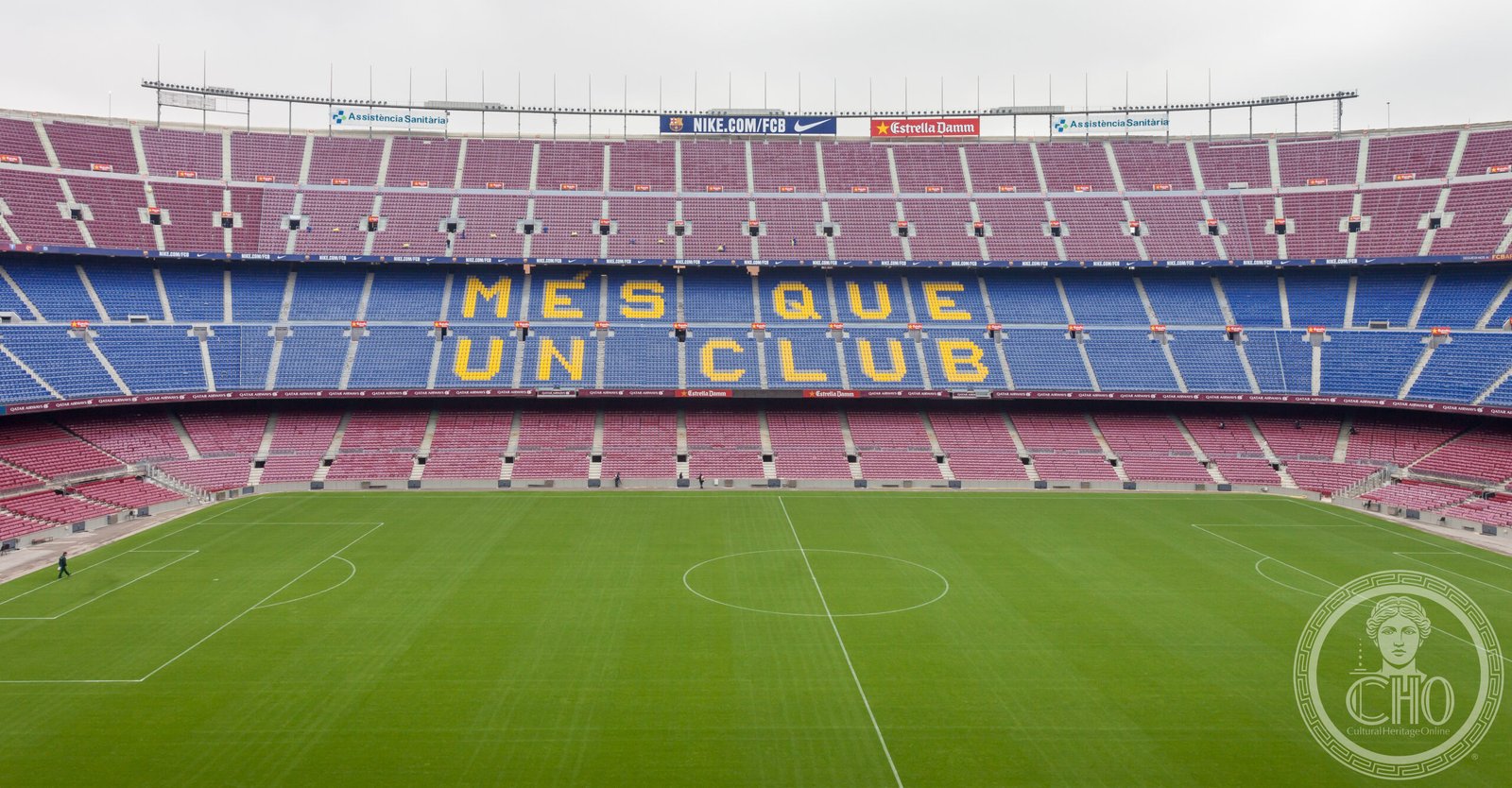
Camp Nou, Barcelona
Camp Nou — officially Spotify Camp Nou for sponsorship purposes — is the home stadium of FC Barcelona, located in the Les Corts district of Barcelona. Opened in 1957 and holding over 99,000 spectators, it is the largest stadium in Europe and the second-largest football stadium in the world, an enduring symbol of Catalan identity and footballing excellence currently undergoing a landmark renovation.
At a glance
- Type
- Football stadium
- Period
- Opened 24 September 1957; major renovation 2023–ongoing (Espai Barça project)
- Style
- Mid-century modernist bowl; ongoing renovation by Populous and local architects
- Location
- Carrer d’Arístides Maillol, Les Corts, Barcelona, Catalonia, Spain
- Coordinates
- 41.3808° N, 2.1229° E
- Capacity
- 99,354 (current); planned 105,000 after renovation
Overview
Camp Nou is the largest stadium in Europe and the second-largest association football ground in the world by seating capacity. Home to FC Barcelona since its inauguration in 1957, the stadium has been the stage for some of the most celebrated moments in football history, including European Cup and Champions League finals. The ongoing Espai Barça renovation project will raise capacity to approximately 105,000, upgrade infrastructure, and connect the ground to a broader sports and leisure campus while the club temporarily relocates matches.
History
FC Barcelona outgrew its previous Les Corts ground in the early 1950s, and after a public vote the club began constructing a new stadium on an adjacent site in 1954. Designed by architects Francesc Mitjans and Josep Soteras Mauri, Camp Nou (Catalan for “new ground”) opened on 24 September 1957. Capacity was gradually increased, reaching its peak of 120,000 in the 1980s, before seating requirements brought it down to around 99,000. The ground hosted the 1982 FIFA World Cup final group stage matches and the 1999 UEFA Champions League Final.
What you see
The stadium presents a three-tiered bowl of imposing scale, its uppermost tier rising steeply to offer sweeping views of the pitch and the Barcelona skyline beyond. The classic concrete structure, recently supplemented with the club’s blue-and-red branding on the exterior, is flanked by the FC Barcelona museum — the most visited museum in Catalonia — and the Palau Blaugrana sports arena. At pitch level, the grass playing surface sits several metres below street level, giving the stands their characteristic depth and intimacy despite the enormous capacity.
Cultural significance
Camp Nou has functioned as more than a football stadium: during the Franco dictatorship it became a rare space where Catalan language and identity could be expressed publicly, making it a site of political as well as sporting importance. The phrase “més que un club” (more than a club) coined by FC Barcelona encapsulates how deeply the stadium and the club are entwined with Catalan culture. It is listed among Europe’s most significant 20th-century sports venues and attracts nearly two million visitors annually through its museum and stadium tours.
Practical information
- Address
- Carrer d’Arístides Maillol, s/n, 08028 Barcelona, Spain
- Tours & Museum
- The FC Barcelona Museum and stadium tour (Camp Nou Experience) operate on non-match days; visit fcbarcelona.com for current schedules, as closures may apply during the ongoing renovation
- Official website
- fcbarcelona.com
Getting there
The closest metro station is Palau Reial or Les Corts (both on L3, the green line), each a 10-minute walk from the stadium. Collblanc station (L5, blue line) is also within walking distance. Multiple bus routes serve the area, and bicycle lanes connect the stadium to the wider Barcelona cycle network. On match days, the metro is the recommended option to avoid traffic congestion in the surrounding streets.
Sources & resources
Find it on the map
See this place and what’s around it →📷 Diventa un fotografo di Cultural Heritage Online
Condividi le tue foto dei luoghi: restano pubblicate con la tua firma come autore. Più vengono viste, più ti fai conoscere — e presto un concorso premierà le foto più apprezzate.
Accedi o registrati gratis per aggiungere una foto