
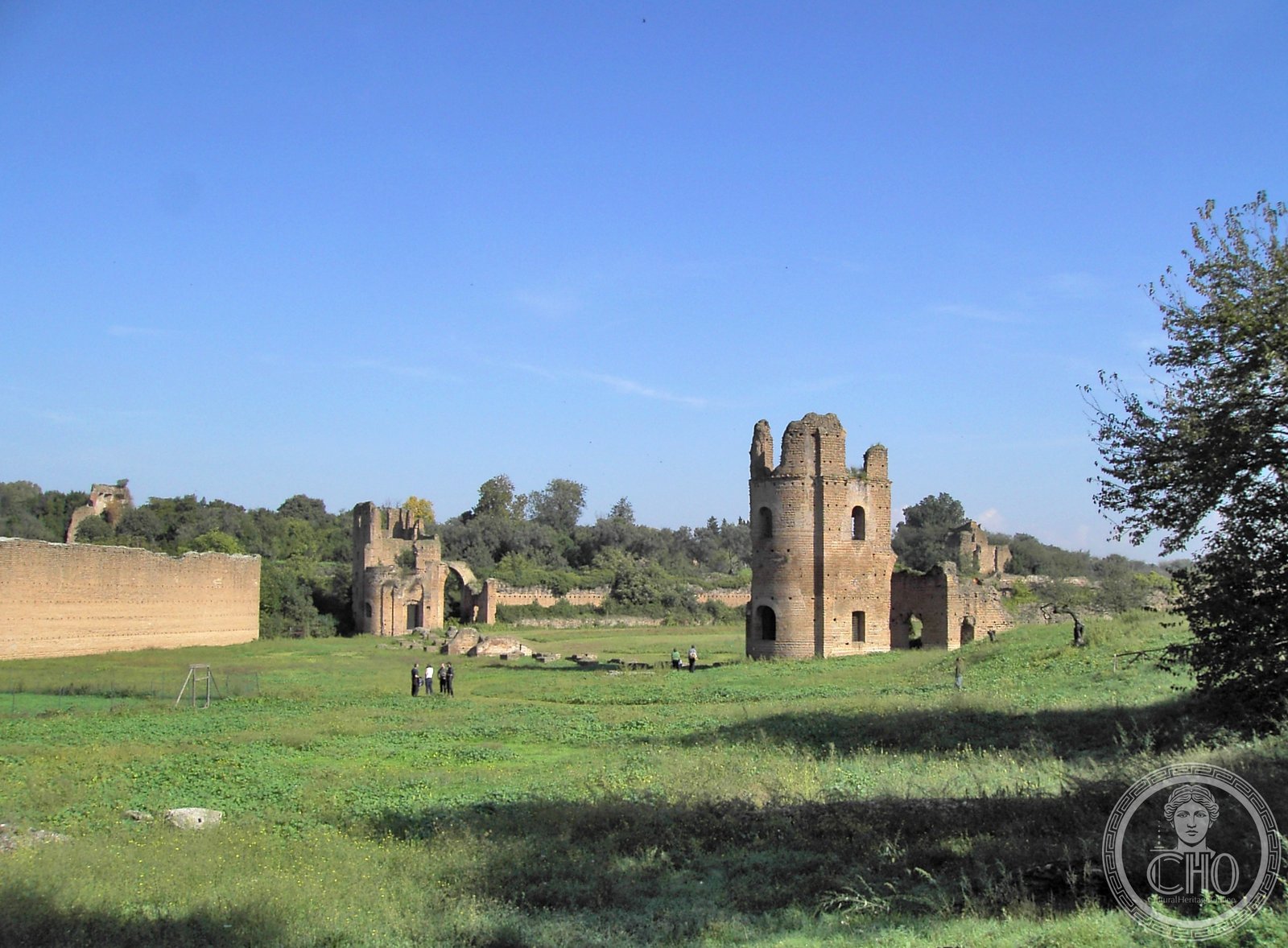
Caffarella Park
Caffarella Park (Parco della Caffarella) is a large urban nature reserve in Rome, lying between the Via Appia Antica and the Via Latina. Stretching across the valley of the Almone river, it preserves a remarkable mosaic of Roman aqueducts, ancient tombs, medieval churches, and Renaissance farmsteads within the Appian Way Regional Park — one of the largest urban parks in Europe.
At a glance
- Type
- Urban archaeological and nature park
- Period
- Ancient Roman through medieval; park designation 20th century
- Location
- Via Appia Nuova / Via Latina, Rome (Municipio VII)
- Coordinates
- 41.8664° N, 12.5250° E
- Area
- Approximately 183 hectares
- Part of
- Appian Way Regional Park (Parco Regionale dell’Appia Antica)
Overview
Caffarella is one of Rome’s most significant green corridors, preserving a landscape that has changed little since antiquity in spite of the city growing around it. The valley floor follows the Almone (or Marana), a small river sacred in ancient Roman religious life as the site of rites to the Magna Mater (Cybele). Walking through the park today, visitors move between Roman-era structures, ancient aqueduct arches, and working agricultural land that supports rich biodiversity within the city limits.
History
The Caffarella valley was densely occupied in ancient Rome as wealthy families built funerary monuments and suburban villas along the Appian Way. The land was later consolidated into large agricultural estates during the medieval period, when it took its name from the Caffarelli noble family. The Temple of the Deus Rediculus — traditionally associated with the meeting of Pope Leo I and Attila the Hun nearby — survives in the valley, as does a nymphaeum known as the Grotta della Ninfa Egerìa, a celebrated picturesque site visited by Grand Tour travellers in the 18th and 19th centuries.
What you see
Key sites within the park include the Nymphaeum of Egeria (a Roman grotto shrine), the Temple of Deus Rediculus, medieval casali (sheep farms), arches of the Aqua Marcia and Claudia aqueducts, and extensive stretches of pastoral landscape with grazing flocks. The park connects southward to the Catacombs along the Via Appia Antica. Wildflowers, wetland birds, and ancient stone monuments coexist across the valley floor in an experience rare for a major European capital.
Cultural significance
Caffarella is valued both as a biodiversity corridor linking Rome’s southern green belt and as an open-air museum of Roman funerary and religious landscape. Its survival within a dense urban context makes it a model for integrated archaeological and natural heritage management. The park is also culturally significant as a venue for collective memory — Romans have used the valley for walks and informal recreation for centuries.
Practical information
- Address
- Via Caffarella, 00179 Roma (main entrance near Via Appia Nuova)
- Hours
- Open daily; no gates on main valley paths. Some monuments have restricted hours.
- Admission
- Free access to the park; individual monuments may charge entry
Getting there
Take Metro Line A to Colli Albani, then walk south along Via Appia Nuova — the park entrance is a 15-minute walk. Bus lines 218 and 660 from San Giovanni serve the Appia Antica area. By car, follow Via Appia Nuova south from the Aurelian Wall and look for Caffarella signs after Furio Camillo; limited roadside parking is available.
Sources & resources
Find it on the map
See this place and what’s around it →Historical events at this place (3)
📷 Diventa un fotografo di Cultural Heritage Online
Condividi le tue foto dei luoghi: restano pubblicate con la tua firma come autore. Più vengono viste, più ti fai conoscere — e presto un concorso premierà le foto più apprezzate.
Accedi o registrati gratis per aggiungere una foto