
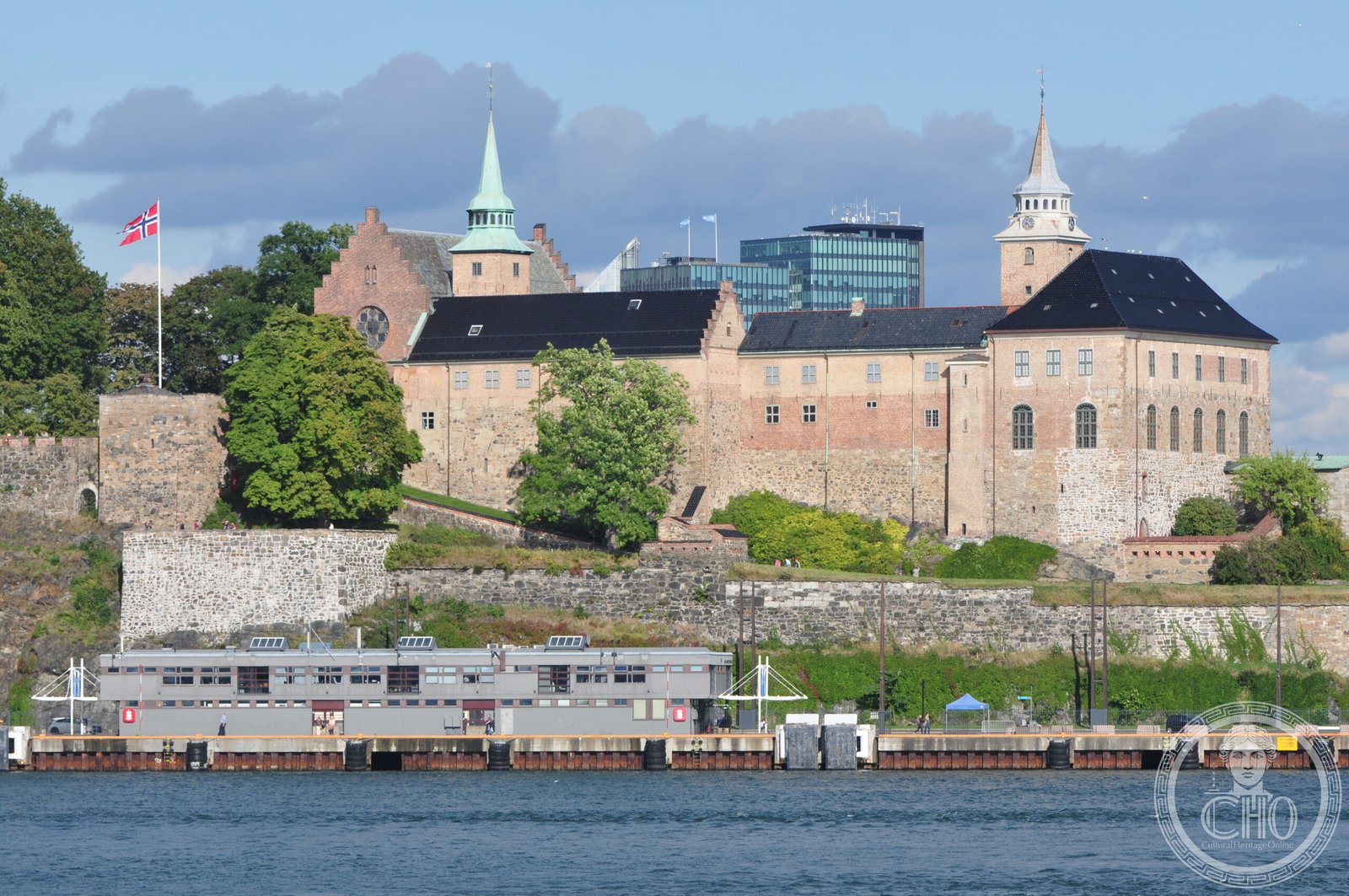
Akershus Fortress
Akershus Fortress (Akershus festning) is a medieval castle and military complex built on a promontory overlooking the Oslo Fjord at the heart of the Norwegian capital. Founded around 1290 by King Haakon V Magnusson and expanded into a Renaissance palace in the early seventeenth century, the fortress has served as royal residence, state prison, and national military headquarters. Today it is one of the best-preserved medieval fortresses in Scandinavia and the site of the Norwegian Armed Forces Museum and the Norwegian Resistance Museum.
At a glance
- Type
- Medieval castle, Renaissance palace, and military fortress
- Period
- Founded c. 1290; Renaissance rebuilding 1592–1648
- Style
- Medieval concentric castle; Renaissance palace interiors
- Location
- Akershus festning, 0015 Oslo, Norway
- Coordinates
- 59.9067° N, 10.7363° E
Overview
Akershus Fortress stands on a rocky headland at the mouth of the Akerselva river where it meets the Oslo Fjord, giving its garrison command over sea approaches to the medieval city of Oslo. The complex encompasses the medieval round tower, a Renaissance castle with royal halls and chapels, extensive earthwork bastions from the seventeenth and eighteenth centuries, and a series of casemates built for artillery defence. The grounds are open to visitors year-round and host state ceremonies, concerts, and official military functions. Several government ministries maintain offices within the fortress walls.
History
King Haakon V began construction of a stone castle on the Akershus promontory around 1290 to replace an older timber fortification. The castle grew in importance after a great fire destroyed Oslo in 1352 and again after Christian IV of Denmark-Norway moved the capital to the present site in 1624, renaming it Christiania. Between 1592 and 1648 the interior was rebuilt as a Renaissance palace with banqueting halls, a chapel, and royal apartments. The fortress successfully repelled Swedish sieges in 1716 and again in 1814. During the German occupation of Norway in World War II, the Nazis used the fortress as a prison and execution site for Norwegian resistance fighters; a memorial and museum now mark this chapter of its history.
What you see
Visitors enter through the main gate on Akershus stranda and explore the outer courtyard, the Renaissance palace rooms — including the Olav Hall, Romerike Hall, and the Royal Chapel where Norwegian kings and queens are interred — and the medieval round tower with views over the fjord. The earthwork bastions from the Baroque period ring the promontory and offer panoramic views of the Oslo Fjord and the modern city skyline. The Norwegian Resistance Museum, housed in a casemate building, documents the German occupation of 1940–1945 with photographs, objects, and personal testimonies.
Cultural significance
Akershus is the symbolic heart of Norwegian military and royal history and the principal venue for state funerals and national ceremonies. The fortress grounds were the site of Norway’s declaration of independence on 17 May 1814, and the complex remains under the administration of the Norwegian Armed Forces, underscoring its living role in national life. Its silhouette is one of the most recognisable images of Oslo and a potent symbol of Norwegian sovereignty.
Practical information
- Address
- Akershus festning, 0015 Oslo, Norway
- Hours
- Grounds open year-round, 6 am–9 pm; castle tours and museum hours vary by season — check official website
- Admission
- Grounds free; castle interior and museums require tickets — check official website
Getting there
Akershus Fortress is a ten-minute walk from Oslo Central Station along the waterfront promenade (Rådhusbrygge). Tram lines 12 and 13 stop at Aker Brygge, from which the fortress entrance is visible. The harbour ferry from Bygdøy also stops at Rådhusbrygge pier, adjacent to the fortress grounds.
Sources & resources
Find it on the map
See this place and what’s around it →📷 Diventa un fotografo di Cultural Heritage Online
Condividi le tue foto dei luoghi: restano pubblicate con la tua firma come autore. Più vengono viste, più ti fai conoscere — e presto un concorso premierà le foto più apprezzate.
Accedi o registrati gratis per aggiungere una foto