
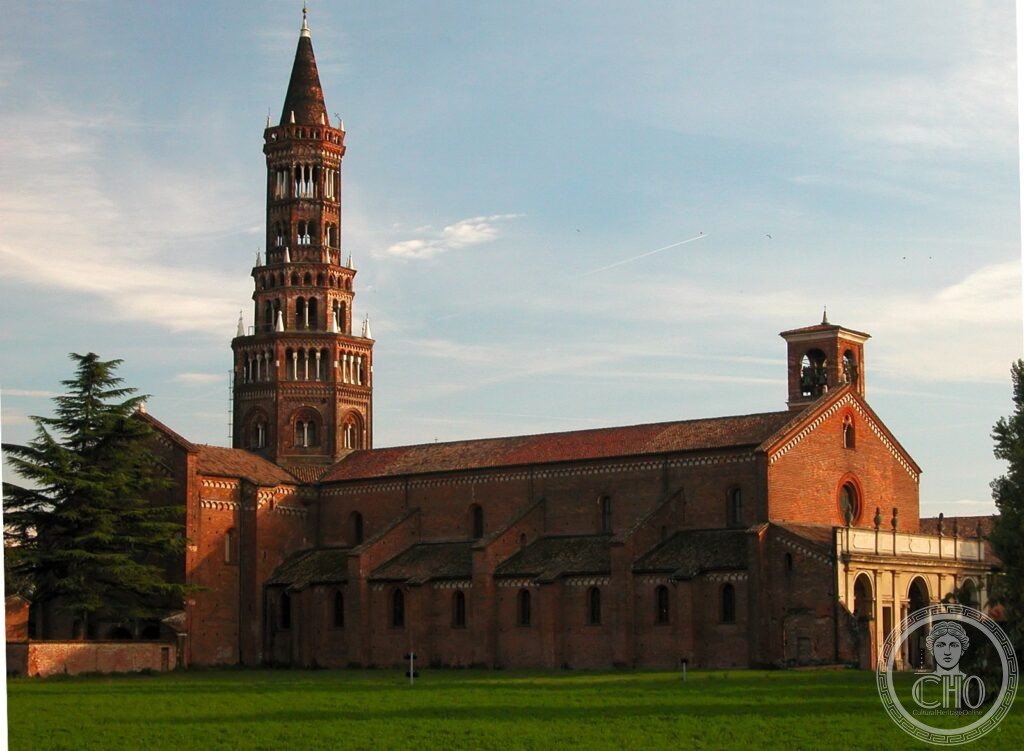
Bernard of Clairvaux founded Chiaravalle in person in 1135, bringing his monks to within 5 km of Milan: the result is one of the best-preserved Cistercian abbeys in Italy, with a thirteenth-century lantern tower visible from the motorways around Milan.
At a glance
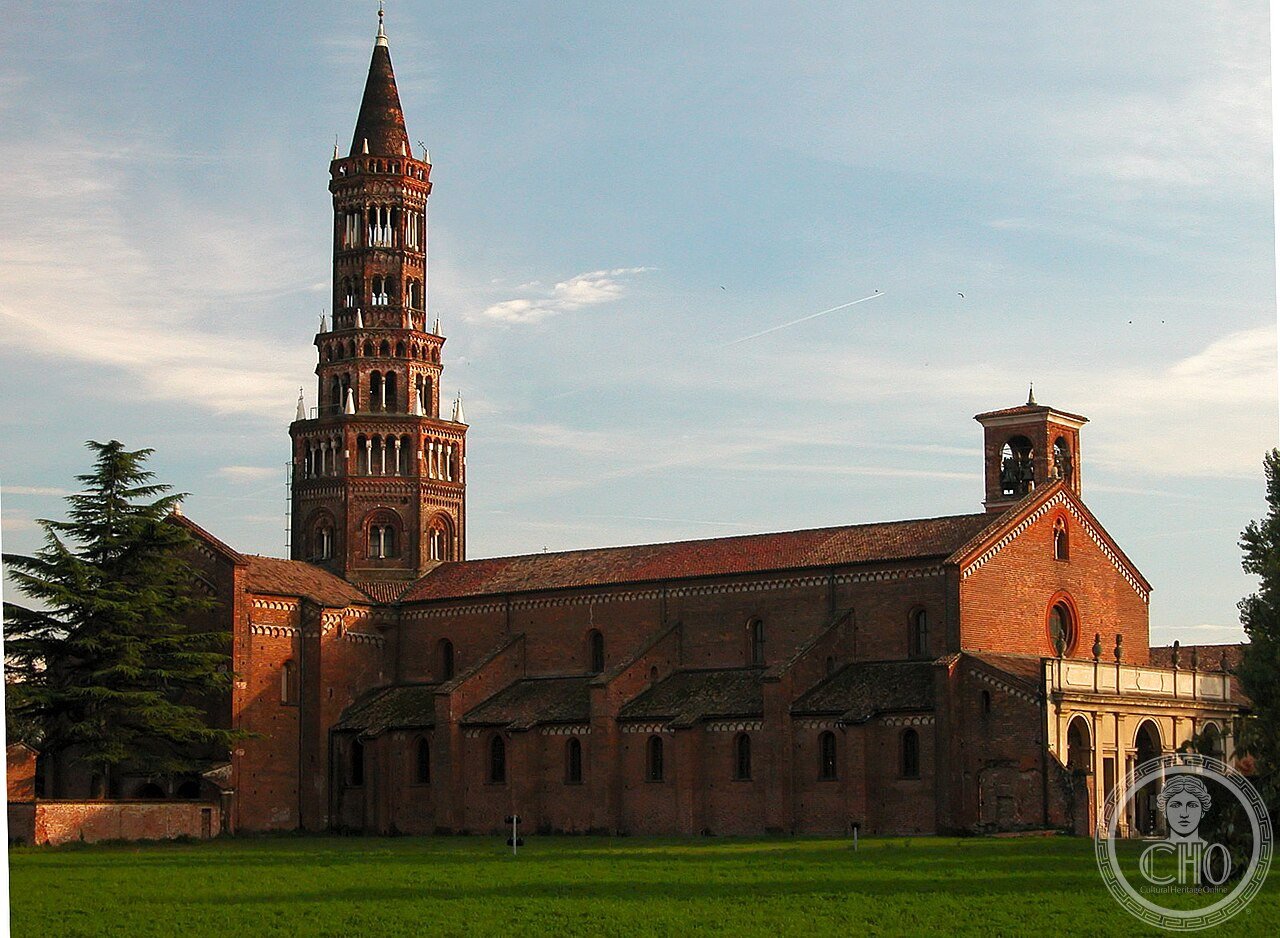
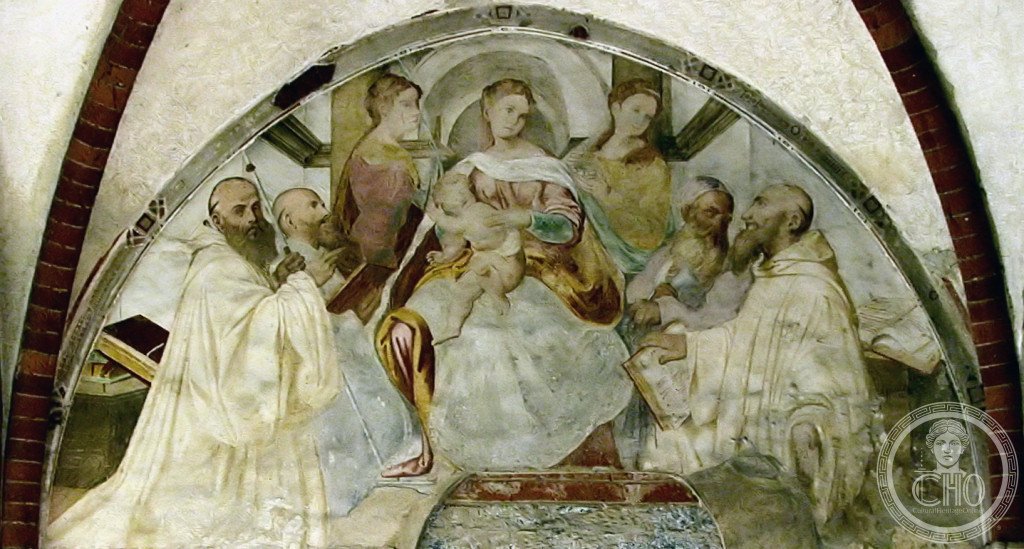
Chiaravalle Abbey (Santa Maria di Rovegnano) stands 5 km south-east of Milan city centre, surrounded by agricultural land that was itself reclaimed and organised by the Cistercian monks in the medieval period. It was founded in 1135 by Bernard of Clairvaux himself — who came to Milan in that year to resolve a schism in the Milanese church and, while there, established this daughter-house of his abbey of Clairvaux in Burgundy. The church, built between 1135 and 1221, follows the Cistercian austerity prescription in its plan and its absence of figurative ornament; the distinctive lantern tower above the crossing — built c. 1330–1340, after the strictest Cistercian rules on towers had been relaxed — is an exception that makes Chiaravalle famous and visible from many kilometres across the Po plain. The interior retains exceptional 14th-century frescoes in the nave, including a cycle of scenes from the life of the Virgin attributed to the school of Giovanni da Milano.
Key facts
- Founded: 1135 by Bernard of Clairvaux (1090–1153) in person; daughter-house of Clairvaux, Burgundy
- Church: built 1135–1221; consecrated 1221; Cistercian plan with nave, transepts and apse
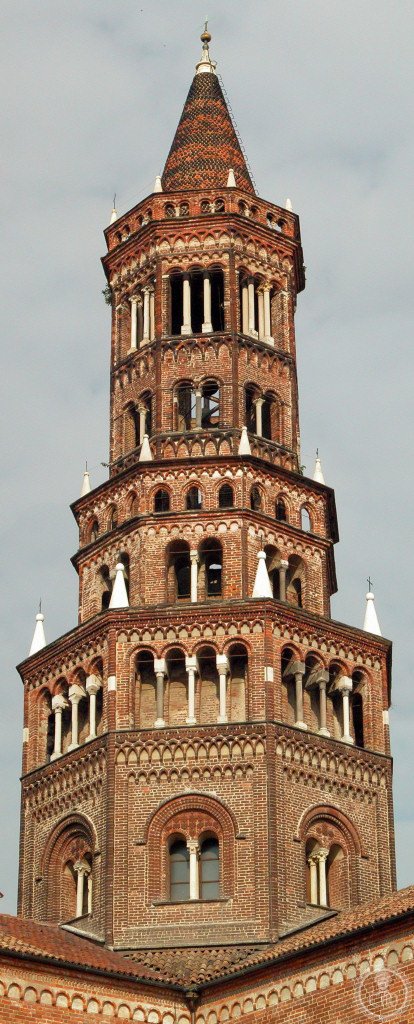
- Tower (Ciribiciaccola): lantern tower, c. 1330–1340; octagonal with three tiers of logge; height 56 m; locally called “Ciribiciaccola”
- Frescoes: 14th-century nave cycle (Life of the Virgin), attributed to school of Giovanni da Milano; further frescoes in the refectory by Bernardino Luini (1512)
- Napoleon: suppressed the abbey in 1798; monks expelled; complex used as a farm until Cistercians returned in 1895
- Today: active Cistercian community; church open to visitors; refectory with Luini frescoes on appointment
History
Bernard of Clairvaux arrived in Milan in 1135 as a mediator in the schism between Pope Innocent II and the antipope Anacletus II; his prestige and oratorical skill won over the Milanese to the Innocentian party. As a gift of gratitude, the Cistercians were offered land south of Milan, and Bernard settled a small community there that would become Chiaravalle. The name “Chiaravalle” is simply the Italian form of “Clairvaux” (Clara Vallis = Clear Valley) — Cistercian daughter-houses throughout Europe adopted this naming convention.
The abbey grew rapidly in the 12th and 13th centuries, becoming one of the wealthiest Cistercian houses in Lombardy. The monks drained the marshy ground around the abbey, created an irrigation network that is still partially visible in the rice fields of the southern Milanese hinterland, and operated mills, forges and an extensive agricultural enterprise. The lantern tower (Ciribiciaccola, meaning “chattering bird” in Milanese dialect) was built in three stages from c. 1330, by which time the Cistercian ban on towers had been informally abandoned across the order. Its three tiers of open logge with tracery are an unusual combination of Gothic elegance and structural ambition.
Napoleon’s Cisalpine Republic suppressed the monastery in 1798 and expelled the monks; the complex was used as a farm until the Cistercians returned in 1895 and undertook a restoration that lasted into the 20th century. The frescoes in the nave and the refectory (where Bernardino Luini painted the Last Supper in 1512) were cleaned and conserved in successive campaigns.
What you see
The approach across the flat agricultural land gives the best view of Chiaravalle’s famous silhouette: the plain rectangular nave and transepts of the 12th-century church topped by the improbable elegant tower rising to 56 m, its octagonal profile and three tiers of Gothic tracery completely at odds with the austerity of everything below. Entering the church, the nave is long and high — four bays of ribbed vaulting in a warm rose brick — with the 14th-century fresco cycle running along the clerestory level. The style is close to Giovanni da Milano’s distinctive manner: the figures flat and linear in the Byzantine tradition but with a new interest in emotional expression and crowd complexity.
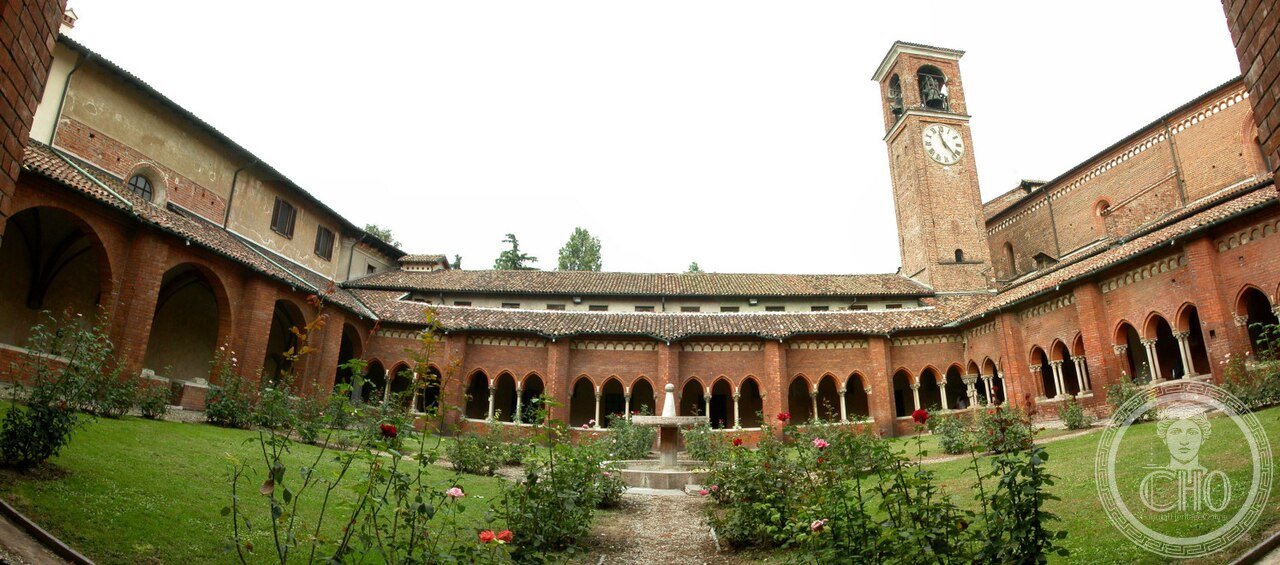
The cloister, rebuilt after the Napoleonic suppression, opens off the south side of the nave. The refectory with Luini’s frescoes is accessible on request to groups. The monastic enclosure beyond the cloister is active and closed to visitors, but the monks’ plain-chant sung at the canonical hours — especially Vespers — is audible from the church.
Practical information
- Opening hours: Tuesday–Sunday 09:00–12:00 and 15:00–17:30; closed Mondays
- Admission: free for the church; small donation suggested
- Refectory (Luini frescoes): on appointment for groups (contact the abbey office)
- Best time: weekday mornings for Lauds or Vespers sung by the community
- Time needed: 1 hour for church and cloister
Getting there
By metro from Milan: M3 line to Corvetto, then bus 77 to Chiaravalle (15 minutes). By car: SP40 south from Milan Porta Romana; parking at the abbey. GPS: 45.4108° N, 9.2232° E.
Nearby
- Abbazia di Viboldone — companion Humiliate monastery with 14th-century frescoes, 8 km south-east
- Parco Agricolo Sud Milano — the agricultural greenbelt protecting the rice fields, waterways and Cistercian-managed land south of the city
- Milan — city centre 5 km north; Duomo, Pinacoteca Brera, Castello Sforzesco
Sources
- Wikipedia — “Chiaravalle Abbey” (en.wikipedia.org/wiki/Chiaravalle_Abbey)
- Wolfgang Braunfels, Monasteries of Western Europe, Thames & Hudson, 1972
- Abbazia di Chiaravalle — official website (chiaravalle.net)
- John Pope-Hennessy, Giovanni di Paolo, cited in Evelyn Welch, Art and Society in Italy 1350–1500, Oxford, 1997
Find it on the map
See this place and what’s around it →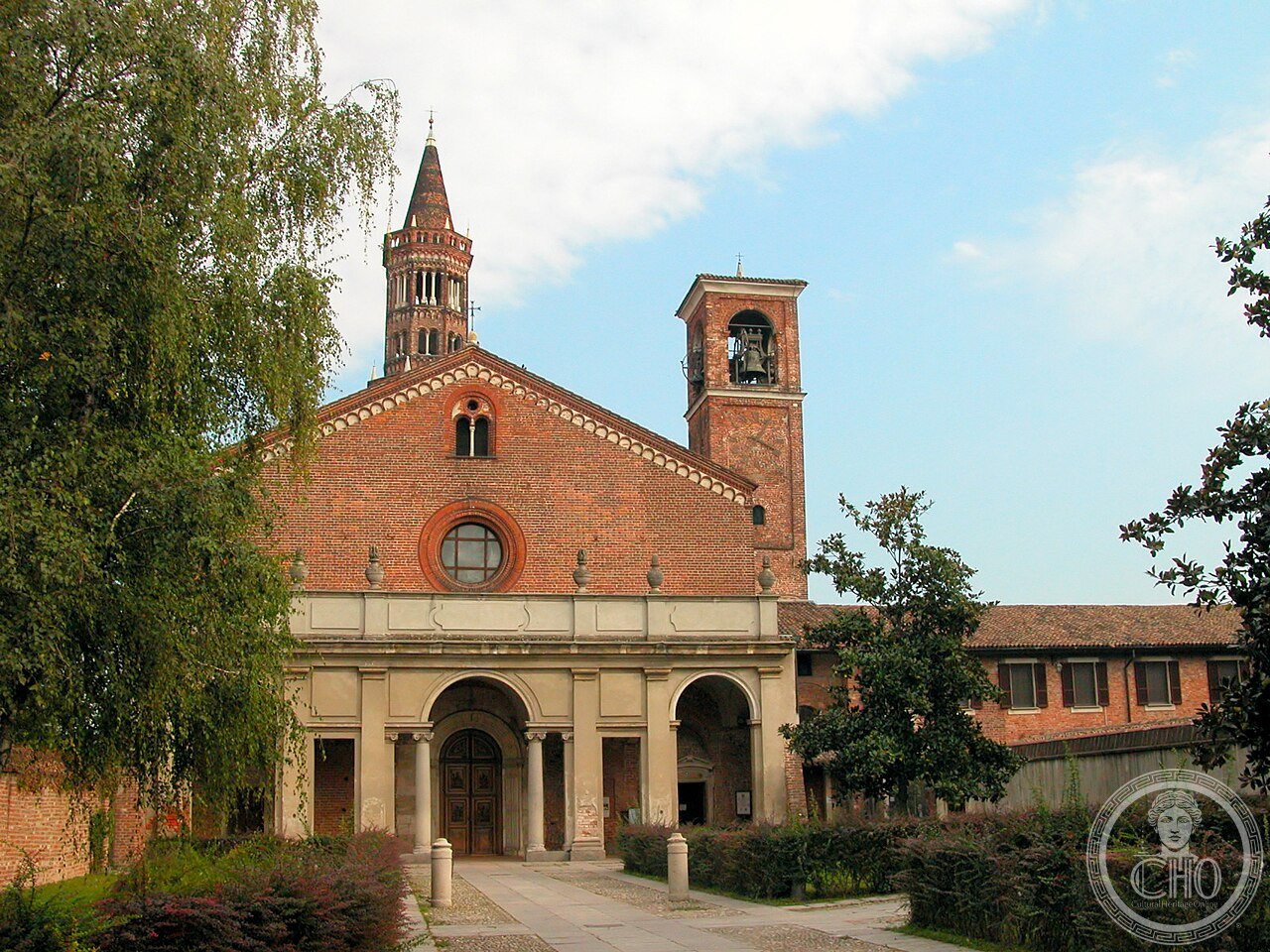
📷 Become a Cultural Heritage Online photographer
Share your photos of places: they stay published under your name as the author. The more they're seen, the more you get noticed — and soon a contest will reward the most appreciated photos.
Log in or sign up free to add a photoIs this page about you?
This page is read by travellers and heritage enthusiasts who find it on Google. Tell us how you are connected to this place and we will take it from there.