The nearest World Heritage site to Phong Nha-Ke Bang National Park and Hin Nam No National Park is the Complex of Hué Monuments, 191 kilometres away in a straight line. Ban Chiang and Vat Phou both follow at 281 kilometres, the Citadel of the Ho Dynasty at 284 kilometres and My Son Sanctuary at 286 kilometres. The subject property, inscribed in 2003 and extended as a transboundary site in 2025, protects one of the oldest and largest intact karst landscapes in Asia.
The World Heritage sites within reach of Phong Nha-Ke Bang
The distances below are straight lines between the reference points that UNESCO publishes for each property, measured to the nearest component of a serial site. They tell you what is close. They do not tell you how long the road takes, which depends on the season and the route.
| Site | Country | Distance | Inscribed | Type |
|---|---|---|---|---|
| Complex of Hué Monuments | Viet Nam | 191 km | 1993 | Cultural |
| Ban Chiang Archaeological Site | Thailand | 281 km | 1992 | Cultural |
| Vat Phou and Associated Ancient Settlements within the Champasak Cultural Landscape | Lao People’s Democratic Republic | 281 km | 2001 | Cultural |
| Citadel of the Ho Dynasty | Viet Nam | 284 km | 2011 | Cultural |
| My Son Sanctuary | Viet Nam | 286 km | 1999 | Cultural |
| Hoi An Ancient Town | Viet Nam | 296 km | 1999 | Cultural |
Read together, the closest sites trace the cultural geography of central Viet Nam and the middle Mekong. Hué, My Son and Hoi An record successive political and trading powers on the Vietnamese coast: the Champa religious capital, the Nguyen dynasty seat, and the port that connected them to wider Asian trade. Inland, Vat Phou and the Ho Dynasty citadel show how the same imperial traditions — Khmer on one side, Vietnamese neo-Confucianism on the other — were built into river landscapes.
Why UNESCO judges the karst here exceptional
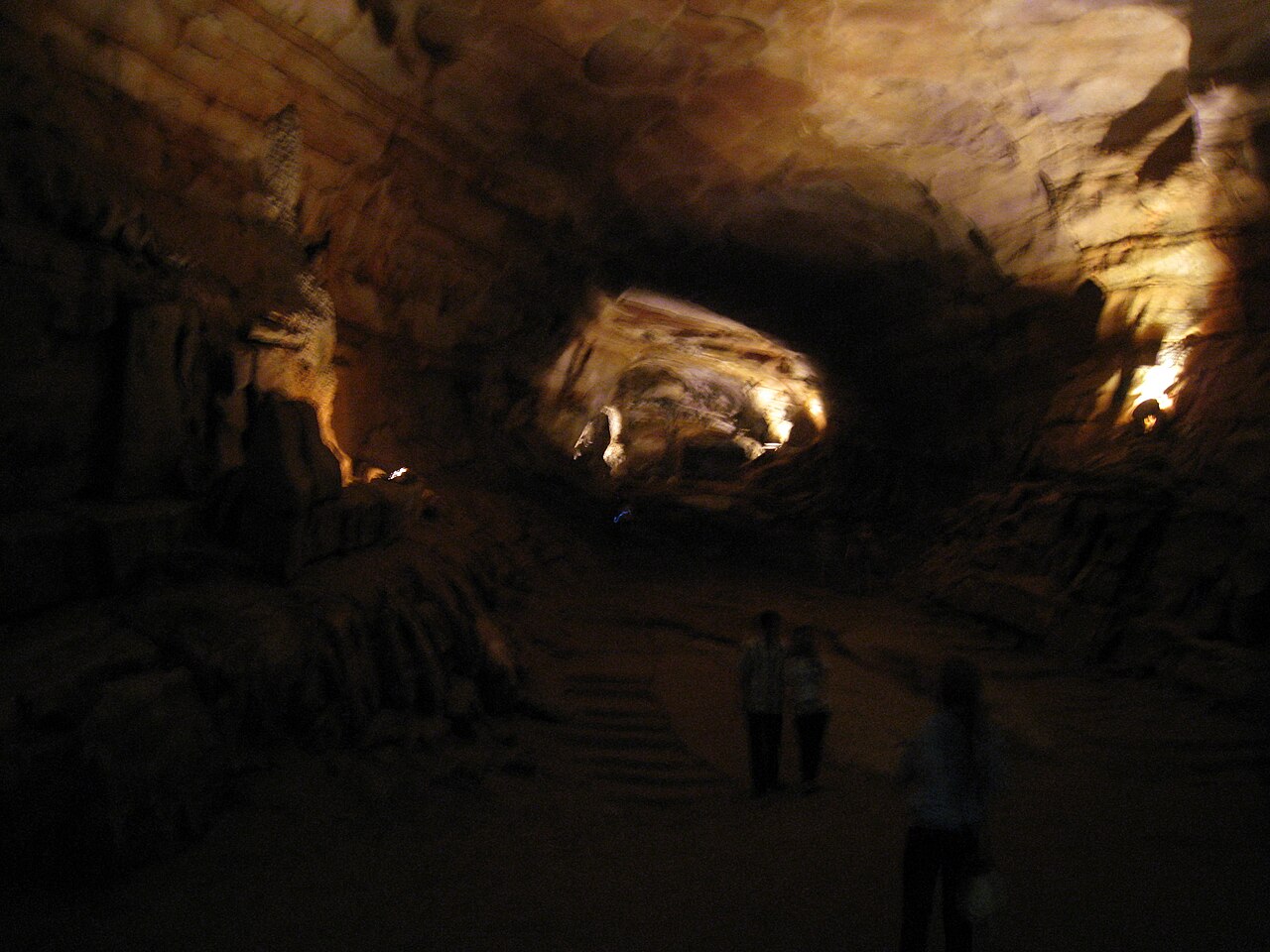
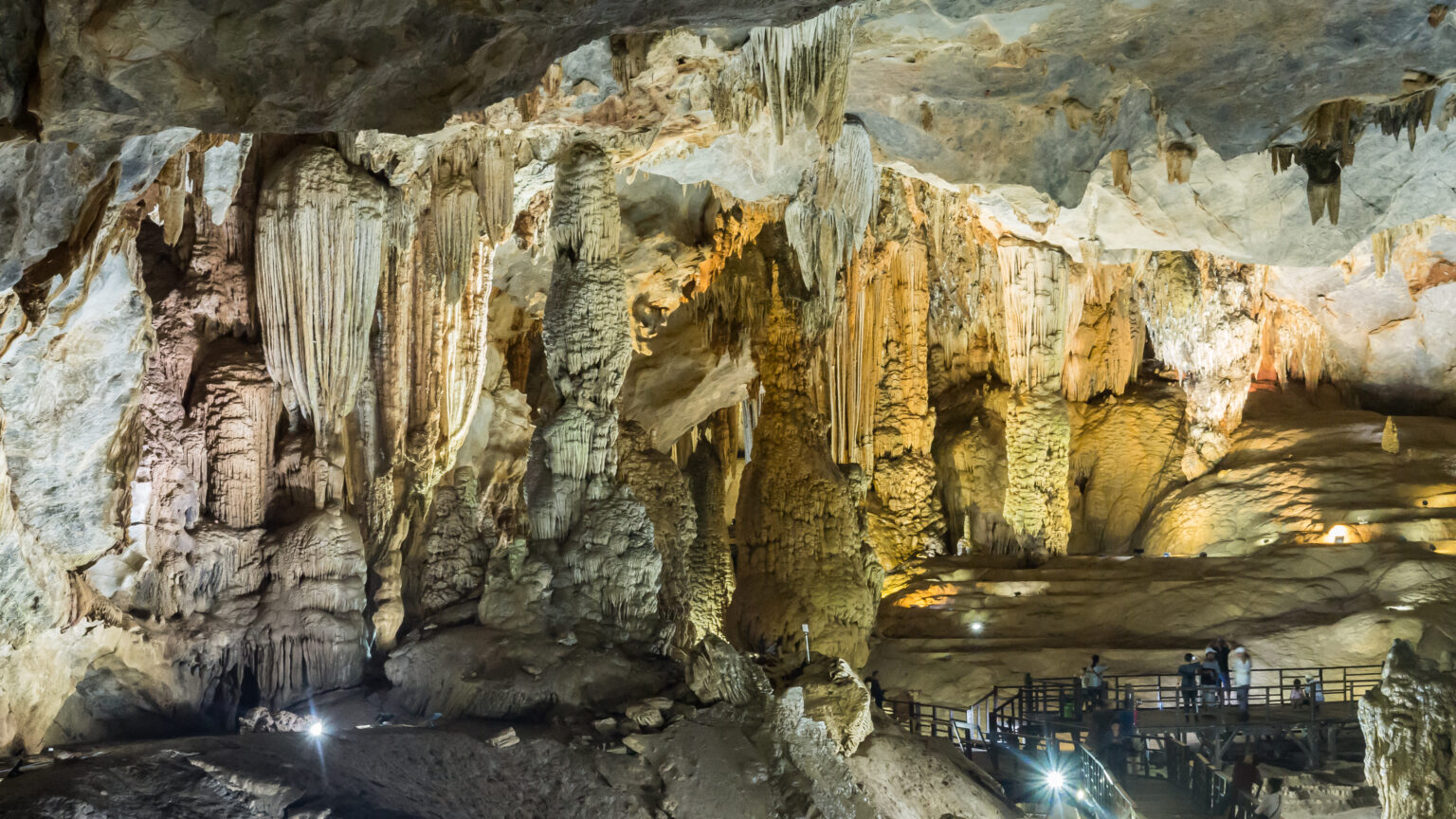
UNESCO’s case for the property rests on a karst system at least 400 million years old, which makes it the oldest large-scale karst in Asia. The limestone is not a single slab but interbedded with shales, sandstone and granite, and that complexity produced an unusual surface pattern of polygonal karst features recorded nowhere else when the site was extended. Underground, the caves include dry, terraced, dendritic and intersecting forms, and they preserve evidence of ancient river routes and the deposition and later re-solution of giant speleothems.
Two caves that set world records
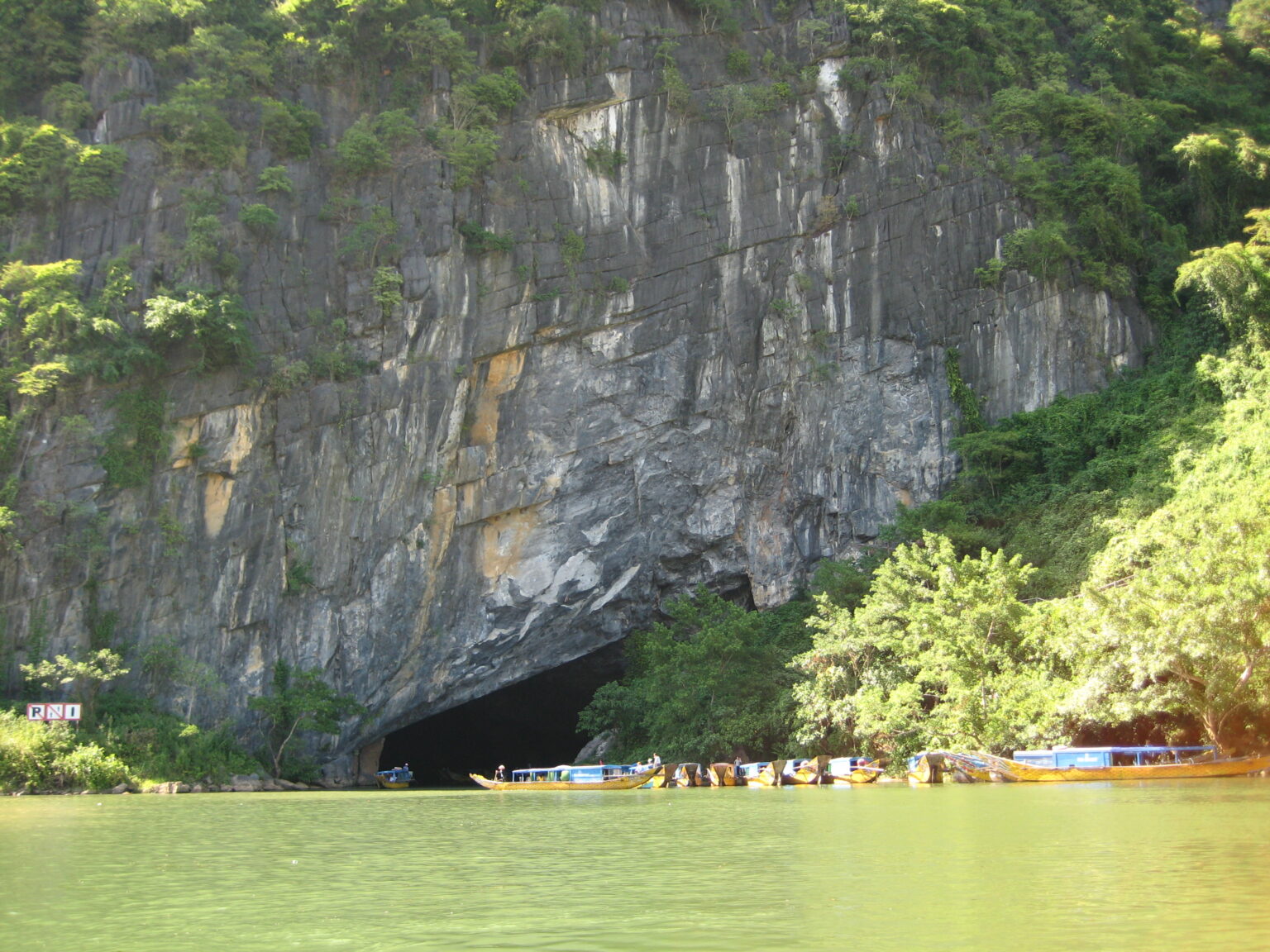
The most significant underground features are Son Doong and Xe Bang Fai. Son Doong contains the world’s largest documented cave passage in terms of diameter and continuity. Xe Bang Fai, in the Lao component of the transboundary property, holds the largest active river cave passage and the largest single cave gour pool recorded globally. A gour is a water-filled basin formed by calcite deposits, and its size here is one of the reasons the site meets criterion (viii) for Earth’s geological history.
Biodiversity above and below ground
Phong Nha-Ke Bang alone has over 2,700 species of vascular plants and more than 800 vertebrate species on record. At the time of inscription, the Vietnamese part of the property counted 237 species considered globally threatened, along with 400 species found only in central Lao People’s Democratic Republic or Viet Nam. Hin Nam No adds over 1,500 vascular plant species from 755 different genera and 536 vertebrate species, among them the Giant Huntsman Spider — the largest spider by leg span anywhere, found only in Lao Khammouane Province. Across the two parks, scientific documentation records 10 to 11 primate species, four of which occur nowhere outside the Annamite range. The biggest surviving group of Southern White-cheeked Gibbon lives within these forests.
Frequently Asked Questions
Which UNESCO World Heritage sites are near Phong Nha-Ke Bang and Hin Nam No National Park?
The Complex of Hué Monuments is 191 km away in a straight line, Ban Chiang and Vat Phou are both 281 km, and the Citadel of the Ho Dynasty is 284 km. My Son Sanctuary lies 286 km away and Hoi An Ancient Town 296 km.
When was Phong Nha-Ke Bang National Park inscribed on the World Heritage List?
The site was first inscribed in 2003 as Phong Nha-Ke Bang National Park in Viet Nam. It was extended across the border to include Hin Nam No National Park in the Lao People’s Democratic Republic in 2025, creating the current transboundary property.
Why are Son Doong and Xe Bang Fai caves significant?
Son Doong contains the world’s largest documented cave passage in terms of diameter and continuity. Xe Bang Fai contains the largest active river cave passage and the largest single cave gour pool, a water basin formed by calcite deposits.
What animals are protected at Phong Nha-Ke Bang and Hin Nam No?
The property hosts 10 to 11 primate species, four of which occur only in the Annamite Mountain range. Two notable examples are the Southern White-cheeked Gibbon and the Black Langur, whose largest remaining population is found here.
Sources
- UNESCO World Heritage Centre — Phong Nha-Ke Bang National Park and Hin Nam No National Park. https://whc.unesco.org/en/list/951/
- UNESCO World Heritage Centre — Complex of Hué Monuments (inscribed 1993). https://whc.unesco.org/en/list/678/
- UNESCO World Heritage Centre — Ban Chiang Archaeological Site (inscribed 1992). https://whc.unesco.org/en/list/575/
- UNESCO World Heritage Centre — Vat Phou and Associated Ancient Settlements within the Champasak Cultural Landscape (inscribed 2001). https://whc.unesco.org/en/list/481/
- UNESCO World Heritage Centre — Citadel of the Ho Dynasty (inscribed 2011). https://whc.unesco.org/en/list/1358/
- UNESCO World Heritage Centre — My Son Sanctuary (inscribed 1999). https://whc.unesco.org/en/list/949/
- UNESCO World Heritage Centre — Hoi An Ancient Town (inscribed 1999). https://whc.unesco.org/en/list/948/
Spotted an error? Write to editorial@culturalheritageonline.com and we correct it the same day.