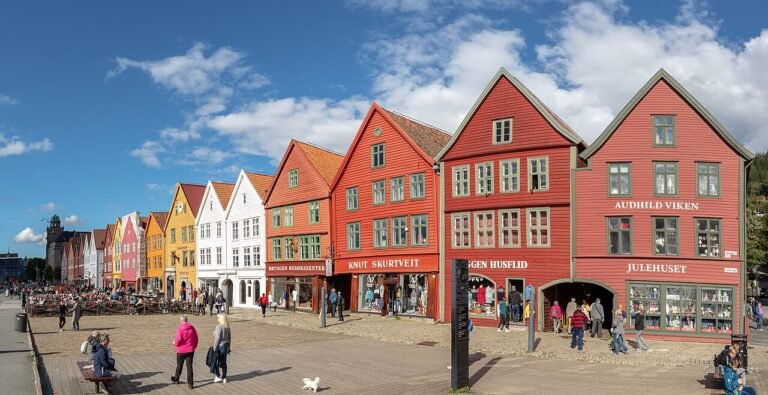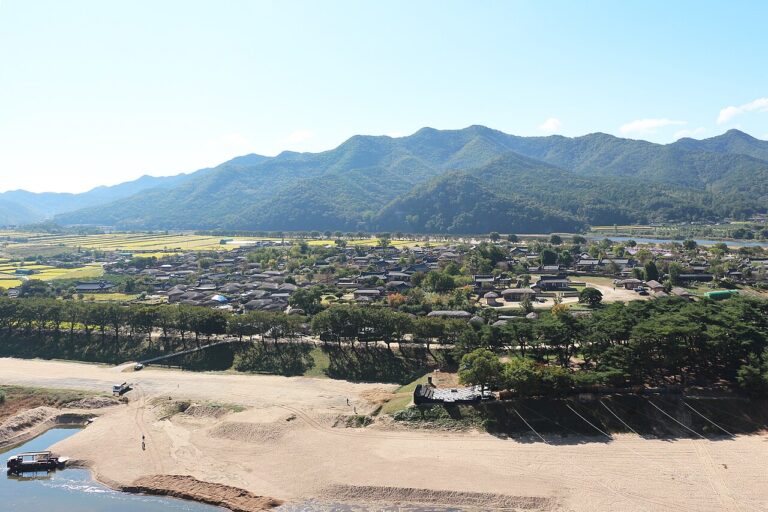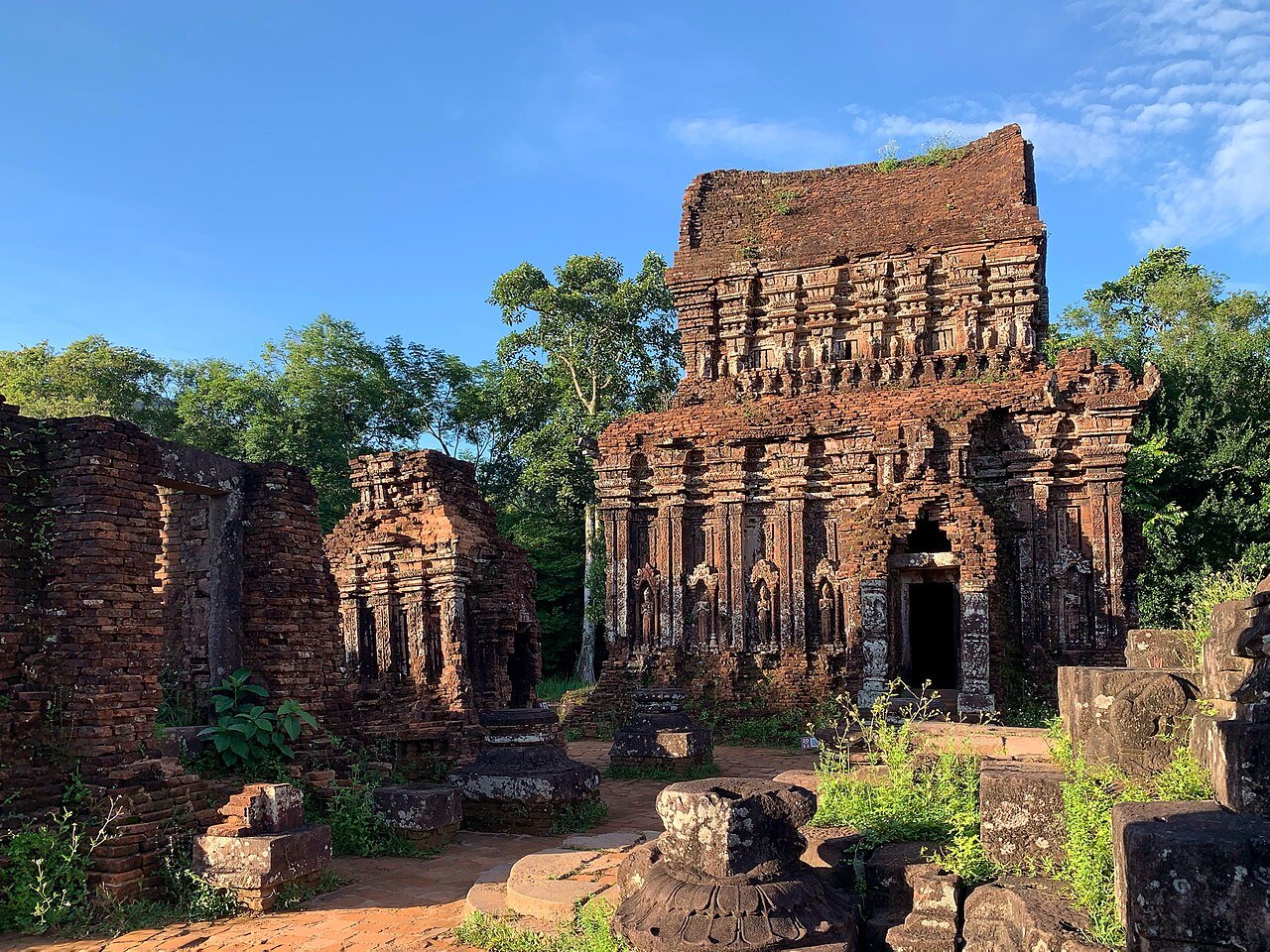
Hội An Ancient Town, 27 km away in a straight line, is the nearest other World Heritage site to Mỹ Sơn, followed by the Complex of Hué Monuments (85 km), both in Viet Nam. Mỹ Sơn itself is a sanctuary of Hindu tower-temples that served as the religious and political capital of the Champa Kingdom for most of its existence, and it has been on the World Heritage List since 1999.
The World Heritage sites within reach of Mỹ Sơn
The distances below are straight lines between the reference points that UNESCO publishes for each property. They show what is close, not how long the road takes, which depends on the route.
| Site | Country | Distance | Inscribed | Type |
|---|---|---|---|---|
| Hoi An Ancient Town | Viet Nam | 27 km | 1999 | Cultural |
| Complex of Hué Monuments | Viet Nam | 85 km | 1993 | Cultural |
| Vat Phou and Associated Ancient Settlements within the Champasak Cultural Landscape | Laos | 266 km | 2001 | Cultural |
| Phong Nha-Ke Bang National Park and Hin Nam No National Park | Viet Nam / Laos | 286 km | 2003 | Natural |
| Temple of Preah Vihear | Cambodia | 399 km | 2008 | Cultural |
| Koh Ker (ancient Lingapura or Chok Gargyar) | Cambodia | 443 km | 2023 | Cultural |
Only the first of these shares a river with Mỹ Sơn. UNESCO notes that the Thu Bon, whose source lies in the sanctuary’s basin, flows past the monuments and reaches the sea near the ancient port of Hội An, a trading town of the 15th to 19th centuries. ICOMOS, the Advisory Body that evaluated Mỹ Sơn, asked Viet Nam to reflect on the natural and historical links between the two properties. Hué is a later story: the capital of a unified Viet Nam from 1802, under the Nguyen dynasty. Vat Phou, in Laos, is the Khmer-era counterpart, a planned landscape of the 5th to 15th centuries shaped by a Hindu vision of nature.
Who built Mỹ Sơn, and over how many centuries?
The Champa kings did, over ten centuries. UNESCO dates the sanctuary from the 4th to the 13th century CE and places it in the ancestral homeland of the Dua clan, which unified the Cham clans and founded the kingdom of Champapura in 192 CE. The temples were dedicated to Hindu gods such as Krishna and Vishnu, but above all to Shiva; Mahayana Buddhism entered Cham culture too, yet Shivite Hinduism stayed the state religion.
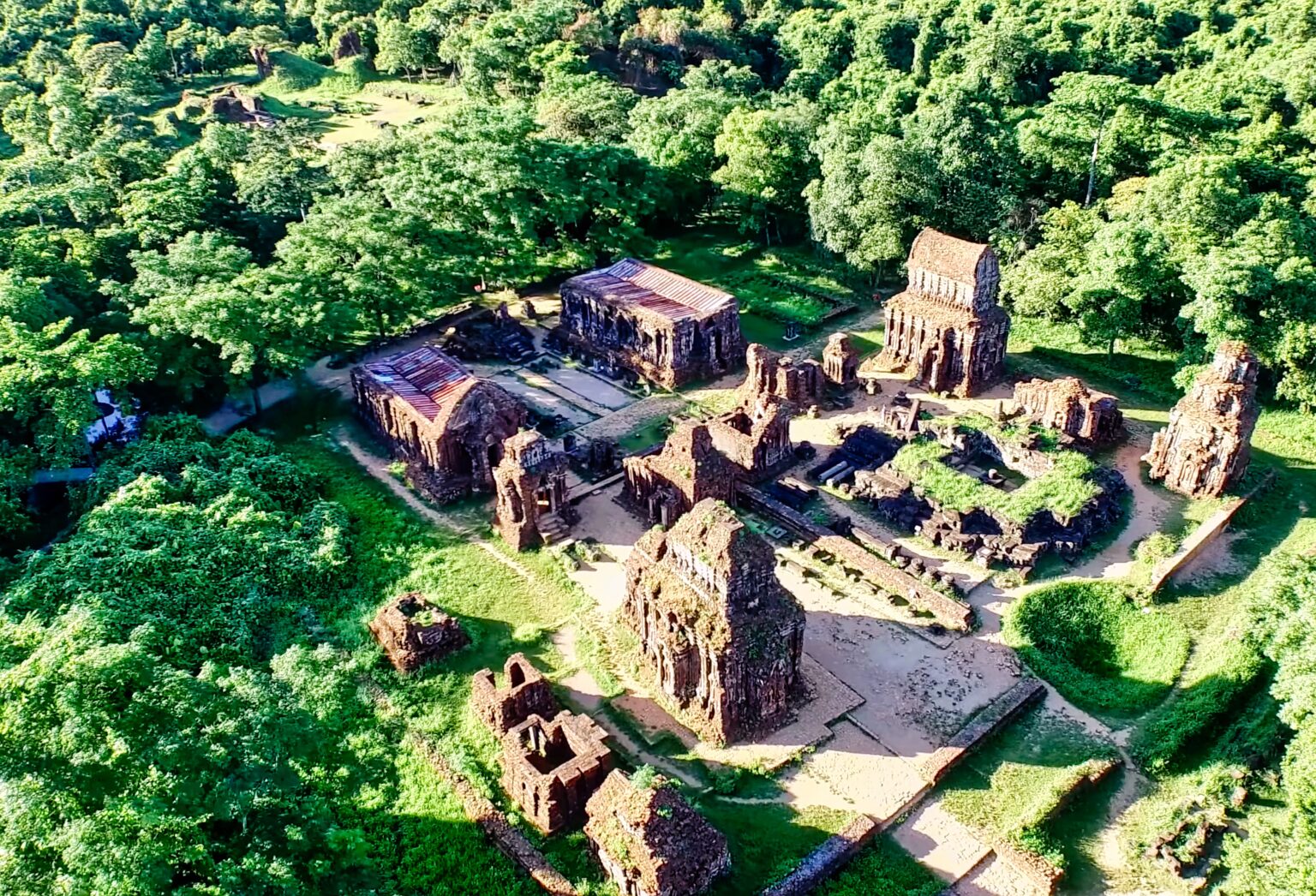
The ICOMOS evaluation gives the sequence in more detail. Kings of the 6th to 8th centuries endowed the site with fine temples. Under Giaya Simhavaram in the later 10th century, it says, most of the finest surviving monuments went up. The 11th century was one of continuous warfare in which Mỹ Sơn “suffered grievously”, until Harivarman IV restored it. In the 12th century Jaya Harivarman I built the five temples of Group G on a hill between Groups A and E. ICOMOS puts the end of worship at Mỹ Sơn in the later 15th century.
The place suited both faith and defence. It lies in a valley ringed by mountains, which UNESCO calls easily defensible, and the Thu Bon rises there.
What does a Cham tower-temple look like?
The monuments are built of fired brick with stone pillars and decorated with sandstone bas-reliefs of Hindu myth. At the centre of each complex stands the kalan, the main tower, which ICOMOS says symbolises the sacred mountain Meru at the centre of the universe. Its square base carries reliefs, and the tower above it is of brick alone, with a false door facing east. The interior is plain, with small niches for lamps and a Shivalingam on a plinth. ICOMOS adds that many of the roofs were originally covered in gold or silver leaf.
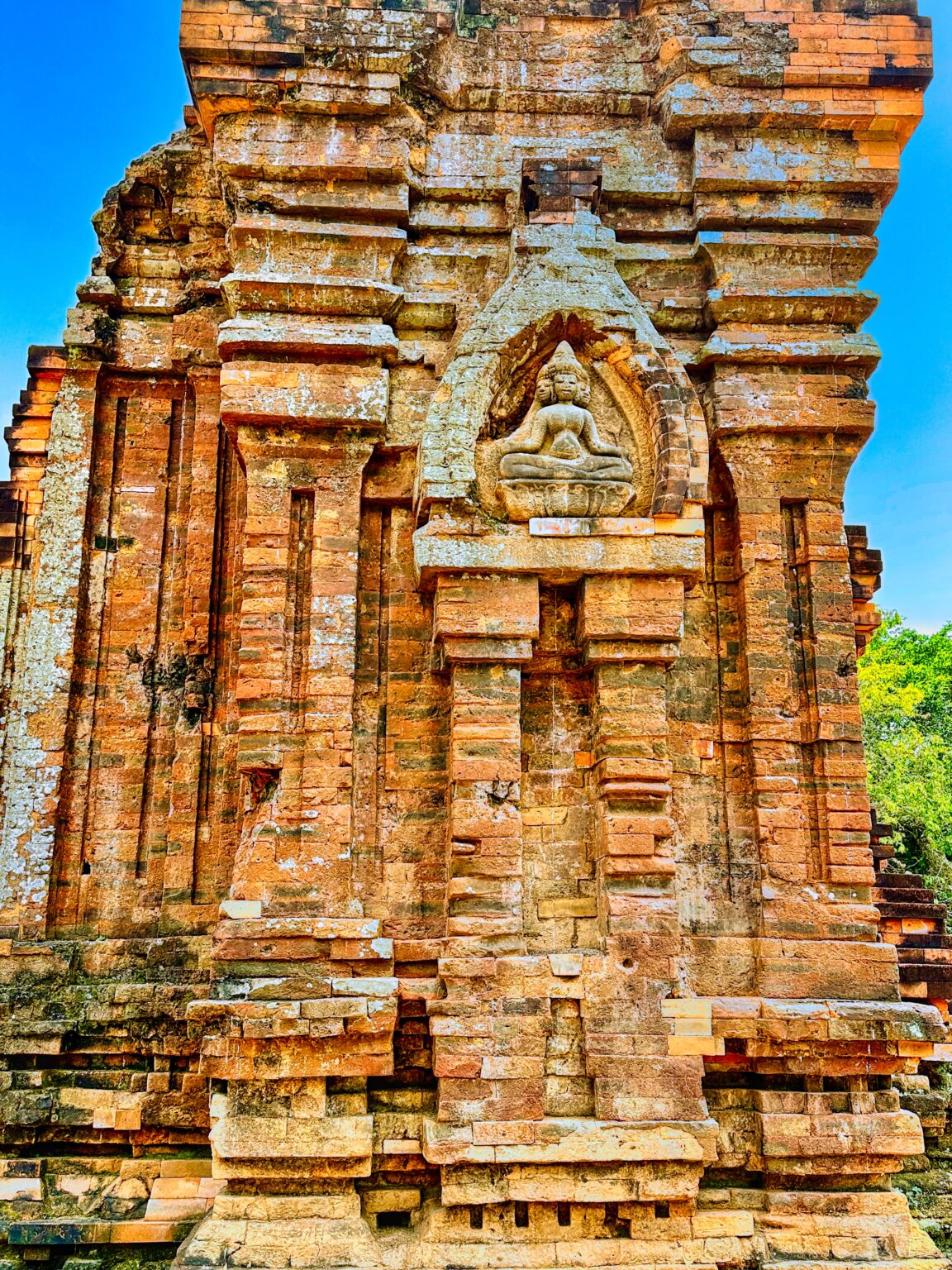
In front of the kalan stood a smaller gate-tower, the gopura, and long tiled halls, the mandapa, for ceremonies. The sanctuary is divided into groups lettered A to H after the French scholar Henri Parmentier, who recorded nearly seventy monuments in the early 20th century. ICOMOS lists thirteen temples inside the enclosure of Group A, whose main tower, A1, is at 24 metres the highest at Mỹ Sơn. Groups B, C and D are the largest concentration, 27 temples in all, according to ICOMOS.
The dates of the groups span the 10th to the 13th century in ICOMOS’s account, and the long range shows in different architectural styles. The architecture and sculpture derive directly from India, with a few northern Vietnamese touches such as the boat-shaped roofs of one or two buildings.
What did the war leave, and who has worked on the ruins?
From 1965 Mỹ Sơn became a guerrilla base, and the region was bombed and mined. In August 1969, ICOMOS records, the sanctuary itself was heavily bombed, with great destruction. Its evaluation names B1 as the largest temple, largely destroyed, and says only the main temple of Group H survived. Even so, UNESCO counts eight groups of 71 standing monuments, plus extensive buried archaeology. It also warns that unexploded ordnance may remain in the buffer zone.
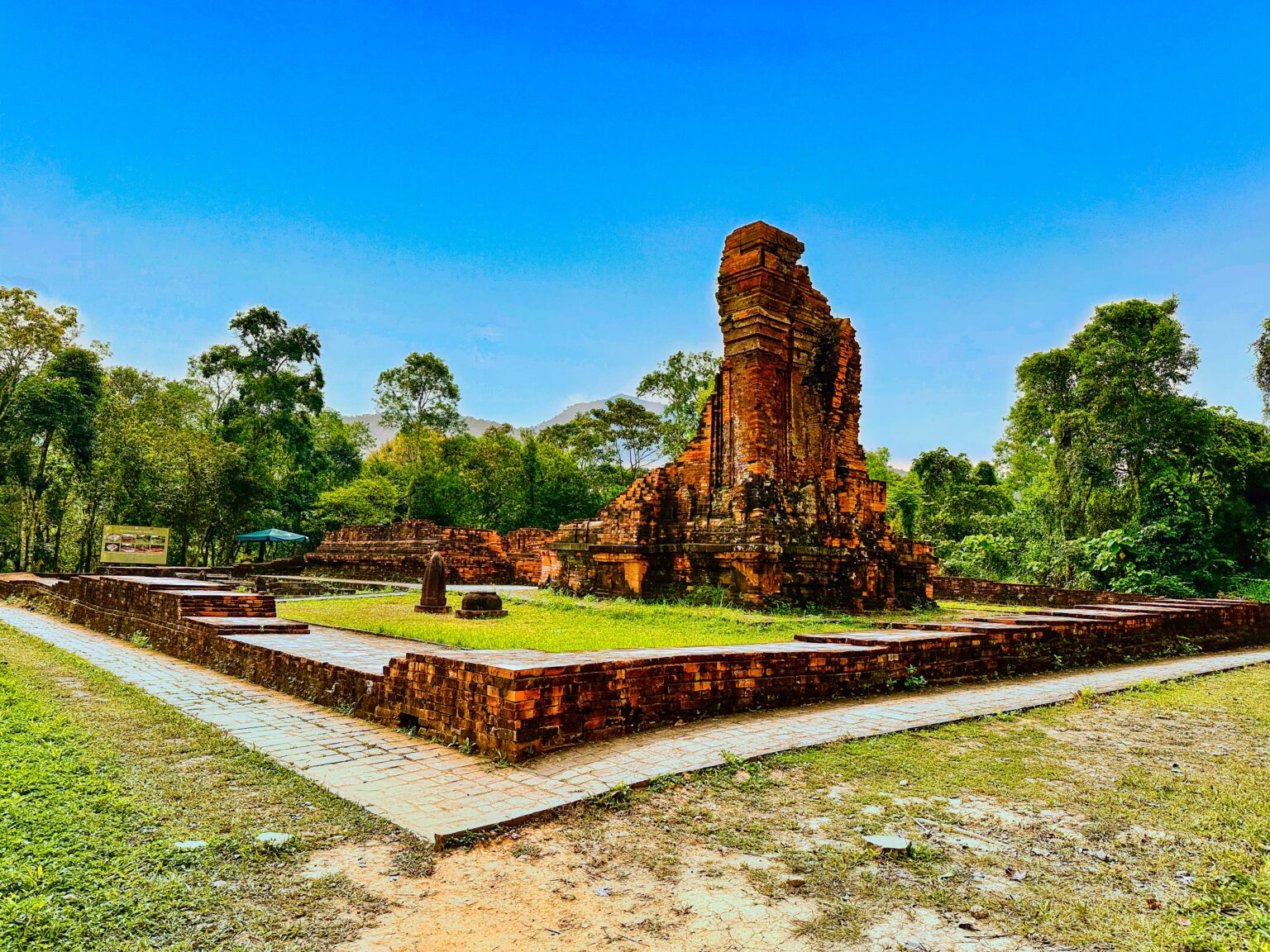
Repair began before the war. The École française d’Extrême-Orient restored temples in 1938-44, and a dam it built in 1939-41 was swept away by flooding in 1946. From 1980 Polish specialists from PKZ worked with Vietnamese colleagues on documentation and consolidation in Groups A-D. ICOMOS also mentions an Italian project prepared by the Fondazione Lerici in 1998, a computer-based archaeological map of the area with a GIS database and training courses, and called it commendable, while noting that its status was uncertain at the time.
Frequently Asked Questions
Which UNESCO World Heritage sites are near Mỹ Sơn?
Hội An Ancient Town is 27 km away in a straight line and the Complex of Hué Monuments 85 km, both in Viet Nam. Further out are Vat Phou in Laos (266 km), Phong Nha-Ke Bang and Hin Nam No (286 km), the Temple of Preah Vihear (399 km) and Koh Ker (443 km).
Which World Heritage criteria does Mỹ Sơn meet?
Criteria (ii) and (iii). UNESCO calls it an exceptional example of cultural interchange, with an indigenous society adapting Hindu art and architecture from India, and says the Champa Kingdom was an important phenomenon in the history of South-East Asia, vividly illustrated by the ruins of Mỹ Sơn.
How many monuments survive at Mỹ Sơn?
UNESCO counts eight groups of 71 standing monuments, along with extensive buried archaeology covering the whole history of the kingdom. ICOMOS, writing in 1999, stressed that many of them were in very poor condition and in need of urgent action, and that war bombing in 1969 had destroyed much.
Who protects Mỹ Sơn today?
Overall responsibility lies with Viet Nam’s Ministry of Culture, Sports and Tourism. It is devolved to the Quang Nam provincial culture department, working with the Duy Xuyen District People’s Committee, which set up the My Son Management Board of Relics and Tourism. The site was made a Special National site in 2009.
Sources
- UNESCO World Heritage Centre — My Son Sanctuary (inscribed 1999). https://whc.unesco.org/en/list/949/
- ICOMOS, Advisory Body Evaluation of My Son (No 949), September 1999. https://whc.unesco.org/document/154666
- UNESCO World Heritage Centre — Hoi An Ancient Town (1999). https://whc.unesco.org/en/list/948/
- UNESCO World Heritage Centre — Complex of Hué Monuments (1993). https://whc.unesco.org/en/list/678/
- UNESCO World Heritage Centre — Vat Phou and Associated Ancient Settlements within the Champasak Cultural Landscape (2001). https://whc.unesco.org/en/list/481/
- UNESCO World Heritage Centre — Phong Nha-Ke Bang National Park and Hin Nam No National Park (2003). https://whc.unesco.org/en/list/951/
- UNESCO World Heritage Centre — Temple of Preah Vihear (2008). https://whc.unesco.org/en/list/1224/
- UNESCO World Heritage Centre — Koh Ker (2023). https://whc.unesco.org/en/list/1667/
Spotted an error? Write to editorial@culturalheritageonline.com and we correct it the same day.