
The Buddhist Monuments in the Horyu-ji Area, 6 km away in a straight line, are the nearest World Heritage site to Ancient Nara, followed by the Ancient Capitals of Asuka and Fujiwara and the Mozu-Furuichi Kofun Group, both 19 km away, all in Japan. Nara was the capital of Japan from 710 to 784, and its temples, shrine, sacred forest and excavated palace site have been on the World Heritage List since 1998.
The World Heritage sites within reach of Ancient Nara
The distances below are straight lines between the reference points that UNESCO publishes for each property, measured to the nearest component of a serial site. They show what is close, not how long a train takes.
| Site | Country | Distance | Inscribed | Type |
|---|---|---|---|---|
| Buddhist Monuments in the Horyu-ji Area | Japan | 6 km | 1993 | Cultural |
| Ancient Capitals of Asuka and Fujiwara | Japan | 19 km | 2026 | Cultural |
| Mozu-Furuichi Kofun Group: Mounded Tombs of Ancient Japan | Japan | 19 km | 2019 | Cultural |
| Historic Monuments of Ancient Kyoto (Kyoto, Uji and Otsu Cities) | Japan | 22 km | 1994 | Cultural |
| Sacred Sites and Pilgrimage Routes in the Kii Mountain Range | Japan | 34 km | 2004 | Cultural |
| Himeji-jo | Japan | 101 km | 1993 | Cultural |
Read in order, the list is a short history of early Japanese power. The Kofun tombs belong to the 3rd to 6th centuries. Asuka (588-694) and Fujiwara (694-710) were the capitals before Nara, and Asuka grew up around Asuka-dera, the first Buddhist temple in Japan. Horyu-ji, UNESCO says, has buildings from the late 7th or early 8th century among the oldest surviving wooden ones in the world. Kyoto took over in 794, and the Kii mountain routes were pilgrimage lines to Nara and Kyoto. Himeji, an early 17th-century castle, is a different world.
Why did a capital of 100,000 people last only 74 years?
Nara was founded in 710, when Empress Gemmei moved the court from Fujiwara. ICOMOS describes the plan: chosen under Chinese geomantic principles, modelled on Chang’an, laid out on an orthogonal grid over 2,500 ha, with a population it estimates at about 100,000. The palace at the northern end of the central avenue took 120 ha. The Japanese chronology of the Nara National Research Institute for Cultural Properties records that the court left for Kuni in 740, then Naniwa, and returned to Nara in 745.
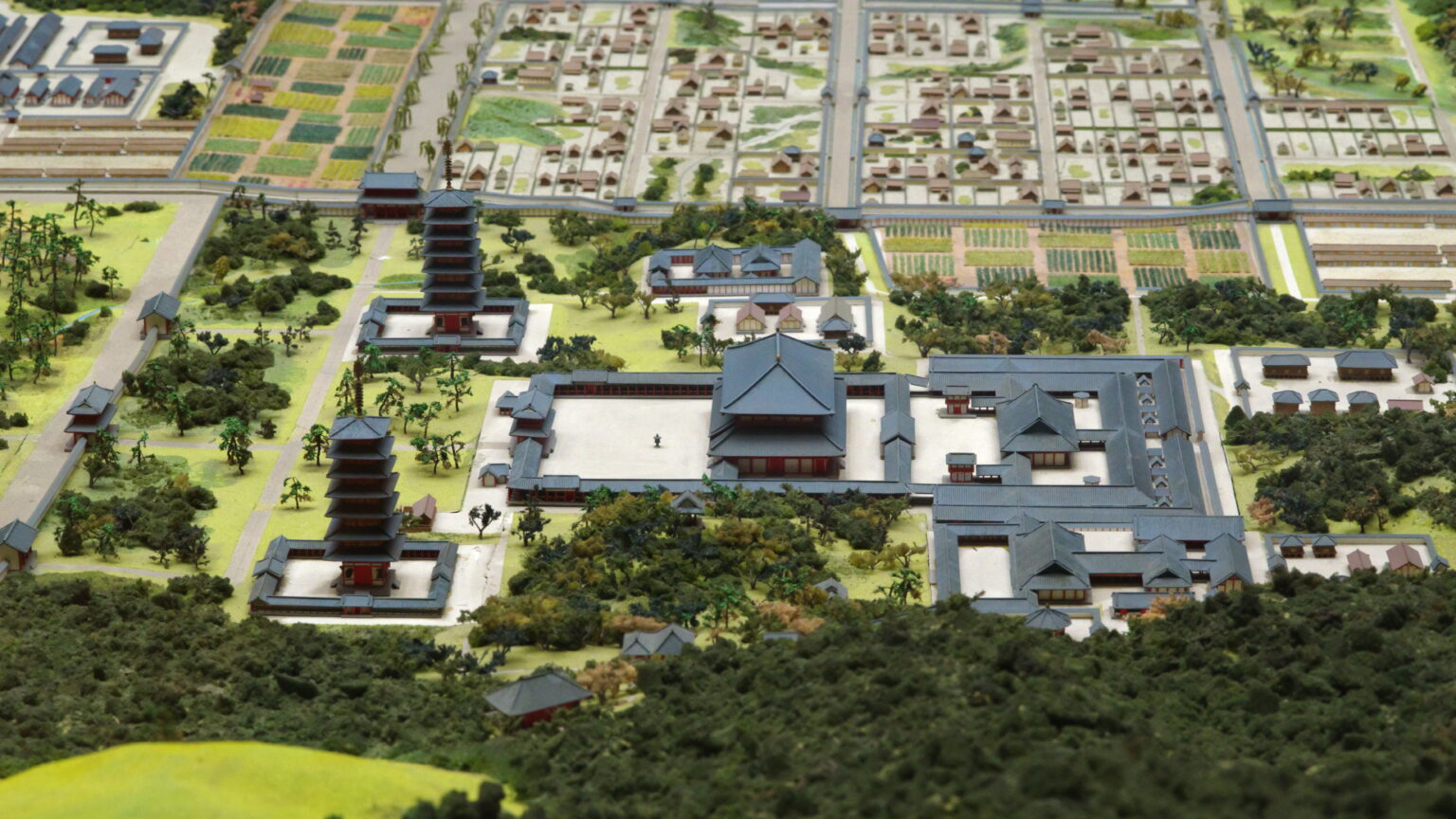
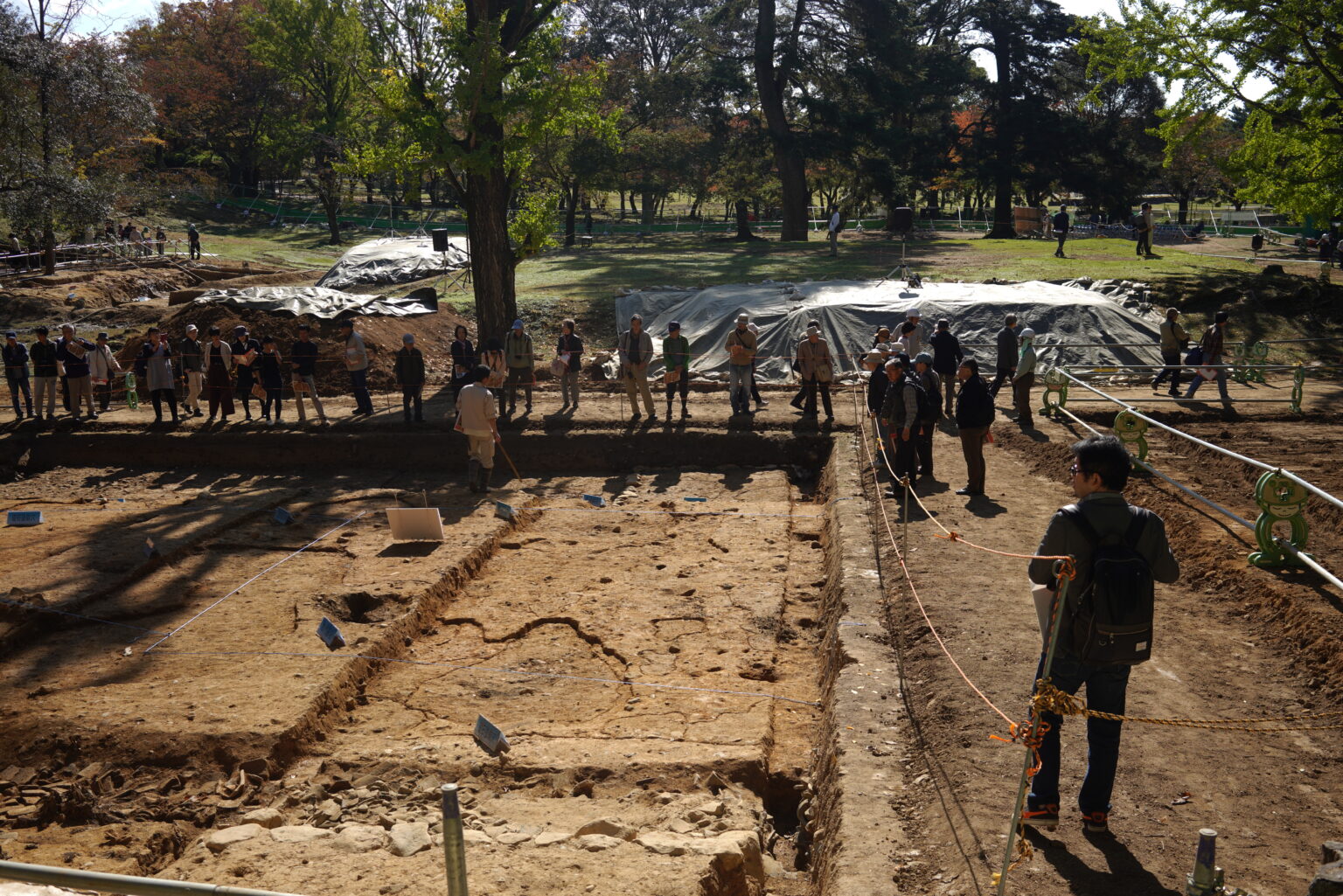
In 784 the capital moved to Nagaoka for nine years and then to Kyoto. The reasons for the move are not given in the UNESCO or ICOMOS texts, so this article does not guess at them. What they do explain is why Nara survives. The palace site became paddy fields, and as the city grew from the medieval period it grew to the east, so the 8th-century palace was never built over. Excavation began in 1955 and recovered pottery, roof tiles and wooden tablets recording the economy and customs of the 8th century. The temples, meanwhile, kept their status and imperial patronage.
How much of the Great Buddha is eighth-century?
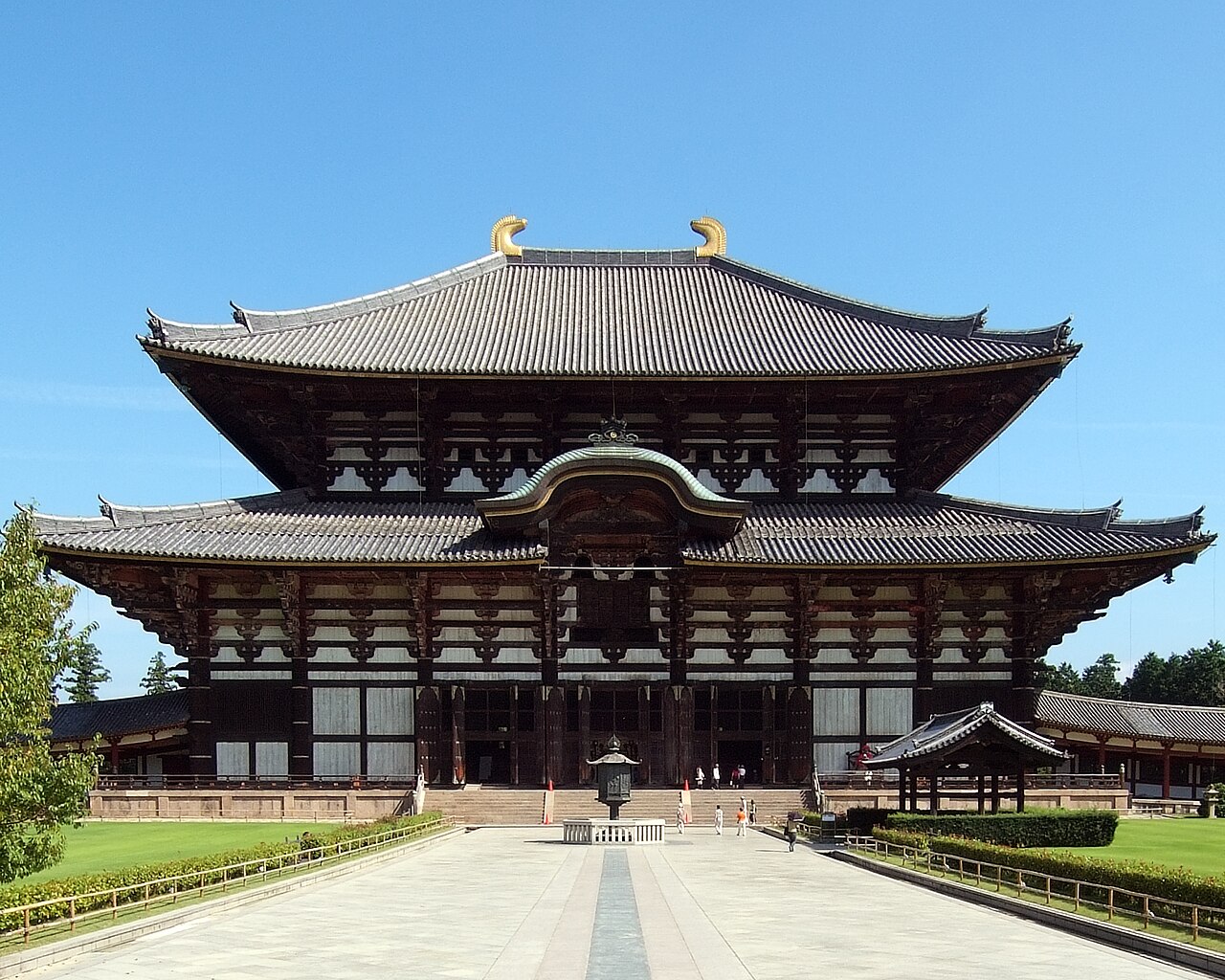
Less than the postcards imply. An edict of 741 ordered provincial temples, and Tōdai-ji was built from 745 as the central one. According to the temple’s own account, the body of the Great Buddha was cast in eight pours over three years, finished in October 749, and the eye-opening ceremony took place in 752. The statue is 14.98 m tall. It has been repaired more than once: the head fell in an earthquake in 855, war fires in 1180 and 1567 burned the hall, the head and left hand were recast after 1180, and the head was recast again before a new eye-opening in 1692.
The Great Buddha Hall has also shrunk. The original hall and its 1195 replacement were eleven bays wide; the present one, which ICOMOS dates to a restoration finished in 1709, has seven because funds were short. Its height and depth are unchanged, and Tōdai-ji still calls it the largest wooden structure in the world.
What else stands on the inscribed list?
UNESCO lists eight components: five Buddhist temples (Tōdai-ji, Kōfuku-ji, Yakushi-ji, Gangō-ji and Tōshōdai-ji), the Kasuga-Taisha shrine, the Kasugayama Primeval Forest and the Nara Palace Site. The forest has been a sacred wood where no hunting or tree-felling has been allowed since 841. ICOMOS adds that the main shrine at Kasuga-Taisha was demolished and rebuilt in the same form every twenty years until 1863. At Yakushi-ji the east pagoda keeps its 8th-century form, and Tōshōdai-ji, founded by the Chinese priest Jianzhen in 759, has the only surviving Nara-period main hall. UNESCO also notes that the palace site has been partly reconstructed, with a gate, a study hall and a garden, and that the visual effect of planned visitor facilities is being addressed.
Frequently Asked Questions
Which UNESCO World Heritage sites are near Ancient Nara?
The Horyu-ji Buddhist monuments are nearest, 6 km away in a straight line. Then come the Ancient Capitals of Asuka and Fujiwara and the Mozu-Furuichi Kofun Group (19 km each), Ancient Kyoto (22 km), the Kii mountain pilgrimage routes (34 km) and Himeji-jo (101 km).
When was Nara the capital of Japan?
From 710 to 784, a period of 74 years known as the Nara period. The court left for Kuni in 740 and Naniwa in 744, and came back in 745. In 784 it moved to Nagaoka, and then to Kyoto, where the capital stayed until the 19th century.
What does the Nara World Heritage property include?
Eight component parts: the temples of Tōdai-ji, Kōfuku-ji, Yakushi-ji, Gangō-ji and Tōshōdai-ji, the Kasuga-Taisha shrine, the Kasugayama Primeval Forest and the Nara Palace Site. UNESCO inscribed them in 1998 under criteria (ii), (iii), (iv) and (vi).
How big is the Great Buddha at Tōdai-ji?
The statue is 14.98 m tall, according to Tōdai-ji. The hall that houses it is the largest wooden structure in the world, in the temple’s words, but it is smaller than its 8th-century predecessor: seven bays wide today, where the original and the 1195 hall had eleven.
Sources
- UNESCO World Heritage Centre — Historic Monuments of Ancient Nara (inscribed 1998). https://whc.unesco.org/en/list/870/
- ICOMOS, Advisory Body Evaluation No 870, October 1998. https://whc.unesco.org/document/154487
- Tōdai-ji — Great Buddha Hall (English) and Great Buddha (Japanese). https://www.todaiji.or.jp/en/information/daibutsuden/ and https://www.todaiji.or.jp/en/information/daibutsu/
- Nara National Research Institute for Cultural Properties — Chronology (Asuka and Nara). https://www.nabunken.go.jp/english/chronology.html
- UNESCO World Heritage Centre — Buddhist Monuments in the Horyu-ji Area (1993). https://whc.unesco.org/en/list/660/
- UNESCO World Heritage Centre — Ancient Capitals of Asuka and Fujiwara (2026). https://whc.unesco.org/en/list/1757/
- UNESCO World Heritage Centre — Mozu-Furuichi Kofun Group (2019). https://whc.unesco.org/en/list/1593/
- UNESCO World Heritage Centre — Historic Monuments of Ancient Kyoto (1994). https://whc.unesco.org/en/list/688/
- UNESCO World Heritage Centre — Kii Mountain Range (2004) and Himeji-jo (1993). https://whc.unesco.org/en/list/1142/ and https://whc.unesco.org/en/list/661/
Spotted an error? Write to editorial@culturalheritageonline.com and we correct it the same day.



.jpg)