The nearest World Heritage site to the Historic Monuments of Ancient Kyoto is Historic Monuments of Ancient Nara, 22 km away in a straight line, followed by the Buddhist Monuments in the Horyu-ji Area (30 km) and the Mozu-Furuichi Kofun Group (39 km), all in Japan. Kyoto itself is a property of seventeen separate parts, inscribed in 1994 under criteria (ii) and (iv), that follow Japanese temple architecture and garden design across the 10th to 17th centuries.
Which World Heritage sites lie closest to the monuments of Kyoto?
The distances below are straight lines between the reference points UNESCO publishes for each property, measured to the nearest component of a serial site. They show what is close on the map, not how long a journey takes.
| Site | Country | Distance | Inscribed | Type |
|---|---|---|---|---|
| Historic Monuments of Ancient Nara | Japan | 22 km | 1998 | Cultural |
| Buddhist Monuments in the Horyu-ji Area | Japan | 30 km | 1993 | Cultural |
| Mozu-Furuichi Kofun Group: Mounded Tombs of Ancient Japan | Japan | 39 km | 2019 | Cultural |
| Ancient Capitals of Asuka and Fujiwara | Japan | 43 km | 2026 | Cultural |
| Sacred Sites and Pilgrimage Routes in the Kii Mountain Range | Japan | 58 km | 2004 | Cultural |
| Himeji-jo | Japan | 91 km | 1993 | Cultural |
The table reads as a sequence of capitals. UNESCO says Nara was the capital from 710 to 784, and ICOMOS records that the court then moved, after ten years at Nagaoka, to Kyoto in 794. The Asuka and Fujiwara capitals, 588 to 710, were modelled on Chinese codified law, and Kyoto in turn was modelled on an ancient Chinese capital. Horyu-ji preserves some of the oldest wooden buildings in the world; the Kii Mountains are tied to Nara and Kyoto by pilgrimage routes; Himeji is an early 17th-century castle, the one fortress in the table.
Why was Kyoto laid out on a Chinese plan?
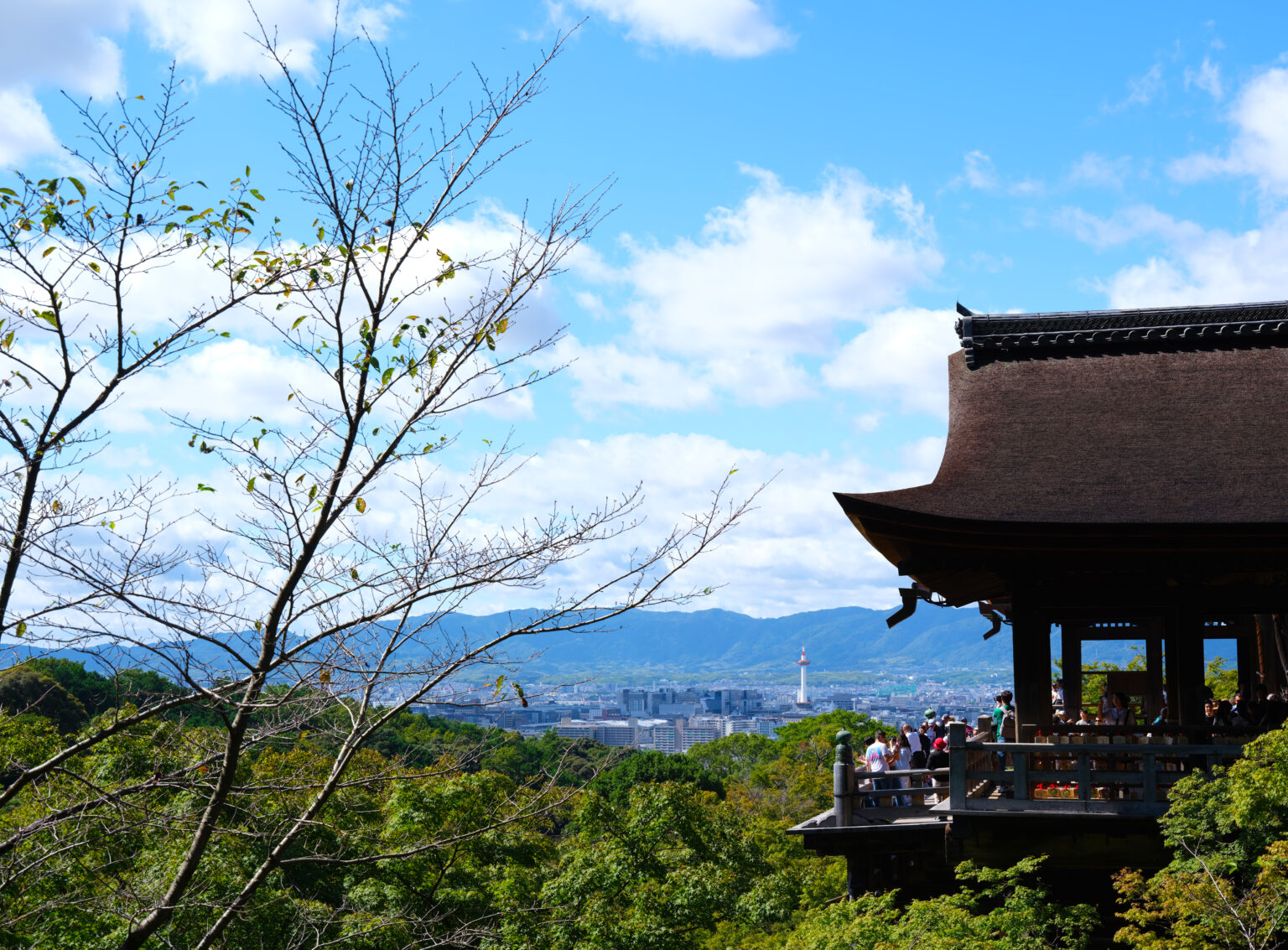
When the court left Heijo-kyo (Nara) for Kyoto in 794, ICOMOS notes, Buddhism had already arrived from China and Chinese culture was deeply influential. The new city, called Heian-kyo, measured 4.5 km east to west and 5.1 km north to south and was modelled on Chinese cities. For most of the Heian period, 794 to 1192, building Buddhist temples inside the city was prohibited, apart from the two Imperial temples, To-ji and Sai-ji. Properties dating from the foundation of the city include the temples To-ji, Kiyomizu-dera and Enryaku-ji.
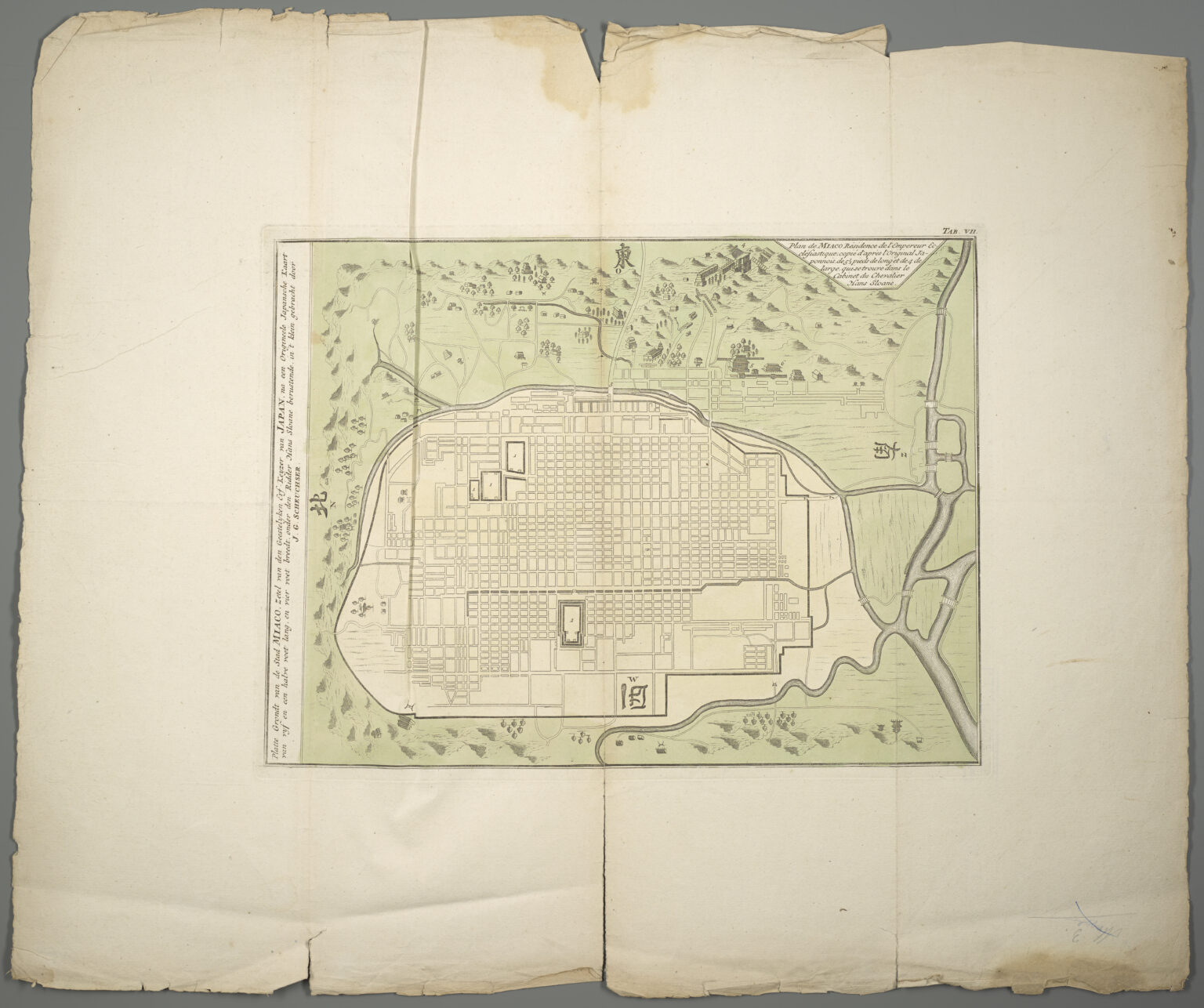
The city did not stay intact. According to ICOMOS, much of Kyoto was destroyed in the Onin War of 1467 to 1477 and was rebuilt by a new merchant class. Toyotomi Hideyoshi later enclosed it with a 23 km wall, which was dismantled after the Tokugawa shogunate built the castle of Nijo-jo at the heart of the city.
Why are almost all seventeen parts religious?
UNESCO counts 198 buildings and twelve gardens across the seventeen parts, most of them built or designed between the 10th and 17th centuries. Every component is a religious establishment except Nijo-jo. Sixteen are owned by religious organisations and Kyoto City owns the castle. Thirty-eight buildings are National Treasures and 160 are Important Cultural Properties; of the gardens, eight are Special Places of Scenic Beauty and four are Places of Scenic Beauty.
Criterion (ii) names garden design explicitly. ICOMOS singles out Ryoan-ji, whose Hojo garden is a world-famous stone garden of the mid 15th century: a rectangle of 250 square metres with fifteen stones in five groups on white gravel, which ICOMOS calls a quintessential example of the karesansui dry landscape garden. Tenryu-ji’s garden, by Muso Soseki, influenced dry gardens after the Muromachi period, and the garden of Saiho-ji, ICOMOS says, influenced later gardens such as Rokuon-ji’s.
Fire, UNESCO says, is the greatest risk to the monuments, which carry automatic alarms, hydrants and, where needed, lightning arresters, and some owners run their own fire brigades.
How did a shogun’s villa become the Golden Pavilion?
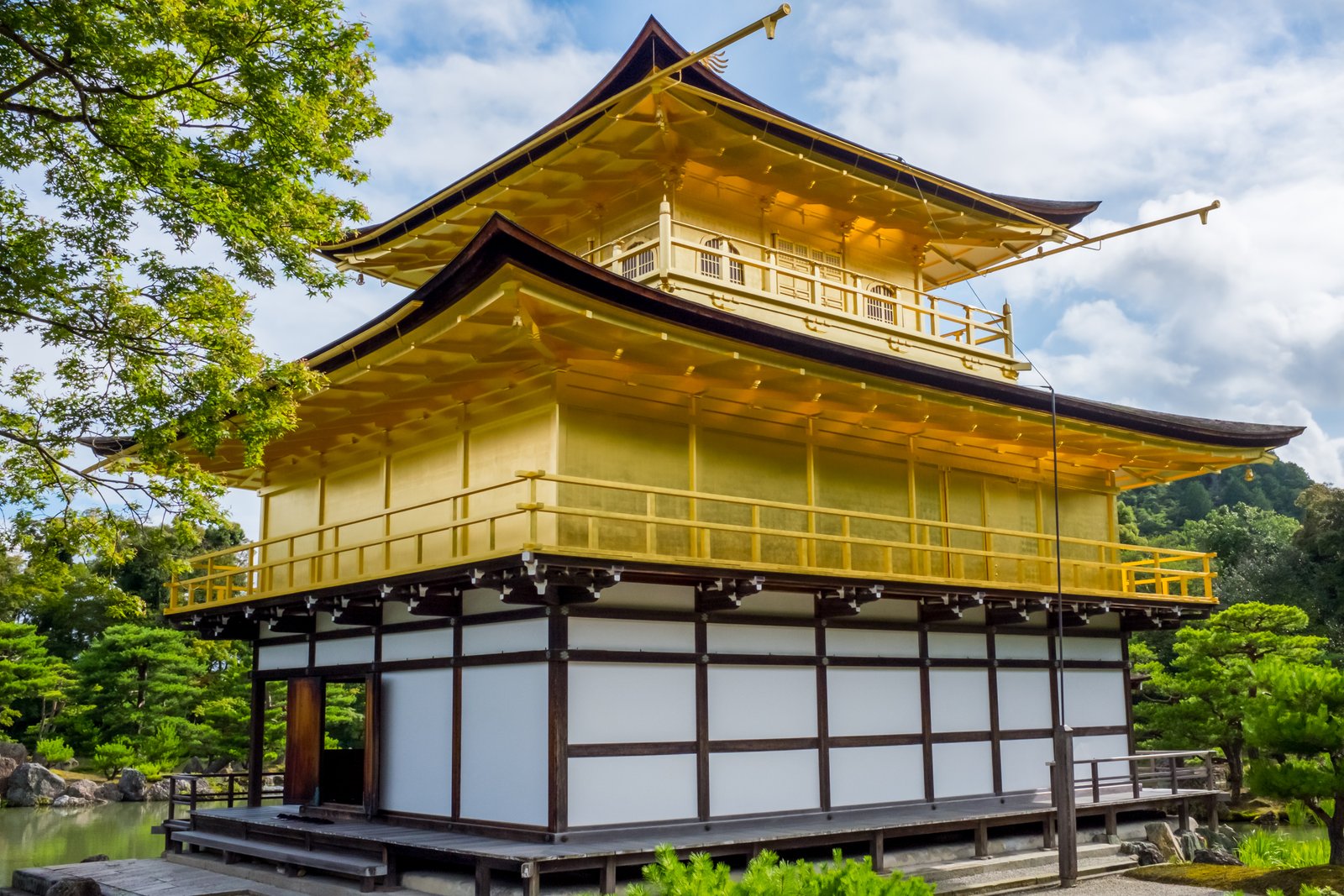
The site of Rokuon-ji, known as Kinkaku-ji, belonged in the Kamakura period to the court noble Saionji Kintsune, who built a clan temple and a villa there; the temple’s own history records a dedication ceremony in 1224. The shogun Ashikaga Yoshimitsu, who had retired in 1394, took over the ruined estate and began building his Kitayama palace in 1397. For its relics hall he had a golden pavilion built. After his death the palace became a Zen temple, as he had asked, with Muso Soseki as honorary founder; the name Rokuon-ji comes from Yoshimitsu’s posthumous name.
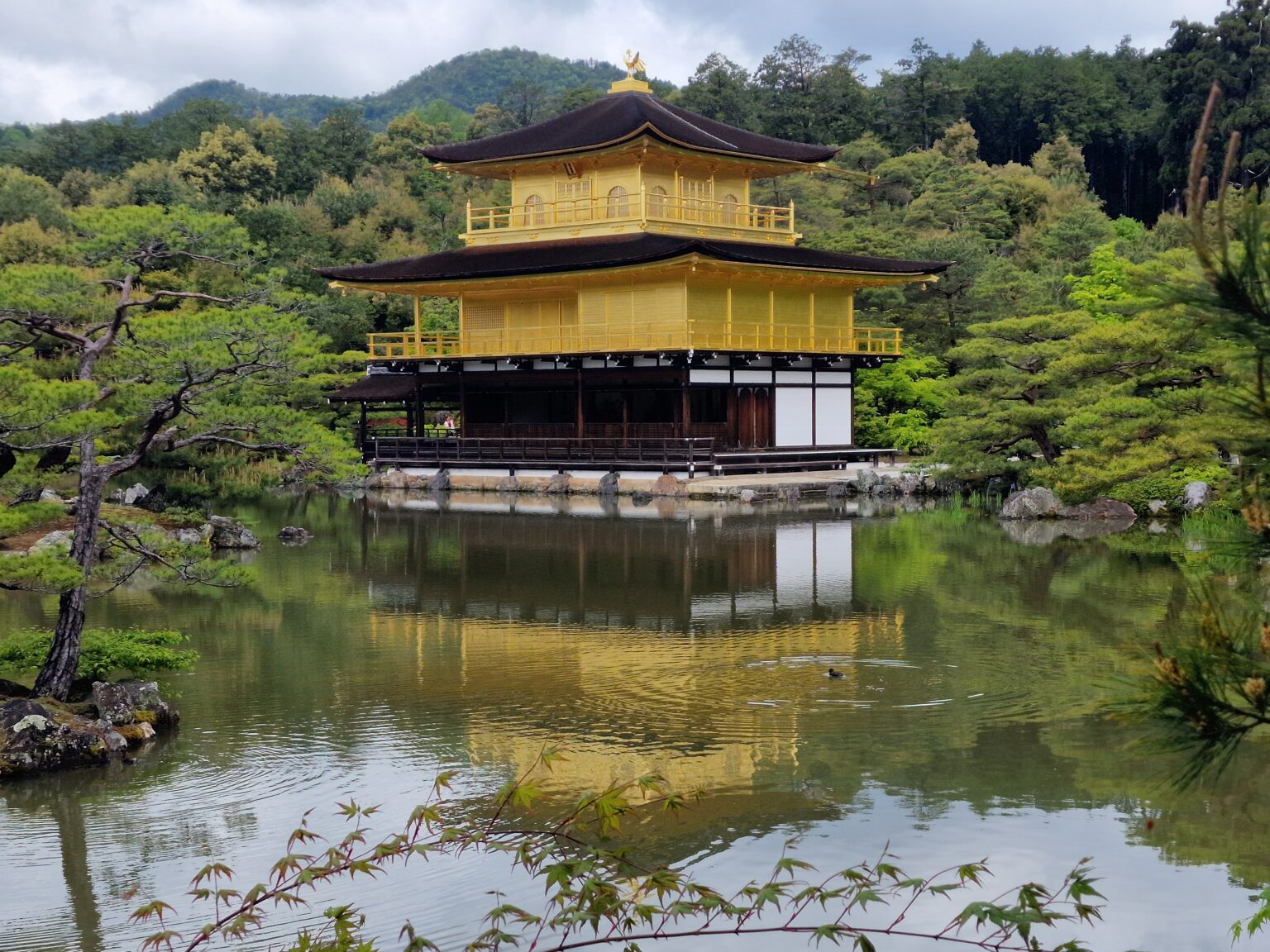
The pavilion has three storeys in three styles. The temple describes the first as shinden-zukuri, the Heian palace style; the second as buke-zukuri, a samurai-house style; and the third as the style of Chinese Zen temples. The second and third floors are lacquered and covered in pure gold leaf. The original survived the Onin War, when fire destroyed many Zen temples, but it burned to the ground in 1950 in an arson attack, and was rebuilt to the same design in 1955, as Japan Search, the national cultural database, records; ICOMOS gives the same reconstruction date. Yukio Mishima drew on the episode for his novel The Temple of the Golden Pavilion. In the autumn of 1987, the temple says, the lacquer and gold leaf were applied again.
Frequently Asked Questions
Which UNESCO World Heritage sites are near Kyoto?
Historic Monuments of Ancient Nara is the nearest, 22 km away in a straight line, then the Horyu-ji Area (30 km), the Mozu-Furuichi Kofun Group (39 km), Asuka and Fujiwara (43 km), the Kii Mountain pilgrimage sites (58 km) and Himeji-jo (91 km). All are in Japan.
How many monuments make up the Historic Monuments of Ancient Kyoto?
Seventeen component parts in Kyoto, Uji and Otsu, containing 198 buildings and twelve gardens, according to UNESCO. Sixteen of the seventeen are religious establishments owned by religious organisations. The seventeenth is the castle of Nijo-jo, owned by Kyoto City.
When was the Golden Pavilion rebuilt?
ICOMOS records that a reconstructed pavilion was erected in 1955 after the original was destroyed by fire. The temple adds that the lacquer and gold leaf were reapplied in the autumn of 1987. Only the second and third floors are covered in gold leaf.
Why is Kyoto a World Heritage Site?
UNESCO inscribed it in 1994 under two criteria. Criterion (ii): Kyoto was the main centre for the evolution of religious and secular architecture and garden design between the 8th and 17th centuries. Criterion (iv): its surviving monuments are the highest expression of that pre-modern Japanese culture.
Sources
- Japan Search (National Diet Library) — Rokuon-ji (Kinkaku-ji). https://jpsearch.go.jp/en/gallery/ndl-O31NgKVpBxFGaG
- UNESCO World Heritage Centre, Historic Monuments of Ancient Kyoto (Kyoto, Uji and Otsu Cities), inscribed 1994. https://whc.unesco.org/en/list/688/
- ICOMOS, Advisory Body Evaluation of the nomination of Historic Monuments of Ancient Kyoto (No 688), 1994. https://whc.unesco.org/document/154031
- Shokoku-ji / Kinkaku-ji (Rokuon-ji), About and Guide pages, official temple website. https://www.shokoku-ji.jp/en/kinkakuji/about/ and https://www.shokoku-ji.jp/en/kinkakuji/guide/
- UNESCO World Heritage Centre, Historic Monuments of Ancient Nara. https://whc.unesco.org/en/list/870/
- UNESCO World Heritage Centre, Ancient Capitals of Asuka and Fujiwara. https://whc.unesco.org/en/list/1757/
- UNESCO World Heritage Centre, Buddhist Monuments in the Horyu-ji Area; Sacred Sites and Pilgrimage Routes in the Kii Mountain Range; Himeji-jo; Mozu-Furuichi Kofun Group. https://whc.unesco.org/en/list/
Spotted an error? Write to editorial@culturalheritageonline.com and we correct it the same day.