The nearest World Heritage properties to the Ancient City of Ping Yao are Mount Wutai (201 km) and Yin Xu (221 km) in China. The Grand Canal comes next at 270 km, followed by the Silk Roads corridor at 272 km. Ping Yao itself was inscribed in 1997 as an exceptionally well-preserved traditional Han Chinese city.
The World Heritage sites within reach of Ping Yao
The distances below are straight lines between the reference points that UNESCO publishes for each property. They tell you what is close, not how long the road or rail journey takes.
| Site | Country | Distance | Inscribed | Type |
|---|---|---|---|---|
| Mount Wutai | China | 201 km | 2009 | Cultural |
| Yin Xu | China | 221 km | 2006 | Cultural |
| The Grand Canal | China | 270 km | 2014 | Cultural |
| Silk Roads: the Routes Network of Chang’an-Tianshan Corridor | China, Kyrgyzstan, Kazakhstan | 272 km | 2014 | Cultural |
| Longmen Grottoes | China | 302 km | 2000 | Cultural |
| Historic Monuments of Dengfeng in “The Centre of Heaven and Earth” | China | 305 km | 2010 | Cultural |
Read together, the closest sites frame different expressions of Chinese civilisation over a long span. Yin Xu preserves the late Shang capital with its oracle bones and royal tombs, the earliest stratum here. Mount Wutai catalogues how Buddhist architecture developed in China for over a millennium, while the Grand Canal and the Silk Roads corridor are vast infrastructure and exchange networks that tied the empire together. Ping Yao sits among them as a lived city of the Ming and Qing centuries.
Ping Yao as a financial centre for the whole of China
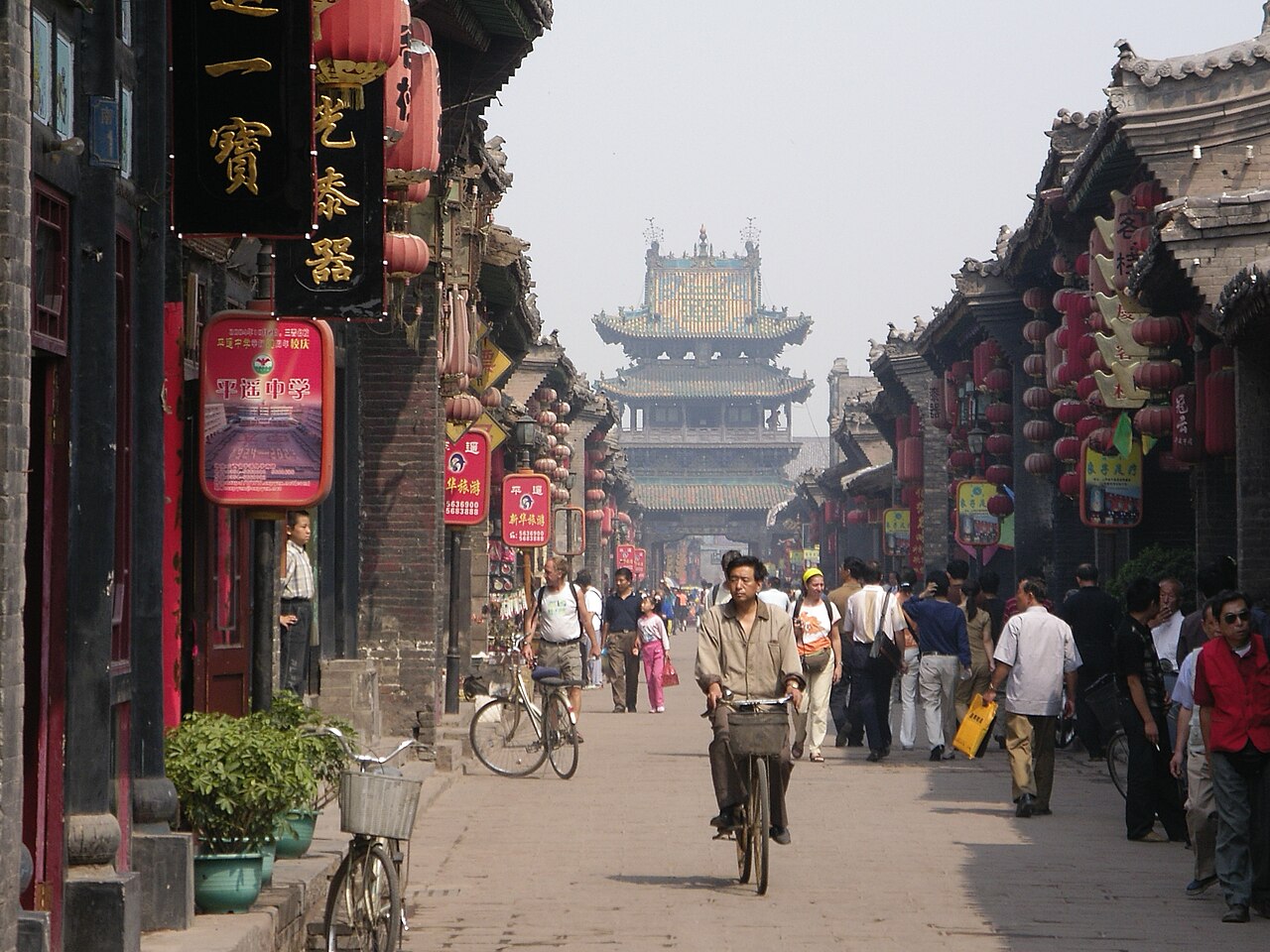
From the 19th century to the early 20th century, Ping Yao was a financial centre for the whole of China. The city’s imposing buildings associated with banking are a central part of its UNESCO inscription. Nearly 4,000 existing shops and traditional dwellings bear witness to that economic prosperity over a century. ICOMOS, in its advisory body evaluation, wrote that Ping Yao’s banking community dominated Chinese financial life in the second half of the 19th century.
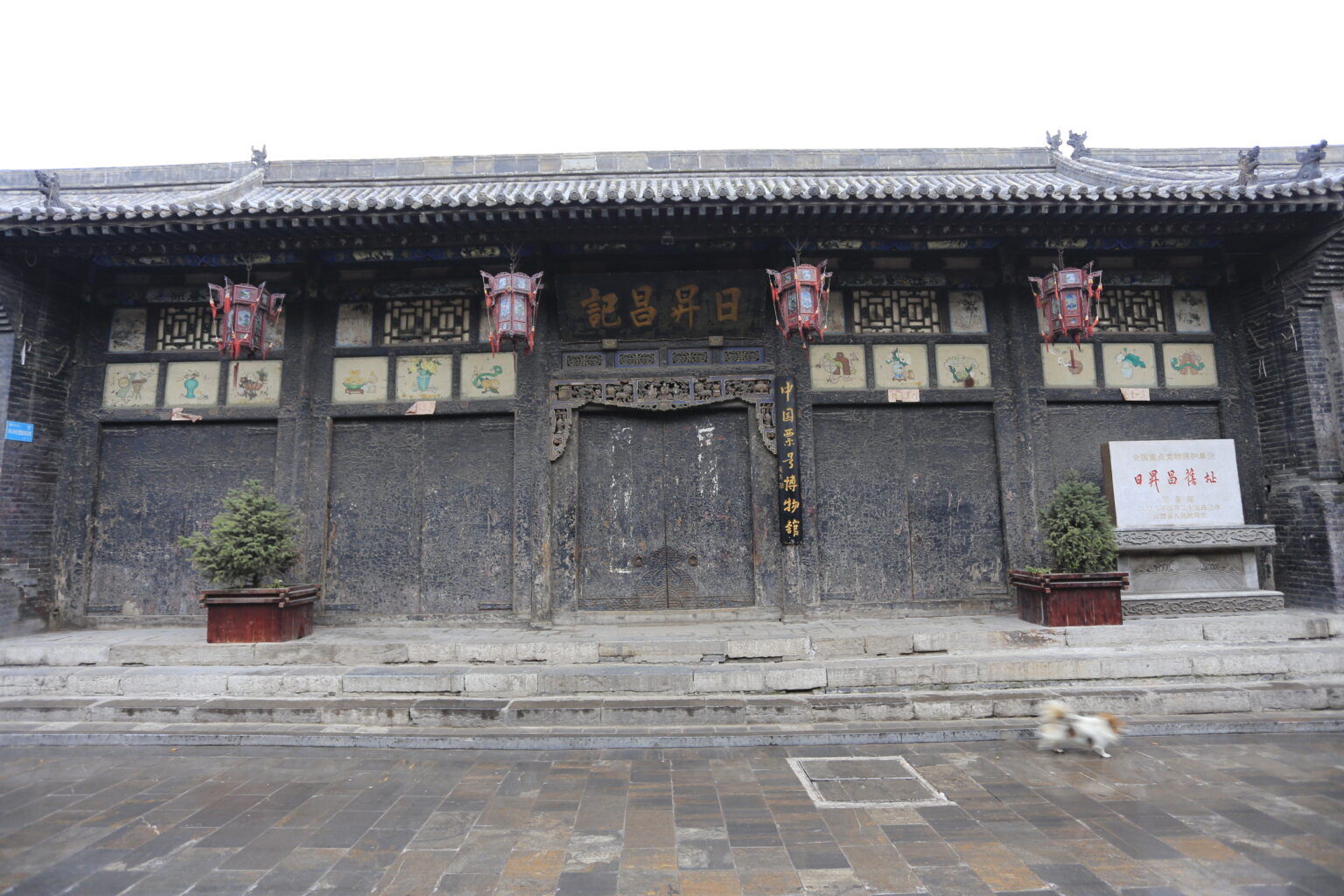
The street layout still reflects the city’s commercial past. Shops built in the 17th and 18th centuries line the main cross-streets, preserving the historic townscape. The internal arrangement is symmetrical and rectilinear, with over a hundred streets and lanes. The prosperity from trade, and later from the draft banks, endowed the city with many high-quality private houses built around open courtyards.
A walled city of the Ming and Qing dynasties
Ping Yao’s circuit of walls was built in the late 14th century, measuring six kilometres in length, the precise dimension prescribed for a city of this grade according to Han rules. The wall is ten metres thick at the base and tapers to between three and five metres at the top; its height varies from six to ten metres. Six fortified gates and seventy-two massive bastions punctuate its length.
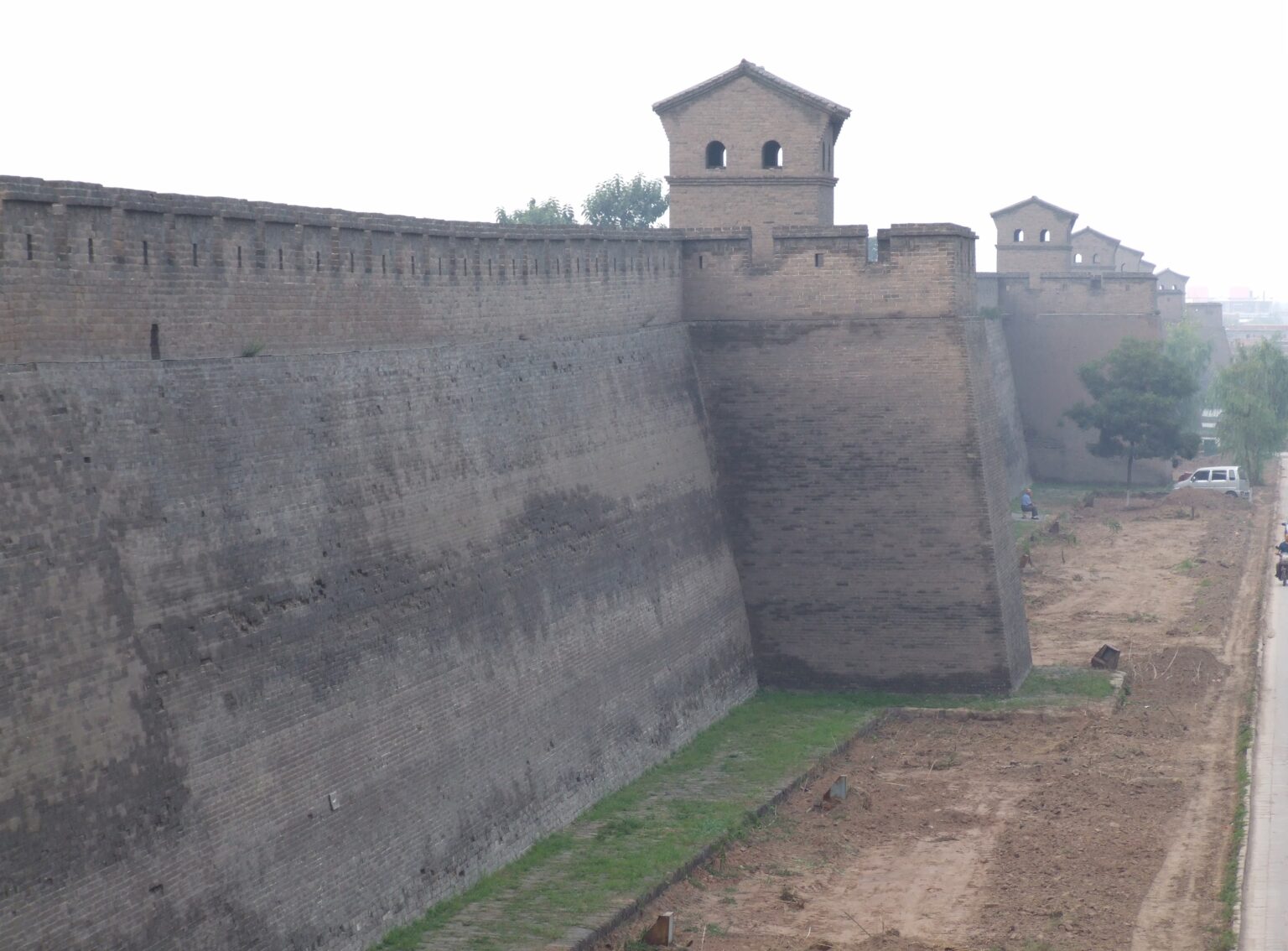
The city’s plan has not changed significantly since 1370, when it was greatly extended under the Ming Emperor Hong Wu. ICOMOS judged that Ping Yao kept its form and material with no radical changes since the 19th century. That continuity of form is central to the site’s value: it provides a remarkably complete picture of cultural, social, economic and religious development during the Ming and Qing dynasties.
Two temples attached to the inscription
UNESCO’s inscription covers not only the walled city but also two temples outside it: Shuanglin Temple six kilometres southwest of the county seat, and Zhenguo Temple twelve kilometres northeast. Shuanglin Temple holds more than 2,000 painted sculptures from the Ming and Qing dynasties, and has been called an “oriental art gallery of painted sculptures”.
Zhenguo Temple’s main shrine, Wanfo Shrine, dates back to the Five Dynasties. It ranks among China’s earliest and most valuable timber buildings still standing. The ICOMOS evaluation also names the temple’s 10th-century Ten Thousand Buddha Hall as a fundamental reference for studying early Chinese painted statues and architecture. These attached temples extend the story of Ping Yao beyond the city wall.
Frequently Asked Questions
Which UNESCO World Heritage sites are near Ping Yao?
Mount Wutai is 201 km away in a straight line, and Yin Xu is 221 km away, both in China. The Grand Canal is 270 km away, and the Silk Roads: the Routes Network of Chang’an-Tianshan Corridor is 272 km away.
Why was Ping Yao inscribed on the World Heritage List?
Ping Yao was inscribed in 1997 because it is an exceptionally well-preserved example of a traditional Han Chinese city founded in the 14th century. Its urban fabric shows how architectural styles and town planning evolved in Imperial China over five centuries.
What was Ping Yao’s role in Chinese banking history?
Ping Yao was a financial centre for the whole of China from the 19th century to the early 20th century. The imposing buildings associated with banking in the city bear witness to its economic prosperity during that period.
Which temples are included in the Ping Yao World Heritage property?
The property includes Shuanglin Temple, six kilometres southwest of the county seat, and Zhenguo Temple, twelve kilometres northeast. Shuanglin Temple has more than 2,000 painted sculptures from the Ming and Qing dynasties, while Zhenguo Temple contains the early Wanfo Shrine.
Sources
- UNESCO World Heritage Centre — Ancient City of Ping Yao (inscribed 1997). https://whc.unesco.org/en/list/812/
- ICOMOS Advisory Body Evaluation — Ancient City of Ping Yao (1997). https://whc.unesco.org/document/154342
- UNESCO World Heritage Centre — Mount Wutai (inscribed 2009). https://whc.unesco.org/en/list/1279/
- UNESCO World Heritage Centre — Yin Xu (inscribed 2006). https://whc.unesco.org/en/list/1114/
- UNESCO World Heritage Centre — The Grand Canal (inscribed 2014). https://whc.unesco.org/en/list/1443/
- UNESCO World Heritage Centre — Silk Roads: the Routes Network of Chang’an-Tianshan Corridor (inscribed 2014). https://whc.unesco.org/en/list/1442/
Spotted an error? Write to [email protected] and we correct it the same day.