
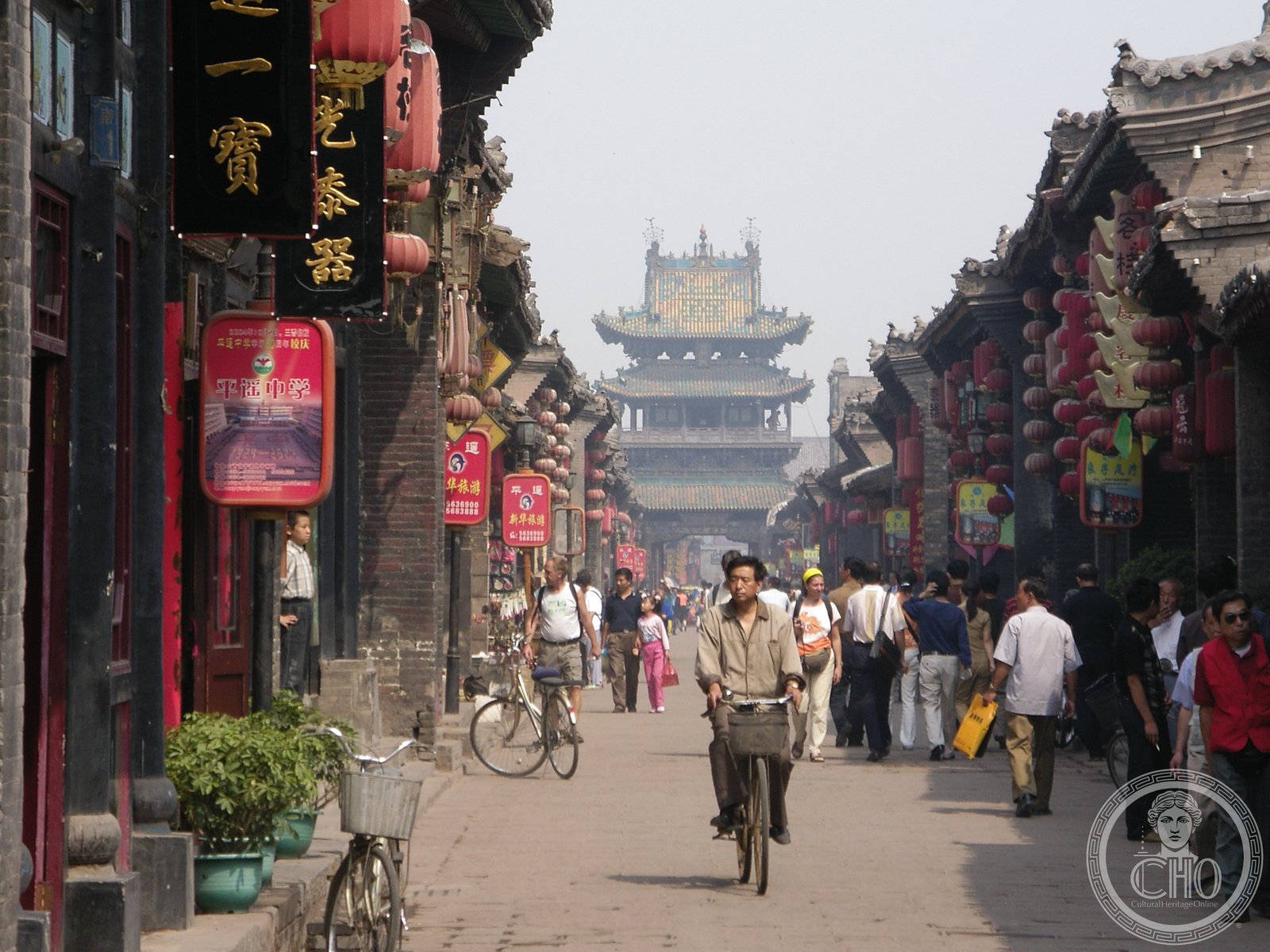
A walled city in Shanxi province whose Ming and Qing architecture and urban planning reflect centuries of mercantile dominance. Once the financial heart of imperial China, Pingyao stands as a vivid record of pre-modern Chinese commerce and civic design.
At a glance
Pingyao is a remarkably intact walled settlement that served as a major financial and administrative hub for over five centuries. Its layout and buildings preserve the urban character of the Ming and Qing dynasties, earning recognition as a World Heritage Site. The city remains an AAAAA-rated tourist destination in central Shanxi.
History
Archaeological and historical records indicate the site was established during the reign of King Xuan of Zhou (827–782 BC), giving Pingyao a documented history exceeding 2,800 years. The town has served as a seat of local government since at least the Qin dynasty.
By the 16th century, Pingyao had emerged as a regional financial centre. Its importance grew through the subsequent centuries; some scholars identify it as the financial centre of the Qing Empire during the late 19th century. The walled city as it stands today was founded in the 14th century AD and reflects the urban planning principles of the Ming dynasty onward.
What you see
The ancient city retains its Ming and Qing urban layout, with defensive walls enclosing a grid of streets lined with period architecture. The settlement’s buildings showcase construction and design methods typical of merchant cities during these dynasties, with temples, residences, and administrative structures integrated into the planned streetscape.
Cultural significance
Pingyao’s architecture and spatial organization document the development of Chinese economic institutions and urban life before industrialization. The city’s rise as a financial hub reflects the sophistication of pre-modern Chinese commerce and the wealth accumulated through regional and imperial trade networks. Its preservation offers rare insight into how medieval and early modern Chinese cities were constructed and governed.
Key facts
- Country: China
- Location: Pingyao County, Jinzhong, Shanxi Province
- Coordinates: 37.2°N, 112.15°E
- Founded: 14th century AD (current walled city)
- UNESCO World Heritage Site: 1997 (with Zhenguo Temple and Shuanglin Temple)
- Designation: AAAAA-rated tourist attraction
Practical information & getting there
Pingyao Ancient City is open to visitors year-round. The site is accessible from Jinzhong in central Shanxi. Check current opening hours, admission fees, and any travel requirements before your visit. Accommodation and dining options are available within and around the walled city.
Sources & resources
Find it on the map
See this place and what’s around it →📷 Become a Cultural Heritage Online photographer
Share your photos of places: they stay published under your name as the author. The more they're seen, the more you get noticed — and soon a contest will reward the most appreciated photos.
Log in or sign up free to add a photoIs this page about you?
This page is read by travellers and heritage enthusiasts who find it on Google. Tell us how you are connected to this place and we will take it from there.