
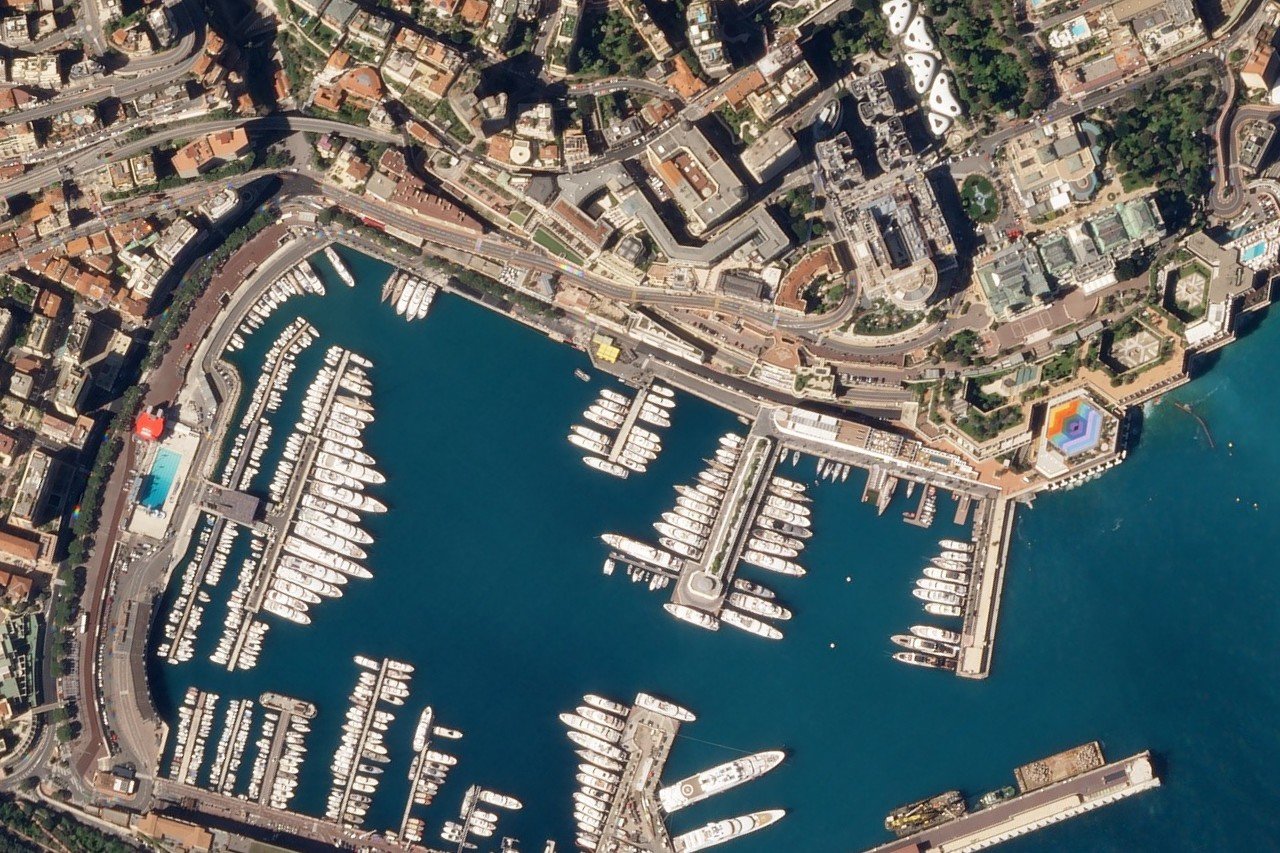
Monaco has no UNESCO World Heritage Sites within its two-square-kilometre territory, but the principality sits at the junction of some of France’s most concentrated heritage — Roman monuments at Orange and Arles, the Papal Palace at Avignon, and the Riviera cities of Nice and Grasse are all within two hours. Italy’s Ligurian coast and the Cinque Terre add another dimension across the border.
Arles: Roman and Romanesque Monuments 🚗 ~1.5 hrs west of Monaco
Arles, inscribed in 1981 under criteria (ii) and (iv), holds some of the best-preserved Roman monuments in the western Mediterranean — the amphitheatre (Les Arènes), built in the first century CE with a capacity of 20,000 spectators and still in use for bullfights and concerts; the Roman theatre; the Alyscamps necropolis; the thermae of Constantine; and the Cryptoporticus, a first-century BCE underground gallery beneath the forum. The medieval additions include Saint-Trophime cathedral and cloister, one of Provence’s finest examples of Romanesque stonework. Van Gogh spent fifteen months in Arles in 1888–89, producing more than 300 works including The Night Café and the series of sunflowers. The Fondation Vincent van Gogh opened in 2014 in an Arles mansion; it does not own original works but displays major loan exhibitions contextualised by the city.
Pont du Gard: Roman Aqueduct 🚗 ~2 hrs west via A8–A9
The Pont du Gard, inscribed in 1985 under criteria (i), (iii), and (iv), is the highest surviving section of the Nîmes aqueduct — a 50-kilometre Roman water distribution system that supplied the city of Nemausus (Nîmes) in the first century CE. The bridge stands 48.8 metres above the Gardon River and was built without mortar, its precisely cut limestone blocks held in place only by weight and geometry. The engineering precision is astonishing: the aqueduct’s gradient descends only 12.6 metres over 50 kilometres — a fall of 1 in 3,000 — requiring Roman surveyors to maintain extraordinary accuracy across the Provençal landscape. A visitor centre on the left bank documents the hydraulic engineering in detail; the bridge itself can be crossed on the lowest tier.
Orange: Theatre and Triumphal Arch 🚗 ~2.5 hrs west of Monaco
The Roman Theatre and its surroundings at Orange, inscribed together with the Triumphal Arch in 1981 under criteria (iii) and (vi), preserve the best-preserved Roman theatre stage wall in the world. The south wall, 103 metres wide and 37 metres high, still carries the stone rings from which the velarium (canvas awning) was suspended. Louis XIV described it as “the finest wall in my kingdom.” The theatre is still used for the Chorégies d’Orange opera festival each summer. The Triumphal Arch, erected around 20 BCE on the Via Agrippa north of town, commemorates Julius Caesar’s Gallic campaigns with relief carvings of naval battles and Gallic prisoners.
Cinque Terre: Italy’s Ligurian Coast 🚗 ~1.5 hrs east into Italy
The Cinque Terre, inscribed in 1997 under criteria (ii), (iv), and (v), are five fishing villages — Monterosso, Vernazza, Corniglia, Manarola, Riomaggiore — terraced into the Ligurian cliffs between Genoa and La Spezia. The landscape represents the accumulated effort of medieval communities who cut dry-stone terrace walls into near-vertical coastal rock over centuries to plant vineyards and olive groves. The coastal path connecting the five villages follows routes that predate the railway; much of it is now heavily walked, but the northern and higher paths give a less-crowded perspective on the terrace system’s scale. From Monaco, the border crossing at Ventimiglia is 15 minutes by road, and Riomaggiore is about 90 minutes further along the autostrada.
Practical information
Monaco is served by Nice Côte d’Azur Airport (NCE), 30 minutes away by helicopter (7 minutes) or bus/taxi (30–40 minutes). Monaco has no airport of its own. A car rented in Nice gives the most flexibility for visiting Arles, Avignon, Orange, and Pont du Gard on a westward circuit, or the Cinque Terre to the east into Italy. The TGV from Nice reaches Avignon in about 2 hours 45 minutes if driving is not preferred. The Riviera’s spring and autumn seasons — April–May and September–October — offer moderate temperatures and fewer crowds than summer for outdoor heritage sites. Pont du Gard and the Cinque Terre both become extremely crowded in July and August.
Frequently Asked Questions
Does Monaco have any UNESCO World Heritage Sites?
No. Monaco has no inscribed UNESCO World Heritage Sites. The principality’s historic district around the Palace Rock (Le Rocher) is nationally protected but not UNESCO-listed.
What is the nearest UNESCO site to Monaco?
The Cinque Terre in Italy is approximately 90 minutes east by road. Within France, the Roman monuments of Arles are about 90 minutes west via the A8 motorway.
How do you get from Monaco to Arles or Avignon?
By car along the A8 motorway, Arles takes about 90 minutes and Avignon about 2 hours. By train from Nice (Monaco to Nice takes 30 minutes by local train), the TGV reaches Avignon in under 3 hours. Orange is best reached by car from Avignon (30 minutes north on the A7).
Sources
- S1 — Bromwich, James. The Roman Remains of Southern France: A Guidebook. Routledge, 1993. ISBN 978-0-415-09738-3.
- S2 — Ward-Perkins, J. B. Roman Imperial Architecture. Yale University Press, 1994. ISBN 978-0-300-05292-3.
Spotted an error? Write to editorial@culturalheritageonline.com and we correct it the same day.

.jpg)