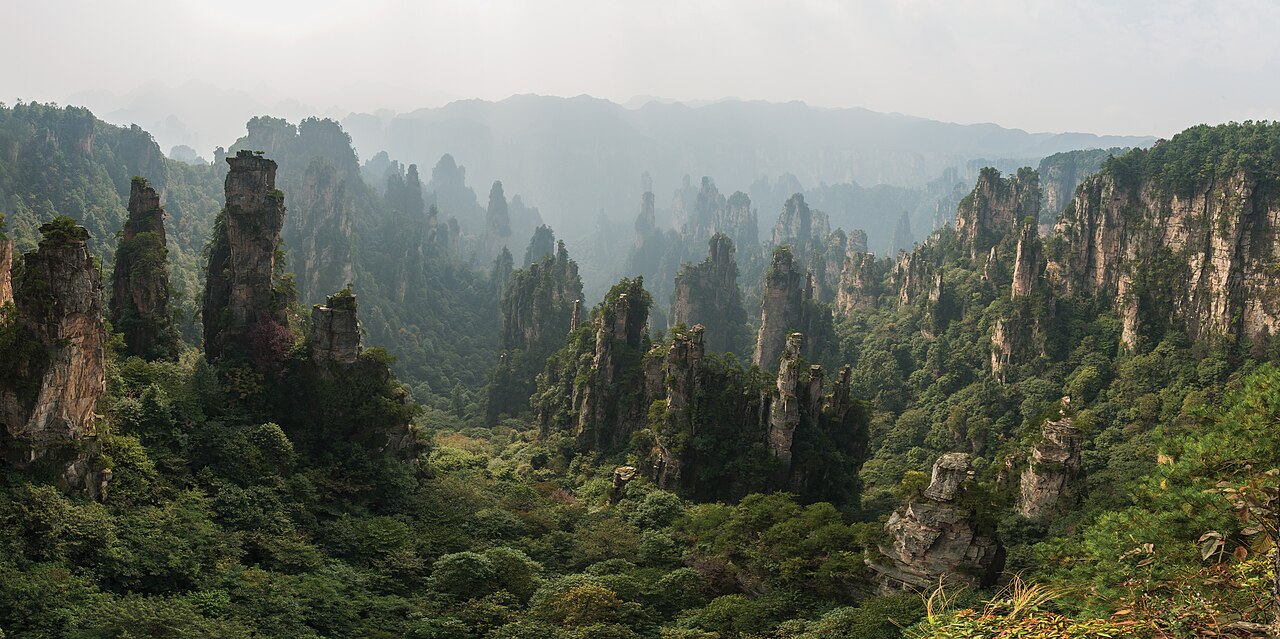
Only one World Heritage property lies within 100 kilometres of Wulingyuan: the Tusi Sites, 64 km away in a straight line. The next, Hubei Shennongjia (237 km) and Fanjingshan (239 km), are a long way off. Wulingyuan itself, in China’s Hunan Province, was inscribed in 1992 for a forest of more than 3,000 narrow quartz sandstone pillars.
The World Heritage sites around Wulingyuan, and how far they are
The distances below are straight lines between the reference points that UNESCO publishes for each property, not road times. All six sites are in China, and the closest by far is a cultural one.
| Site | Country | Distance | Inscribed | Type |
|---|---|---|---|---|
| Tusi Sites | China | 64 km | 2015 | Cultural |
| Hubei Shennongjia | China | 237 km | 2016 | Natural |
| Fanjingshan | China | 239 km | 2018 | Natural |
| South China Karst | China | 244 km | 2007 | Natural |
| Imperial Tombs of the Ming and Qing Dynasties | China | 279 km | 2000 | Cultural |
| China Danxia | China | 334 km | 2010 | Natural |
Four of the six are natural sites, and three of them are landscapes of eroded rock, like Wulingyuan itself, which is quartz sandstone. South China Karst is limestone, with tower, pinnacle and cone karst, natural bridges, gorges and large caves. China Danxia is red sedimentary rock eroded into pillars, towers and ravines. Fanjingshan is, in UNESCO’s words, an island of metamorphic rock in a sea of karst. The Tusi Sites are the human counterpart: the remains of tribal domains whose chiefs were appointed by the central government as hereditary rulers from the 13th to the early 20th century.
Why are 3,000 sandstone pillars enough for World Heritage status?
UNESCO inscribed Wulingyuan under a single criterion, (vii), for natural beauty. It describes an area of some 26,400 hectares dominated by more than 3,000 narrow quartz sandstone pillars, many over 200 metres high. Between them lie ravines and gorges with streams, pools and waterfalls, some 40 caves with impressive calcite deposits, and two huge natural stone bridges. One of the bridges rises 357 metres above the valley floor.
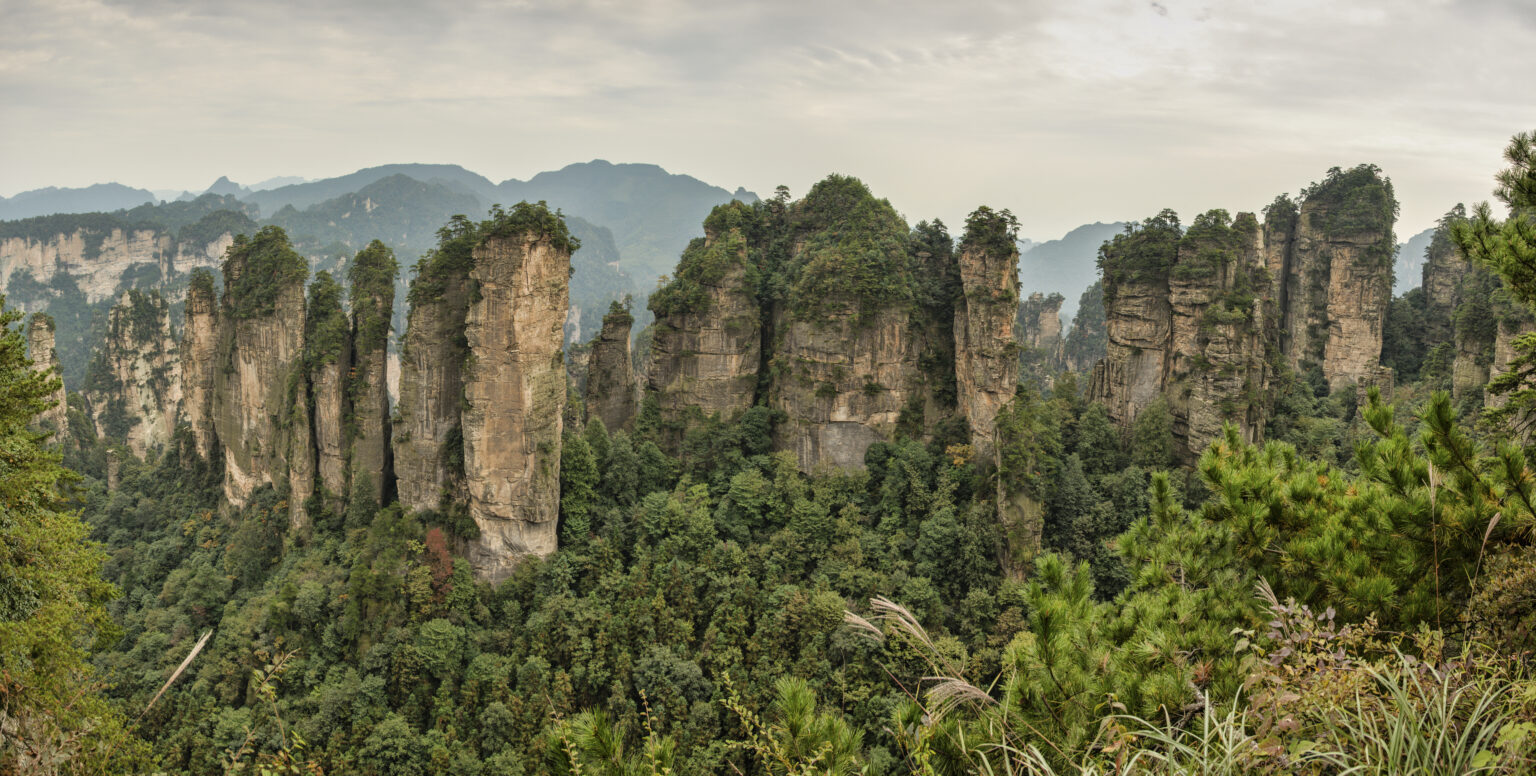
The setting matters as much as the rock. Dense broadleaf forest covers the ground, and mists and clouds frequently shroud the pillars. UNESCO calls the site an island of nature within a heavily populated agricultural region.
The inscription also notes that, with more information, the site could have been listed under criterion (x), because it shelters threatened species such as the dhole, the Asiatic black bear and the Chinese water deer. IUCN adds that Wulingyuan was a refuge for many ancient species during the Quaternary glaciations. It counts some 3,000 plant species, including 600 woody ones, and 116 species of terrestrial vertebrates.
Who lives inside a pillar forest?
Wulingyuan is not empty. IUCN reports about 55,000 inhabitants, most of them Tujia, one of China’s ethnic minority groups. The highest mountain in the area, Tianzi Shan, is named after the legend of Xiang Wang, a Tujia tribal leader who defied the central government during the Ming dynasty. IUCN lists traditional worship of nature as one of the site’s other important values.
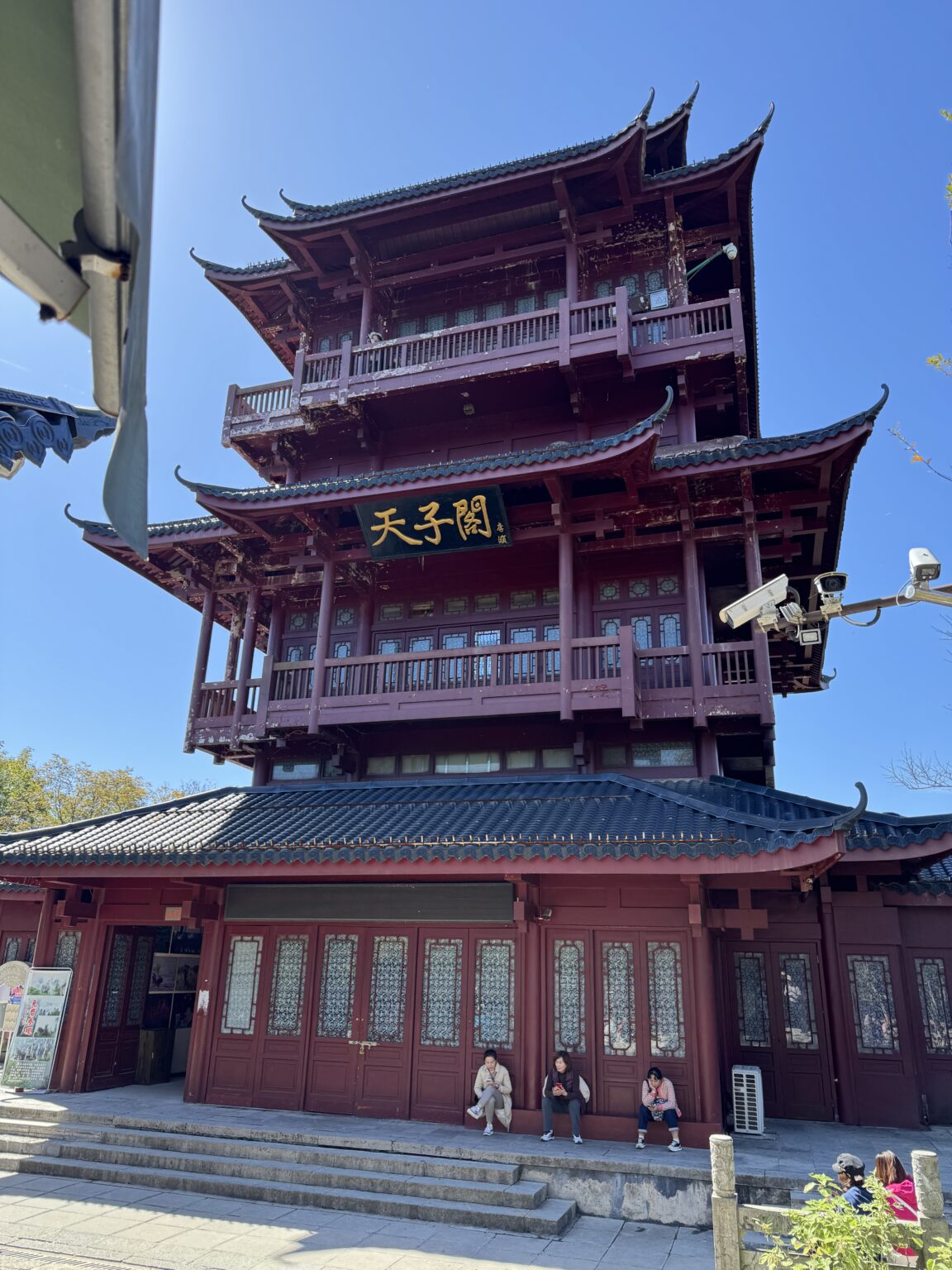
Protecting the scenery meant moving people out of it. In 1999 the local authorities declared a decision to protect the property and began demolishing houses in the scenic areas. IUCN records significant disturbance of the residential community through relocation and re-housing. In 2019 and again in 2021 the World Heritage Committee asked China to ensure effective consultation, fair compensation and the preservation of cultural rights. China’s own report says more than 95% of residents have expressed satisfaction and signed a relocation agreement voluntarily.
How well has the park coped with its visitors?
UNESCO noted intense pressure from visitors at the time of inscription, and numerous tourist facilities with an aesthetic impact on the natural values. IUCN gives the scale: visits rose from fewer than one million a year in 1992 to 4.29 million visitor days in 2019, within a stated capacity of 5.56 million visitors a year.
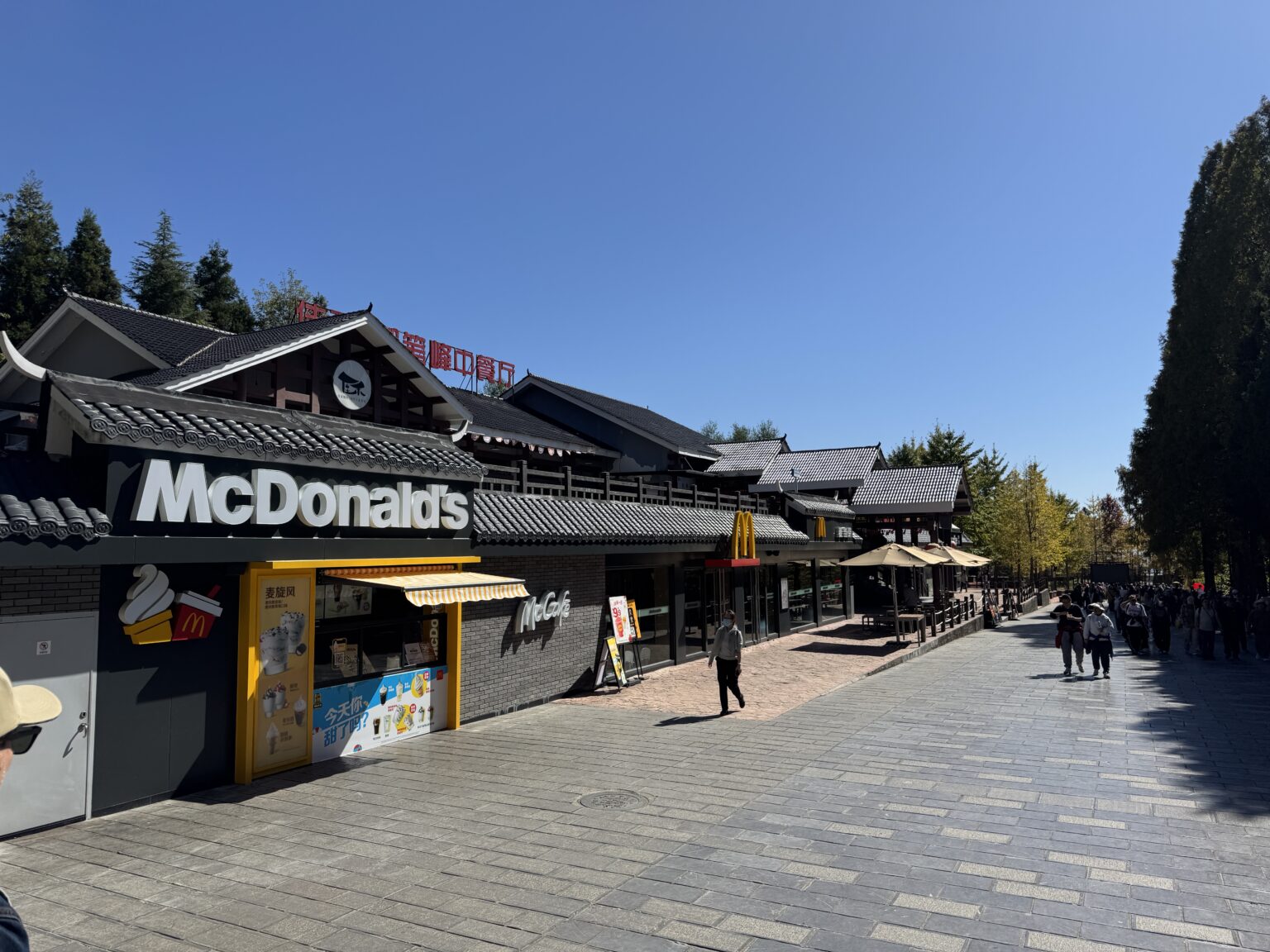
The Outlook is candid about what was built. It acknowledges the negative visual impact of the cable cars and the elevator, and says measures have been taken to reduce it. It also records that no new road has been built since March 2015, and that removal of illegal buildings took place in 1999 to 2003, 2006 to 2009 and 2015 to 2018.
IUCN’s 2025 assessment, finalised on 11 October 2025, rates the conservation outlook as “good with some concerns”. It still classes the rapid rise in visitor numbers as a high threat, and notes that the site operates under an outdated management plan while a revised one is developed.
Frequently Asked Questions
Which UNESCO World Heritage sites are near Wulingyuan?
The closest is the Tusi Sites, 64 km away in a straight line. Hubei Shennongjia (237 km), Fanjingshan (239 km) and South China Karst (244 km) follow, all in China. These are distances between UNESCO reference points, not road times.
How many sandstone pillars are there in Wulingyuan?
UNESCO counts more than 3,000 narrow quartz sandstone pillars and peaks, many of them over 200 metres high. They stand within a World Heritage area of some 26,400 hectares in Hunan Province, inscribed in 1992 under criterion (vii) for natural beauty.
Is Wulingyuan in good condition?
IUCN’s 2025 World Heritage Outlook rates it “good with some concerns”. Pollution is now controlled and protection is mostly effective, but rapid growth in visitor numbers remains a high threat. The property also operates under an outdated management plan, and it is not on the List of World Heritage in Danger.
Which rare animals live in Wulingyuan?
UNESCO names the dhole, the Asiatic black bear and the Chinese water deer as threatened species with habitat here. IUCN also lists the Chinese giant salamander among the globally endangered animals, and counts 116 species of terrestrial vertebrates in the site.
Sources
- UNESCO World Heritage Centre, Wulingyuan Scenic and Historic Interest Area (inscribed 1992). https://whc.unesco.org/en/list/640/
- IUCN World Heritage Outlook, Wulingyuan Scenic and Historic Interest Area, 2025 assessment. https://worldheritageoutlook.iucn.org/explore-sites/wulingyuan-scenic-and-historic-interest-area
- UNESCO World Heritage Centre, Tusi Sites (inscribed 2015). https://whc.unesco.org/en/list/1474/
- UNESCO World Heritage Centre, Fanjingshan (inscribed 2018). https://whc.unesco.org/en/list/1559/
- UNESCO World Heritage Centre, South China Karst (inscribed 2007). https://whc.unesco.org/en/list/1248/
- UNESCO World Heritage Centre, China Danxia (inscribed 2010). https://whc.unesco.org/en/list/1335/
Spotted an error? Write to editorial@culturalheritageonline.com and we correct it the same day.