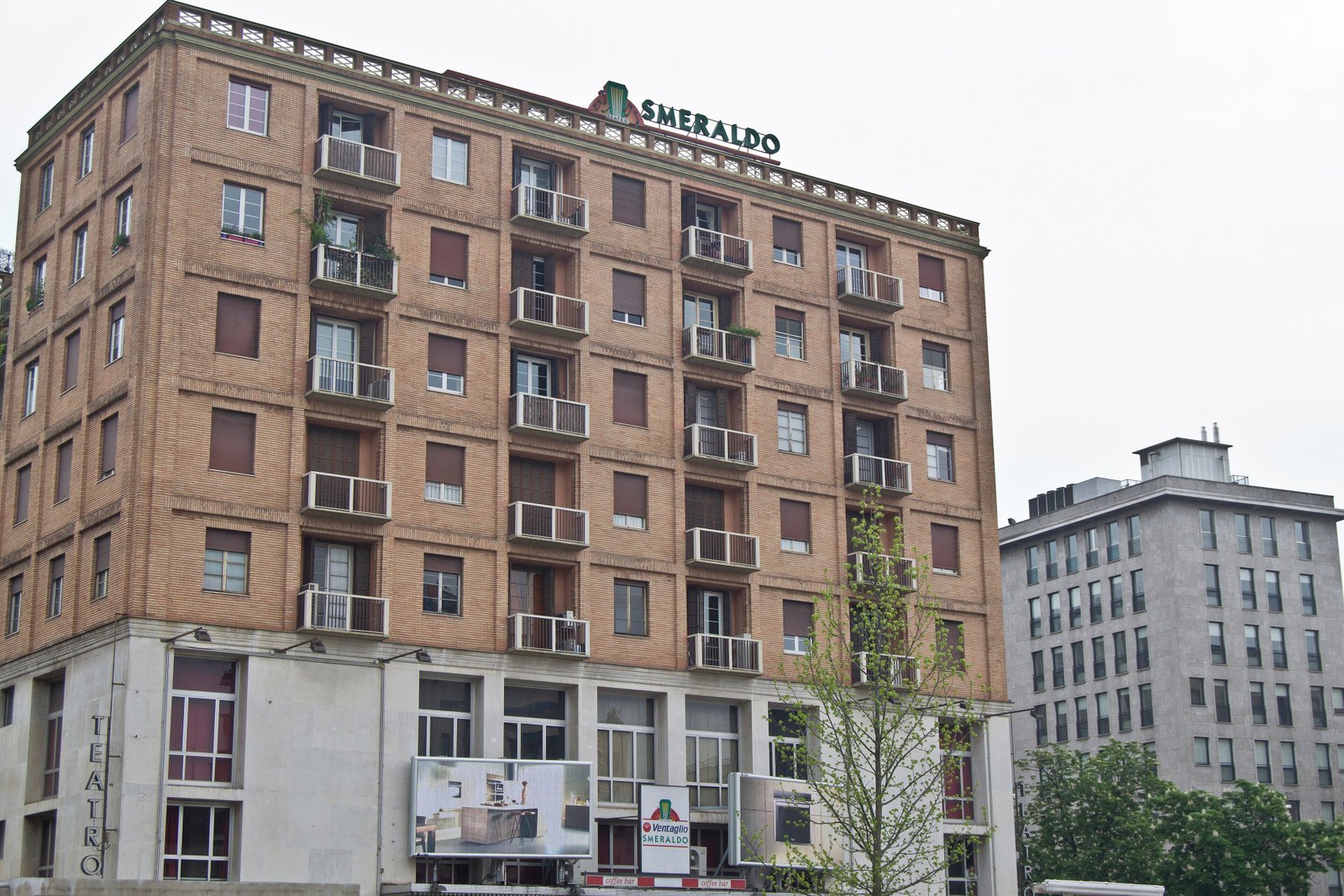
The Teatro Smeraldo was a theatre in Milan designed by architect Alessandro Rimini between 1939 and 1940, opening to the public in 1942.
Rimini, of Jewish heritage, was unable to sign the project himself due to the racial laws in force during the fascist era. The theatre was managed by the Longoni family from its opening, beginning with Count and Senator Mario Longoni and continuing through subsequent generations. The venue hosted significant musical events, including the Rock Parade in January–February 1958, which featured performances by Adriano Celentano, saxophonist Eraldo Volonti and his group, and Tony Dallara. The first edition of Sei giorni della canzone took place there the same year. From the 1960s onward, the theatre operated as a cinema until the 1980s, when it returned to exclusively theatrical programming, emphasizing musicals and solo artist recitals under the artistic direction of Gianmario Longoni. The theatre remained under Longoni family ownership until its closure in 2012.
About Alessandro Rimini
Alessandro Rimini was an architect working in the Rationalist movement, the predominant architectural tendency in Italy during the interwar period and beyond.
Details
- Designed: 1939–1940
- Opened: 1942
- Architect: Alessandro Rimini
- Location: Milan, Italy
- Closed: 2012
- Original use: Theatre; later cinema; returned to theatre
Explore more: 193 heritage places in Milano
Frequently asked questions
Who designed the Teatro Smeraldo?
The theatre was designed by architect Alessandro Rimini between 1939 and 1940, though Rimini could not formally sign the project due to fascist racial laws of the period.
When did the theatre open and close?
The Teatro Smeraldo opened in 1942 and operated until its closure in 2012, remaining under management of the Longoni family throughout its history.
What performances took place at the venue?
The theatre hosted notable musical events including the Rock Parade in 1958 and the first edition of Sei giorni della canzone the same year, before later functioning as a cinema and eventually returning to theatrical programming.
Sources
- S1 — Gramigna, Giuliana, and Sergio Mazza. Milano. Un secolo di architettura milanese dal Cordusio alla Bicocca. Hoepli, 2001. ISBN 978-88-203-2913-6.
- S2 — Ciucci, Giorgio. Gli architetti e il fascismo: architettura e città 1922-1944. Einaudi, 2002. ISBN 978-88-06-16310-5.
Spotted an error? Write to editorial@culturalheritageonline.com and we correct it the same day.