
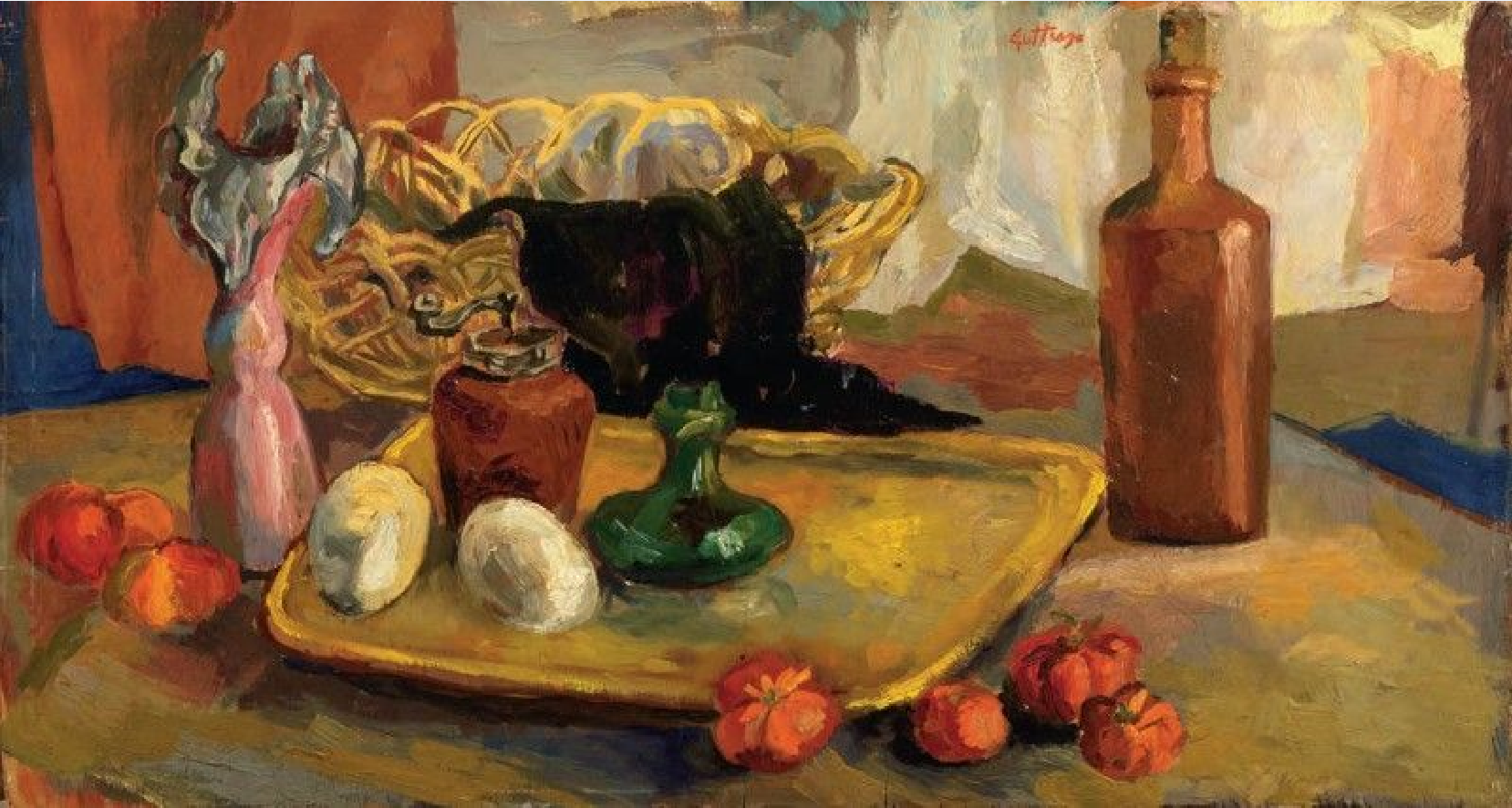
Tavolo con natura morta is a still life painting by Italian artist Renato Guttuso, completed in 1937. The work represents Guttuso’s engagement with modernist expression during the interwar period.
Guttuso was a central figure in twentieth-century Italian expressionism, known for works that merged formal innovation with social and political commentary. His practice encompassed painting and sculpture, and his artistic trajectory reflected his deep engagement with political life: he would later serve as a senator of the Italian Communist Party from 1976 to 1983 under Enrico Berlinguer’s leadership.
About Renato Guttuso
Guttuso is recognized among the most important Italian artists of the twentieth century. His work is characterized by the integration of expressionist technique with themes of social relevance, establishing him as a key voice in modern Italian art.
Details
- Creator: Renato Guttuso
- Date: 1937
- Genre: Still life painting
- Movement: Italian expressionism
On video
Frequently asked questions
Who was Renato Guttuso?
Renato Guttuso was an Italian painter and politician considered among the most important Italian artists of the twentieth century and a key figure in Italian expressionism. He was a member of the Italian Communist Party and served as its senator from 1976 to 1983.
What is the significance of still life in Guttuso’s work?
Still life allowed Guttuso to explore everyday subjects through a modernist expressionist lens, integrating formal innovation with his broader artistic practice of social and political commentary.
When was this painting created?
Tavolo con natura morta was painted in 1937, during the Italian interwar period.
Sources
- S1 — Pontiggia, Elena. Il Novecento Italiano. Abscondita, 2003. ISBN 978-88-8416-048-5.
- S2 — De Fusco, Renato. Storia del design. Laterza, 2002. ISBN 978-88-420-6623-1.
Spotted an error? Write to editorial@culturalheritageonline.com and we correct it the same day.


