Twice in three years, formations of twin-hulled flying boats left a lagoon in southern Tuscany to cross an ocean. In the winter of 1930–31 fourteen Savoia-Marchetti S.55s flew from Orbetello to Rio de Janeiro; in the summer of 1933, twenty-five S.55Xs flew from Orbetello to Chicago and back to Rome. The “crociere atlantiche” were the loudest aviation events of their decade — propaganda, engineering and endurance in inseparable proportions — and their physical traces survive today on three sites across two continents: a memorial park on the Tuscan lagoon, an ancient Roman column on the Chicago lakefront, and the name of an avenue in the Loop.
The context, stated plainly
The cruises were flown under, and for, the fascist regime. Italo Balbo was the regime’s Minister of Aeronautics and one of its founders; the formations flew the flag of a dictatorship, and their receptions abroad — parades in Chicago, an avenue renamed within forty-eight hours — were propaganda victories that the regime spent for a decade. The 1933 cruise cost two lives: Sergeant Ugo Quintavalle at Amsterdam on the first leg, Lieutenant Enrico Squaglia in the Azores on the return. This article documents the flights, the dead and the surviving places together, and celebrates none of it.
The machine and the method
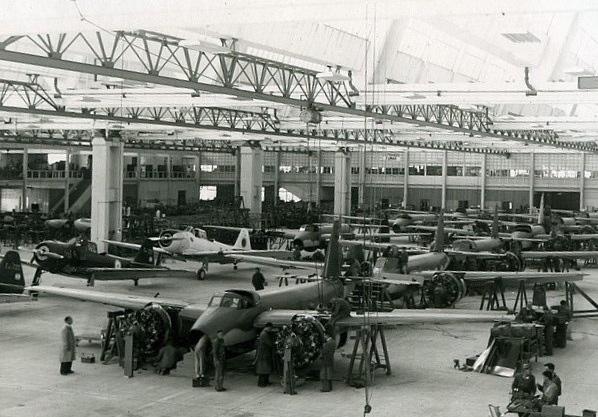
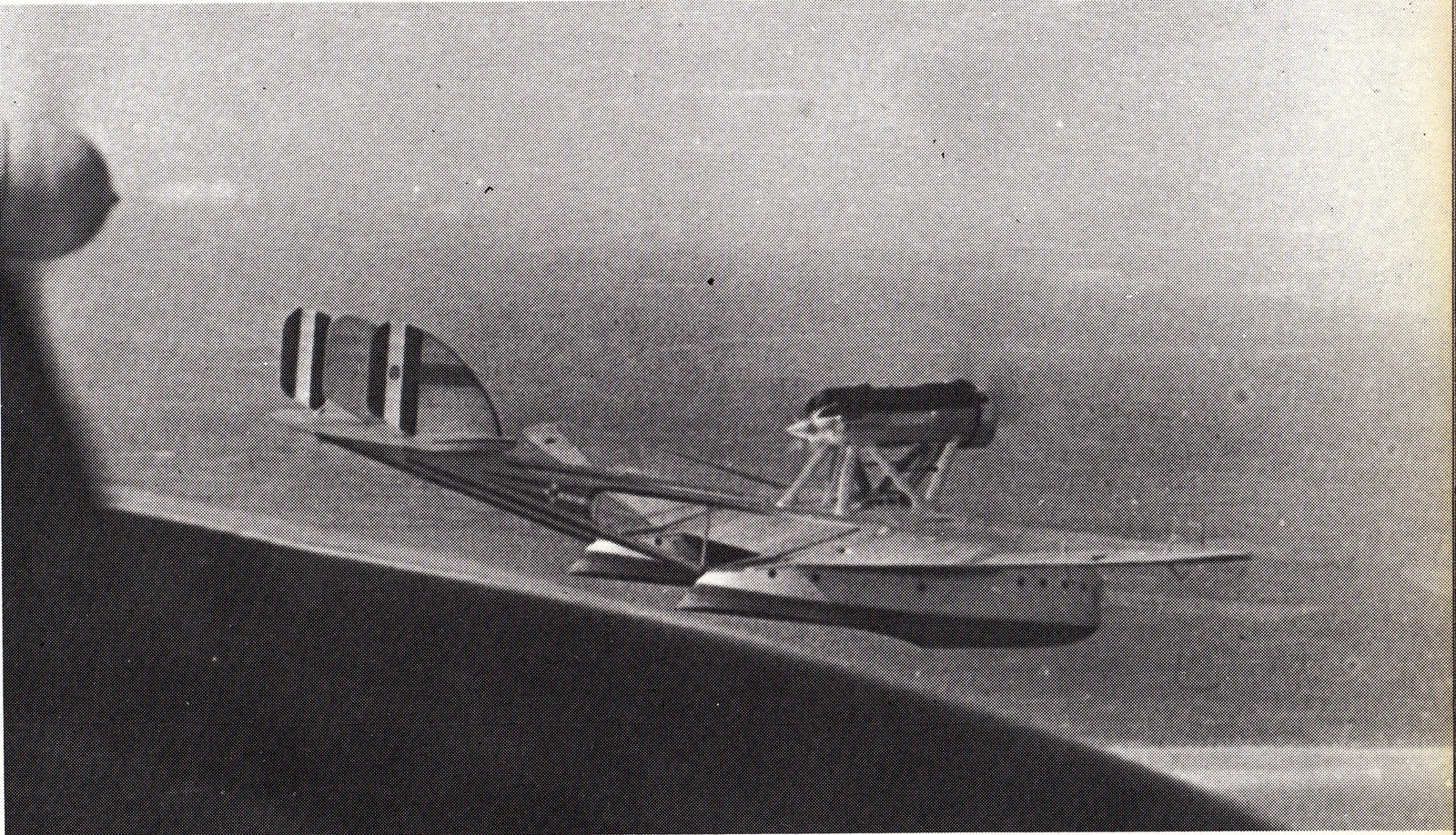
The instrument of both cruises was the Savoia-Marchetti S.55, a catamaran flying boat with its engines mounted back-to-back above the wing — an aircraft that looked improbable and flew formidably. The method was the real invention: at the Orbetello seaplane base, on a lagoon sheltered from every wind, crews trained for months in tight formation flying, open-sea navigation and night operations, so that dozens of aircraft could cross an ocean not as a race of individuals but as a single disciplined fleet. Foreign air forces studied the results closely.
1930–31: to Brazil
The South Atlantic cruise left Orbetello on 17 December 1930 — fourteen S.55s and fifty-six men under Balbo’s command — and worked its way south and west in stages, reaching Rio de Janeiro on 15 January 1931. A formation of military flying boats had crossed the South Atlantic, and the “crociera” formula — mass, discipline, spectacle — was proven.
1933: the Decennial Air Cruise
The second Atlantic cruise was conceived for the tenth anniversary of the regime’s air force and aimed at the Century of Progress world’s fair in Chicago. Twenty-five S.55Xs left Orbetello on 1 July 1933. The first leg ended in tragedy: an aircraft flipped on landing at Amsterdam, killing Sergeant Ugo Quintavalle. The fleet pressed on — Londonderry on 3 July, Reykjavik on the 5th, then the long over-water legs to Cartwright in Labrador on the 12th, Shediac (thirty thousand people waiting) on the 13th, Montreal on the 14th — and at 6 in the evening of 15 July 1933 the formation landed on Lake Michigan in front of a crowd beyond one hundred thousand.
Chicago declared Italo Balbo Day; two days later Seventh Street became Balbo Avenue; the Sioux inducted the minister as “Chief Flying Eagle”. The fleet flew on to New York — seventy-five thousand at the harbour — and began the long way home: Shoal Harbour in Newfoundland for a two-week weather layover, then the Azores on 8 August, landing split between Ponta Delgada and Horta. On take-off the next morning the I-RANI overturned, killing Lieutenant Enrico Squaglia; the Lisbon ceremonies were cancelled. The fleet reached Rome on 12 August 1933. Within a year Balbo was governing Libya, where the coastal highway and the Tripoli fair would occupy him for the rest of the decade.
What survives on the route
At Orbetello, the base itself is gone — demolished by retreating German forces in 1944, together with the two great prefabricated-concrete hangars Pier Luigi Nervi had built at the decade’s end — but the site is now the Parco delle Crociere, with the Esedra dei Trasvolatori Atlantici as its memorial. In Chicago, the regime’s 1934 thank-you gift still stands in Burnham Park: an ancient Roman column from Ostia on a travertine base, today the subject of an open removal debate that is itself part of the story. In New York, the Palazzo d’Italia at Rockefeller Center — opened two years after the fleet’s visit, stripped of its fascist panel days after Pearl Harbor — completes the American footprint of 1930s official Italy. Together the three sites make a single historical route, flyable now only on a map.
Places of this story in the archive
- Idroscalo di Orbetello — the lagoon base of both cruises
- The Balbo Column, Burnham Park, Chicago — the contested monument of the 1933 flight
- Palazzo d’Italia, Rockefeller Center, New York — official Italy on Fifth Avenue, 1935
Sources
- S1 — Balbo, Italo. La centuria alata. Mondadori, 1934. / Corner, Paul. The Fascist Party and Popular Opinion in Mussolini's Italy. Oxford University Press, 2012. ISBN 978-0-19-873069-9.
- S2 — Segrè, Claudio G. Italo Balbo: A Fascist Life. University of California Press, 1987. ISBN 978-0-520-05866-8.
Spotted an error? Write to editorial@culturalheritageonline.com and we correct it the same day.