Paola Bonometti
Content Editor

Paola Bonometti

Paola Bonometti is a volunteer with the ABCO association and still contributes to it today.

Contributions: 1,022 articles

Author name: Paola Bonometti

Paola Bonometti is a volunteer with the ABCO association and still contributes to it today.

UNESCO Heritage Sites Near Leptis Magna, Libya

UNESCO Heritage Sites Near Leptis Magna, Libya

Leptis Magna, UNESCO-inscribed in 1982, is one of the Roman world’s best-preserved cities — the birthplace of Emperor Septimius Severus, who transformed it with the Severan Forum, the great Basilica, and a monumental triumphal arch. Buried under Saharan sand for centuries, its theatres, baths and colonnaded streets survive in extraordinary condition, though Libya’s political situation currently limits access.

UNESCO Heritage Sites Near Robben Island, South Africa

UNESCO Heritage Sites Near Robben Island, South Africa

Robben Island (UNESCO 1999), located seven kilometres from Cape Town in Table Bay, held Nelson Mandela for 18 of his 27 prison years and hundreds of other anti-apartheid activists in its maximum-security political prison from 1961 to 1991. The site’s guided tours are led by former political prisoners, and the island’s earlier history as a leper colony and colonial place of banishment extends its significance across four centuries. Ferries depart from the V&A Waterfront and advance booking is essential.

UNESCO Heritage Sites Near Kilwa Kisiwani, Tanzania

UNESCO Heritage Sites Near Kilwa Kisiwani, Tanzania

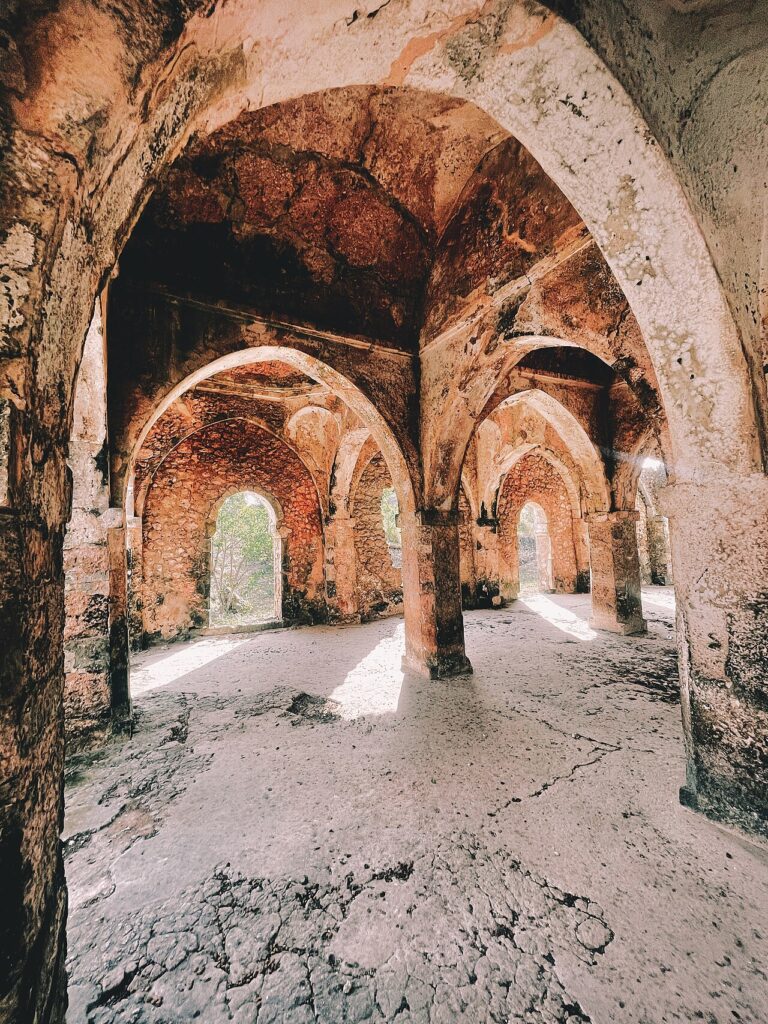
The Ruins of Kilwa Kisiwani (UNESCO 1981, on the Danger list since 2004) preserve the coral-stone remains of the most important medieval Swahili trading city in sub-Saharan Africa, including the oldest standing mosque south of the Sahara (founded c. 800-900 CE) and Husuni Kubwa Palace (c. 1320-1333 CE) — the largest pre-colonial building in the region. The island, reachable only by dhow from Kilwa Masoko in southern Tanzania, controlled the East African gold trade connecting the Zimbabwe Plateau to Arabia, India and China for six centuries.

UNESCO Heritage Sites Near Royal Palaces of Abomey, Benin

UNESCO Heritage Sites Near Royal Palaces of Abomey, Benin

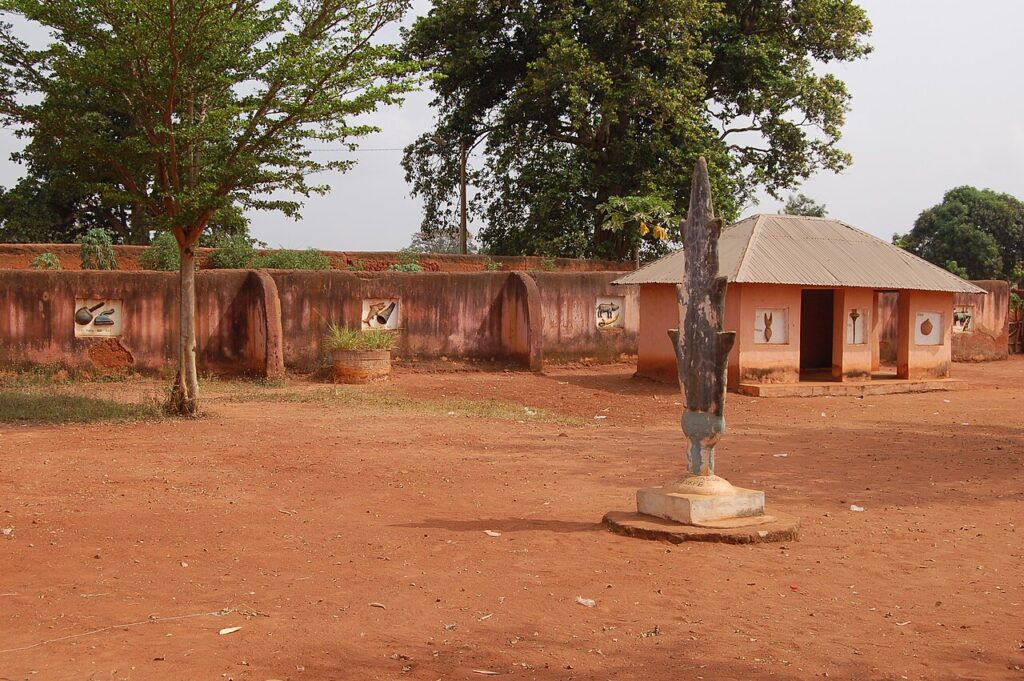
The Royal Palaces of Abomey (UNESCO 1985) preserve the 44-hectare earthen palace complex of the Kingdom of Dahomey in Benin, built by 12 successive kings from c. 1625 to 1900 CE. The site is notable for its bas-relief visual history panels, the legacy of the Agojie female military corps, and the 2021 return from France of 26 royal treasures looted during the French conquest of 1892. Abomey lies 145 kilometres north of Cotonou and is best reached by road.

UNESCO Heritage Sites Near Carthage, Tunisia

UNESCO Heritage Sites Near Carthage, Tunisia

The Archaeological Site of Carthage, inscribed by UNESCO in 1979, preserves two superimposed cities 15 kilometres northeast of Tunis: the Phoenician trading metropolis founded around 814 BCE that dominated the western Mediterranean, and the Roman Carthago rebuilt from 29 BCE that became one of the largest cities in the Roman Empire. Key monuments include the Baths of Antoninus — the third largest Roman baths in the ancient world — and the Punic Tophet sanctuary containing over 20,000 funerary urns. The site is accessible by suburban railway from central Tunis.

UNESCO Heritage Sites Near Amphitheatre of El Jem

UNESCO Heritage Sites Near Amphitheatre of El Jem

The amphitheatre of El Jem (UNESCO 1979) in Thysdrus, built c. 230–238 CE, is the third-largest Roman amphitheatre in the world with a capacity of 35,000, built entirely of dry-laid limestone without mortar. The wealth of Thysdrus derived from olive oil exports across the empire; in 238 CE the governor Gordian I was proclaimed emperor here in a reign lasting 36 days. The adjacent Archaeological Museum holds the finest Roman mosaic collection in Tunisia.

UNESCO Heritage Sites Near Timgad, Algeria

UNESCO Heritage Sites Near Timgad, Algeria

Timgad (UNESCO 1982) — Colonia Marciana Traiana Thamugadi, founded by Emperor Trajan in 100 CE for veterans of the Third Augustan Legion — is the finest surviving example of Roman orthogonal urban planning, preserved by Saharan sand burial from the 7th century until French excavations from 1881. The site on the Algerian steppe at 1,050m includes a triumphal arch, a 3,500-seat theatre, 14 bath complexes, a public library, and complete street grid legible in both plan and pavement.

UNESCO Heritage Sites Near Timbuktu, Mali

UNESCO Heritage Sites Near Timbuktu, Mali

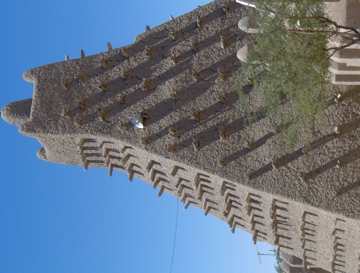
Timbuktu (UNESCO 1988, In Danger 2012–present) reached its height under the Songhai Empire as one of the great centres of Islamic learning, with 25,000 students, 150–180 Quranic schools, and the three great mosques of Djinguereber (1327 CE), Sankore, and Sidi Yahia. The city holds an estimated 400,000+ private manuscripts and suffered deliberate destruction of 14 of its 16 sacred mausoleums during the 2012 Islamist occupation — an act prosecuted by the ICC as a war crime.

UNESCO Heritage Sites Near Chan Chan, Peru

UNESCO Heritage Sites Near Chan Chan, Peru

Chan Chan in northern Peru — 5 km from Trujillo — is the largest pre-Columbian city in South America and the largest adobe city in the world, covering 20 sq km. Capital of the Chimu Empire from c. 900 CE until the Inca conquest of the 1470s, its nine royal compounds with 9–12 m adobe walls and maritime-themed friezes remain on the UNESCO In Danger list due to El Niño erosion.

UNESCO Heritage Sites Near Tiwanaku, Bolivia

UNESCO Heritage Sites Near Tiwanaku, Bolivia

Tiwanaku, on Bolivia’s altiplano at 3,850 metres and 72 km from La Paz, was the spiritual and political capital of the pre-Inca Andes from roughly 500 to 1000 CE. Its Gate of the Sun — a 10-tonne carved andesite doorway bearing the relief of the creator deity Viracocha — and its Akapana pyramid are among the most important monuments of South American civilisation.

Scroll to Top