
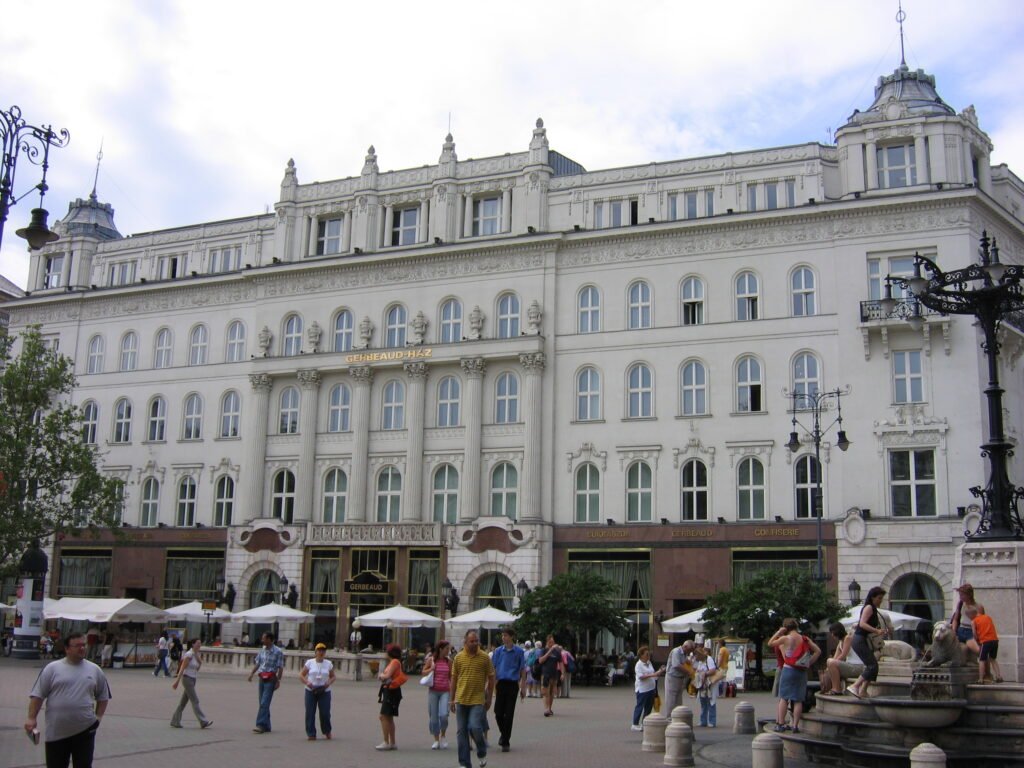
Café Gerbeaud
The Gerbeaud-ház facade on Vörösmarty tér. Photo: Gerbeaud Budapest 2005 078 via Wikimedia Commons, CC BY 2.5, Norbert Aepli. Budapest, […]

The Gerbeaud-ház facade on Vörösmarty tér. Photo: Gerbeaud Budapest 2005 078 via Wikimedia Commons, CC BY 2.5, Norbert Aepli. Budapest, […]
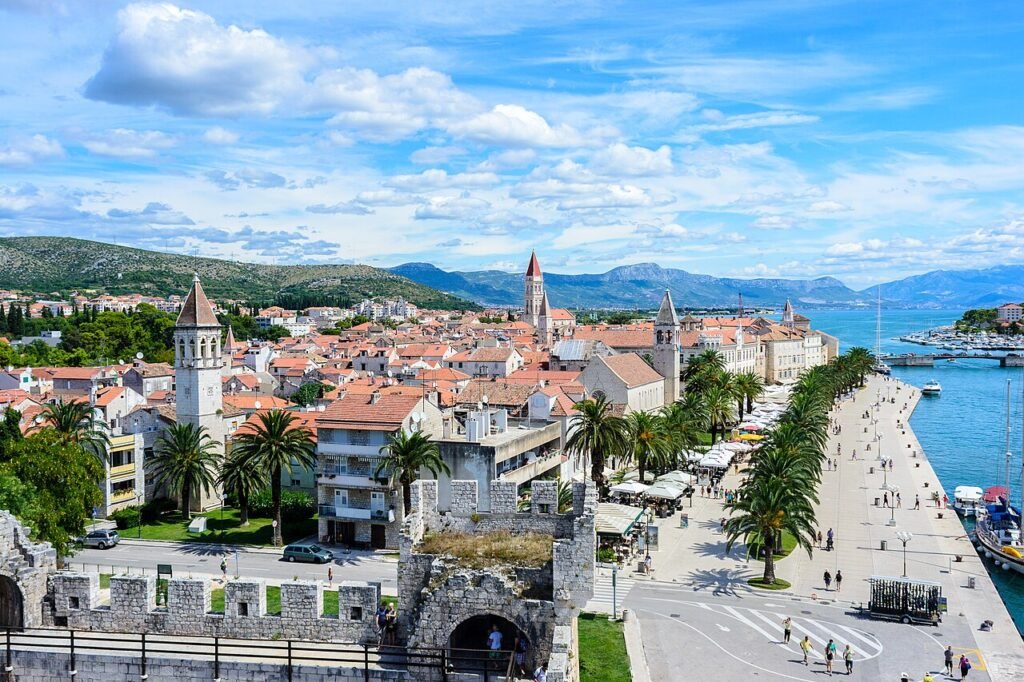
Trogir (inscribed 1997) is the most complete Romanesque-Gothic city in the Adriatic: a 600×300m island city on the Dalmatian coast, founded by Greeks in 380 BCE, built through Roman, Byzantine, Croatian, and 377 years of Venetian rule. The Portal of Master Radovan (1240 CE) on the Cathedral of Saint Lawrence — 8m of carved limestone — is the finest Romanesque sculpture in Croatia. 27 km from Split’s Diocletian’s Palace.
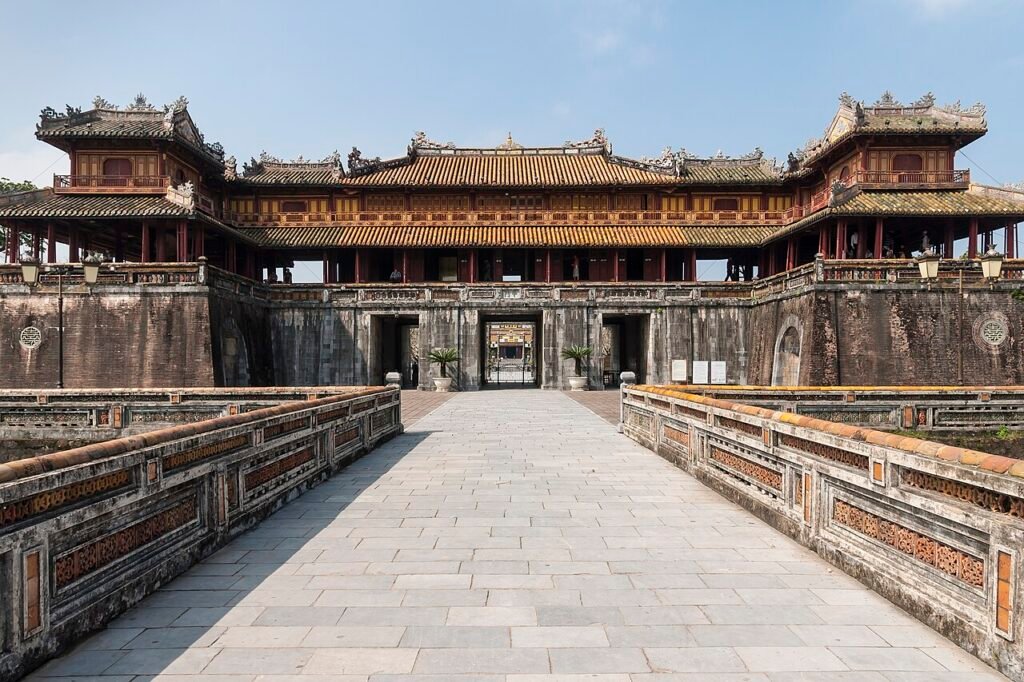
Complex of Hue Monuments (inscribed 1993): Vietnam’s last imperial capital under the Nguyen dynasty (1802–1945), with 10 km of citadel walls, the Purple Forbidden City (modelled on Beijing), and the Noon Gate where Emperor Bảo Đại abdicated in 1945. The 1968 Tet Offensive destroyed 40% of the Purple Forbidden City; restoration ongoing. Seven royal tombs along the Perfume River.
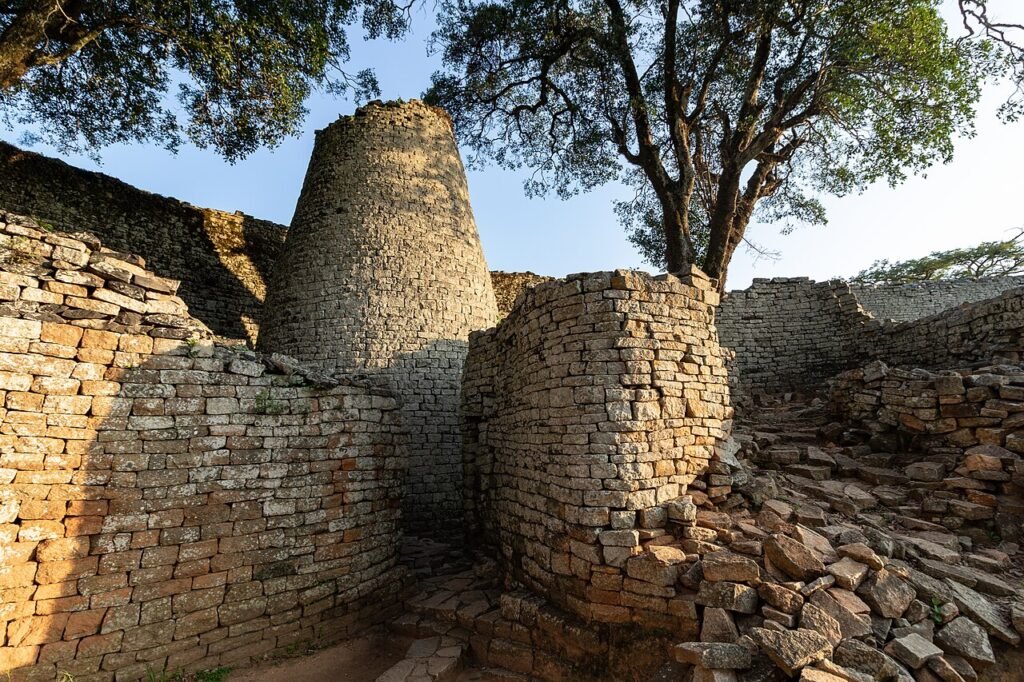
Great Zimbabwe (inscribed 1986) is the largest ancient stone structure in Africa south of Egypt: the Great Enclosure’s elliptical wall (250m circumference, 11m high, 5m thick) was built dry-stone without mortar by the Zimbabwe Kingdom (1100–1450 CE), pop. 18,000. Colonial Rhodesia denied Africans built it until 1980. The Zimbabwe Bird soapstone figurines became the nation’s symbol.
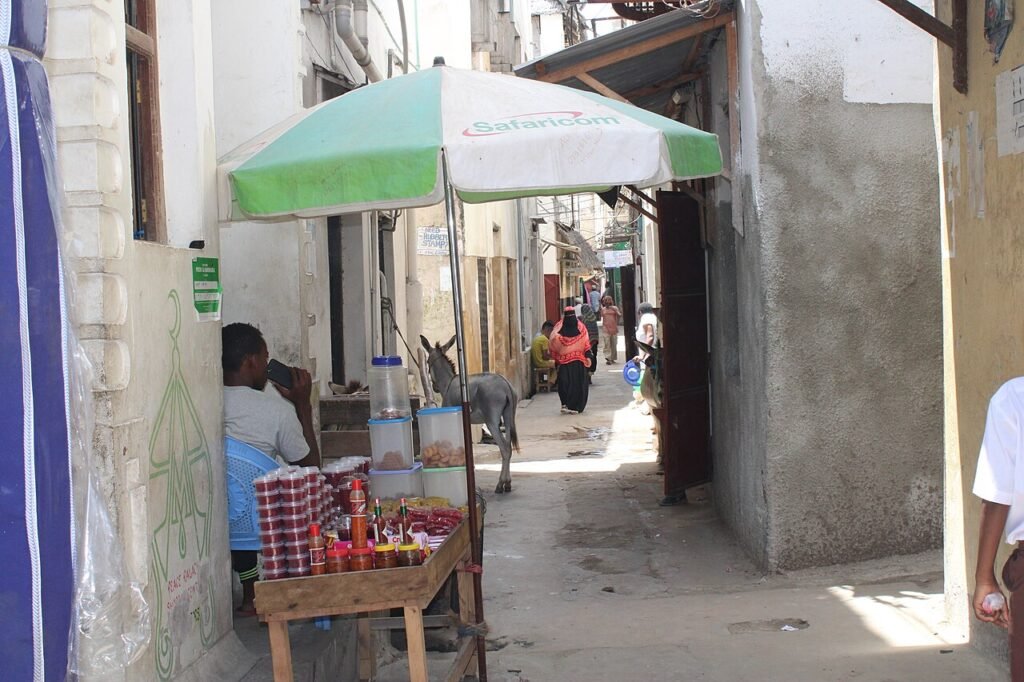
Old Town of Lamu (inscribed 2001) is the best-preserved Swahili settlement in East Africa: coral stone houses, 23 mosques, 2,000 working donkeys (no cars ever), elaborately carved wooden doors, and a surviving dhow-building tradition. The 14th-century town traded ivory, gold, and enslaved people across the Indian Ocean to Arabia, Persia, and India.
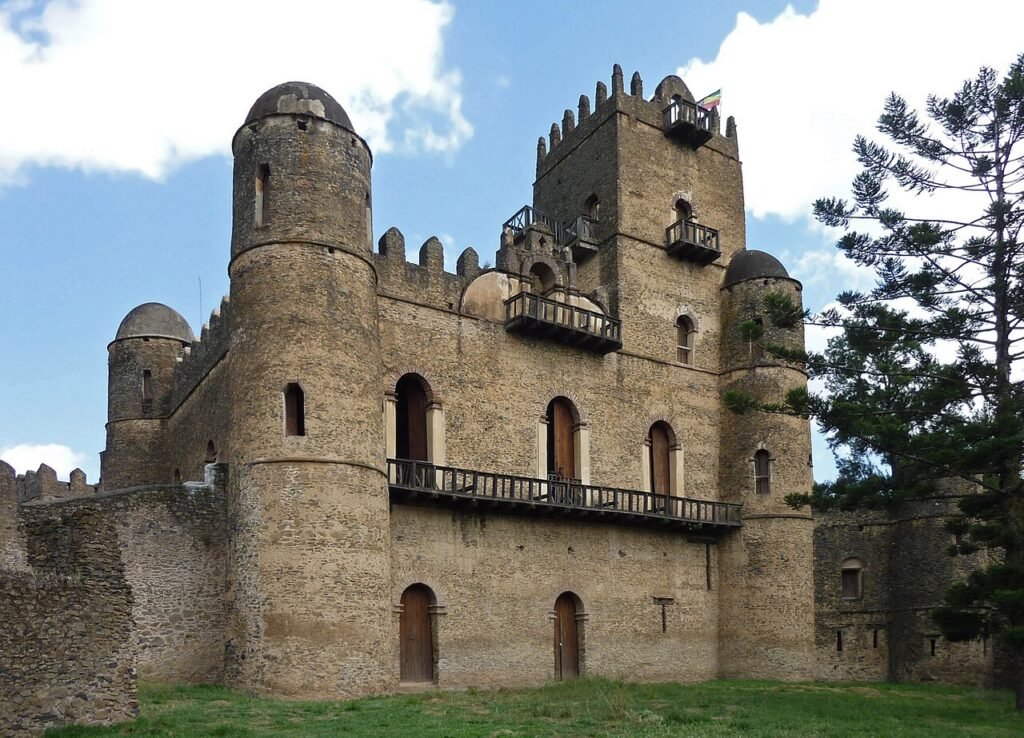
Fasil Ghebbi (inscribed 1979) is the “Camelot of Africa”: Emperor Fasilides’s five-palace walled enclosure (c. 1635–1667 CE), a synthesis of Ethiopian, Portuguese, and Mughal architecture. The Timkat Festival (Ethiopian Epiphany, January) fills the 17th-century Fasilides Bath with tens of thousands of white-robed Orthodox faithful and is UNESCO-listed Intangible Heritage.
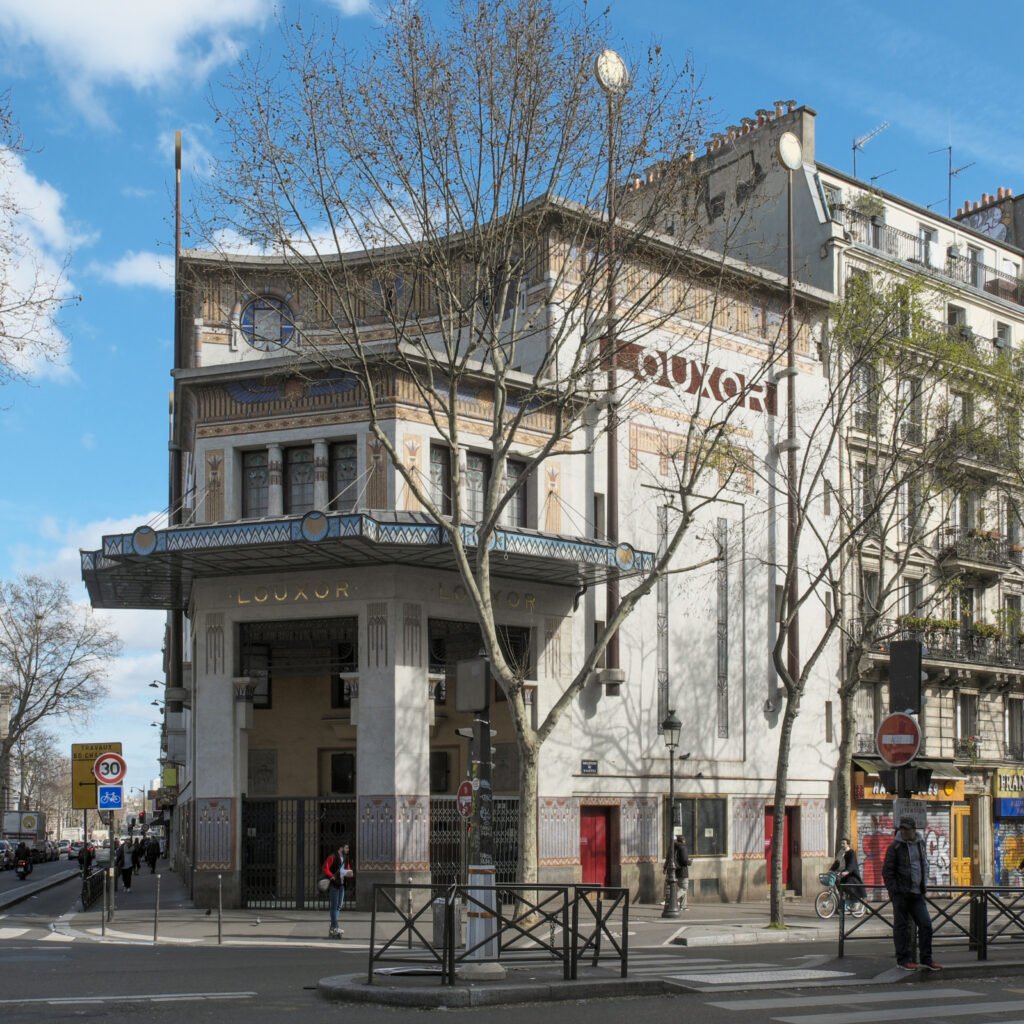
Le Louxor holds the corner of boulevard de Magenta and boulevard de la Chapelle. Photo: GFreihalter via Wikimedia Commons, CC
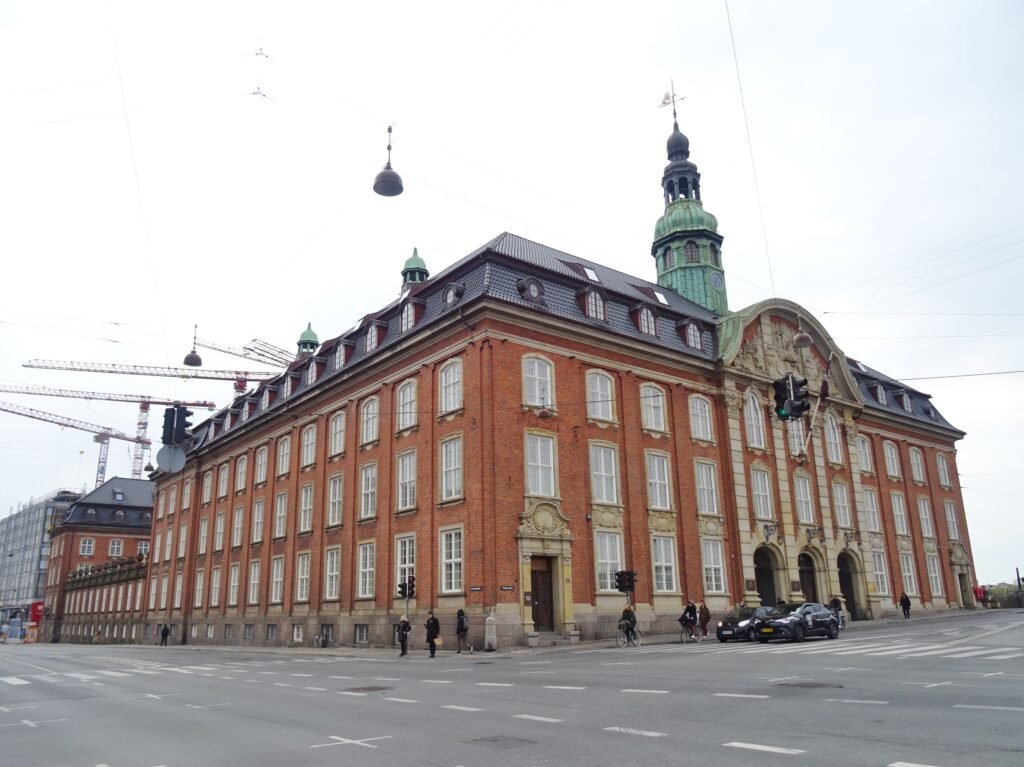
The former Central Post Building at the corner of Bernstorffsgade and Tietgensgade, a hotel since 2020. Photo: Leif Jørgensen via
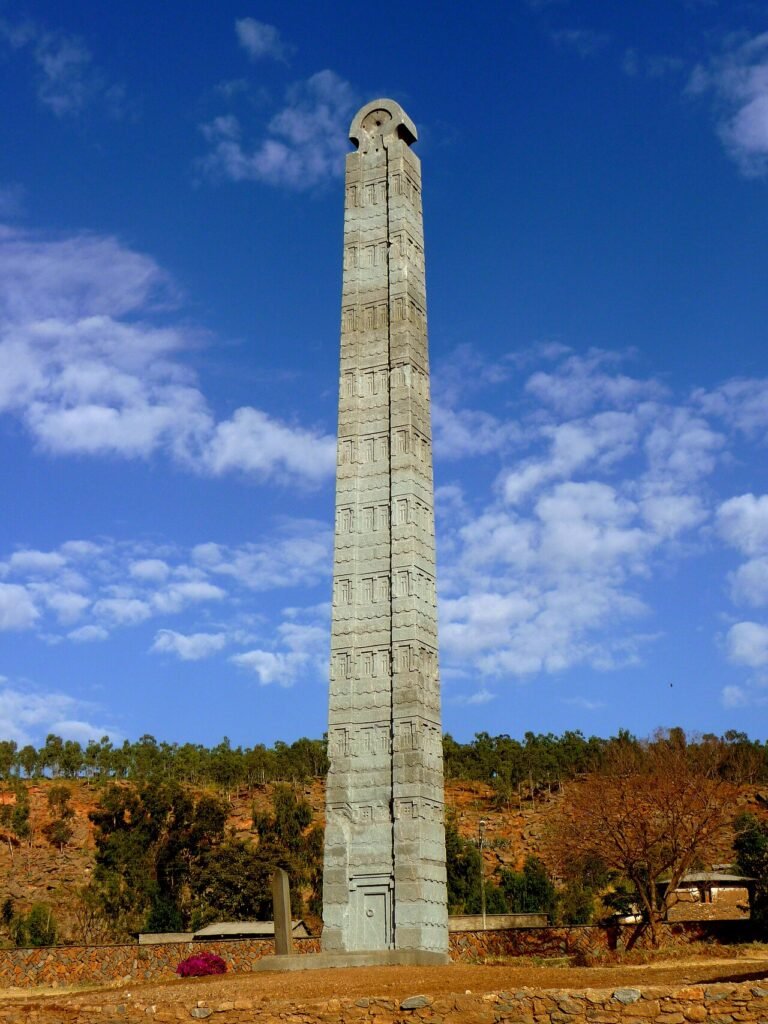
Aksum (inscribed 1980) was one of the four great empires of the ancient world — its stelae field has obelisks up to 33m (the tallest ancient monolith ever attempted); the Stele 2 (24m) was in Rome from 1937 to 2008, removed by Mussolini. The Church of Our Lady Mary of Zion claims to house the Ark of the Covenant, guarded by a single monk for life.
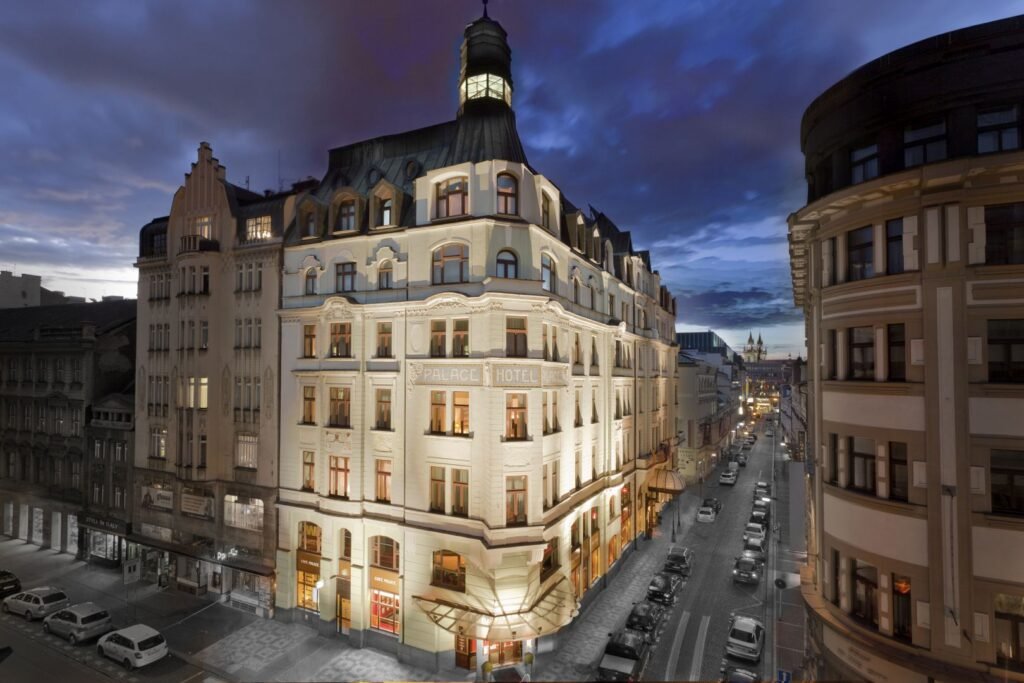
The hotel at dusk, holding the corner of Panská and Jindřišská. Photo: courtesy of the Art Nouveau Palace Hotel. Prague,