Cultural Heritage Online
The editorial desk

Cultural Heritage Online

Contributions: 831 articles · 15,399 heritage places · 166 events · 50 itineraries · 4 road-books · 16,124 photographs

Author name: Cultural Heritage Online

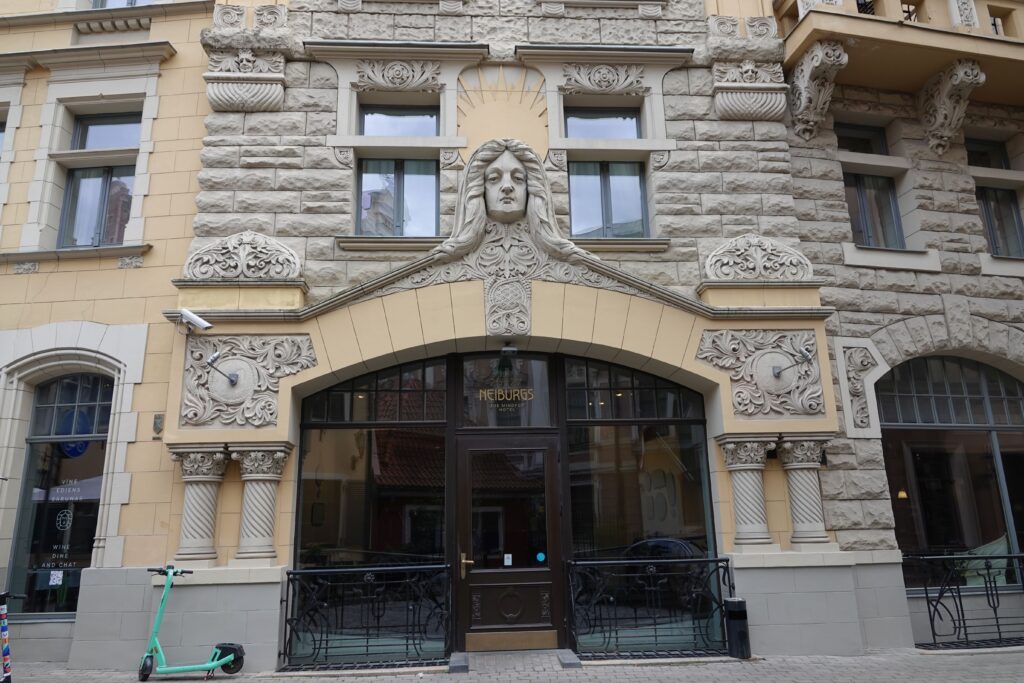
Neiburgs House, Riga

Neiburgs House, Riga

An Art Nouveau dwelling house of 1903 on Jauniela in the old town of Riga, built for the builder Ludvig Neiburg, its facade carrying bay windows, balconies, floral ornament and a monumental mascaron over the entrance. A registered Latvian cultural heritage monument, now a hotel under the original owner’s name.
Palace Hotel, Zagreb

Palace Hotel, Zagreb

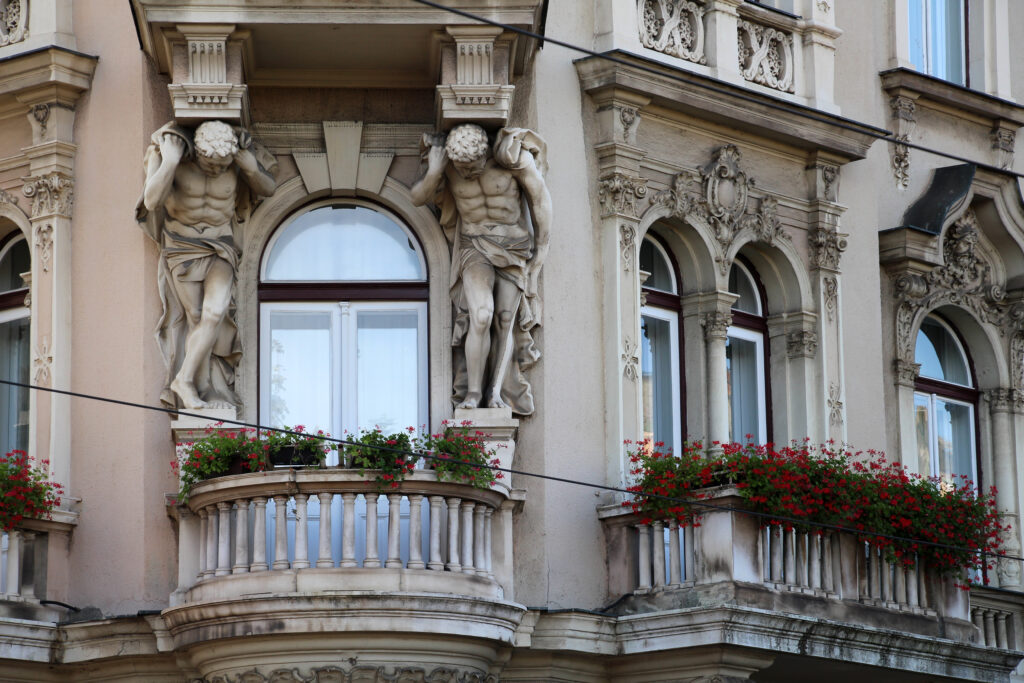
A neo-Rococo palace on Strossmayer Square in Zagreb, built in 1891 for the musician Carl Schlesinger by the studio of Hönigsberg & Deutsch and converted in 1907 into one of the city’s first professionally run hotels, with an Art Nouveau interior rare in the region. A glass and copper time capsule of 1891 was found in its foundations.

Hotel Tobaco, Łódź

Hotel Tobaco, Łódź

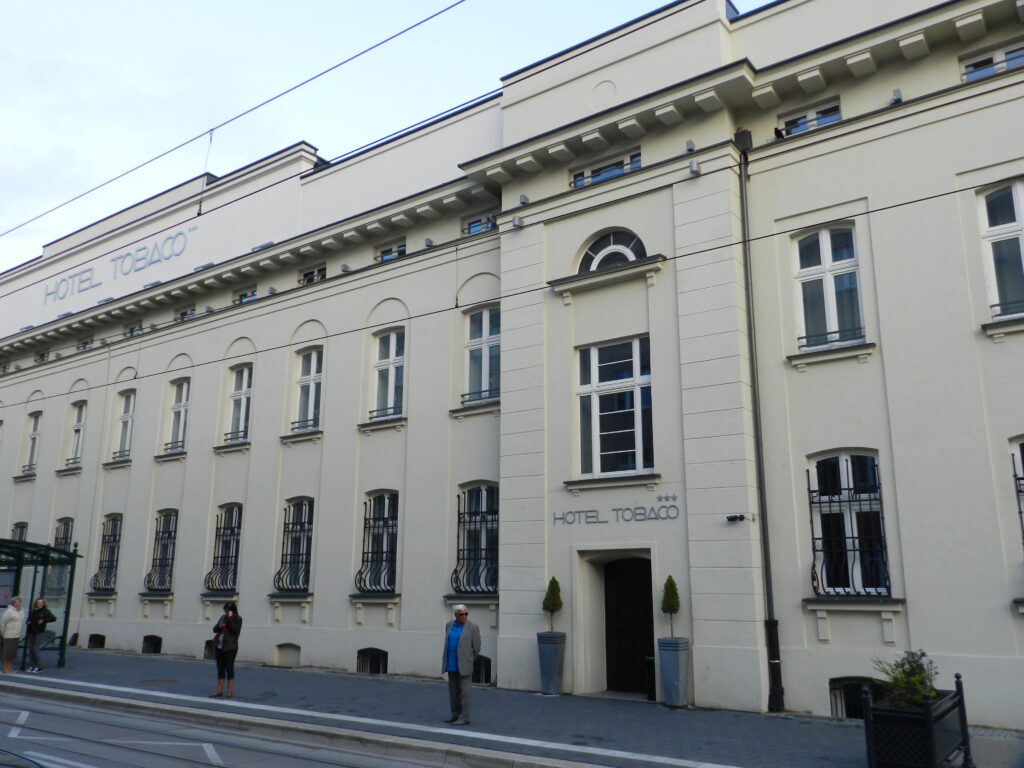
A Łódź industrial complex at Kopernika 64: a steam weaving mill from 1875, taken over in 1925 by the Polish State Tobacco Monopoly, which added modernist buildings in 1926 that are entered in the register of monuments. Production ended in 2001 and the site was converted from 2010 into apartments and the Tobaco hotel, opened in 2013.

Musée des beaux-arts, La Chaux-de-Fonds

Musée des beaux-arts, La Chaux-de-Fonds

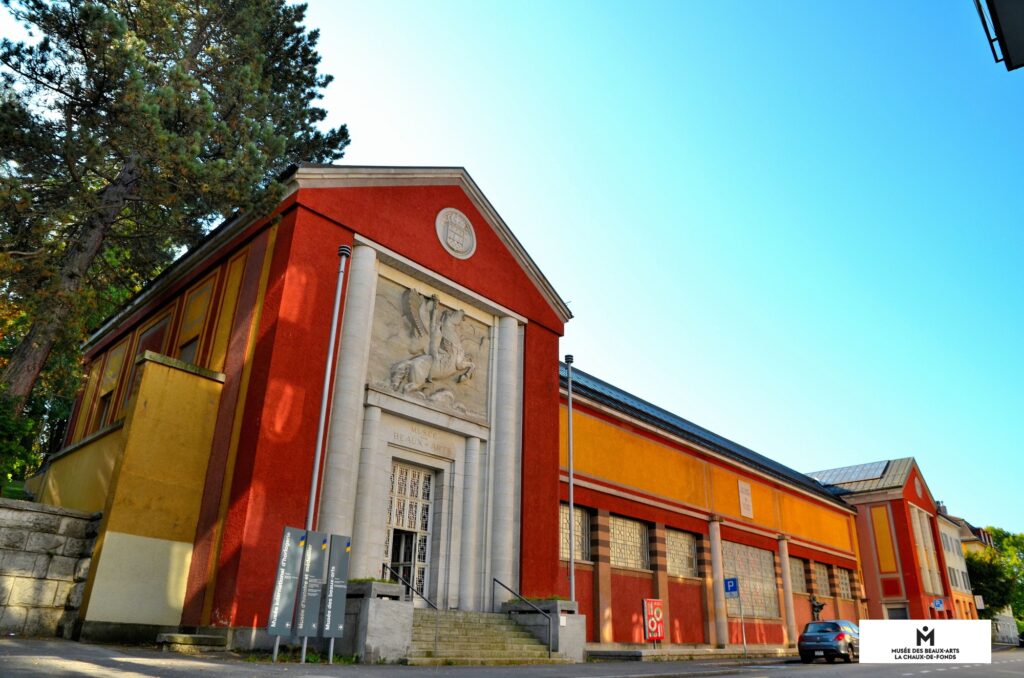
An Art Deco museum inaugurated in 1926 in the Swiss watchmaking town of La Chaux-de-Fonds, designed by the artist Charles L’Éplattenier and the architect René Chapallaz, who between them had taught and first employed the young Charles-Édouard Jeanneret. L’Éplattenier made the sculpted railings of the grand staircase; the building is a classified monument.

Savoy Hotel, Buenos Aires

Savoy Hotel, Buenos Aires

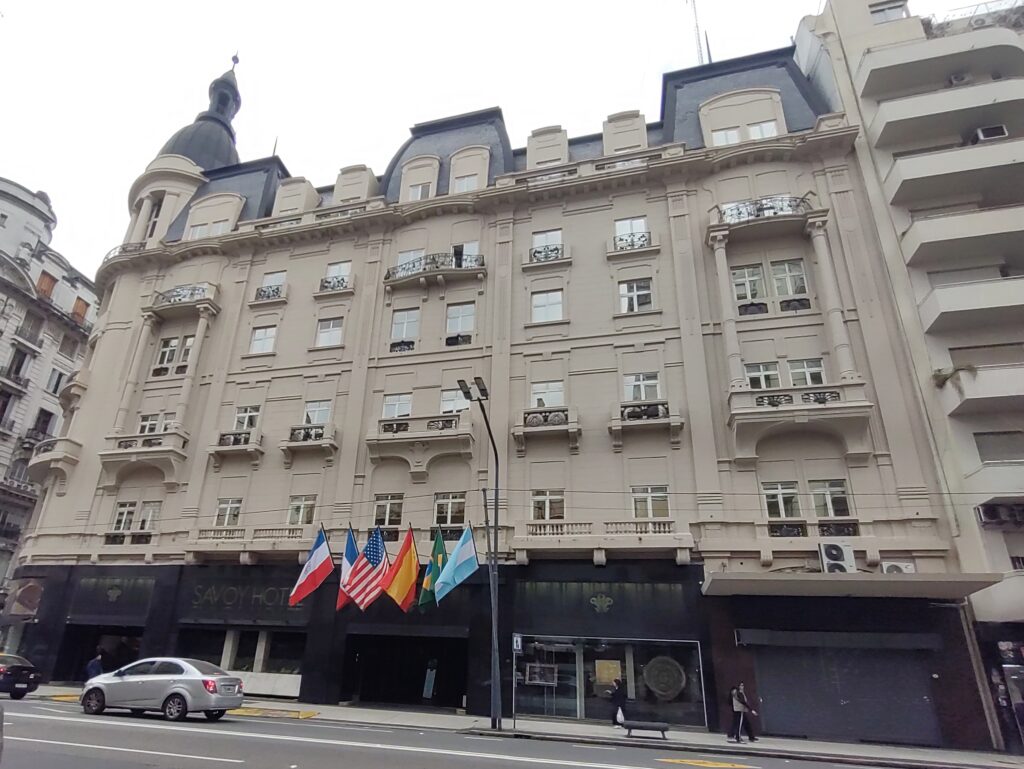
A grand hotel on Avenida Callao opened in 1910 for the centenary of the May Revolution, built by the Italian architect Gerónimo Agostini in an eclectic manner owing much to Milanese Liberty, with a dome tying the two street fronts together and interiors that look to the Viennese Secession.

Otto Wagner Villa — Ernst Fuchs Museum, Vienna

Otto Wagner Villa — Ernst Fuchs Museum, Vienna

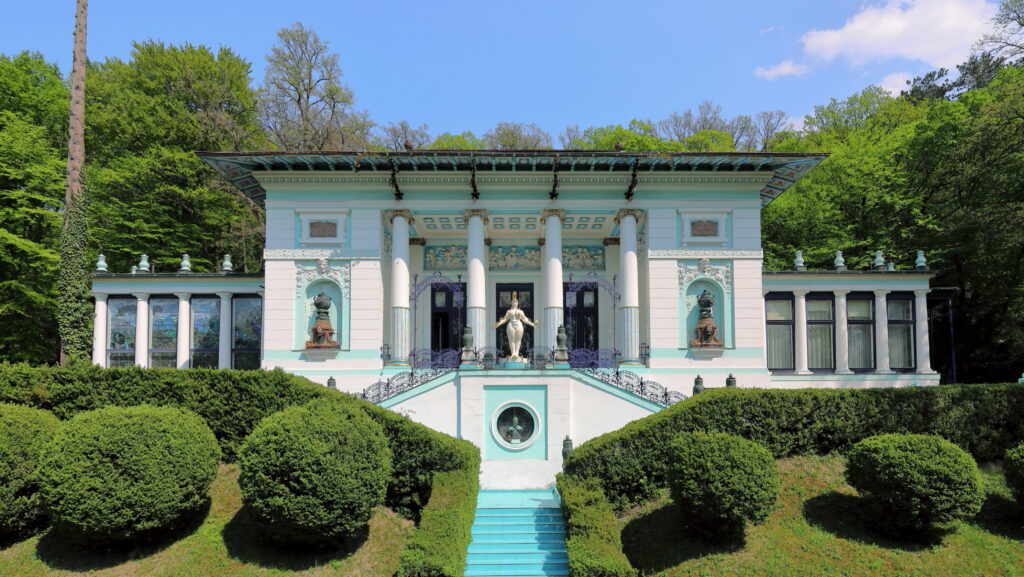
The summer villa Otto Wagner built for himself in Penzing between 1886 and 1888, classical and Palladian in manner, whose left wing he rebuilt in 1900 as a Jugendstil hall with Tiffany glass designed by Adolf Böhm. Bought by the painter Ernst Fuchs in 1972 and opened as his museum in 1988.

Burgh Island Hotel, Devon

Burgh Island Hotel, Devon

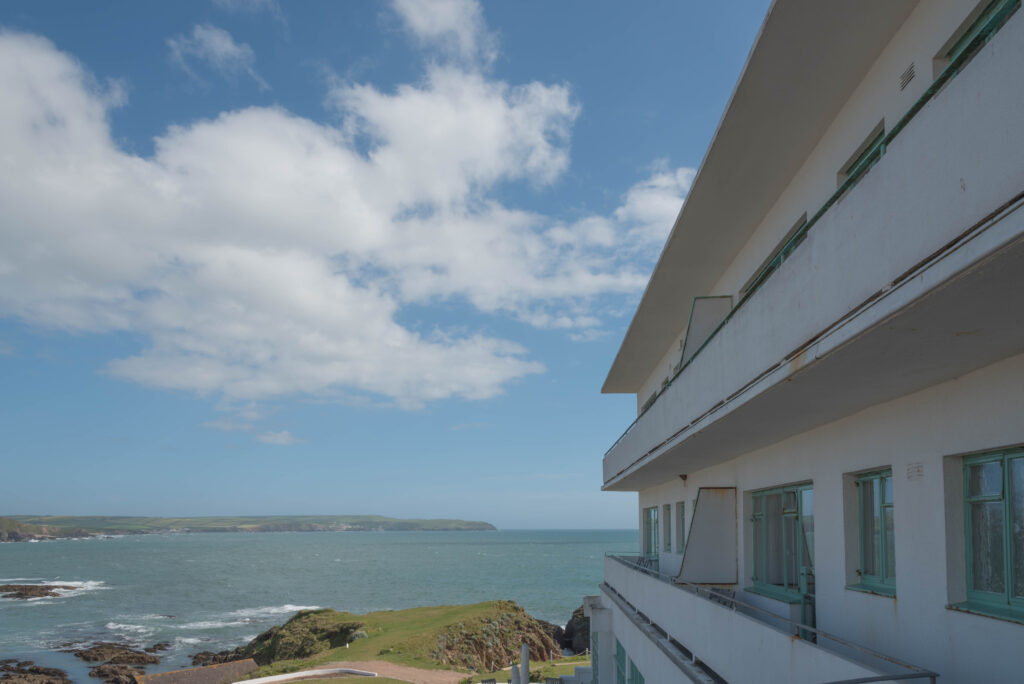
An Art Deco hotel of 1929 on a tidal island off the south Devon coast, built by the film producer Archibald Nettlefold and reached by sea tractor when the causeway floods. Agatha Christie wrote Evil Under the Sun and And Then There Were None in a beach house built for her below it; the hotel is Grade II listed.

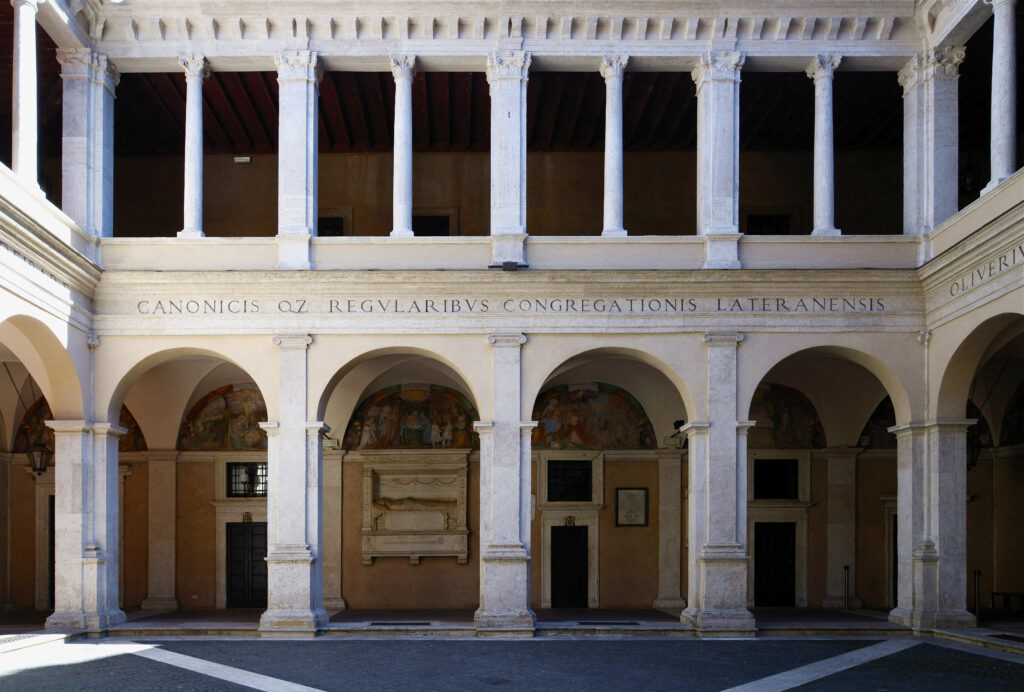
Chiostro del Bramante, Rome

Chiostro del Bramante, Rome

The cloister of Santa Maria della Pace in Rome, commissioned around 1500 by Cardinal Oliviero Carafa and completed by Donato Bramante in 1504: his first Roman work, square in plan, with sixteen columns and two superimposed orders of loggias. It is used today for exhibitions and concerts.

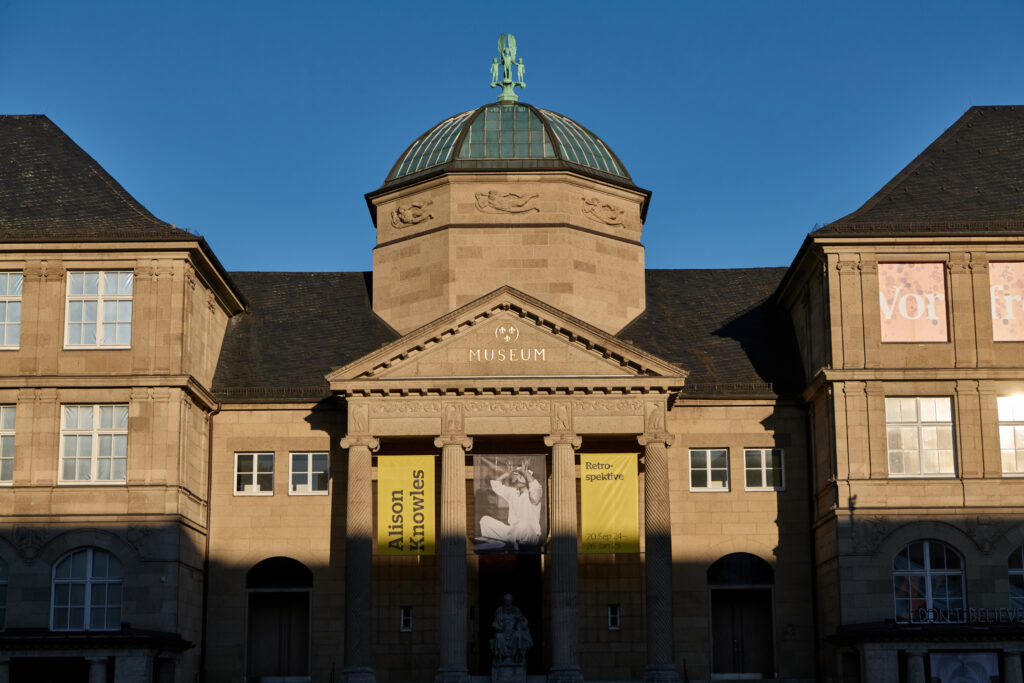
Museum Wiesbaden

Museum Wiesbaden

A Hessian state museum in a building of 1913-1915 by Theodor Fischer, designed from the outset to hold three collections at once: Nassau antiquities, natural sciences and a picture gallery. Two wings flank a recessed columned portico; the picture gallery opened on 1 October 1915 and the other departments in July 1920.

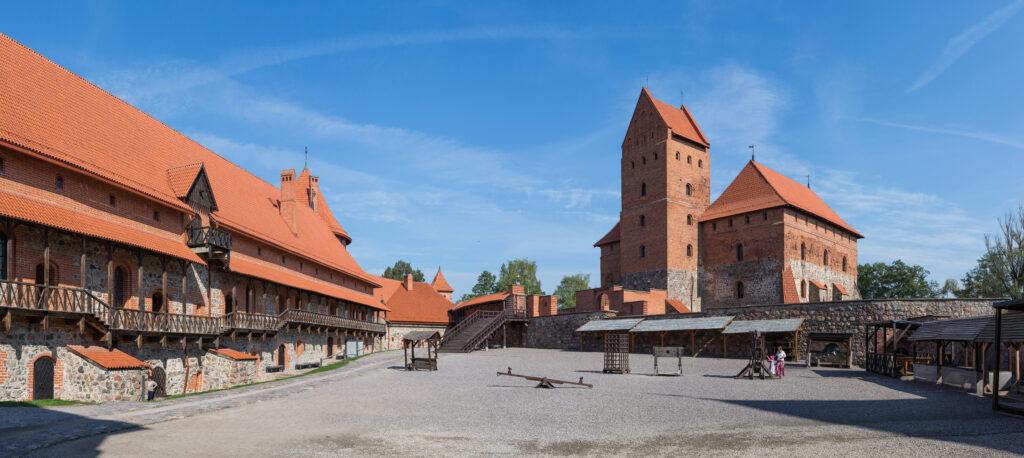
Trakai Island Castle, Lithuania

Trakai Island Castle, Lithuania

A brick castle on an island in Lake Galvė, begun by Grand Duke Kęstutis in the fourteenth century and completed around 1409 by Vytautas the Great, who made Trakai the capital of the Grand Duchy of Lithuania and died here in 1430. Never taken in war, ruined after 1655 and restored to its fifteenth-century form between 1953 and 1987; held by the Trakai History Museum since 1962.

Scroll to Top