
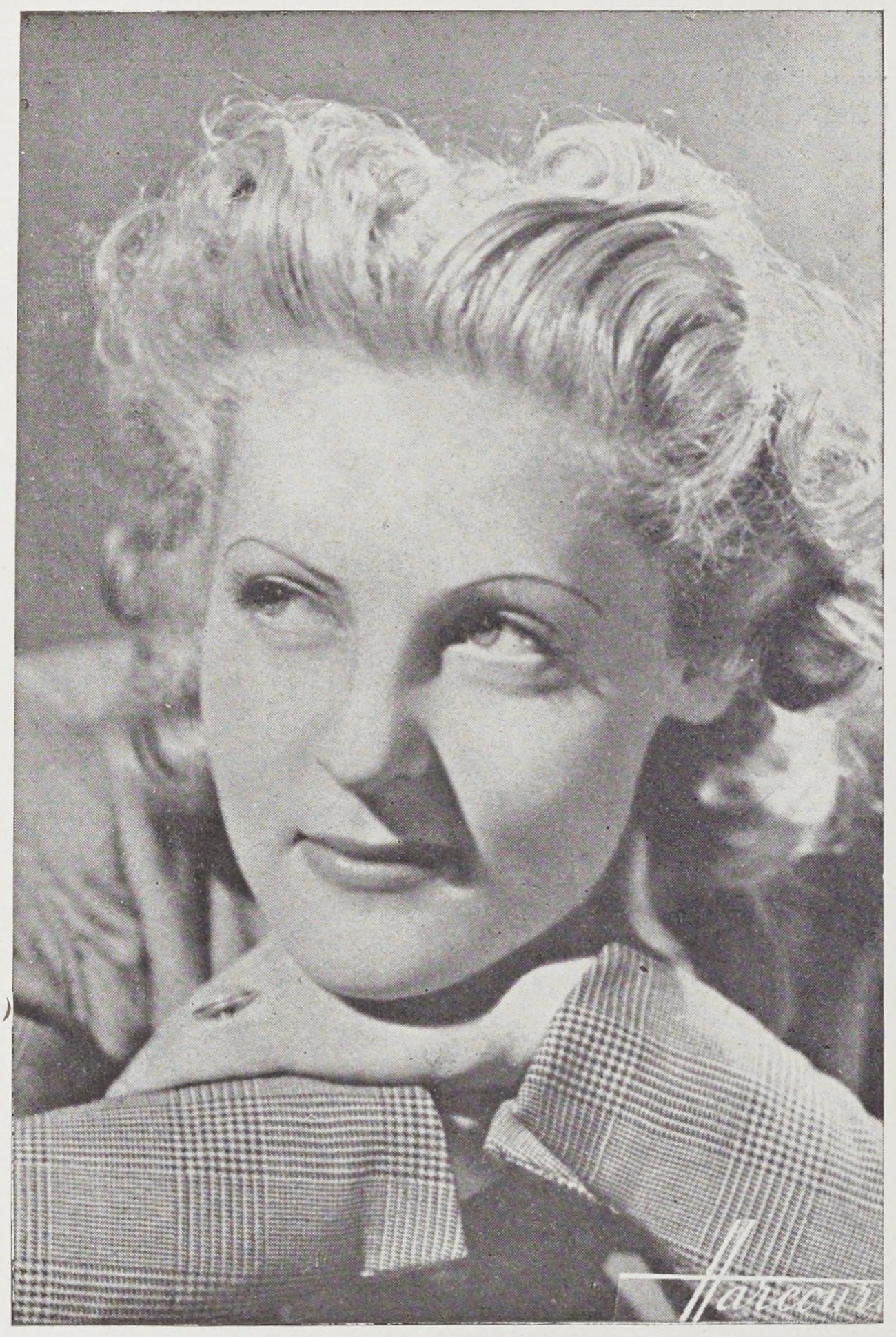
On 1 January 1939 the American films stopped arriving in Italy. MGM, 20th Century-Fox, Warner and Paramount had pulled out of the market in answer to the state monopoly on film imports decreed on 4 September 1938, and from that day the screens of an entire country had to be filled by somebody else.
Seventy-six Italian titles are listed for 1939. What they were mostly about was not the empire, or the war that began in September: it was a salary.
A thousand lire a month
The film that gave the year its name is a comedy, Mille lire al mese, and the phrase outlived it: a thousand lire a month was the modest, secure, deeply desirable income of a clerk with a permanent job. The Enciclopedia del Cinema calls the film the symbol and the manifesto of a country that wanted a quiet life of small comforts rather than heroism — which, in 1939, is a statement about the distance between a nation and its official language.
It was directed by Max Neufeld, an Austrian. Neufeld was of Jewish origin, and had left Germany for Italy when the Nazis came to power — the encyclopedia’s phrase is that he moved for racial reasons to «the more tolerant Italy». He made Mille lire al mese in 1939, a year after Italy passed racial laws of its own. He went on working there until 1948, when he returned to Austria.
The shop girl and the driver
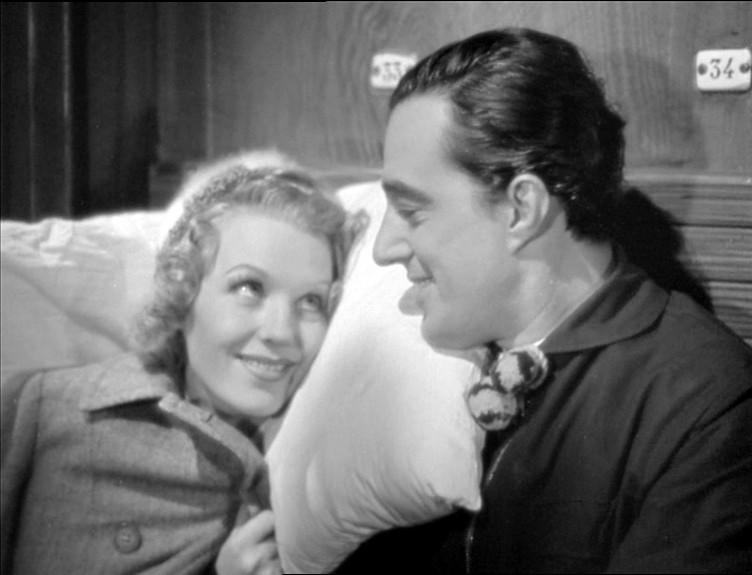
The same appetite runs through the year’s best-remembered comedies, and they belong to one director and one face. Mario Camerini made two in 1939: Grandi magazzini, in which Assia Noris is Lauretta, a shop girl in a department store, loved by a delivery driver played by Vittorio De Sica, and Batticuore. Treccani describes the plots as light, and what they carry as «the illusions and disappointments of the Italian lower middle class».
This is the cinema that came to be called the one of the telefoni bianchi, the white telephones, after the prop that stood for a comfort nobody in the audience had. It is easy to be condescending about it. It is also the only place in the Italian cinema of those years where ordinary working people appear doing ordinary work, and the shop counter of Grandi magazzini is a more accurate document of 1939 than most of what was made to be one.
The actress Neufeld made
There is a thread here worth following, because it ends in a place this archive has already been.
Max Neufeld directed the young Alida Valli in six films and made her, in Treccani’s words, the leading actress of the white-telephone cinema. Three of the six came out in 1939 alone: Mille lire al mese, Ballo al castello and Assenza ingiustificata. She was eighteen.
Three years later the same actress was Kira Argounova in Noi vivi, and a war and a change of register separate the two. The distance between an eighteen-year-old in a castle ballroom and the woman of 1942 is, in miniature, the distance the whole industry travelled in four years.
The festival that gave one prize
The Mostra at Venice met again in 1939, in the Palazzo del Cinema at the Lido, which had been built for it two years earlier. Treccani’s account of that edition is one sentence long and says everything: «L’edizione del 1939 fu segnata ancora di più dal precipitare della situazione internazionale: le assenze furono numerose e venne assegnata soltanto la Coppa Mussolini per il miglior film» — the 1939 edition was marked still more by the collapse of the international situation: the absences were many, and only the Coppa Mussolini for best film was awarded.
It went to Goffredo Alessandrini, for Abuna Messias. It was the last edition to be held on the Lido until after the war: the three that followed, in 1940, 1941 and 1942, took place away from the building, and are counted in the Biennale’s own history as not having happened.
Where they were made
The machine behind the seventy-six was two years old. Cinecittà had opened on via Tuscolana in April 1937; the campus of the Centro Sperimentale di Cinematografia, the state film school, was still going up on the same road and would be finished in 1940. We have described elsewhere what that machine reached three years later, and what was left of it by the end of 1943.
1939 is where the curve starts. The Italian share of its own market went from 13.7 per cent in 1938 to 35.1 per cent in 1939, and the number of Italian films distributed rose from forty-five to ninety-six over the following four years. Every one of those figures is a consequence of a decree about foreign currency, and none of them is a statement about the films.
The people of 1939, and the days we mark them
Each name below has two pages in our calendar, one for the birth and one for the death, and each comes round again every year on the day. Four of them are new here; the other four already had their pages from the years we have covered before, which is how an archive is supposed to work. The dates come from the Treccani Enciclopedia del Cinema and Dizionario Biografico degli Italiani, checked against a second independent record; where the records disagree, the page says so.
- Assia Noris, actress, Lauretta in Grandi magazzini — born 26 February 1912, Saint Petersburg · died 27 January 1998, Sanremo
- Max Neufeld, director of Mille lire al mese — born 3 February 1887, Guntersdorf, Austria · died 2 December 1967, Vienna (day of birth disputed — see his page)
- Gino Cervi, actor, Un’avventura di Salvator Rosa — born 3 May 1901, Bologna · died 3 January 1974, Punta Ala
- Amleto Palermi, director of Cavalleria rusticana — born 11 July 1889, Rome · died 20 April 1941, Rome
- Alida Valli, actress, eighteen in 1939 — born 31 May 1921, Pola, today Pula · died 22 April 2006, Rome
- Goffredo Alessandrini, director of Abuna Messias — born 9 September 1904, Cairo · died 16 May 1978, Rome
- Mario Camerini, director of Grandi magazzini and Batticuore — born 6 February 1895, Rome · died 4 February 1981, Gardone Riviera
- Vittorio De Sica, actor, the driver in Grandi magazzini — born 7 July 1901, Sora · died 13 November 1974, Neuilly-sur-Seine
Details
- Italian titles listed for 1939: 76 (the list compiled by Stefano Vigolo)
- The American withdrawal: MGM, 20th Century-Fox, Warner and Paramount, from 1 January 1939, following the decree of 4 September 1938
- Market share of Italian cinema in Italy: 13.7% in 1938, 35.1% in 1939
- Venice 1939: many absences; only the Coppa Mussolini for best film was awarded, to Abuna Messias by Goffredo Alessandrini
- Last edition on the Lido until after the war: those of 1940, 1941 and 1942 were held away from the building
- Mille lire al mese: directed by Max Neufeld, who had left Germany for Italy for racial reasons
- Alida Valli: eighteen years old, three of her films released in 1939, all directed by Neufeld
- Cinecittà: two years open; the Centro Sperimentale campus still under construction
Where you can still stand
- Palazzo del Cinema, Lido di Venezia — the hall of the 1939 Mostra
- Cinecittà, Rome — two years old in 1939, with a 360° tour
- Centro Sperimentale di Cinematografia, Rome — the school on via Tuscolana
- Italian cinema in 1942 — the peak, ninety-six films
- Italian cinema in 1943 — the year it broke
Do you know more?
On this page we have published what can be seen and what we were able to verify. About most of the seventy-six Italian films of 1939 almost nothing is written anywhere, and the people who made them are harder to trace every year. If you know something — a photograph, a programme, a poster, a memory told in your family, or a date we have got wrong — write to Sofia, who looks after these pages.
Write to Sofia
or send a message on WhatsApp
Please start your message with the title of this page, so it reaches the right file. Every contribution is checked against independent sources before it goes on the page, and we always say where a piece of information came from.
Frequently asked questions
Why did Italian film production rise in 1939?
Because the competition left. A decree of 4 September 1938 gave the state a monopoly on the import and distribution of foreign films, and the four largest American studios withdrew from the Italian market on 1 January 1939. The Italian share of its own market went from 13.7 per cent to 35.1 per cent in a year.
What does «a thousand lire a month» mean?
It was the salary of a clerk with a secure post, and it became the title of a 1939 comedy directed by Max Neufeld. The phrase stayed in the language as the name of a modest, safe ambition — the thing most of the audience actually wanted.
What are the «white telephone» films?
The light comedies of the late 1930s, named after a prop — a white telephone — that signalled a comfortable home. Mario Camerini’s Grandi magazzini and Batticuore, both 1939 and both with Assia Noris, are among the best known.
Who won at the Venice festival in 1939?
Goffredo Alessandrini, with Abuna Messias. It was the only prize awarded that year: the international situation had emptied the programme, and the Coppa Mussolini for best film was the single award given.
Sources
- Treccani, Enciclopedia del Cinema, entry Distribuzione — the decree of 4 September 1938, the withdrawal of MGM, 20th Century-Fox, Warner and Paramount from 1 January 1939, and the market-share figures for 1938 and 1939.
- Treccani, Enciclopedia del Cinema, entry Mostra del cinema di Venezia — the 1939 edition, the numerous absences, the single prize awarded and Abuna Messias; and La Biennale di Venezia for the wartime editions held away from the Lido.
- Treccani, Enciclopedia del Cinema, entry on Max Neufeld — his Jewish origin, the move from Germany to Italy for racial reasons, Mille lire al mese as the symbol and manifesto of the country, and the return to Austria in 1948.
- Treccani, Enciclopedia del Cinema, entries on Assia Noris and on Alida Valli — Grandi magazzini and Batticuore with Mario Camerini and Vittorio De Sica; the six films Neufeld made with Valli, three of them released in 1939.
- Treccani, Enciclopedia del Cinema, entries on Gino Cervi and on Amleto Palermi — Un’avventura di Salvator Rosa, Cavalleria rusticana and Napoli che non muore.
- The Library of Congress Name Authority File — the birth and death years behind the anniversary pages linked above.
- The list of 1939 titles on which this article is based was compiled by Stefano Vigolo and sent to the editorial desk on 12 September 2026.